 For those of you who do not live in overwhelmingly Roman Catholic countries, today was probably a normal workday; however, whether they know it or not, the people of Austria who were celebrating der Rhuetag, can thank Pope Pius IX and his 1854 pronouncement ex cathedra regarding the obligation of the Feast of the Immaculate Conception. According to David Mills over at First Things, this Marian Dogma declares that:
the most Blessed Virgin Mary, in the first instance of her conception, by a singular grace and privilege granted by Almighty God, in view of the merits of Jesus Christ, the Savior of the human race, was preserved free from all stain of original sin, is a doctrine revealed by God and therefore to be believed firmly and constantly by all the faithful.
In his reflection on John 19:26—“Woman, behold thy  Son”—the third word of Jesus from the cross, Stanley Hauerwas observes that “Dante called Mary, ‘Virgin Mother, daughter of thy Son.’” This, he asserts, “challenges any assumption that Jesus’s address to Mary from the cross is simply an example of a son’s solicitude for his mother’s welfare”(49). He goes on to point out that Jesus, throughout the Gospels, is portrayed as not exactly “family friendly” (at least in an blood relation sense–Mark 3:34-35, Luke 14:26). For Hauerwas, Mary’s importance lies in the existence of her faith, not her motherhood. Following Raniero Cantalamessa, Hauerwas argues, “Mary is our Abraham. Just as Abraham did not resist God’s call to leave his father’s country to go to a new land, so Mary did not resist God’s declaration that she would bear a child through the power of the Holy Spirit. Abraham’s faith foreshadows Mary’s ‘Here I am’ because just as we are Abraham’s children through faith, so we become children of the new age inaugurated in Christ through Mary’s faithfulness.” (51-52). Protestants of the world, unite:)
 Now, I am painfully aware that in discussions on the Virgin Mary, we are entering into theological territory burned over by years of doctrinal infighting between Christians of all colors and stripes. I do not want to disregard her importance to theological discourse, nor to dismiss anyone’s strong opinions on the matter, but in keeping with my Lenten devotions, I am going to focus on Mary in light of the concept of the deus absconditus–the “presence of God’s absence.” For anyone interested, there are excellent treatments of the ongoing theological discourse surrounding Mary here and here.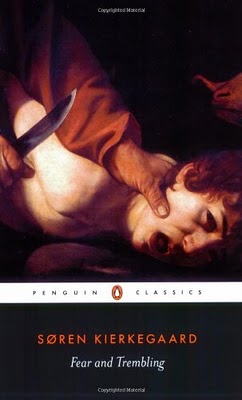
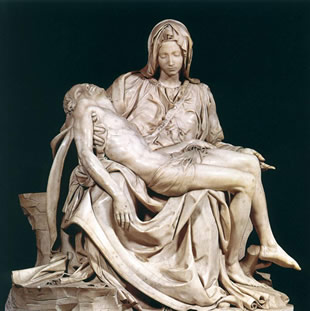 Mary, one believes, had as much insight into Jesus’ divine nature as anyone; nevertheless, she watches in powerlessness as her son suffers the cross. It is this passivity—the vita passiva—writes Oswald Bayer, that is the righteousness of faith without works, a faith “which can only be suffered . . . [this] happens when all thinking that one can justify oneself, in a metaphysical sense, as well as when all acting, in a moral sense, together with the desire to unite the two efforts, are radically destroyed.” In this sense of Mary’s passivity, we find a place where we can affirm her as the “Mother of the Church.” If the church is made up of those of faith, people who rest in the “assurance of things hoped for, the conviction of things not seen (Heb.11),” then these are people who, “Mary-like, must live by hope—a hope that patiently waits with Mary at the foot of her son’s cross”(53).