




For Part I of this two-part series, go here.
When I hear the polarized political and religious conversations rocking our nation today, I pause and remember the wonderful, quirky church of my childhood, which defied all the stereotypes of our current national debate. Seen from the estranging distance of years, the vision is no longer wholly familiar to me, but rather extraordinary in its eccentricity, and this is part and parcel of the process that I call defamiliarization. Each spring, our youth group held a confirmation class party, where some kids lounged in the jacuzzi while others watched the movie Airplane. On the first retreat I ever attended in the mid-‘80s, I recall riding in a van into the Sierras and listening to an animated debate among the kids and leaders about Central American Liberation Theology. On Sunday mornings, we heard from an erudite Princeton-educated pastor, who loved Elie Wiesel, Karl Barth, and Dietrich Bonhoeffer, and who hung a banner representing the anti-Nazi Barmen Declaration in the sanctuary. His generation of pastors was trained at a time when theologians like Jürgen Moltmann attempted to articulate any theology at all in the cataclysmic aftermath of the Holocaust. Anti-intellectualism and antisemitism were totally foreign to me. From an associate pastor who held advanced degrees in biochemistry and molecular biology alongside a doctorate of divinity, I first learned about theistic evolution. Beneath the diffused light cascading through stained glass windows, the sanctuary was radiant with its design in the round, which symbolized the democratic ideals of the congregation. In the winters, we attended retreats at Forest Home, where, if a speaker preached too forcefully about a specific vision of the end times, we would then debate this critically in the cabins afterwards. In the summers, we attended camp on Catalina Island, where we gathered on the beach around a campfire and sang praise songs under a starlit sky.
I hesitate to name the church of my childhood in the elegy above because doing so will immediately enclose me in a box of stereotypical, flawed assumptions about my theological identity and political stances, but I share these positive, redemptive experiences in the hope that others might be inspired to reflect on their own religious and spiritual journeys, and how they challenge or transcend the current national debate, which is veering into the dangerous waters of Dominionism and Integralism. This is a profound and pivotal moment, a moment that calls not for deconstruction but for the defamiliarization of our faith, for a revitalized vision, for a new Barmen Declaration that opposes the perilous religious nationalism now threatening to upend the nation’s democratic and ecumenical ideals. Long before he penned the 1934 Theological Declaration of Barmen and signed it alongside courageous leaders of the Confessing Church, Barth wrote with powerful prescience in 1914:
God helps justice and love. God helps the kingdom of heaven, and that exists across all national boundaries. ‘God is Spirit, and those who worship him must worship him in spirit and in truth’ (John 4:24). The foolish mixing of patriotism, war enthusiasm, and Christian faith could one day lead to the bitterest disappointment … We will not join in drinking this intoxicating potion. We want to look steadfastly and unwaveringly here to God, who loves everyone equally, who is above all the nations, from whom all have similarly departed, and from whose glory they have fallen short (see Rom. 3:23) — the God who in like manner wants to draw all people to himself and gather them under the rule of his good and holy will. (A Unique Time of God 100)
I call upon the courage not only of Barth and Bonhoeffer but also of Dr. Martin Luther King, Jr., Dorothy Day, Óscar Romero, and Elie Wiesel to offer us models of guidance during these turbulent times. My wish at this moment of extreme polarization is to hear of the dazzling variety of religious experiences, experiences that topple the monolith of white Christian nationalism, stretching across ecumenical and interfaith discussions into the enormous diversity that reveals the paradoxical unity behind it all: We’re seeking nothing less than a divine love that enfolds us, a loving community that upholds us, and an opportunity to share the love that we have received.
May we make it anew, and may we begin again.
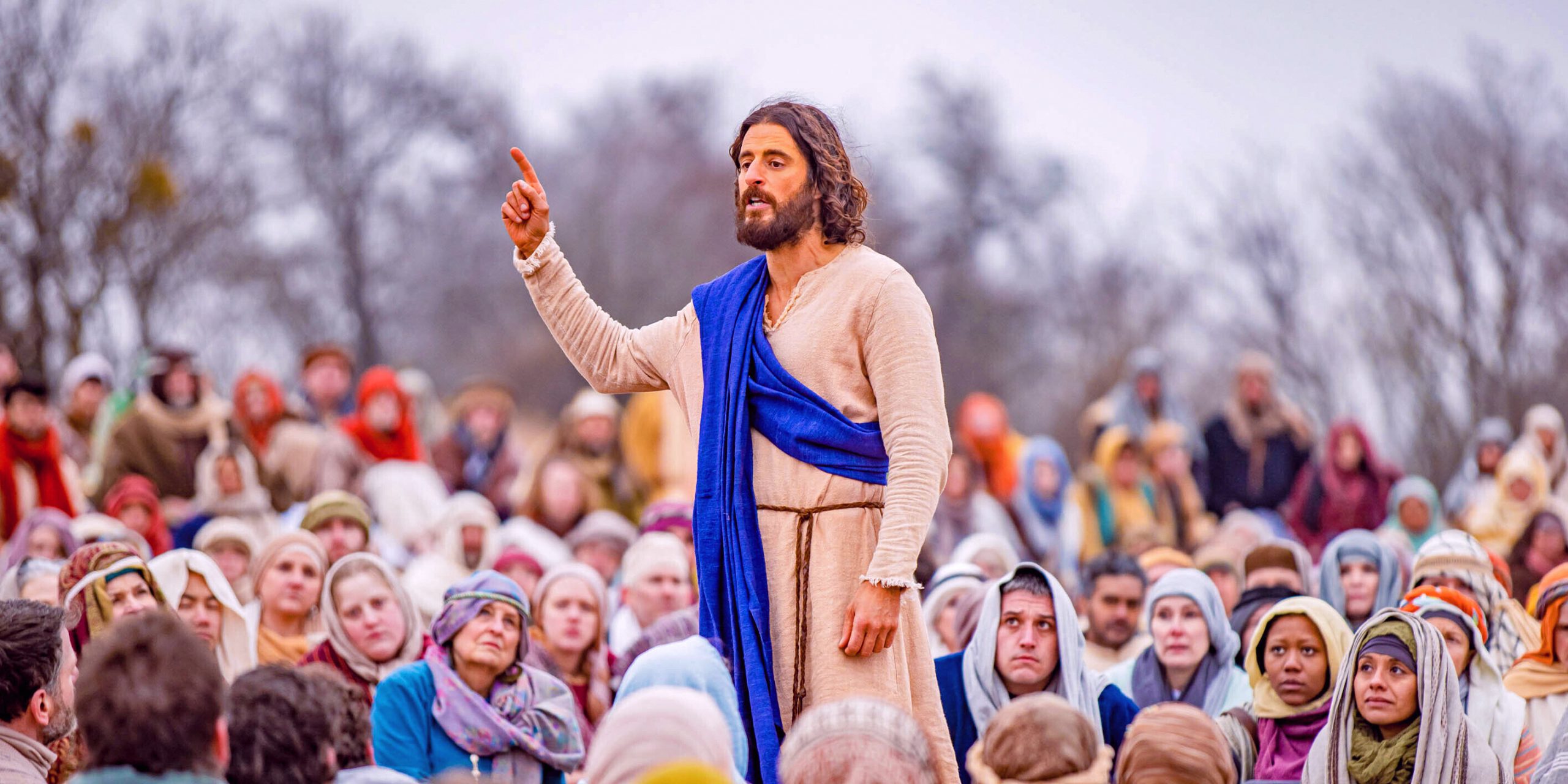
When I speak of a rejuvenated aesthetic vision that refashions what is familiar to us and makes it unfamiliar again, I am partly inspired by the first two seasons of the TV show, The Chosen, directed and co-written by Dallas Jenkins, which imaginatively portrays Jesus’ interactions with his disciples. Taking familiar stories and breathing new life into them, the first two seasons have made the Gospel fresh and vibrant again. It’s also delightful to see the women who supported Jesus’ ministry and to witness Mary Magdalene portrayed as one of his first disciples. Great care was taken to avoid antisemitism, with Jewish consultants on board for the production, and the show depicts a wide variety of Romans and Pharisees who are sympathetic or unsympathetic towards Jesus. The aspect of defamiliarization that most altered my habitual perception was a revitalized appreciation of Jesus’ Jewish heritage, evoking a desire to learn the beautiful prayers spoken before meals and at the beginning and end of each day.
Unlike Robert Powell’s mystical blue-eyed Jesus, Jonathan Roumie’s representation of Jesus seeks to merge his humanity and divinity in a manner that embraces humor as well as compassion. The show is not perfect by any means, and Peter may have been miscast as a swaggering bully, but the casting of Matthew as a socially awkward tax collector — likely of the Asperger’s type — was absolutely brilliant. There are moments that will break your heart wide open, like when Jesus frees Mary Magdalene from her torment by simply speaking her name. “I have redeemed you,” he says, quoting from the prophet Isaiah. “I have called you by name, and you are mine.” Or when he bends down and calls the woman daughter after she touches his hem and is healed from years of bleeding. Or when he tells Nathanael that he saw him at his darkest moment and did not turn away. In one of my favorite scenes, he tells the disciples that he has given them authority to heal and is ready to send them on their way. Nathanael says, “Wait, did I miss a ceremony?” No ceremony needed, not even a laying on of hands, for such quiet power and beautiful love.
In seasons three and four, the show took some unexpected turns and controversial risks as the writers sought to wrestle with extremely complex questions of theodicy. I’m sorry to say that they failed to handle these questions well, which I hope to demonstrate in the following formalist analysis that disavows deconstruction’s decentering of the logos (communicative reason) and the Logos (the divine Word, who is Jesus). While the fictionalized representations of the disciples’ lives are generally tolerable (except for the ones I will mention below), the show is at its best when it sticks to the biblical script regarding the words and actions of Jesus. In the Bible, the primary statement of theodicy from Jesus is a corrective rebuke to those who claimed that suffering is a punishment for sin. When Jesus heals a blind man near the pool of Siloam, He says, “Neither this man nor his parents sinned, but this happened so that the work of God might be displayed in his life” (John 9:3, NIV).
The writers of The Chosen unfortunately decided to expand and experiment with a variety of contentious perspectives related to theodicy, creating imaginative frames for the emotional context of various scenes, in a manner more closely related to fan fiction than to biblical accuracy. In an extrabiblical scene from the third season, Jesus kindly declines to heal his disciple “Little” James, claiming that his painful limp will make him an even greater conveyor of the Gospel message: “When you find true strength because of your weakness, and when you do great things in spite of this, the impact will last for generations.” It’s a profoundly moving scene, touching on deep emotional issues for those with chronic pain, and yet, as my friend Benjamin Redelings has noted, when the bridegroom is in the house, the miracle of healing is different than at any other time in history, and we have no examples in the Bible of Jesus refusing to heal someone who asks to be healed. I’d also note that “impact,” a popular word at our contemporary moment, tends to grate on the ears, and the recurring motif of “strength” highlights the provocative, polemical revival of “Muscular Christianity,” which spans the spectrum from John Piper to Mark Driscoll to Doug Wilson.
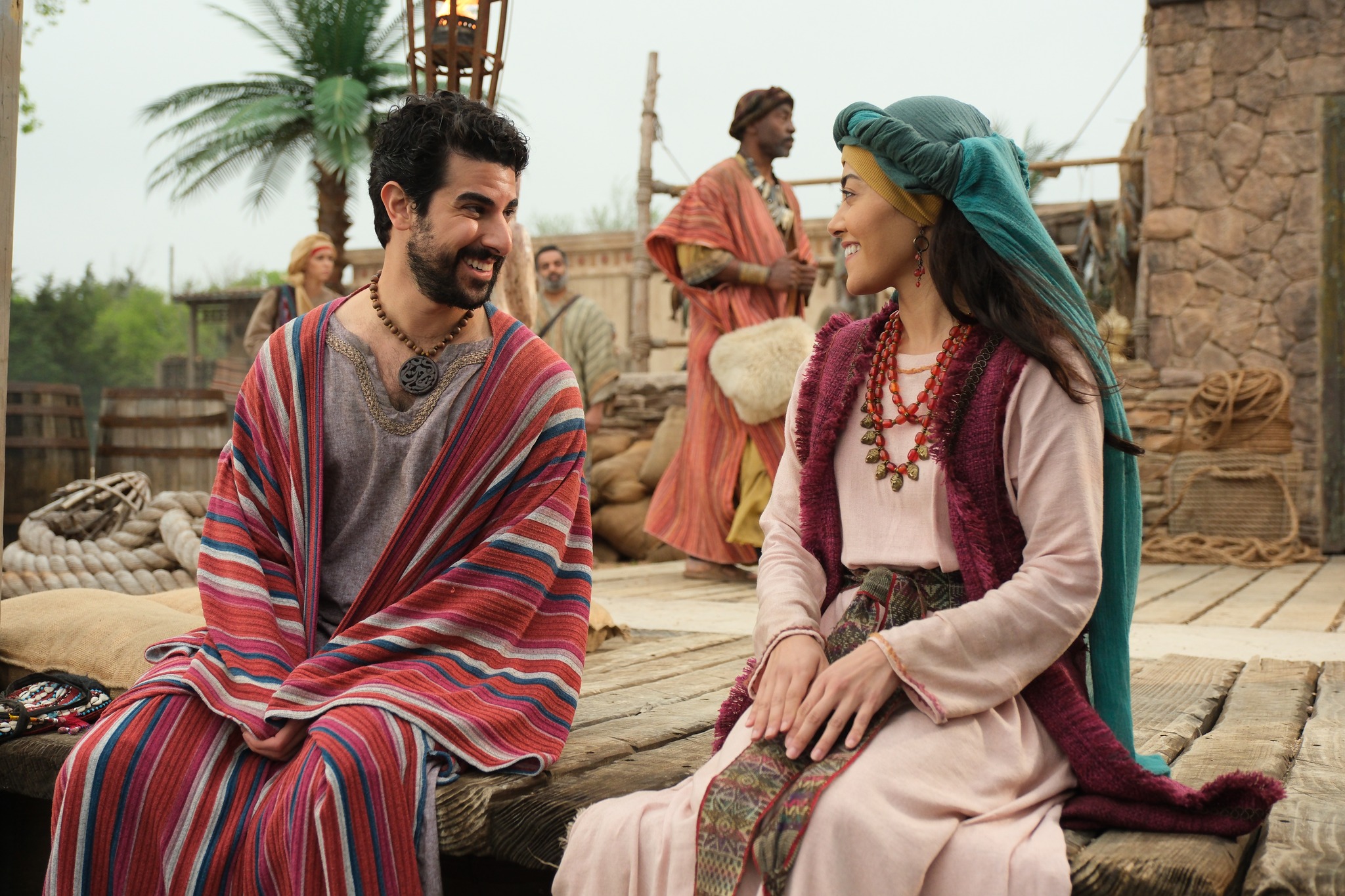
Even more controversially, the writers invented a plotline about Peter’s wife having a miscarriage, and the fallout from this is not only extrabiblical but also terribly erroneous in its theology. Angry at Jesus for not preventing the miscarriage, Peter and Jesus bellow at each other as Peter joins him for a walk on the water during a literal and figurative storm. “Why do you think I allow trials?” Jesus cries. “They prove the genuineness of your faith! They strengthen you. This is strengthening you!” My jaw hit the floor. Is this Jesus or Nietzsche talking here? The loss of a child is meant to make us stronger? A cruel test to prove our faith?
Absolutely not. Death, especially the death of a child, is an enemy of God, as David Bentley Hart notes in his extraordinary work, The Doors of the Sea, which should be required reading for any Christian in a first-year philosophy course about to be tormented by a discussion of the problem of evil and a reading of Dostoevsky’s Grand Inquisitor:
Our faith is in a God who has come to rescue his creation from the absurdity of sin, the emptiness and waste of death, the forces — whether calculating malevolence or imbecile chance — that shatter living souls; and so we are permitted to hate these things with a perfect hatred … When I see the death of a child, I do not see the face of God, but the face of His enemy. It is not a faith that would necessarily satisfy Ivan Karamazov, but neither is it one that his arguments can defeat: for it has set us free from optimism, and taught us hope instead. We can rejoice that we are saved not through the immanent mechanisms of history and nature, but by grace; that God will not unite all of history’s many strands in one great synthesis, but will judge much of history false and damnable; that He will not simply reveal the sublime logic of fallen nature, but will strike off the fetters in which creation languishes; and that, rather than showing us how the tears of a small girl suffering in the dark were necessary for the building of the Kingdom, He will instead raise her up and wipe away all tears from her eyes — and there shall be no more death, nor sorrow, nor crying, nor any more pain, for the former things will have passed away, and He that sits upon the throne will say, “Behold, I make all things new.” (101, 103-104, emphasis mine)
Even though I have disagreements with his later theological works, Hart is at his rhapsodic best in this lyrical, magnificent passage, and the writers of The Chosen would do well to pay attention to his theodicy. Unfortunately, in season four, the writers doubled down on their flawed theology when Peter chides Thomas for not accepting Jesus’ words when he walked on the Sea of Galilee. By this point, the show is floundering in even deeper water after Thomas’s fictional fiancée is accidentally killed, a scene set in immediate contrast to Jesus’ decision to resurrect Lazarus. Again, such extrabiblical material is doing more harm than good, as it suggests a certain capriciousness on Jesus’ part. There is no need to invent backstories for Thomas’s doubt or for Peter’s walk on the water, as those stories are vibrant, standalone masterpieces that reveal the goodness and power of the Messiah, not weakness or volatility or impulsivity. And the flashbacks to King David and Bathsheba, though poignant and powerful, nonetheless provide a confusing, contradictory theodicy to John 9:3, while also suggesting a muscular stoicism in the face of death rather than a vision of salvation and redemption.
Though I don’t think the show verges on idolatry, as some have claimed, I will say that it is incredibly unwise to alter or add to Jesus’ red-letter words. This is particularly true for theodicy, as the final answers to the deepest mystery of our faith will be revealed at the end of days, and not in a TV show. And it’s extremely important not to alter Jesus’ divinely revelatory “I am” statements, as He certainly never said “I am the law of Moses,” which has overtones of bibliolatry. He is not the word, but The Word of God — the divine Logos, God’s self-expression and agent of creation, the second person of the Trinity — an eternal, incorporeal being, who, through the miracle of the Incarnation, came to earth to communicate with his creatures in a hypostatic union fully human and fully divine.
Let’s hope season five redeems the mistakes of the previous two seasons by adhering more closely to the biblical script when it comes to Jesus’ words and actions on the road to Calvary. From the cross to the resurrection, where Jesus triumphed over sin and death, all trendy terms fade into the background, all extrabiblical plotlines pale in comparison, and what remains is the absolute truth and goodness of His ultimate victory.
Kathryn Stelmach Artuso (Ph.D. English, UCLA) is a freelance journalist, a specialist in transatlantic modernism, and the author of Transatlantic Renaissances: Literature of Ireland and the American South.








[…] For Part I of this two-part series, go here. […]
I so agree with your observations. Mine came in the form of, “Wait a minute. What?” Thank you for the clarity.
Oh how I loved this. Like you, there are things I have liked about The Chosen but when you start putting different words into Jesus’ mouth, especially on complex subjects, you start to run into serious problems. I have a particular interest in theodicy from my own lived experience with chronic pain and I was SO disappointed by Peter and Jesus’ scene. Thank you for articulating this!
Thanks so much! Theodicy is such a complex topic, and I was so grateful to read Hart’s Doors of the Sea, which finally helped me overcome the trauma of reading Dostoevsky’s Grand Inquisitor.
Thank you for this! I haven’t watched much of THE CHOSEN yet but I did see the scene between Jesus and James that you reference and it left me angry and burdened. Thank you for articulating what I hoped was true in opposition to that scene.
Thanks, Steven! The writers are trying to explain the inexplicable, and it’s not yet working well, though I think they’ll land upright after Jesus’s defeat of sin and death. I was able to tolerate the scene with Jesus and Little James because I could see that the writers were trying to offer comfort, but the scene with Peter and Jesus on the Sea of Galilee went off the rails into flawed theology. I’ve heard a lot of discussion of Ramah’s death and the scene with Little James, but I’m surprised not to be hearing more critiques of the scene on the Sea of Galilee, which was the one that seemed the least tolerable….
I love The Chosen. Much like I loved The Robe. Flaws and all. OK, I did have a crush on Jean Simmons. It must have been thorny for Paul to hear, “for I will show him how much he must suffer for the sake of my name.”
“ the final answers to the deepest mystery of our faith will be revealed at the end of days, and not in a TV show “
Thank you- I love the Chosen but I share frustration and disappointment with the Chosen writers’ certainty in a theology that at points forecloses the depth and breadth of the subject matter. On the other hand, it is people who have such clear nonmysterious views that are often motivated to take on such projects, and much of the show is meaningful. So I have been having mixed feelings which have been useful for me to wrestle with. It’s not the mystics who get projects like this done.