




A few spoilers ahead for Thor: Love & Thunder.
It’s pretty clear that the entertainment industry is oversaturated with the popular superhero genre. Don’t get me wrong, my butt is in the seat whenever a new Marvel flick arrives at the theater. But it’s hard to ignore what the critics say about the genre. Certainly, there are points to be made about the genre of movies and some of the abhorrent entries within it. (Although there are ones here and there that truly stand on their own two legs.) While there might be debate, even inside the Marvel fandom camp itself, the latest Thor installment seems to be attempting something outside the regular formula. It shoots for the stars by grappling with the age-old topic of suffering.
You’d be hard-pressed to find a topic more relatable to every human being on earth than suffering. Sure, everyone goes through different levels on the spectrum, but it always invokes the five W’s of English: who? what? where? when? and (most importantly) why? Over time, humanity has attempted at answering these questions pertaining to suffering, only to come up with inconclusive results — at least in the sense that we haven’t all come to an agreement on the answer. Some abandon their faith over a bout of suffering; others come to faith because of it. There are a multitude of avenues to deal with suffering, but writer Jason Aaron chose to create a character who encapsulated his anger about the topic.
The main villain in Thor: Love and Thunder is known as “Gorr the God Butcher” (created by Jason Aaron). Gorr’s backstory is a sympathetic one. He’s a character who has prayed his way through intense suffering, suffering which involved the death of his entire community and, most devastatingly, his daughter. Still, Gorr remains hopeful, only to find out his god doesn’t care about him, a god who mocks Gorr’s suffering. He laughs at Gorr’s idea that there would be some type of eternal reward for him once he died. This leads Gorr to become the God Butcher, slaying any god he can get his hands on in revenge.
Jason Aaron, who grew up in a Southern Baptist church in Alabama, has said that the creation of Gorr stemmed from his “pessimism about religion.” Director Taika Waititi, similarly calls himself an atheist and understands the anger Gorr carries. It’s an anger we’ve all felt at some point, a dissatisfaction with how God has chosen or not chosen to communicate with us about this life. But Taika takes this anger and makes not only a hilarious film, but a thought-provoking one.
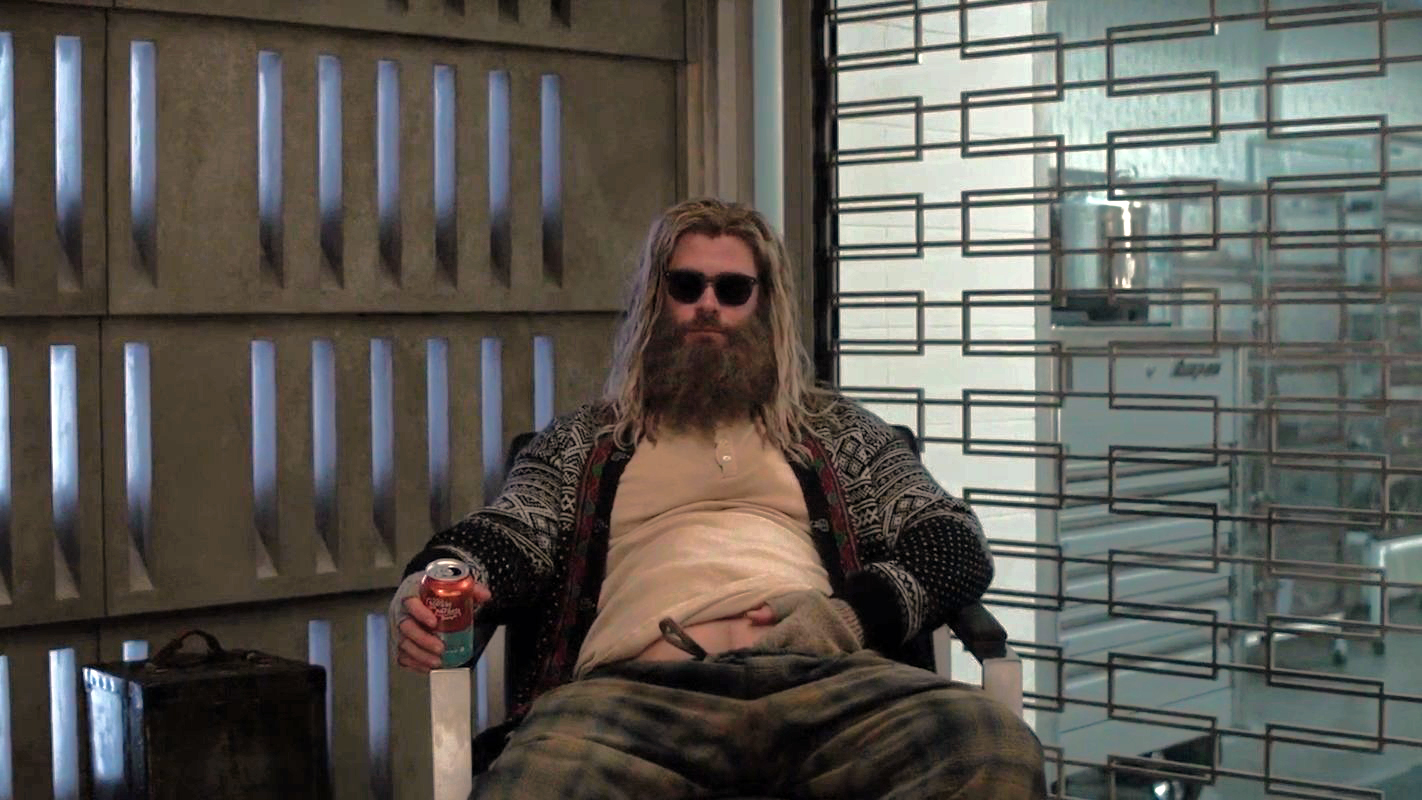
While Gorr begins slaughtering the gods, the viewer spends time with Thor, a god not averse to suffering. There’s even a quick scene which references all the times Thor has undergone extreme pain and loss. He’s lost his father, his mother, his brother (three different times), and the love of his life. He’s had to battle an assortment of villains (including one time when he lost his eyeball), and then as the cherry on top, his entire home world exploded. For an entire movie he was comically out of shape and depressed. While he was busy saving the world, his own life was falling apart at the seams. So, suffice it to say, Thor is a god who suffers.
Outside of Christian circles (and sometimes within them), the idea of a suffering god strikes many as highly peculiar. Author Yann Martel put it perfectly in his book Life of Pi, when the main character is hearing about Christianity for the first time:
“But divinity should not be blighted by death. It’s wrong … It was wrong of this Christian God to let His avatar die. That is tantamount to letting a part of Himself die … If God on the Cross is God shamming a human tragedy, it turns the Passion of Christ into the Farce of Christ. The death of the Son must be real. Father Martin assured me that it was. But once a dead God, always a dead God, even resurrected. The Son must have the taste of death forever in His mouth. The Trinity must be tainted by it; there must be a certain stench at the right hand of God the Father. The horror must be real. Why would God wish that upon Himself? Why not leave death to the mortals? Why make dirty what is beautiful, spoil what is perfect?”
It’s baffling to imagine a god who subjects themselves to the experience of humanity, especially death. And it stuns Gorr the God Butcher as well, when he sees Thor suffer once again as his girlfriend, Jane Foster (played by Natalie Portman), loses her life to cancer. It’s this sight that turns Gorr’s heart, if even a little, to see things differently. He sees that perhaps there is hope in our suffering after all. That maybe there’s hope in a god who suffers alongside us. Gorr the God Butcher gives up his eponymous crusade.
While the suffering God may not be an answer to suffering — and it surely doesn’t always feel like it — it is a bit of good news when you’re in the thick of it. Not only a God who suffers but one who hungers, cries, tires, and needs alone time. Our circumstances won’t always change and the road of sorrows may be a long one, but the good news is that there’s a God who isn’t distant in a lofty paradise mocking you, but rather present in your desolation. With names and titles aplenty granted to this God, even Taika gives him a reference in the film as the “God of Carpentry,” some know him as the “Suffering Servant.” And those that know Him, know He lives up to the name.







[…] The God Who Suffers – Mockingbird — Read on mbird.com/film/the-god-who-suffers/ […]
Thanks for your observations. i particularly liked the Martel quote. He seems to assume that never having died is automatically better somehow than death and resurrection. But I find this arbitrary. Could it not be that life/death/life is more beautiful than just life? It seems more complete. Richer. Deeper. Even as God seems to think that redemption from sin is more beautiful than never having sinned.
[…] Love and Thunder — Move over, Superman, there’s another superhero who far better resembles the suffering God of the […]