




Maybe every age thinks its troubles are uniquely difficult. Yet ours seem especially intractable. Our divisions seem to get deeper with each year that passes. Conservatives and progressives, Democrats and Republicans, globalists and localists talk to each other less and less — and hurl barbs at each other with ever increasing venom.
Yet division is nothing new. Over the past few centuries, both the USA and the UK saw their own civil wars, where we literally killed each other (and the odd king) over our disagreements, both political and religious.
So where do we find wisdom to navigate these difficult times? Let me suggest one guide to our times — one of the great polymaths of the western world; a thin, otherworldly Frenchman who was born just over 400 years ago and who might be just the kind of guide we need in our troubled and divided world: the remarkable Blaise Pascal.
Pascal lived for only 39 years and spent most of his life suffering from various forms of illness that led to his early death. He was on the forefront of the emerging science of the modern world, a groundbreaking mathematician, inventor, geometer, physicist, polemicist, theologian, and philosopher. He lived in one of the most dramatic periods of European history, during the Europe-wide Thirty Years’ War and, across the channel, the English Civil War. His contemporaries were majestic figures in French history like Descartes, Molière, Racine, and Louis XIV.
 He built one of the first mechanical calculating machines, a precursor of the modern computer; proved the existence of the vacuum; and laid the foundations of probability theory, which lies at the basis of all of our calculation of risk. He also invented buses, getting involved in an innovative scheme to provide an urban transportation system for the poor of Paris, while also writing some of the most striking works of satire, philosophy, and theology in the history of the French language.
Today his mark is seen in a number of areas of modern life. A unit of atmospheric pressure and a computer language of the ’70s were named after him. Pascal’s triangle remains a mathematical device for calculating probabilities. Yet the work for which he is best known today is one that he never finished.
Pascal’s own wrestling with the vital questions of existence were resolved (if not solved) by a life-changing experience of the almost tangible presence of God on a cold November night in Paris in 1654, leading to a desire to persuade his sophisticated friends, who found the idea of God boring, that their true happiness was to be found in the last place they would look — religion. His Pensées is a collection of scribbled notes in his almost illegible handwriting, found in his room after his death.
Unlike many of the apologists of his time and since, Pascal doesn’t try to persuade unbelievers by giving them arguments as to why God exists, as if it was obvious if you only thought about it a bit more. Instead, he presses into the ambiguity and complexity of life. The human condition is a mystery, with our remarkable capacity for cruelty and kindness, discovery, and destruction: “What sort of freak, then is humanity? How novel, how monstrous, how chaotic, how paradoxical, how prodigious? Judge of all things, feeble earthworm; repository of truth, sink of doubt and error, glory, and refuse of the universe.”
God is no less of an enigma, not providing us with obvious signs of his presence or existence. If he exists at all, he remains hidden from us. Science is a wonderful enterprise but doesn’t give us any particular guidance as to whether there is a God or not.
Facing this enigma, this mysterious blend of glory and grimness that is humanity and the elusiveness of God, Pascal recognizes two broad ways of thinking in human history.
There are what Pascal called the “dogmatists,” like his contemporary René Descartes, who are sure that they know everything through the use of reason or the application of philosophical or scientific method. Then there are the “skeptics,” like the figure who fascinated Pascal from the century before — Michel de Montaigne — who think everything is custom, and there is no final Truth to be found.
Because of this, Pascal’s analysis has a surprisingly contemporary feel. The literary critic Terry Eagleton once wrote of our century: “The world is accordingly divided between those who believe too much and those who believe too little. While some lack all conviction, others are full of passionate intensity.” It sounds quite Pascalian and could reflect the seventeenth century as much as the twenty-first. It sounds just like the culture wars of our time.
Our own time has its fair share of those who have an overwhelming confidence in the power of human knowledge, and the physical sciences in particular, to unlock the secrets of life, the universe, and everything. The new atheist project of Richard Dawkins and friends was confident in science and its capacity to tell us all we need to know, dispatching religion to the dustbin of history and instead placing an unshakable faith in the empirical methods of science.
Yet we also have in the progressive postmodern project those who reject any kind of underlying rationality or sacred order — either above us or beneath us. For them, there is no underlying Truth to be discovered, and they delight in revealing the instability and illusory nature of any claim to truth.
Pascal does not take sides in his own seventeenth-century culture war. He in fact thinks both have a point:
There is no certainty, apart from faith, as to whether man was created by a good God, an evil demon, or just by chance … This means open war between men in which everyone is obliged to take sides, either with the dogmatists or with the skeptics, because anyone who imagines he can stay neutral is a skeptic par excellence … Who will unravel such a tangle? This is certainly beyond dogmatism and skepticism, beyond all human philosophy. Humanity transcends humanity. Let us then concede to the skeptics what they have so often proclaimed that truth lies beyond our scope and is an unattainable quarry, that it is no earthly denizen, but at home in heaven lying in the lap of God, to be known only insofar as it pleases him to reveal it.
The skeptics, like Montaigne, are right. Truth is beyond our grasp, it does not reside here on earth, openly obvious and ready to be found. If it exists, it exists in some world above us, beyond our reach. How do we even know if we are asleep or awake, given that, when we dream, we are as convinced that we are awake as we are when we are truly awake?
And so modern progressives, looking to dismantle the assumed results of previous understanding due to its inherent colonial, patriarchal, or abusive past, delight in showing how random and arbitrary is so much of what we take for granted from the past. And, Pascal would add, they have a point. Many of our legal, political, and cultural assumptions are purely cultural and contingent and sometimes simply serve to the advantage of the rich over the poor.
 Yet on the other side, the “dogmatists,” like Descartes, have their strong point, which is that we cannot doubt natural principles. The acids of deconstruction can only take you so far. The most skeptical philosopher still puts the kettle on assuming that it will boil to make a cup of tea. She gets up in the morning assuming that the sun will rise and set again at the end of the day. Despite the corrosive effects of skepticism, “I maintain that a perfectly genuine skeptic has never existed. Nature backs up helpless reason and stops it going so wildly astray.” Despite all our doubt, we still live in a world with order and predictability. Skepticism keeps bumping up against reality.
So, modern conservatives point to a deeper “givenness” to things, an order within the natural world that we did not create and yet, mysteriously, seems to be prearranged before we got here. Scientific exploration does make sense. There is a regularity to nature that we can, indeed have to, depend on. We are not entirely free to override the natural order of things — there is a deeper rhythm to nature and its capacity for renewal that we only mess with at our peril as climate change has taught us. As a result, the age-old battle between rationalists and skeptics, progressives and conservatives, will never find resolution as the arguments flow back and forth.
Christian faith includes both conservative and progressive impulses. Christians are aware of the brokenness of the world and therefore long to see it changed. The progressive impatience with the way things are and the yearning for a better world have their roots in Christian faith.
Yet at the same time Christian faith claims there is a divinely authorized order to the world, a rhythm to the natural world that cannot be broken, and therefore an inherent conservatism is part of Christian faith as well. In other words, the Christian story can explain both and offer a bigger picture than either.
For Pascal, Christianity offers a diagnosis for this mystery of the human condition — the complex mix of grandeur and misery, infinity and nothing, skeptic and rationalist — in the simple, yet endlessly generative idea that we humans are gloriously created, deeply fallen, and yet offered redemption through Jesus Christ. Our sadness is heroic and tragic: “the wretchedness of a great Lord, the wretchedness of a dispossessed king.”
Pascal wanted to lead his friends to what he considered to be the real God — not the “God of the philosophers” (yes, it’s his phrase), but the God of Jesus Christ, a God to be known, loved, experienced.
We can’t prove God, and yet we often have a sense that there is something more to life than what we can see around us. If the one place God showed himself to us was in the life of an ordinary-looking Jewish rabbi 2,000 years ago, then of course we should expect God is hidden, not just in Jesus but in nature and history as well. The ambiguity of science, pointing to a sense of order and rationality within the world and yet giving so little obvious evidence of the existence of God, only makes sense if the God who is the author of order refuses to be the conclusion of a logical argument. God instead stands waiting to be found by those open to the same life-transforming and all-consuming encounter that Pascal experienced.
Pascal offers us a way through our culture wars, not by taking sides nor by simply offering an alternative but by offering a story that incorporates their insights, avoids their pitfalls, and offers a bigger and richer narrative that makes sense of both.
At a time when the question of God seems to be back on the agenda in contemporary life, there are few authors so mysterious, so compelling, so relevant to our distracted and divided scientific, unbelieving age and God-haunted culture, than Blaise Pascal.
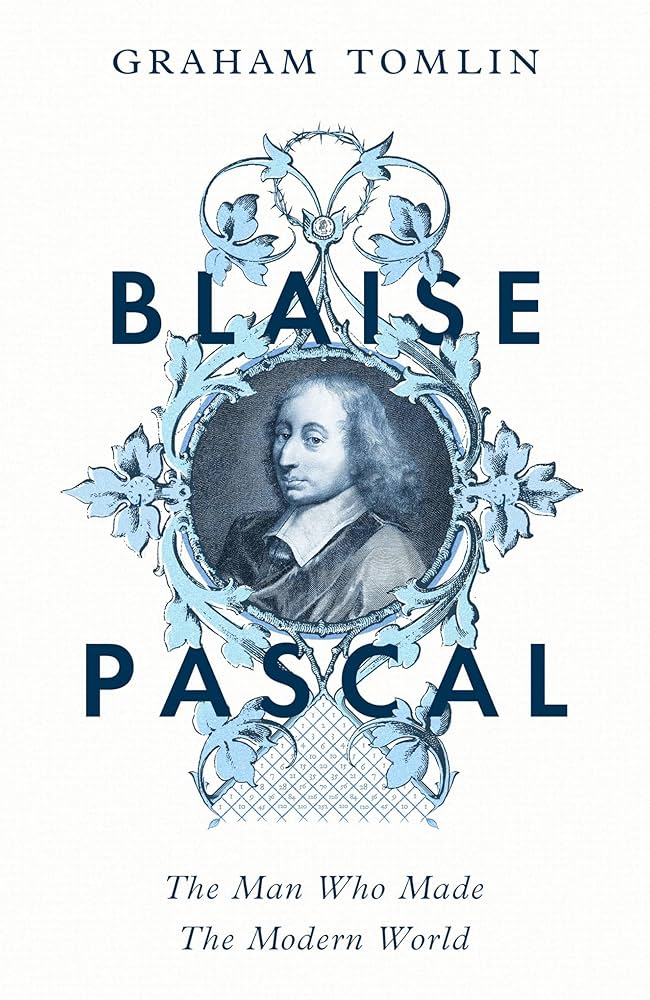
Graham Tomlin is the author of Blaise Pascal: The Man who Made the Modern World (Hodder).








Thanks so much for this refreshing piece. I wish more people wrote about how thoughtful Christianity can produce both progressive and conservative political thinking.
I need to read Montaigne one of these days. Eagleton, as I’m sure you know, was riffing on Yeats in “The Second Coming”:
The best lack all conviction, while the worst
Are full of passionate intensity.
Thank you for this, Tomlin! This resonates deeply with my own oscillation between left and right these days, and my slow realization that as a Christian I belong to neither, but rather to the crucified and risen Christ, the crux of it all!