Purity of heart is to will one thing. (Søren Kierkegaard)
I can’t remember exactly what sparked it. It was on the trading floor where I work, and I vaguely recall that the financial markets were choppy that day. But I don’t remember exactly what was said, or even who said it. It was one of my colleagues, and it went something like “Holy yield fluctuations, Batman!”
But I do remember that I knew, immediately, what I’d be doing that evening.
After dinner, I gathered my wife and two daughters, aged seven and three, into the living room and announced that we would be doing something important that night as a family, a ritual that had been passed down to me by my own father. Namely, we would be renting Batman — as in, the 1966 cinematic triumph starring Adam West.
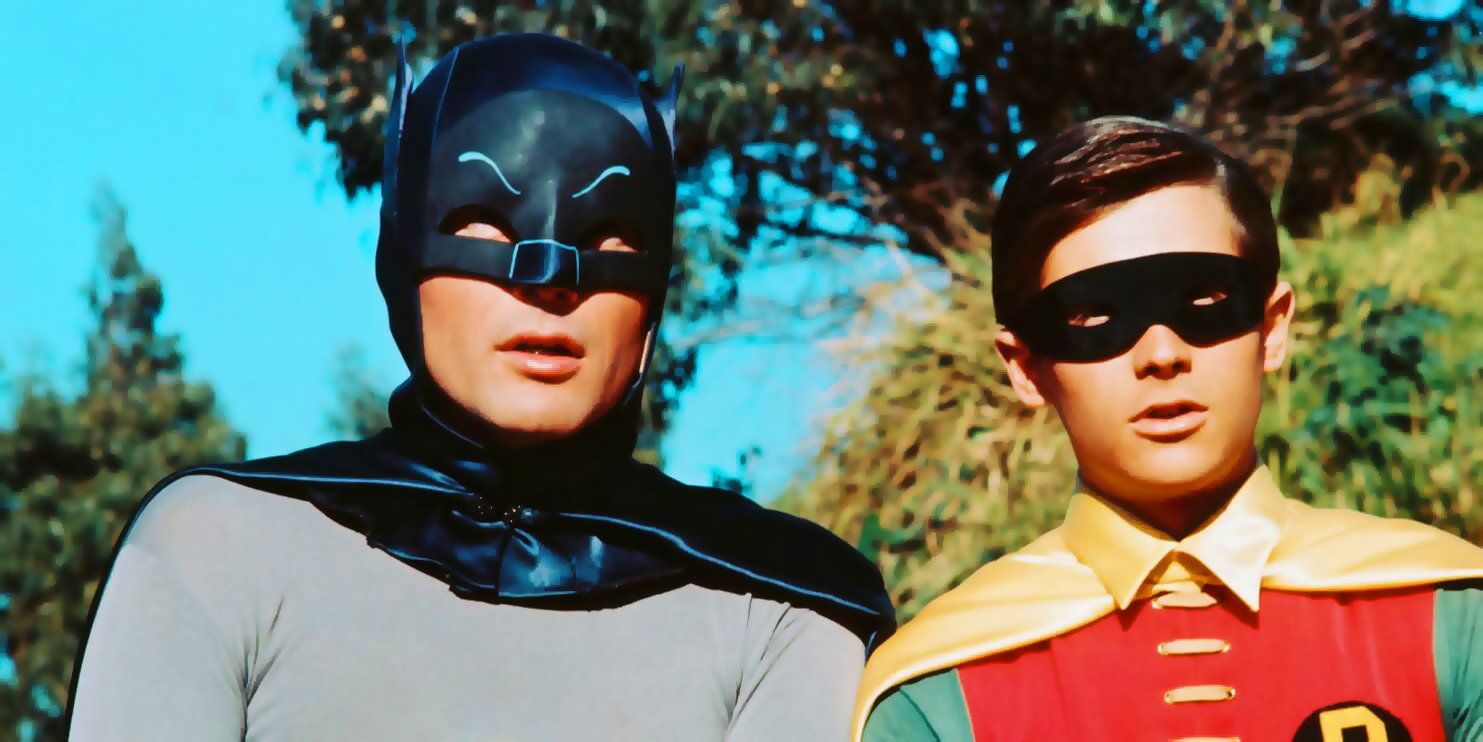
Batman, the mythos, is inherently paradoxical. On the one hand, Bruce Wayne’s backstory — having both parents murdered in front of his ten-year-old eyes — is about as dark as it gets. On the other hand, the concept of a grown man running around at night dressed like a bat and taking it upon himself to deliver rough justice to the bad guys is patently absurd. What interests me most about the mythos is how each successive writer tries to balance the tension between the tragic and the ridiculous.
Batman ’66, to say the least, leans enthusiastically towards the “ridiculous” side. I was only vaguely aware of this when I first watched the film as a boy. I remember being confused as to why the fate of the world depended on Batman and Robin rescuing the UN Security Council, portrayed in the film as a gaggle of men in culturally stereotypical outfits pontificating simultaneously and ineffectually in their own respective languages. But most of the rest of it checked out pretty well in my ten-year-old estimation.
Coming back to it in my mid-thirties, it took about five minutes of run-time for me to realize that this thing is glorious. Batman, being lowered from the Bat-Copter in preparation to board the villains’ ship, is promptly attacked by a shark,[1] which latches on to the Caped Crusader’s right leg. “Holy sardine!” exclaims Robin, who is piloting the Copter. Things look grim. But Batman is nothing if not a man prepared for any contingency. “Hand down the Shark Repellent Bat-Spray!” cries Batman, hoarse from the struggle. The boy wonder climbs down the ladder (presumably the Bat-Copter has an auto-bat-pilot function) and manages to deliver said spray to his beleaguered mentor. The shark is duly repelled, exploding upon falling back into the water. In the next scene, Batman deduces that the villains had lured him out over the ocean in order to attack him with a trained shark stuffed with high explosives.
“That shark was really pulling my leg,” concludes the Dark Knight, with the straightest face imaginable.
Unbelievably, this is not even the best scene of the movie. My daughters were smitten; my three-year-old announced, “I am Batman.” Clearly the next step was purchasing the first season of the TV show,[2] which we continue to watch as a family on Tuesdays and Fridays.
Batman ’66 is something, I suppose, that one is supposed to enjoy “ironically,” like yacht rock or Applebee’s. But my love for it is unaffected and, I hope, free from condescension. What I love most are the inspired performances by Adam West, who reportedly got the gig from ABC because he was the only candidate who could deliver the lines without cracking up. West never loses his gravitas. In one episode, Commissioner Gordon, astonished by Batman’s safe-cracking skills, longs to know how our intrepid hero had opened a locked vault in “three seconds flat.” By way of explanation, Batman holds up a circular device and says, “With my Three Seconds Flat Bat Vault Combination Unscrambler, Commissioner.” West delivers all of this with the quietly dignified air of a workman who takes justifiable pride in his tools.
More generally, West gives us a Batman who harbors no doubts about the basic goodness of his world (i.e., Gotham, here portrayed by bright, sunny Los Angeles) nor of his place within it. For Batman, Gotham’s institutions are just, its values noble and honorable. Crime really doesn’t pay, and the police, their somewhat questionable competence aside, really are looking out for the public. True, “tricky devils” like the Riddler or the Joker periodically emerge to wreak various kinds of havoc, but such villains are aberrations, not the products of a sick or faltering society. The Dark Knight works in broad daylight, his presence celebrated by the general public and uniformed police alike. It would never occur to this Batman that theming himself after a flying rodent and taking his teenaged ward into battle with equally costumed evildoers is, like, really weird.
Batman ’66, in other words, is a universe with no need of irony. Batman can give himself to his noble cause without reservation. Even though death, usually in ludicrous fashion, threatens him almost every episode, he will never wake up one day wondering if he really is a fool for doing what he does. His is not a heart divided between his passion for justice on the one hand and any impulse to safeguard his ego or public image on the other. Even while warring against crime, he is a man at peace with himself. He wills one thing.
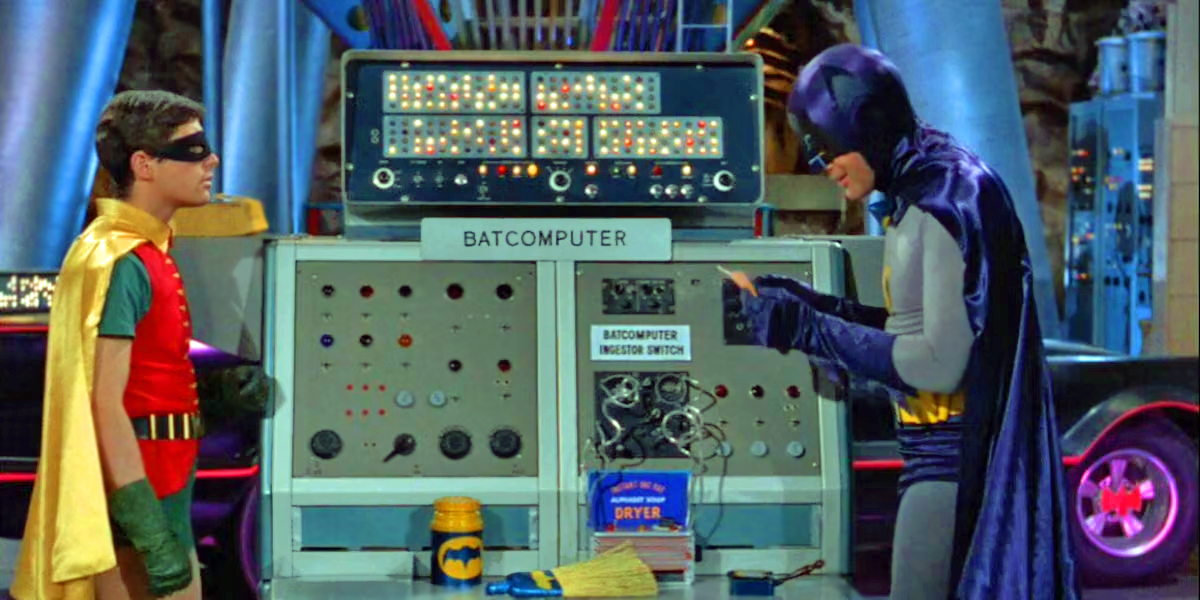
This is not the world that we inhabit. Nor, for that matter, is it the world of later incarnations of Batman. By the nineties, both Gotham and its greatest son had changed. To my mind, Batman: The Animated Series (1992–1995) comes closest to striking the right balance between the tragic and silly aspects of the mythos. [For a deep dive into the series, click here] Like ’66, the animated series knows how to have fun: there’s a Christmas special in which the Joker[3] subjects the dynamic duo to all manner of holiday-themed death traps, only to give “Batsy” a special Christmas present at the end. I won’t spoil the surprise.
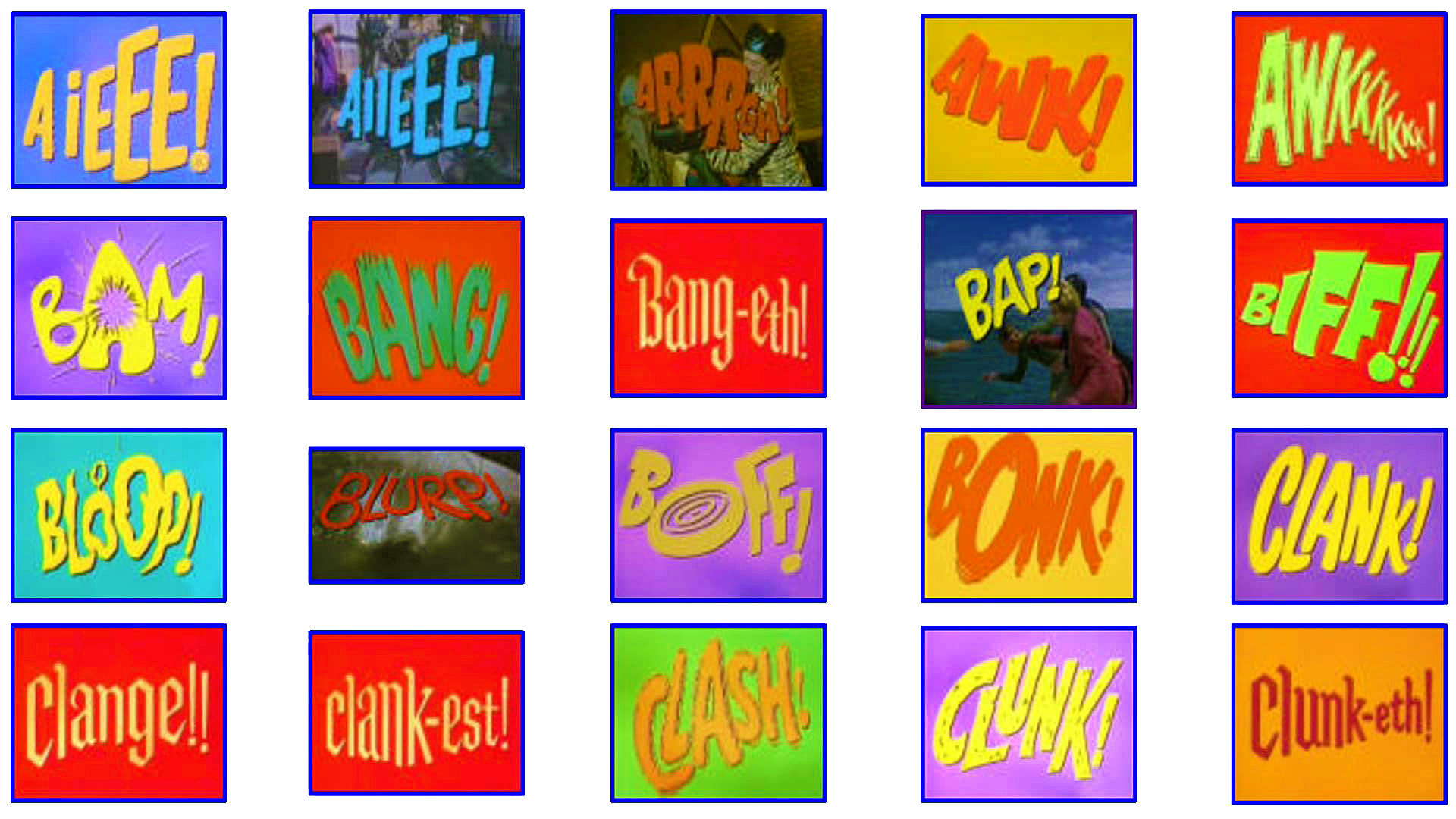
Unlike its predecessor, however, BTAS lets Bruce Wayne fight his doubts, which do not give way so easily to onomatopoeia-inducing fistfights. Perhaps the show’s greatest episode “I Am the Night” (1992) opens with the Dark Knight uncharacteristically slumped in his Batcave recliner. He confesses a sense of spiritual exhaustion to Alfred, the ever-loyal butler, showing him a newspaper headline announcing the recent release of the Penguin on a technicality. There is no reason to believe that his one-man war on crime has made Gotham any safer than when his parents were murdered on this very night all those years ago.
Things go from bad to worse. Caught up in grieving his parents, Batman is late for a sting operation against a dangerous gang of drug traffickers. Commissioner Gordon is subsequently hospitalized with life-threatening gunshot wounds. Batman, or rather Bruce Wayne, has reached a breaking point, isolating himself in the cave for days.
Presently, a concerned Dick Grayson (aka Robin) pays a visit. Bruce berates himself for failing Gordon. Grayson’s pleas that Bruce is being much too hard on himself fall on deaf ears. As the faltering Dark Knight explains, “Sooner or later, I’ll go down. It might be the Joker or Two-Face or just some punk who gets lucky. My decision. No regrets. But I can’t let anyone else pay for my mistakes.”
Things then take an existential turn. “When all is said and done, how much good have I accomplished?” Bruce muses. “They sell T-shirts of me! I’ve become a cliché! More good for the tourist trade than for the streets.” Batman, rather than ridding the city of crime, has become a local attraction whose profitability depends on the ongoing proliferation of that very crime. To some degree, Bruce has grasped the inherent absurdity of Batman, and he renounces it.
By the end of the episode, of course, Bruce has renounced his renunciation, discovering that his vocation can be sustained by the individual little victories he achieves. However absurd Batman may be, Batman cannot refuse his calling. His devotion is that of Camus, who, while recognizing the universe as fundamentally absurd, still held out the possibility of sainthood (without God), not through adherence to some moral code or ideology, but by fully giving oneself to others out of love. Batman knows that he will never win, that Gotham has always been corrupt and always will be, that he is probably a fool or perhaps even mentally unbalanced.[4] For all that, he goes back to work, at least for the moment, with no need to justify himself or to safeguard bits of his ego in pursuits other than his calling. He is again a whole man, a man who wills one thing.
To be fully human requires the internal integration that comes from a wholehearted commitment to some good, or really the Good. The Good is that which is worthy of ultimate devotion; that which connects and gives coherence to all the other multifarious goods that we pursue. It’s what keeps life from being a grab bag of unconnected ambitions and damage-control projects. In reality, though, my daily experience is one of being pulled in a hundred directions by external demands and internal desires. These appear to have no unifying center and often enough are contradictory. Life feels like it tends towards no great end.
This division of the heart is not so much a tragedy foisted upon me, a product of both unwillingness and inability to commit myself wholly to any one thing. I am no Bruce Wayne or Albert Camus. All of the usual suspects are to blame: boredom, inertia, distraction, fatigue. More than anything else, however, it’s the fear most people experience on the cusp of any great commitment: the fear that we will be let down and left with nothing — in short, that we will be exposed as fools. Better to diversify, to invest our hearts into this job, that institution, these relationships, while owing ultimate loyalty to none of them. If one of these goes down, we at least have something to fall back on. The lack of coherence is, we can sometimes convince ourselves, just part of being a grown-up.
And so we are caught seemingly forever in a tension between our need for ultimate commitment and our incapacity, or refusal, to so commit ourselves.
But there is a wrinkle in this story. Christianity claims (with a straight face) that the Good has in fact committed himself to us. We fear being found out as fools; but the Good willingly embraced foolishness for us and for our salvation. While we hedged our bets and played it safe, indeed, “while we were yet sinners, Christ died for us.”
Whether this can be believed intellectually is a topic for a different time. Here I can just say that being claimed by Christ (the pure of heart) even while my own heart is hopelessly divided feels like what I need most. It fits.
Towards the end of the 1966 Batman film, the Caped Crusader is preparing to rehydrate the members of the UN Security Council, who had been dehydrated into variously colored dust piles by the villains. This Batman, it turns out, is not yet the unbeliever he has become in more contemporary tales. “A solemn moment, gentlemen,” he declares, “One of dedication, and humble supplication.” Batman dedicates himself and his works to the one worthy of that devotion. Back in our world, our own devotion is usually frail, intermittent, and confused, but it is to one who has devoted himself, with his heart undivided, to us.
[1] This scene will, if nothing else, lead to a greater appreciation of the technical marvel Spielberg was able to pull off not a decade later in Jaws (1975).
[2] I mentioned this to my dad, who told me that when he was a kid, an adult in the neighborhood would announce, “Batman’s on!” All the neighborhood kids would immediately scramble inside. “I took it very seriously,” he said.
[3] As in Mark Hamill’s Joker, as in indisputably the best Joker. He’s alternately loony, crafty, genuinely funny, and downright terrifying.
[4] For a tale of Batman coming to terms with his own disturbed psychology, there is Grant Morrison and Dave McKean’s Arkham Asylum: A Serious House on Serious Earth (1989). It is impossible for me to imagine anything further removed in tone and tenor from the Batman of the 1960s. It is most emphatically not for children.