




You pray to win. But you often don’t.
The world of Wham! pop music, holiday earworms, and huge bows atop cars as Christmas presents is so last year. It is now the engrossing season of football. The other major sports are stuck in the midseason blahs, but the ultra-elites of college and professional football are in a series of death matches.
“Win and advance” is the order of the season, when the undefeated claim immortality and the losers become the fodder of pub trivia nights. There are no consolation prizes for those who fall short of their ultimate goal, while the winners enjoy trips to Disney World, ticker tape parades, and profitable endorsement deals.
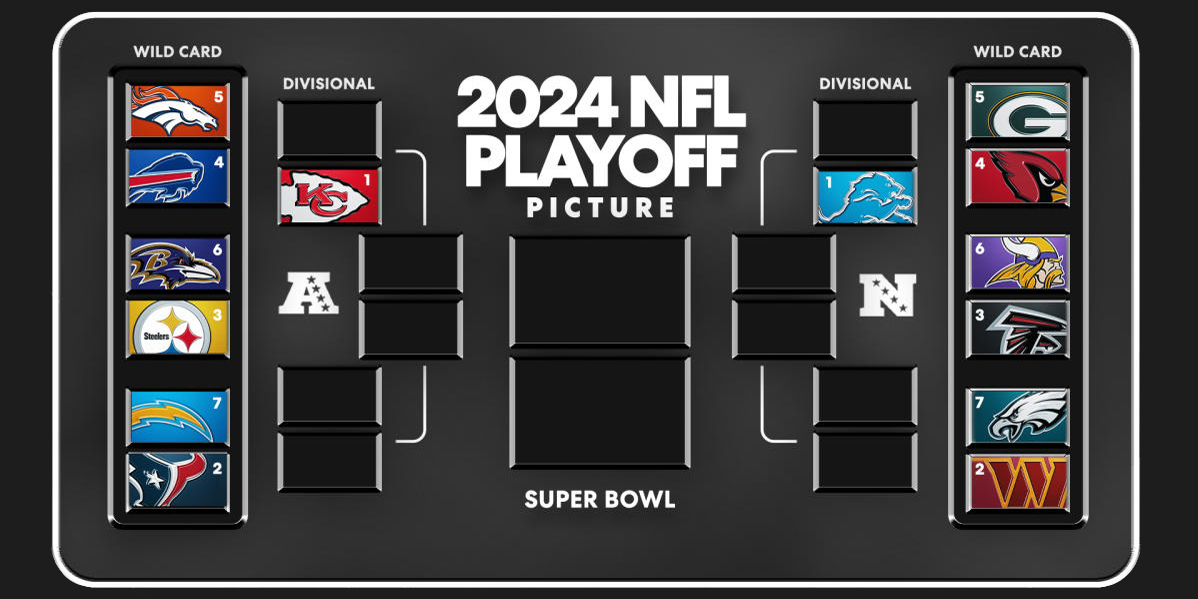
We love the drama of “win and advance.” There is definitive justice, the finality of win/lose — “Just win, baby” is the anti-Zen that makes sense. And that’s a problem. “Win” or “lose” happens in sports, most wars, and gambling. But part of us, part of me, expects justice. From life. From God. We might write the rulebook for sports, wars, and gambling, but in the game of life, God writes the rules for us. The problem arises when we apply the definitions of “win” and “lose” to contour with what we think — what we absolutely know to be justice. But we have nothing to do with the overall arc of events that shape our plans, hope, even faith. We use what God gave us, and we inevitably fall short of the immortality that we somehow seem to expect.
Our lives should be called “Lose and advance.”
Like any good drama, sports puts forward a vision for humanity that we then buy into. If that weren’t so, we, like the dissenters who abstained from Roman gladiatorial games, wouldn’t watch. But the “win and advance” spectacle and absolutist meritocracy coheres with our values and what we believe about ourselves. Because beyond the gridiron, we live by transaction. You do the work and you get the reward. You pay your bill and you get what you bought.
But any number of us invest money, love, and time into things that do not return the outcomes we hope for. Many realize what we went to school for was simply not what we ended up doing. Our “life’s passion” is not our nine-to-five. Our children cannot play T-Ball. Despite doing all the right things, our outcomes cannot be purchased by money or devotion. The simple judgment of “win and advance” informs our construction of justice, our assessment of the worth of our life’s work.
Jesus was pretty clear that the love of God renders our expectations folly. The essential communion with the God who made us should temper, even overcome, our myopic desire to know and control our lives. Prayer is supposed to be the window beyond ourselves into an unseen hand who does not play by our “win and advance” rules.
I find it almost impossible to pray beyond “Thanks” and “Sorry” — asking for a win or to avoid a loss are not what I can ask God for. Maybe that’s a problem, but I have no choice. We live here, now, in our land of constructed transactions, and God made everything, including us, so what we make is downstream of grace.
Maybe that is where Jesus is — living in the world we create in all its ignorant hope and fear. I think it is clear that Jesus did not want to die, but he also knew something we often forget: when we die, we advance, that it is the loser who knows the kingdom. But I am not good with death, or losing.
Losing hurts. Paying the dues to get what we want is our learned expectation, but when we lose what we expect, it’s somehow seen as inadequate. We fail even though we expect to have the outcome we aspire to, sometimes knowing that is what we deserve. “Deserving” means the fairness of justice. Fairness means that there is cosmic order in life, that there is a rule book that we should follow. But the rule books we use are the ones that we write, embodying the fairness we define. “Win and advance” is our rule book’s reason to exist.
But all the playoffs in life, all the hopes and work, can turn to dust — despite fairness, despite rule books, despite justice. It is simply true that the logically, rationally, empirically better team can lose. Our jobs end, our babies die, our love is rejected, and we die — for no good reason. Because we are not in control of what we are given: a gift is not a purchase.
As we age out, we see that life itself is not earned, it is given. We can put the full measure of all we are into the effort of getting what we value — sacrifice, labor, risk, hope, and beyond that, devotion and love. But faith in ourselves, in our ability to win and advance, fails to measure up to close scrutiny.
The only faith that never fails us is that God loves us. That faith is a fact that is both unprovable and irrefutable. Faith is not hope because our hopes often arise from what we can expect, what this world affords us: the Playoff Bracket of Achievement is what we give ourselves — not what we are given.
We are given life. We earn none of it: but we try so hard to do what we value that the losses that eradicate our hope can also extinguish the false faith that gave rise to those hopes. If we try to have faith in anything other than the source of the gift of life, we lose what we are given.
It’s often impossible to understand the playoffs in our lives, but outcomes are undeniable. And one of those outcomes is the truth that God loves you, and when you lose, you advance.





“Win and advance,” great piece of cultural commentary. Thank you.
I’ve always wondered why pro football players, when they lose, or drop a pass or fail to score a touchdown, not also point upward, acknowledging God? I guess God is with the winners. Well some gods are. But not ours. Thanks again.
There is a renewed focus of many college and professional architects og Faith. Before & After games, and often when a serious injury happens, groups of players from both teams hit their knees together…There is an ethic (I seem to have it) where failure is not living up to what God has given me, not given to me by God…for good or ill.
“I find it almost impossible to pray beyond “Thanks” and “Sorry”.” Thanks for that, Duo. The more I age, the more this holds true for me.