




Though the wrong seems oft so strong…
The Pine Ridge Indian Reservation in South Dakota is one of the world’s most desperate places. The green prairie is as beautiful as ever, undulating softly for miles to the horizon, like a deep comforter tucked over rows of little feet. But most of the people who live on the reservation are deeply impoverished and trapped inside abusive cycles that began generations ago.
Perversely, Pine Ridge and the other reservations were supposed to be the solution to decades of misunderstanding, provocation, and war between American settlers and Indians. Hypothetically, Indians could maintain autonomy and their way of life on these small areas of compromise. But the reservations failed. Lawmakers broke treaties and created a tarlike bureaucracy that warped the reservations into dysfunction, like fire hoses spraying lighter fluid. The problems began with historic injustices and have grown tall today. In 1890, just a few miles from Pine Ridge at Wounded Knee, the U.S. Army slaughtered more than 250 Lakota Indians, dumped their bodies in a mass grave, and awarded the Medal of Honor to 20 of its soldiers. Today, at the site, addicts sell trinkets for drug money. Only a heart of stone could visit the reservation and not ask “How can we fix this?”
In Pine Ridge, there is a small group of Christians who have dedicated their lives to serving the reservation in the town of Oglala and answering that question. Part of the group serves through the Oglala Re-creation and Worship Center, which connects its donors with countless community needs. The “Rec Center,” as it is known, takes the form of a large sheet-metal building between chaotic housing projects. Heidi Martin helps lead the Rec, particularly service teams like ours. The rest of the group serves at Oyate Hope Academy (OHA), a Christian school, where Wendell Gehman is head of school. The staff of the Rec and OHA are united by their love for the reservation, and they support each other’s work, so much so that OHA is fundraising for its own addition to the Rec’s facility. The group has very distinct ideas about what kind of help is actually helpful. They are discerning about who they invite to serve with them. They invited only six teams this year. Somehow Phileas Fogg made the cut.
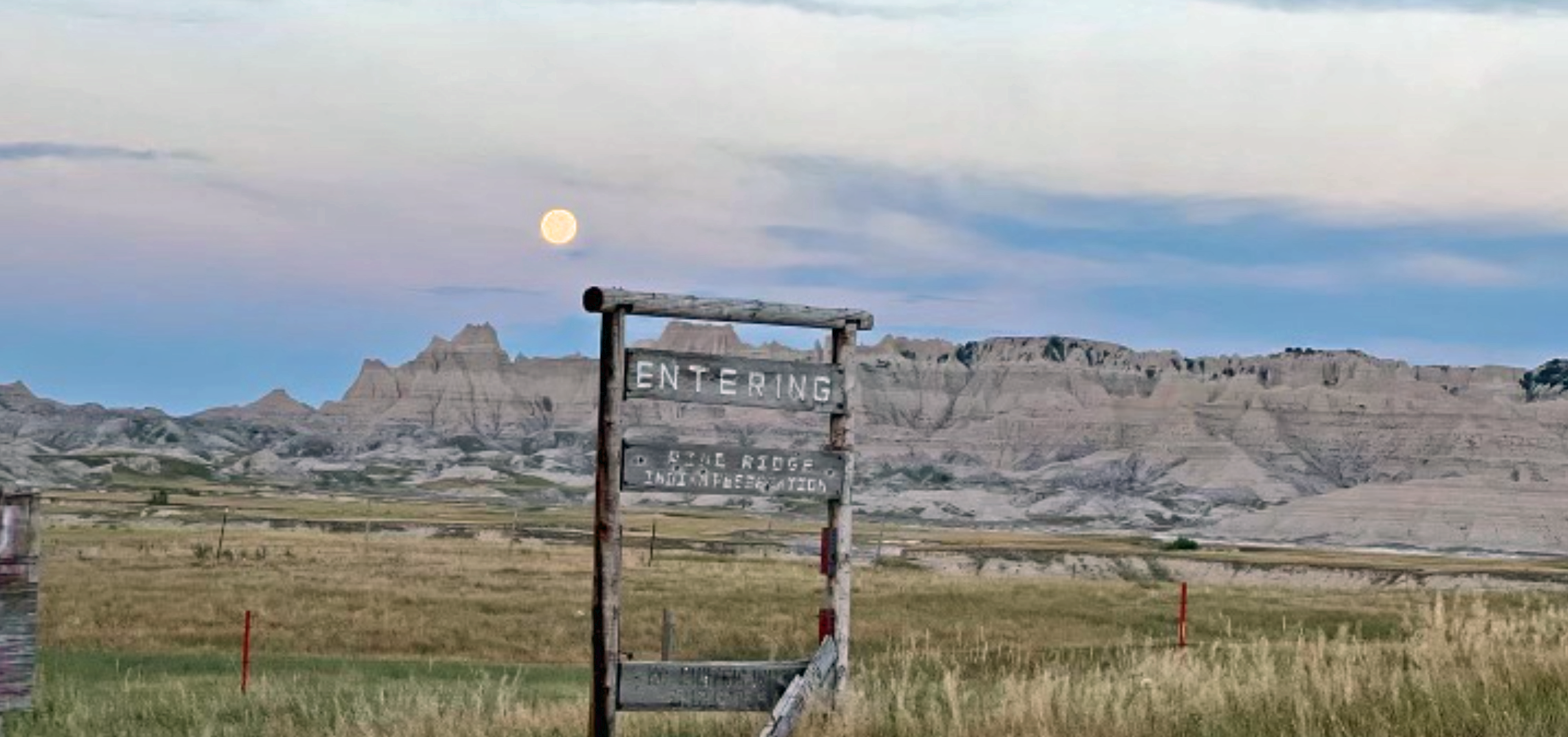
He shines in all that’s fair;
Highline Community Church member Kristin Johnson has driven from her home in Denver to serve at the reservation so many times that she’s lost count. She has been asking herself how to help, not fix, the reservation for years. In November, she and her sister, Allyson Whittle, committed to tackling this question and spending several hours on the phone each week to find an approach that would be truly helpful in such a complex place. They were determined to find a way of serving that would grip the pavement even in a quagmire of injustice and dysfunction.
Week after week, Kristin and Allyson used their education experience to distill what OHA’s students fundamentally needed. They settled on reading. Practically, students need to strengthen their reading to advance in other subjects. Spiritually, reading is a way that God, the Word Made Flesh, speaks to us, especially those in terrible surroundings — whether you’re Paul writing the prison epistles or a Lakota tribe member behind invisible reservation bars. “We are people of the word. This is a way that God has chosen to communicate with us. Reading is not just an earthly survival skill,” said Kristin. Having targeted reading, they designed an experience that would use every minute to strengthen this vital skill.
They created the idea of a three-day reading camp themed on Around the World in 80 Days. Volunteers would help the students with one-on-one tutoring and games and create as much excitement as possible for reading before the start of summer. It is difficult to find a short-term mission trip that truly helps, especially on the reservation, but Kristin’s proposal to Wendell and Heidi would, at the very least, give the staff a bit of a break and bring greater awareness to the far-away problems at Pine Ridge. They agreed that this first camp would be an experiment.
In the rustling grass I hear Him pass, He speaks to me everywhere.
In early May, eighteen volunteer reading guides, many of them from Highline’s more senior membership, loaded up vehicles with reading camp supplies. “Oh I love this! Look at all these busy bees,” said Kristin, pulling into the Highline church parking lot and seeing the activity. Months of her and Allyson’s planning had led to this moment. A reading professional, Gayle Ruder, designed the curriculum. Many volunteers completed orientations on the needs of the reservation and the strategy behind the camp. Three six-hour days were divided into 20-minute blocks. Sessions for reading, tutoring, and games were timed precisely in succession. Those with teaching experience or who had met a child in the past knew that much depended on the first day going well.
A few miles south of the Badlands, after hours of windswept grass, muddy lakes of black cattle, and infinite coal trains, we arrived at the Rec Center. The building has heavy metal doors and includes a sanctuary, kitchen, classrooms, showers, bunks for dozens, and a gymnasium. Like a castle keep or moon base, you can stay safe inside for a long time. In the busyness of the coming days, some members of our trip forgot to check on the sun. The surrounding property is filled with tiny purple wildflowers and is crisscrossed by walking paths used by the community. The Rec and school staff feel safe from the dysfunction all around them, but their highest priority is protecting their students. Ela Sutton, who moved to Pine Ridge from Germany (yes, really), said that she walks home alone: “On this property, God is king.” We unloaded everything into the castle and set up for camp.
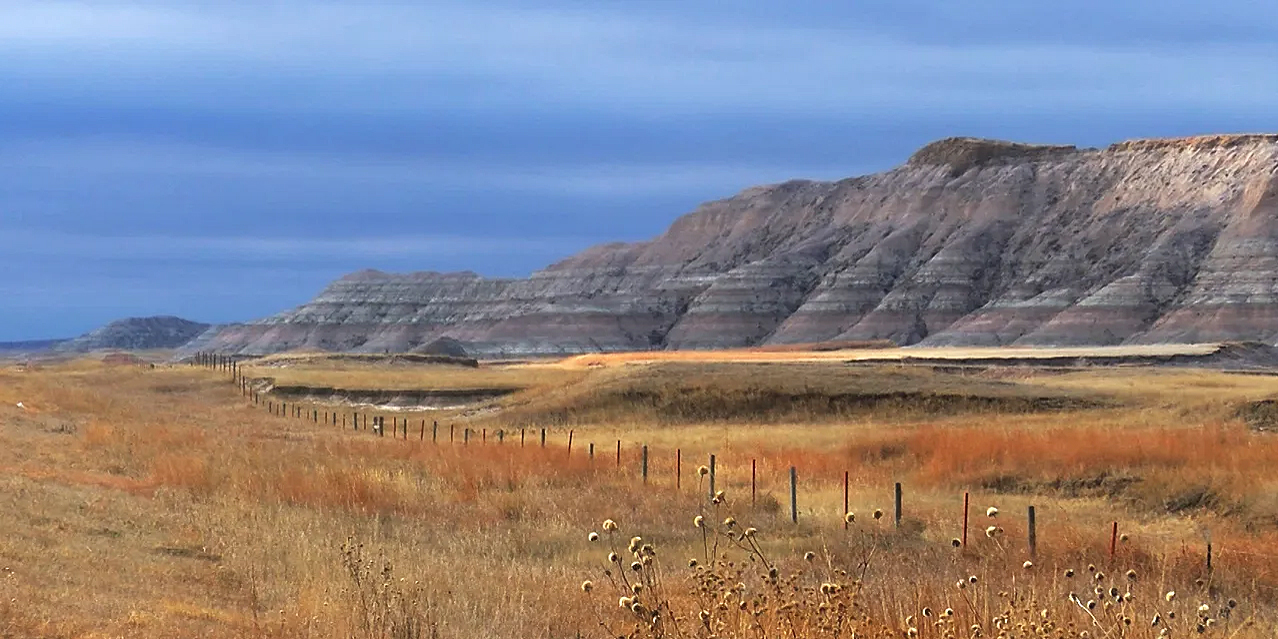
This is my Father’s world: The birds their carols raise,
The next day, Wendell takes a number of us on the bus to pick up his students. Birds tunefully call to one another in the early morning, making the reservation their symphony hall. OHA’s students are the Meadowlarks, and it’s easy to hear why. Most students live across the street, but Wendell picks them up to encourage attendance, honking at each home. Students run out and sit quietly, leaning away from the strange adults. Gradually, adults and students start to get to know each other. Everyone tries their best to say the right thing. “You have a saggy neck,” says one rascal to their guide. “How many people live in your house?” one adult asks, referring to the small, aging structure we were driving away from. Most of the time, seven is the reply. Allyson immediately receives an “I love you” drawing from one little girl. Everyone is curious about each other, but will they read?
The kids enter school, sit down to breakfast, and complete their Psalm recitation for Wendell. They are introduced to their guides, and we set off for the first reading of Jules Verne’s classic. From behind a curtain, two finely dressed gentlemen appear — Mr. Fogg and his butler Passepartout. These mustaches didn’t travel with us from Denver, but Kristin and Allyson were never around to tell us how they got to Oglala. They read the story of their adventure. There are what some might call jokes and accents. There is a real pocket watch and a huge map to keep track of the duo’s progress. Each guide and student is assigned a world city, and they bow to the crowd’s applause when it’s mentioned in the story. The children are very distractable, but each was given a small knapsack with a passport and stamp to encourage them to follow the story. The adults begin to realize what they had signed up for. This is 1) a work trip with 2) kids and 3) the key word was flexibility — three things that many guides finished with around the invention of the smartphone.
Everyone separates into pairs throughout the Rec Center. They focus on reading skills according to each child’s needs — Kristin completed an assessment with each student weeks ago. She is the busiest bee. Like a well-run classroom, the children are asked to work hard with white boards and sand trays for 20 minutes, and then everyone shifts to small games, hymn and Bible verse memorization, or large physical activities in the gymnasium. It is clear that the students live hard lives. Some show signs of fetal alcohol syndrome. Others are painfully withdrawn. One girl has a smile that could clear a rainstorm but broke down in tears at least once a day. But there is also enthusiasm and tenacity. Huge games earn chaotic, echoing shouts of joy. We use a large colorful parachute to help students practice their letters. Later in the week, the obstacle course (“around the gym in 80 seconds”) became the absolute favorite. Students cheered each other on as they speedily packed a carpet bag and walked on all fours with Passepartout’s slippers. Everyone did the course twice. When the first day ended, the children were ready for more. The adults were exhausted.
The first day was a success. We were told to expect some students to not return, but every student did. The next two days were more extreme versions of the same, with more sweetness and success, and more behavioral challenges and frayed emotions. The school’s most withdrawn student amazed her teachers by coming out of her shell and running the obstacle course with a smile. Some guides suffered disrespect. The boys were especially good at learning-by-doing one of the week’s vocabulary words: commotion. The adults became more and more in awe of the Rec team. “Jesus demonstrated passion and intensity by living among us,” said Eric, explaining his decision to work on the reservation. “It’s a very difficult place to live, but God has given me what I need. I wouldn’t want to be anywhere else,” said Jen, a teacher. One of the goals of the trip came into focus as a very worthwhile and tangible objective — giving the staff a break.
All nature sings, and round me rings; The music of the spheres.
On the last day, the students performed the hymn and verse that they memorized. A small audience of parents and staff listened as the children delivered “This is My Father’s World” and Psalm 24:1. The reading camp seemed to finish well, but whether or not it would ever be repeated depended on the teachers, the students, and the community.
The adults took time to rest, charge their medical devices, and reflect on the trip. Most would agree with Jim Vander Kamp if they had to describe the trip in one word: overwhelming. But Janet Gilbert spoke for others when she said, “I expected to be down and oppressed and found the opposite. I was lifted up by what I saw here.” The teachers had been given a break, although they certainly helped throughout the camp. The guides did see some progress in reading. Both the adults and the children learned from one another. “Don’t we all?” was the most helpful frame that Wendell handed those of us who were naive about the reservation and the realities of poverty. Don’t we all want attention? Aren’t we all self-destructive and defiant? The reading camp did not fix the reservation, but it did provide some help and hopefully reflected the One who fixes all of us. The school and the Rec agreed. They asked that we do another reading camp next school year.
“There is no solution except Jesus,” said Rec Center pastor Eric Sutton. “We’ve seen solutions come and go. But one day when the story is written, it won’t be a church or a government program that gets the credit. Jesus will get the credit.” The other staff agreed. “The Lord has us here for a reason,” said Heidi, “and it’s to show his light. The Rec is here to bring Jesus to this place. What people do with that is up to them.”
Without Jesus, there is no reason to think that life on the reservation will change anytime soon. Later that month, the staff attended the funeral of a murdered young man that grew up spending time at the Rec Center. But anyone who visits can see that there is more to the reservation than poverty and shameful history. OHA is building for the future. There are people serving on the reservation out of love. And there are children who “declare their Maker’s praise” as well as anyone. So “This is my Father’s world: Why should my heart be sad? The Lord is King: let the heavens ring!”








I teach HS Special Education on MN poorest, highest crime, drug riddled reservation. All of my students not only have physical, emotional, and intellectual disabilities but they have “capital T” Trauma to boot. Any conscientious person that visits here goes through all the phases of grief; disbelief, anger at the system, sadness for the community, and finally, some limited imperfect form of acceptance. However, I have learned to approach the community the same ‘John 9’ way I run my classroom:
“”As they went along, tyhe saw a community wounded since birth. His disciples asked him, “Rabbi, who sinned, the white settlers or the Elders, that this community is broken?” “Neither the white man nor the Elders sinned,” said Jesus, “but this happened so that the work of God might be displayed here.””
Knowing this, I become a fellow sufferer and participant in Jesus; the only solution.
Thank you for reading and sharing. Having done a little bit of teaching in the past, I love this thought. Thank you for the work you are doing in special education on the reservation.
Thank you for this piece, Grant! It was a great read. You captured the complexity, brokenness, and beauty of Pine Ridge with honesty and hope. Grateful for this writing – and for the reminder of the hope that exists in Jesus.