Here at Mockingbird we tend to be more Wham! than Wagner, but let’s step out of our comfort zone, shall we, to make a very Mockingbird point in a slightly unusual way.
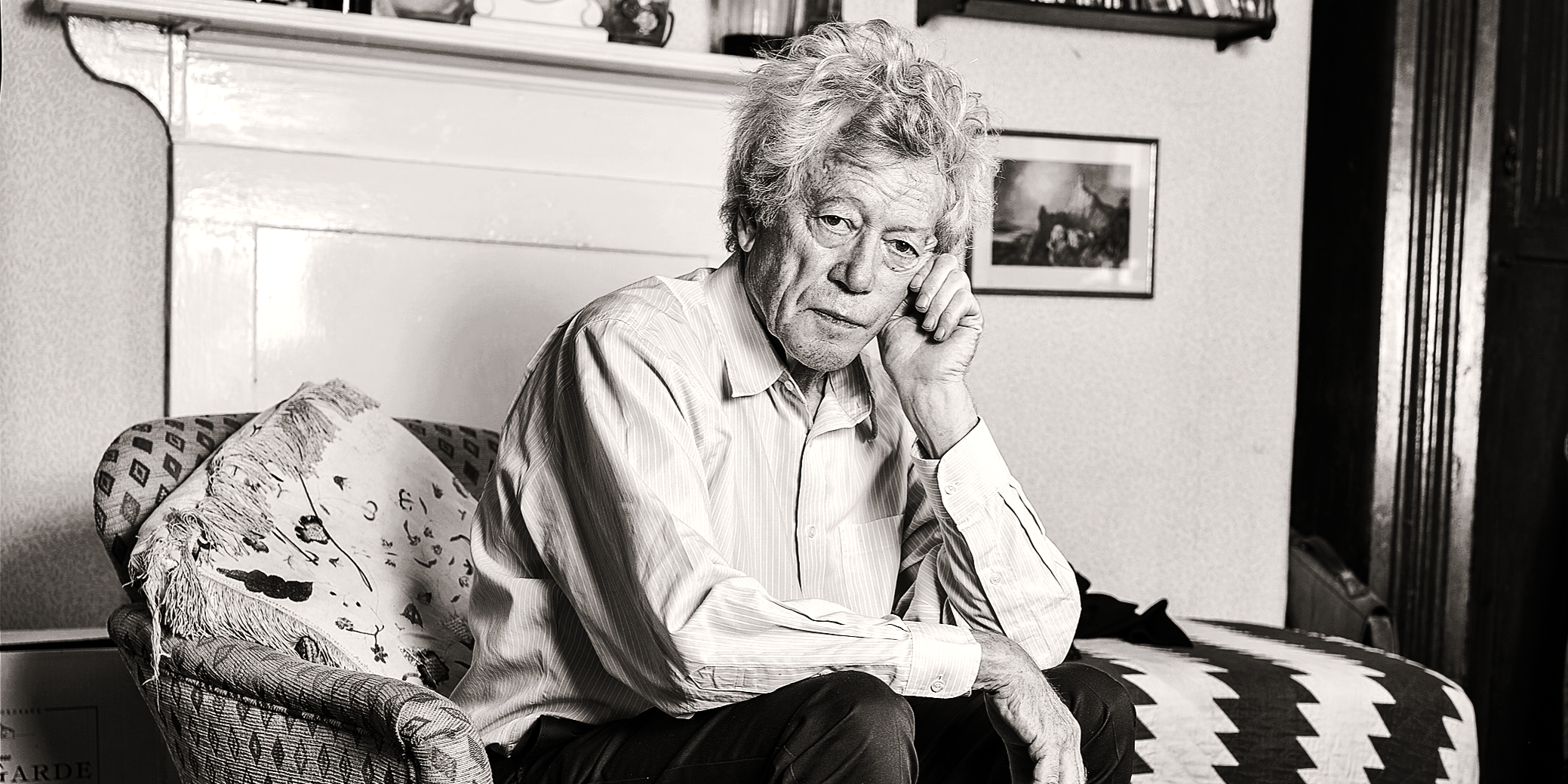
Roger Scruton (1944–2020) was an English philosopher, a social critic, journalist, musician, and defender of conservatism, and a man with a very complicated relationship to the Christian faith. He regularly attended church, and even played the organ at his parish in Wiltshire, but after joining that community he wrote, “I was welcomed home at last by my tribal religion – the religion of the English, who don’t believe a word of it.” Since writing those words, Scruton has at times seemed to come closer to believing at least some words of it, and who knows where he came to at the end? We can but hope.
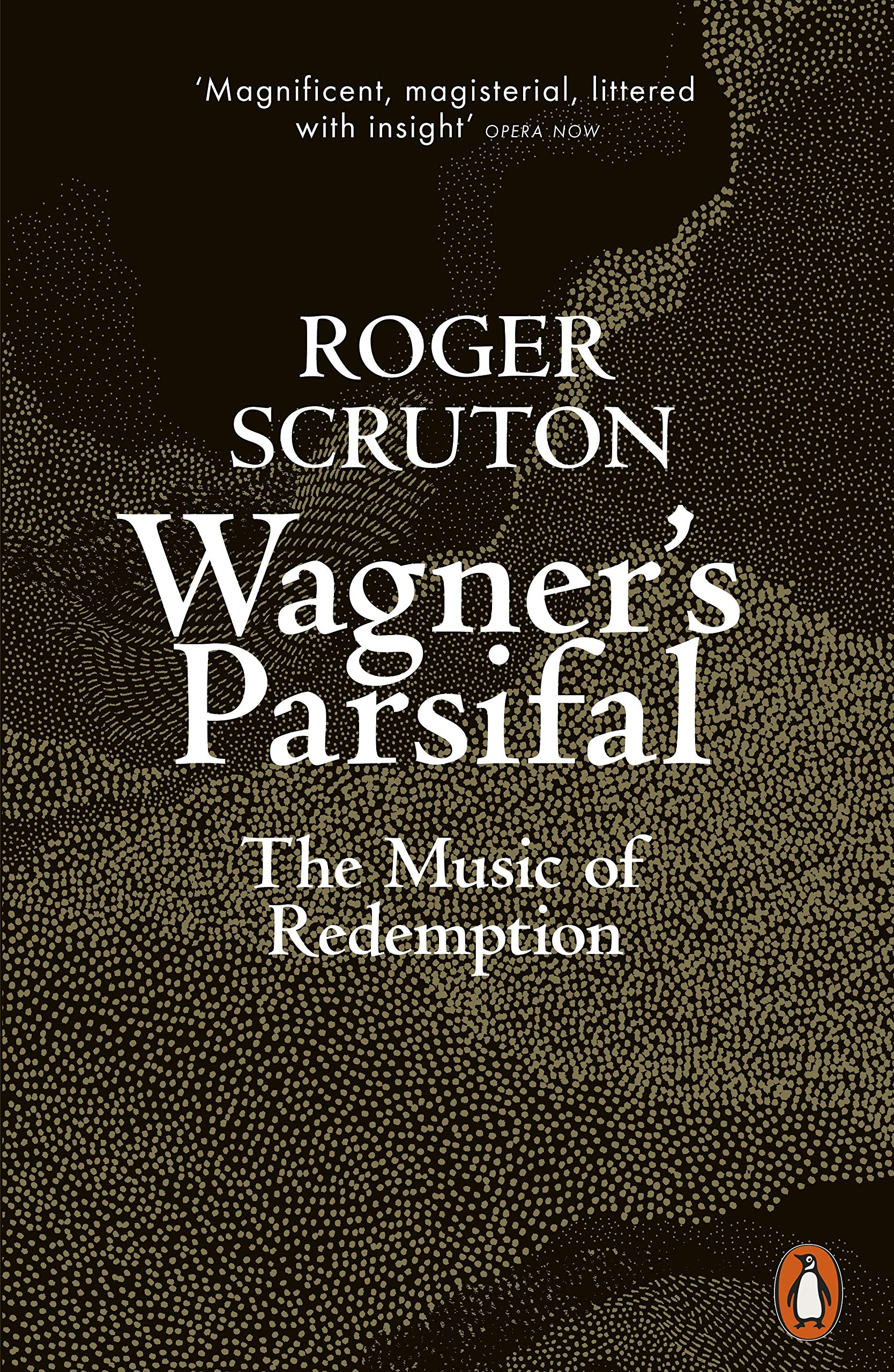
But his final book, a close reading (textual and musical) of Richard Wagner’s opera Parsifal, is not encouraging in this regard. The book often sounds as if it’s meant to be Scruton’s intellectual last will and testament — he was dying of cancer as he wrote it — but it’s not easy to read the key terms of the will clearly. In any event, at one key juncture of the story there’s a fascinating juxtaposition I want to call attention to. The first point of it is a detailed analysis of the last scene of Act I, in which the knights of the Grail celebrate Holy Communion.
By this stage in his book, Scruton has repeatedly (and rightly!) insisted that Wagner was not a Christian, and that the ritual life practiced in his musical drama is religious, but not in a way that involves God. “The religion of Monsalvat” — the castle of the Knights — “is not based on the promise of another world. It is an invitation to live differently in this world, and so to find a redemption through our own efforts, and without the help of a God.”
Having described the Communion scene, Scruton returns to this point:
Wagner regarded the concept of the sacred as indispensable to human relations. But he also believed that it is we who render things sacred, and that no God has a part in it. A central theme of Parsifal therefore, is the way in which we sanctify (‘make sacred’) what most concerns us, and how this making sacred is a collective achievement, which cannot easily be rectified when something goes wrong. … The music conveys the complete surrender of the participant’s being to the ritual, while carrying a burden of suffering implanted in the notes. It shows us why the knights, observing their ruined king, cannot simply conclude that it would be better to put a stop to Holy Communion, to dissolve the Order, and to bury the Grail in some place where it can do no harm. A community that has been made sacred has undergone an existential change, from which there is no turning back. There is no alternative for the Grail knights but to rescue the missing relic from the profane hands that pollute it, while renewing the sanctity of their Order as best they can.
Thus it is not God who renews the sanctity of their Order, but the knights themselves; it is not Jesus Christ who is the sacrificial victim, but rather the “ruined king” Amfortas. The knights are working out their salvation with fear and trembling — but, in contrast to the Apostle Paul’s picture of things, there is no God to work in them both to will and to do. It’s just them.
And now to the second point of the juxtaposition. As Act I gives way to Act II, the scene shifts to the enchanted garden of the wicked sorcerer Klingsor, the primary antagonist of the drama. Here’s how Scruton marks that transition:
Religion tells us that we do not have power over the world, and that we must learn to accept our limitations and to recognize that our salvation depends on the God who will rescue us. When we pray we do not command the world to obey us; on the contrary, we humbly acknowledge our lack of power, and ask God to intervene on our behalf. Prayer is a recognition of our weakness, and a resolve at the same time to deserve God’s help.
In this respect prayers are the very opposite of spells. The one who casts a spell is assuming power over reality. He has no need of God since he is God: he is assuming the powers of the creator and subduing life and matter to his will. Magic, in this sense, is a kind of blasphemy, and when alchemy was condemned by the medieval Church it was as an attempt to dispense with God.
This is powerful and true, but … if it is true, then do the Grail knights of the previous scene “pray?” Do they practice “religion” (as defined by Scruton) at all? I think not: after all, if “it is we who render things sacred, and … no God has a part in it,” then the Communion rite of the Grail knights can scarcely be one in which they “recognize that … salvation depends on the God who will rescue” them. They are rescuing themselves. They are not uttering prayers but rather casting spells — even if the spells are motivated by the desire for good rather than (as with Klingsor) the desire to hurt and destroy.
I often tell my students that whether Christianity is true or not, it is the most unnatural religion in the world. Even a cursory study of the world’s religions will show how obsessed humans are with finding some way to (a) gain the favor of the gods, or transhuman powers of any kind, and/or (b) avert their wrath. Religious seeking is almost always about these two universal desires: to get help and to avert trouble. But in Christianity it is God who comes to seek and save the lost (Lk 19:10); it is God who reckons with His own wrath, himself making propitiation for our sins, and not for ours only but also for the sins of the whole world (1 Jn 2:2). The standard — or rather the obsessive — practices of homo religiosus have no place here. In Jesus Christ, the Christian gospel says, God has done it all.
I say: This may be true or it may be false, but it is the Christian account of things, and it is very, very weird — so weird that it is easy, indeed natural, for us to fall back on the standard model of religion and turn our prayers into spells. How often do we think, perhaps in some unacknowledged place deep inside our minds and hearts, that when we come to church and say the appointed words and perform the correct actions, we are somehow getting Management to take our side?
Scruton is powerfully drawn to the resonant mythic power of the Communion rite, but wants to redescribe it in a way that puts human beings — homo religiosus — at the center of things. Near the end of his book he acknowledges that the idea of a Redeemer — one with the power to put the world right and put us right — “haunts our days, even if we have no knowledge of who he is, why he came, or whence he has departed.” We can escape this haunting “only when we understand … that we ourselves are the redeemer. We have been called not to explore the world, but to rescue it.” Scruton is confident that this is not just his view, but is also Wagner’s, and I think he’s correct about that. Wagner told his wife Cosima that his view had always been the same: “I do not believe in God; but I believe in godliness.” That is, he believed that human beings are both called to and capable of righteousness and purity. And presumably he meant Parsifal to embody this belief.
But I am not sure it does.
The two crucial events of the opera come at the end of Act II — when Parsifal, the holy fool, destroys the wicked sorcerer Klingsor — and at the end of the third and final act, when Parsifal heals Amfortas and replaces him on the throne. But he accomplishes each of these miracles by wielding the Holy Spear, the instrument with which Christ’s side was pierced.
In Act II, Klingsor, who had taken that spear from Amfortas and wounded him with it, flings it at Parsifal — but the young man catches it and, instead of attacking Klingsor with it, holds it out towards the wizard and makes the sign of the Cross with it — at which point Klingsor and his castle vanish, and his enchanted garden withers.
And at the very end, the spear which had wounded Amfortas is the instrument by which his wound is closed, after which Parsifal ascends to the throne as the new king. The Holy Grail now appears — it had been hidden — and a white dove hovers over Parsifal as he sits on the throne. The knights in chorus cry out: “Erlösung dem Erlöser!” — that is, “The Redeemer Redeemed!” But redeemed by what … or by whom?
One of the most noteworthy elements of Tolkien’s The Lord of the Rings — a work more deeply indebted to Wagner than Tolkien ever admitted — is a certain reticence about the Powers at work in Middle-Earth. In the novel’s second chapter, Gandalf says to Frodo, in the finding of the One Ring by Bilbo “there was something else at work, beyond any design of the Ring-maker. I can put it no plainer than by saying that Bilbo was meant to find the Ring, and not by its maker.” A little later, Elrond tells the visitors to his house that they must find a solution to the problem posed by the Ring, because “That is the purpose for which you are called hither. Called, I say, though I have not called you to me, strangers from distant lands. You have come and are here met, in this very nick of time, by chance as it may seem. Yet it is not so. Believe rather that it is so ordered that we, who sit here, and none others, must now find counsel for the peril of the world.”
All of which raises the question: “Meant” by whom? “Called” by whom? The passive voice dominates in these passages. Something or someone is at work for our good — but most of the characters in The Lord of the Rings don’t know who it is.
And it seems to me that the final minutes of Parsifal raise similar questions. Whatever Scruton may have thought, whatever Wagner himself may have thought about our own power to “render things sacred” and “rescue the world,” mysteries remain. Why can Parsifal do what he does only through the Holy Spear, the sign of the Cross, and, before all that, his recognition of his own sin? Why do the concluding transformative events of the opera happen on Good Friday, of all days — a point which is given great emphasis at the beginning of Act III? And, perhaps above all, who sent the white dove? Is Parsifal the real Power here, capable of healing and redemption? Or is he but the instrument of Something or Someone infinitely greater? That question might very well “haunt the days” of any would-be self-redeemer. Stealing from another work concerned with such mysteries, I would only say: There are more things in heaven and earth, homo religiosus, than are dreamt of in your philosophy. It’s time to set aside your spells and remember your prayers.