




What do Barbie, The Eras Tour, and this year’s Super Bowl all have in common? They have all been given the most coveted accolade of our age: the Instant Classic. Whether it’s a fashion item, a political speech or a hit song, there is an ever-present urge to declare something as an instant classic. The term implies that as soon as a thing came into the world, it achieved immortal status and will be remembered forever. Whenever we experience a cultural phenomenon like this, we often feel like a living part of history. We look forward to telling our children that we personally witnessed such a momentous occasion. There’s just one catch: the Instant Classic does not actually exist.
The truth is that it takes time for genuine genius to be seen for what it is. Consider some of the greatest artists who were ahead of their time. Vincent Van Gogh only sold one painting before he died. The Gettysburg Address received mixed reviews from the newspapers of its day. Citizen Kane was a flop at the box office and was snubbed for Best Picture. Both Nick Drake and Otis Redding died before they were ever widely acclaimed musicians. Art, it turns out, is less like a flash in the pan and more like a seed buried in the ground. It often has been long forgotten by the time it sprouts through the ground.
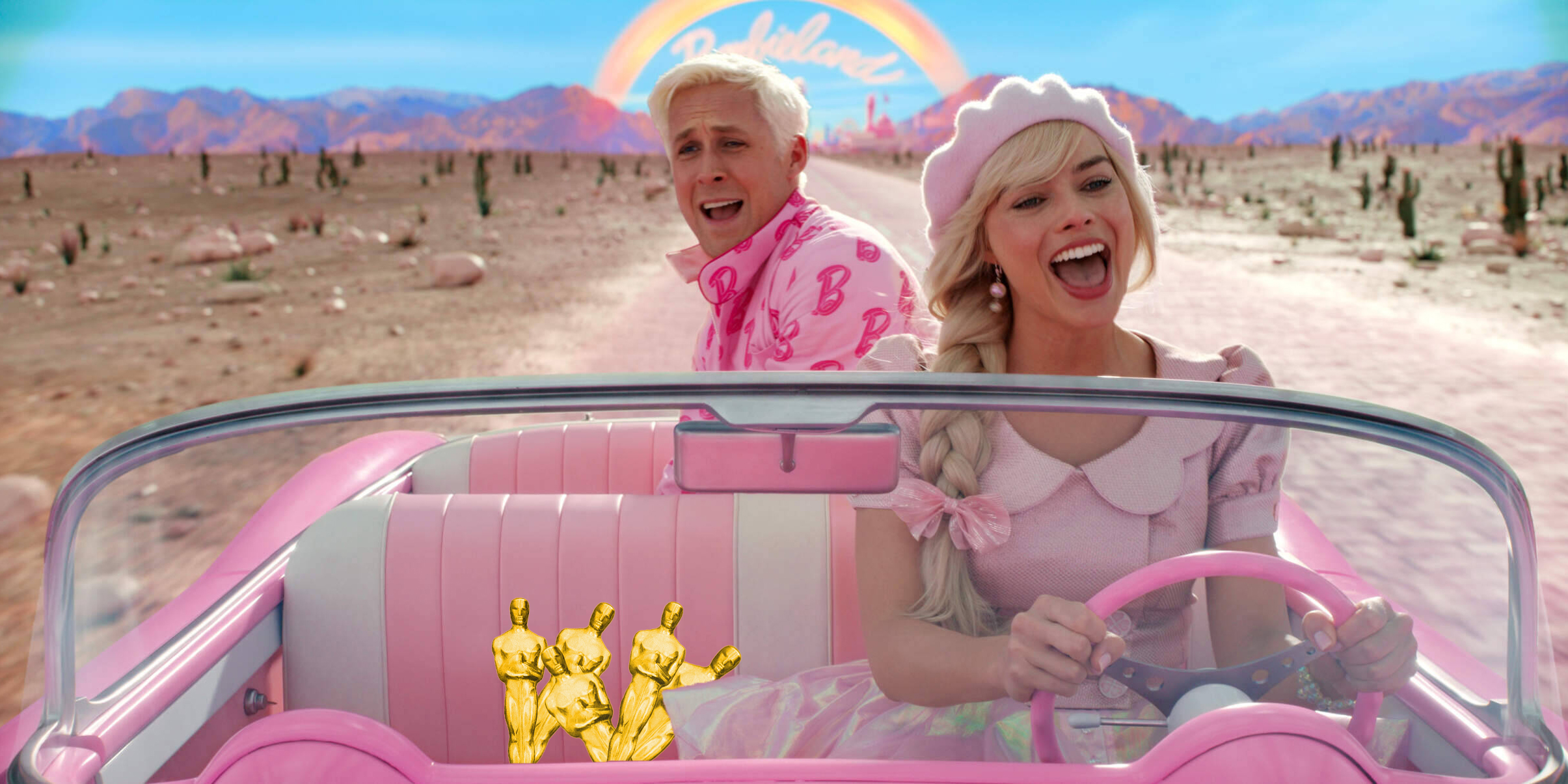
And yet, we think we know right now what will stand the test of time. This Sunday, awards will be doled out for whatever the Academy deemed superior cinema this past year. Certain films will achieve Hall of Fame status while others fall by the wayside. Acting careers will be catapulted to stardom while others will begin a slow fade into forgotten history. Even an acceptance speech will likely be deemed an instant classic. Unless, of course, we misjudge what is timely for what is timeless.
One could argue that awards and accolades should be doled out years after movies and music are released, not mere weeks or months. For instance, one of the biggest songs last year was 1988’s “Fast Car” by Tracy Chapman, a recurrence that even the savviest record label executives could not see coming. Likewise, some awards have been given out too hastily. In 1946, for example, the neurosurgeon António Egas Moniz was awarded the Nobel Peace Prize for inventing the lobotomy, a medical practice that hasn’t exactly aged well. It seems we are incapable of knowing the timelessness of something until enough time has sufficiently passed.
In our constant search for the Next Big Thing, the “now” will always take precedence over the not yet. And understandably so. No one wants the endless string of days to be utterly meaningless, awaiting some hoped-for future that may or may not come to pass, but to see the fruits of our labors and enjoy their spoils. As much as we might revere Vincent Van Gogh, few would actually want to be Vincent Van Gogh.
Even still, whether it’s self-driving cars, iPhones, houses, or foam pillows, the word “new” is so intertwined with the word “improved” that we have come to believe that these two things are synonymous. And yet, predictably, as soon as the latest fad begins to fade, we turn our hopes to its replacement. In a constant revolving door of consumption, we stand in line for the latest and greatest, watch the newest blockbusters, and cheer on the next G.O.A.T. with the hope that their legends will live forever. We are often blind when determining what has eternal value.
To add to the old, familiar trope, “You don’t know what you got until it’s gone,” we don’t really know what is truly good until it’s long gone.
So it goes with Christianity, the phenomenon that nobody saw coming. It’s no secret that the Church underwent a long gestation period before coming into full bloom. So much so that a recent article can argue that the Jesus of the Gospels never existed because no contemporary writers make any reference to him. “You’d think that a cult leader who drew crowds, inspired devoted followers and was executed on the order of a Roman governor would leave some indentation in contemporary records,” Gail Evans writes. Compared with Socrates, for example, whose pupils and contemporary critics wrote books and plays about him, Jesus hardly gets any mention from anyone from within his actual lifetime. Evans argues that, like Robin Hood, Jesus was a historical figure whose legend grew from a grain of sand into a world of its own.
In other words, Evans wants Jesus to be an instant classic. After all, how important could the Son of God have been if he didn’t even make the headlines while he was alive? Truly, if Jesus was at all the figure the Gospels claim him to be, people would have known it from the start.
But the life and death of Jesus is much more like a seed sown in the ground rather than the flash in the pan we might expect. He hardly made a splash during his own lifetime, at least one big enough to cause a respectable revolution. He was an ordinary Jew, the son of a common carpenter. Though Jesus’ ministry started with throngs of adoring crowds, with every step he took toward Jerusalem those crowds slowly dwindled until he was left hanging on a cross alone. It wasn’t until well after Jesus’ resurrection that anyone had an inkling about how momentous an event they were experiencing actually was. Consider the gospel the “Fast Car” of our salvation.
Even after the disciples had come and gone, it was hard to understand exactly what was going on. Who knew how the Scriptures were initially received when they were first read out loud? Yes, Paul’s letter to the Galatians was accepted into the canon, but there’s reason to believe that half the people who first heard Paul’s letter were really pissed off. Meanwhile, the Gospel of Thomas could have made a big splash at first, but its star would fade as quickly as it came. The Gospel of Mark might be beloved today, but nearly no one in the early Church bothered to cite it. The wheat and the weeds grow side by side for much longer than we’d like to believe before God does the sifting.
The same is true for us, of course. As we try to discern what God is doing in our own lives, we assume that certain things are instant classics: graduations, promotions, and new cars. And yet, the things that often make the most impact in our lives happen undercover, things that look like utter failure: the accident that stripped you of the illusion of control, the friend who came to visit you in jail. The present is, in fact, overflowing with significance, but its meaning can only be seen from the vantage point of eternity. Indeed, only God knows what is truly classic and what is not. We may not know in that very instant, but can trust that it will be revealed in due time.





This is just so good and true.