




The article is written by Colin Craig:
Our faith often feels as though it balances upon a tenuous tension between believing in God’s unwavering love for us and a fear that we need to work, show, and sacrifice in return and in thanks to God. Of course, this transactional relationship is us putting ourselves on the level of God, claiming that there is something we must do to earn our salvation. The church cultivates and guides our faith, but can often put conditional expectations upon us, whether intentionally or unintentionally. God gave up everything for you and, while that love is conferred upon you forever, you could at least try to be grateful. They’ll tell you that you could (and should) act and do good (and more precisely), BE good. Doing works of righteousness will glorify God to others and make you a holier person deserving of God’s grace.
Within this kind of thinking is where Shūsaku Endō’s seminal novel Silence enters the scene. Silence is a story of two Jesuit priests and missionaries named Sebastian Rodrigues and Francisco Garrpe who find themselves striving to preserve the Church and Christianity itself in early 17th-century Tokugawa-controlled Japan where Christianity is actively being purged. What they soon encounter, however, will shake the foundation of their faith in a way that is emblematic of human experience. Namely, that immense human suffering with no visible response from God, the silence of God, makes them doubt everything.
This is where the theological quandary of theodicy (the idea of justifying an all powerful and loving God in the face of the colossal amount of evil that exists in this world), wriggles its way into the picture. In the present state of the world (but really since the beginning and every year to come in the future), there is a cacophony of suffering from every individual, nation, and corner of the globe. It is suffocating in how it overwhelms our senses, minds, and hearts.
No wonder we can barely look it in the eye and acknowledge its grueling existence. Ignorance truly is bliss, but we can never revert back to our ignorant ways once we know. Sebastian and Garrpe are exposed to this suffering firsthand in Japan when two Christians are crucified where the ocean’s tide can reach them. They struggle to find the answers to “make sense” or “justify” such suffering in the context of God’s all-encompassing love:
What do I want to say? I myself do not quite understand. Only that today, when for the glory of God Mokichi and Ichizo moaned, suffered and died, I cannot bear the monotonous sound of the dark sea gnawing at the shore. Behind the depressing silence of this sea, the silence of God … the feeling that while men raise their voices in anguish God remains with folded arms, silent (Endō, 64).
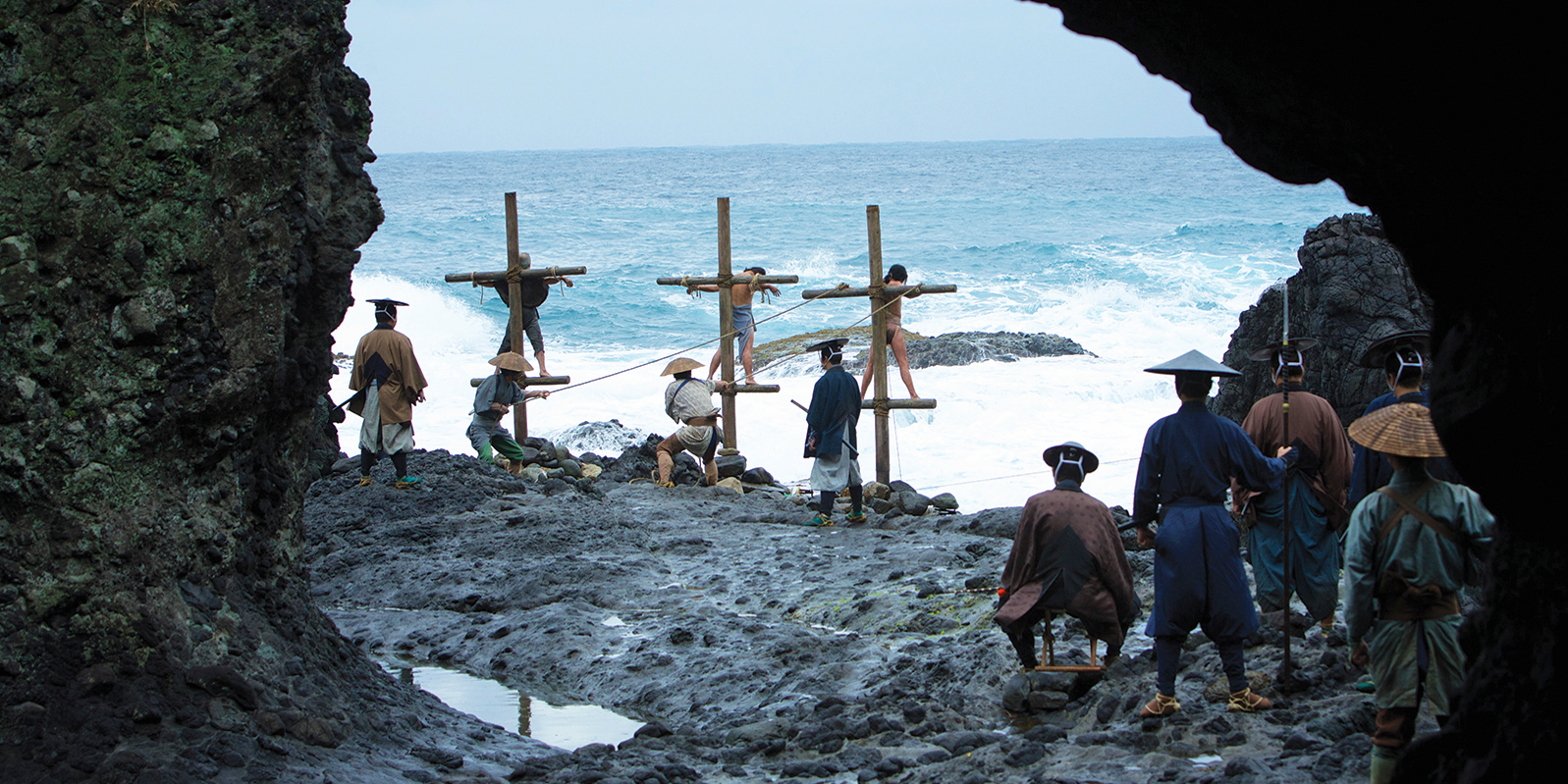
We ask God, why do you allow this? Why do you not answer their prayers, our prayers? Do you not care, do you not love “GOOD” people? Why let them die in such awful, terrible ways? Why allow their oppressors to lord over them, experiencing such success, such opulence of the earth? Theodicy is an understandable and very human topic of discussion when you think of the people lost in your own life or the lives of people close to you that seemed to be absolutely remarkable and wonderful human beings taken too soon and without reason.
People, though, are never as wonderful nor quite as bad as we make them out to be. If ever there was one person from the Bible that exemplified this contradictory relationship and whom I relate to most over all others, it is Judas Iscariot. Judas was always the one disciple I pitied the most in the Bible, someone who I could easily empathize with and relate to in his conflicting humanity, his depraved selfishness in betraying Jesus and overwhelming remorse for having done so. Judas is often treated as the black sheep, the exception, of the Christian life, instead of the rule that he truly represents.
In Silence, the “Judas” character was the cowardly Kichijirō, a Japanese Christian and drunkard who would renounce his faith again and again to save himself from the Tokugawa officials, leaving the “strong” Christians to their deadly fates. Yet, the very next day he would come back, groveling, begging for forgiveness and to confess his sins:
“Please hear my confession. If even the Apostate Paul has the power to hear confessions, please give me absolution for my sins … Father, I betrayed you. I trampled on the picture of Christ,” said Kichijirō with tears. “In this world are the strong and the weak. The strong never yield to torture, and they go to Paradise; but what about those, like myself, who are born weak, those who, when tortured and ordered to trample on the sacred image” (Endō, 202-203).
Kichijirō and Judas represent the often hypocritical nature of our relationship with God, our self-proclaimed devotion and our inevitable shortcomings to be fully loving and devoted toward God and other people. There is this gnawing sense that we should not and cannot be loved for our failure to fulfill the law. Therefore, we think, it must be that the “strong” get eternal life and the “weak” have their fates uncertain or condemned.
These questions and doubts as Christians can make one feel guilty, that we are blaspheming against God and Jesus whom we are eternally indebted in our minds. Many Christians come from middle-class backgrounds in which relative stability, privilege, and luxuries in life are often taken for granted. So, when we think of “real suffering” an immense feeling of shame surely follows.
We think to ourselves that we have not suffered “enough” to show that our faith to God is authentic, certainly not like Christians or people in other parts of the world who are murdered and persecuted for their beliefs, for who they are, and who lack their basic needs being met and provided for. If my faith were tested to the absolute brink, would it survive? Would I renounce God to save myself, or worse, would I want to renounce God in my suffocating suffering?
If we really answer that question, we know the answer is that we would, without a doubt. Of course, such thoughts are our minds working against us, as they often do. They make us believe that God will abandon us for these thoughts. Sebastian confronts them when he, continually expecting to be gloriously martyred for the sake of God and the Christian peasants of Japan, must watch those peasants that he had hoped to spare from pain being tortured and killed on his behalf. He questions his own intentions and even the point of becoming a martyr. It isn’t about God or even really saving people. For him, he wonders, is it not for personal sanctification and immortality:
Lord, do not abandon me anymore! Do not abandon me in this mysterious way. Is this prayer? For a long time I have believed that prayer is uttered to praise and glorify you; but when I speak to you it seems as though I only blaspheme. On the day of my death, too, will the world go relentlessly on its way, indifferent just as now? After I am murdered, will the cicadas sing and the flies whirl their wings inducing sleep? Do I want to be as heroic as that? And yet, am I looking for the true, hidden martyrdom or just for a glorious death? Is it that I want to be honored, to be prayed to, to be called a saint? (Shūsaku, 128).
What Sebastian comes to realize is that, despite being a priest (and in his mind a representative of God and Christianity), he too is no different from Kichijirō, no different from Judas. The truth is that we all are as low as them. Hypocrisy is the rule in our faith, never the exception. We grasp for control and the objective truth of this universe, of how to be a perfectly upstanding person, of how to “vindicate” God in light of all that seems contradictory when none of these are necessary or attainable. Jesus loves us regardless of whether we see ourselves as a sinner or a saint.
Jesus is there with us in our suffering, no matter how deafening the silence may seem. I can confidently and proudly say that I am Kichijirō. That I am Judas and all is forgiven and loved. That Christ came to save both the faithful and the apostate.








Great stuff Colin! Sounds like a great book for the Mockingbird book club!
Not only Kichijiro and Judas, but Peter and Paul too.
Silence is not absence. We are held in the silence. Learning and trusting this makes all the difference
This us a fascinating article and though I used to be very fond of digging into the depths intellectual discussions, sometimes. it’s best to just get back to the basics.
Faith is the Way to heaven and God’s good grace pays the fare. There’s a gospel song by Julie Miller called “All My Tears” that goes something like this, I don’t matter where you bury me, I’ll be home and I’ll be free
It don’t matter where I lay, all my sins be washed away ”
It is not through martyrdom or any other deeds or sacrifices that we make that we are saved; it is through simple faith.
just read this book and found your post. “I am Kichijiro” amen. “Christ came to save both the faithful and the apostate” amen. what a beautiful scene at the end where forgiveness is given. thanks for this