SPOILER ALERT for The Iron Claw
Growing up in the nineties I was familiar with names like The Rock, The Undertaker, the Hardy Boyz and of course, who could forget Rikishi? Wrestling was good family fun. We’d go see it live, eat some overpriced popcorn, rub sticky cotton candy fingers on my pants and then go home without a thought about the wrestlers themselves. In my youth I was certainly not concerned with the livelihood of athletes and as I grew older I fell into the trend of “wrestling is fake” and counting them as anything but athletes. So, naturally when The Iron Claw was announced and I saw the poster I gave it a brief glance and moved on with my life. Ignorance almost let what might be the best movie I saw this year slip right by me.
The von Erichs were a wrestling family through and through. About as unserious as I took wrestling, they took the opposite direction tenfold, maybe a hundred. I’m no wrestling historian and won’t pretend to be after a scroll through Wikipedia, but will place my cards on the table — most of my information is based on the film’s narrative which is inspired by the true story of the troubled family. The movie depicts the father, Fritz, as the driving force behind the family’s passion. (Or is it his passion?) The movie opens up with a flashback to the father having plans of becoming the heavyweight-champion belt holder. His wife clearly thinks they don’t have the financial positioning to pursue such a thing and the flashback fades as the wife prays to the Lord, the father dreams away and the sons stare up at their parents awaiting their future.
After jumping into the present, a voiceover from the now grown up son, Kevin, played by Zac Efron, narrates that their family is supposedly cursed. It’s been known for a long time and outsiders know it too: suffering follows them. (The movie briefly mentions tragedy began when the family lost Jackie, the first born seven-year-old who was electrocuted then drowned in a puddle). Tragic as the loss of the child was the movie continues to unfold revealing the curse may have more to do with their father than some spiritual cloud hanging over the family. The father is bent on the heavyweight-champion belt being in his family after it was “stolen” from him. This results in unbearable pressure put on his four boys which also pushes his wife numbingly to the sidelines while she leaves all issues between father and sons. Fritz is passing down more than his signature 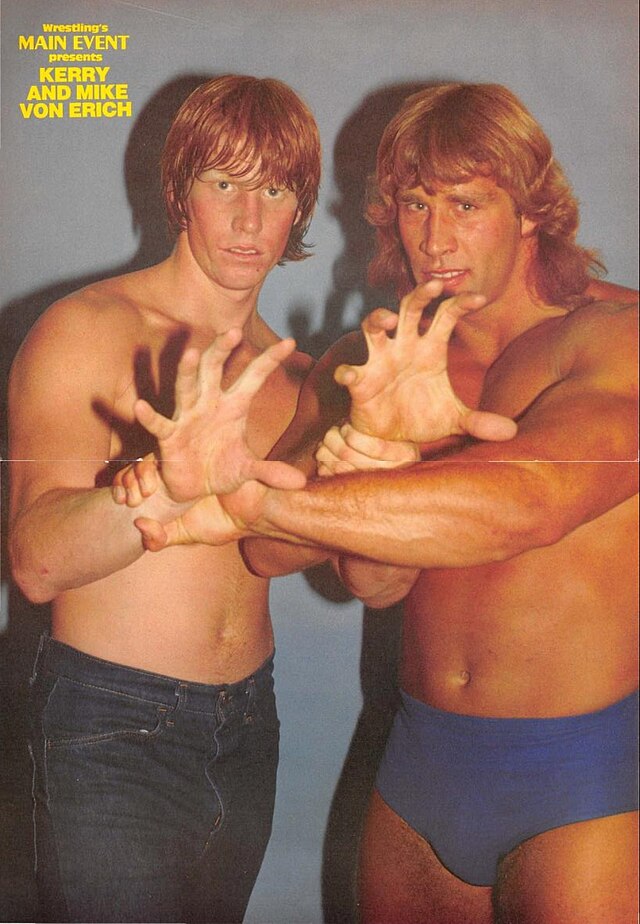 move, the Iron Claw, down to his children. Although, they bear a metaphorical similarity — the signature move is a clawed hand, fingers sprawled out as they grip around the opponent’s head pressing in forcefully. This weight of never-ending performance and the incessant need for success blinds the father to his uneasy yoke and heavy burden.
The weight of performance is nothing new to humanity. It permeates every realm of the human condition. We love competition. And competition is good in its rightful balanced order. There is beauty in developing a skill and growing in a specific arena of life, even when motivated by others striving alongside you. But when the law creeps in and demands perfection, we’re all bound to crumble under the weight of expected glory. Fritz Von Erich embodies the law in his far-reaching grasp on his children. In numerous scenes his overbearing presence is felt without his coinciding physical appearance. He’s shaped his children into little wrestling legalists who demand perfection from themselves.
One by one the weight of the law crushes the children. One overworks himself into his intestine bursting resulting in his death right before his titular fight. After telling his other boys to wipe their tears after the funeral for “the Lord decided it was time to take him” Fritz then quickly sees to replacing the son so the title can still be won. The law is not satisfied until death has spread to all. And so it spreads. Another son who was the least favorite, as stated by the father for his lack of accomplishments and wrestling finesse, takes his own life — but not before training himself into a coma in an attempt to please the lawgiver. The next son wins the belt for his father and in the emptiness and pool of trauma remaining, crashes his bike and loses his foot. Later, after miraculously making it back into wrestling through grit and excruciating pain, the father demands another title. The law isn’t pleased yet. This son takes his own life as well.
There is no “aha” moment for Fritz. The law doesn’t go away. But throughout the film there is another presence. One that, like the von Erich father, whose presence isn’t always on the screen but is certainly present throughout. The crucified Jesus. In the beginning of the film there’s a still shot of a classic dark walnut cross with a shiny gloss finish and a silver messiah pinned to it. Then the camera cuts to family pictures and medals, a brief overview of the von Erichs. The cross doesn’t make its next appearance until the second son’s funeral. It quietly hangs on the wall in the background while the mother looks at her black funeral dress she has to put back on as she weeps at the thought of people recognizing the dress from the last funeral. Finally, after the fourth son ends his life, we’re reminded of the cross as Kevin von Erich, the last remaining son, brings his brother’s limp body inside in an almost recreation of the image as he lay his dead brother on the shiny dark walnut dining table. Another innocent one suffering under the curse of the law.
While the movie isn’t explicitly about suffering — the director himself states the focus was on how the boys weren’t allowed to grieve and the lovely bond between them — it is certainly overwhelmingly present as the wet eyes in the theaters would prove. (It’s ironic the Lord’s name was invoked to prevent grieving and yet this same Lord wet his cheeks at the death of Lazarus, discarding our culture’s masculinity standards.) We all know suffering, even if it is nothing close to what the von Erichs experienced. The great theologian and prophet, Bonhoeffer, boldly claimed it was the mark of a true disciple. But even noted that one need not go seek suffering for your lot will find you itself.
The cross is there, right from the beginning, he has only got to pick it up: there is no need for him to go out and look for a cross for himself, no need for him deliberately to run after suffering. Jesus says that every Christian has his own cross waiting for him, a cross destined and appointed by God. Each must endure his allotted share of suffering and rejection. (The Cost of Discipleship, pg. 89)
And perhaps it works vice versa: suffering marks the true disciple but it also marks the true God. For somehow, in a mysterious way, we are united with Christ in our suffering. In the dark, troubling times we find a God alongside us, not far off and distant.
And yet, Christ’s suffering led to his glory and our redemption. We see this beautiful picture of glory after suffering, joy after mourning when the last son dies. There’s a stunning scene where he wakes up with a new glow about him. He’s walking outside and his previously amputated leg is healed. Internally he’s new as well, it’s obvious in his smile and gait. He’s in heaven now. He paddles down a river and finds his two other brothers on a dock as gleeful as him. Much to his surprise, his older brother Jackie is also present who he gets to meet for the first time. They all huddle, embracing one another and rejoicing together in love, peace and heavenly bliss. It’s a bold and shocking scene. God doesn’t solve the family’s sufferings and put an end to it? Why were four sons allowed to die so tragically? How could so much suffering lead to this awe-striking moment? It’s offensive in some senses. But it’s glorious in all the others. The director had this to say about the scene:
“It’s a way to reunite the brothers and have them in a pure state where they can be with each other in a way that they weren’t maybe allowed to be in life.”
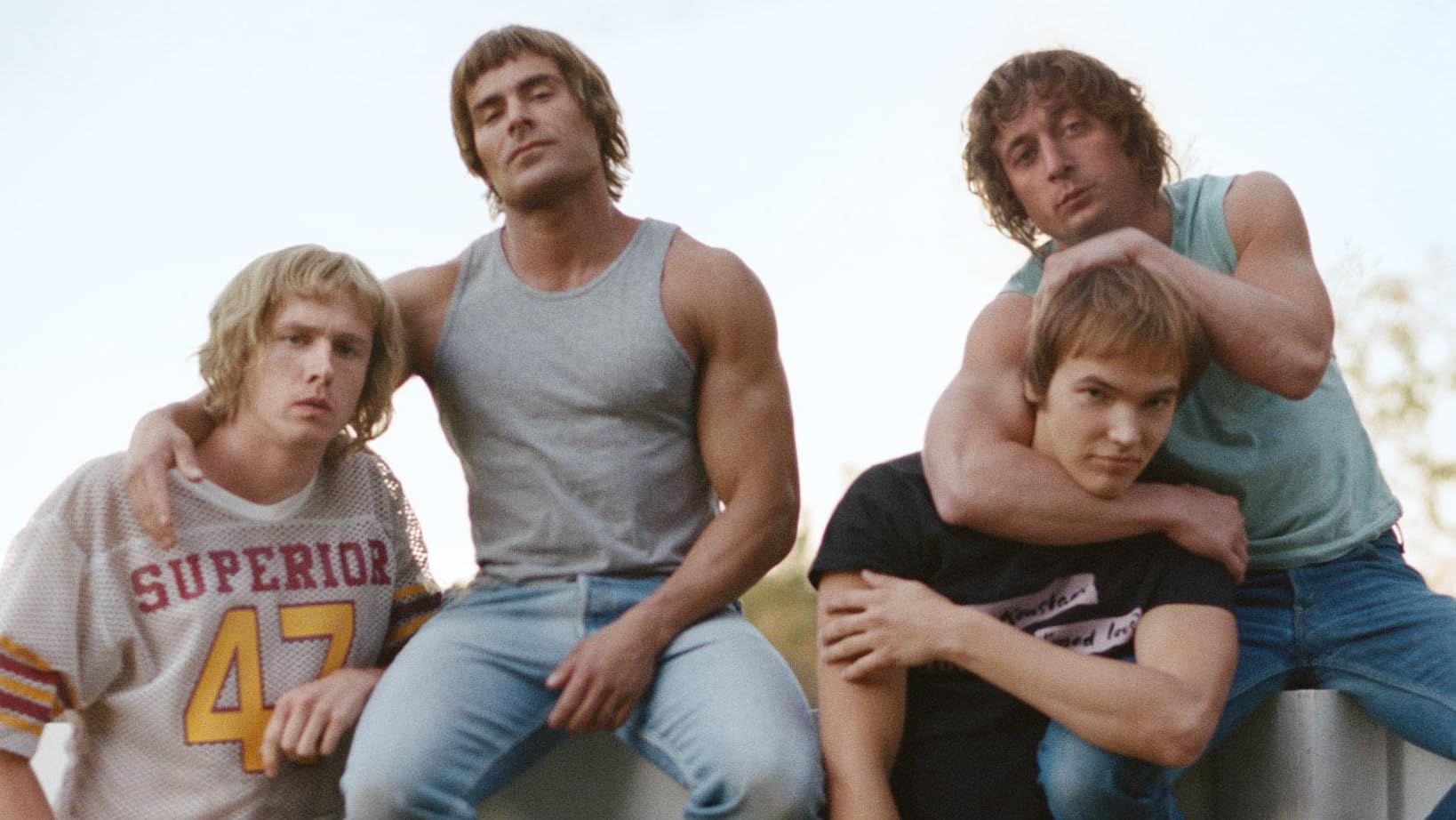
The toll of suffering also leads to redemption for the last son, Kevin. The final scene shows him with eyes full of tears as he watches his two sons play outside. They ask why he’s crying and he apologizes and says he shouldn’t cry for men don’t cry, at least that’s what his father taught him. They gently correct him and become a salve for his years of brokenness. A new lineage has been born in the midst of suffering. Generational curses broken. On the other hand, Fritz ends his story by realizing his wife has postponed making him dinner so she can paint, a passion she’d long ago put to the side but reignited since the law has no hold on her anymore. The last we see of Fritz is a lonely shot of him watching her paint, slightly baffled with no one left under his rule. The curse of the iron claw is no more.
Suffering takes numerous shapes and forms, affecting everyone. At times it’s from our own hand. We make choices which result in their respective poor repercussions. Other times the world afflicts us in its own broken ways. Then there’s the people around us who afflict us, often times our own family. But there is something unique about the suffering of the innocent. And there is no greater example of this than the incarnate God in Jesus, beaten and bloodied for the sake of the broken world. The ultimate innocence afflicted with unimaginable suffering in order to free us from the curse. The grip of the law pressing in on our temples is not only weakened but vanquished. We are free. Free to suffer and free to rejoice. Free to hope and free to grieve. Free to worship a suffering God in our suffering.