




In April of 2020, a few weeks after his school had closed and our lives had changed dramatically, my son came up to me, leaned on the kitchen counter and asked, “So when you were a kid and you had to stay out of school because of a pandemic, what did you do?” I realized at that moment that my kids never experienced something that one of their parents had not. Moving schools? I did that. I told them how I adjusted. Asthma attacks? My husband told stories of going to the ER and learning to use an inhaler. Broken bones? Me. Falling out of bed when I was five. Mad at our parents? Yep. Frustrated by siblings? Definitely. But when I looked at this kid, his gray blue eyes imploring some wisdom, some ideas for how to quarantine well, I had nothing. Was this going to ruin his idea of his mom? Would I lose credit for not having an anecdote to explain this?
Laughing, I said, “Buddy, I don’t know. No one you know has ever done this before. This is everyone’s first time.” His life, his experiences differ dramatically from mine. And there was no guidebook, no historical precedent for how to do this, let alone do this well. And on that day, though he probably already suspected it, my son learned that his mom is not in fact a know-it-all.
Sometimes, maybe even often, the words “I don’t know” are the most hospitable and honest thing we can offer one another, and ourselves. In this technology era, it is tempting to believe we can know everything, or at least everything we want to know. According to ListenNotes, there are at least 3.2 million podcasts in the world. Major cable networks cover news 24 hours a day, ad infinitum. In a single 24-hour period, two to three million articles are posted online. And that is merely the news. Consider all the opinions about current events that are shared on social media and reshared or replied to. Trying to know what is going on is like drinking from a proverbial fire hose. We are drowning in information and falsely believe that it is making us safer.
We crave knowledge because we want to know for certain what is happening and, maybe more importantly, what will happen. If we know everything, we can prepare. If we know everything, we can predict. If we know everything, we can avoid the murky, confusing uncertainty we run from.
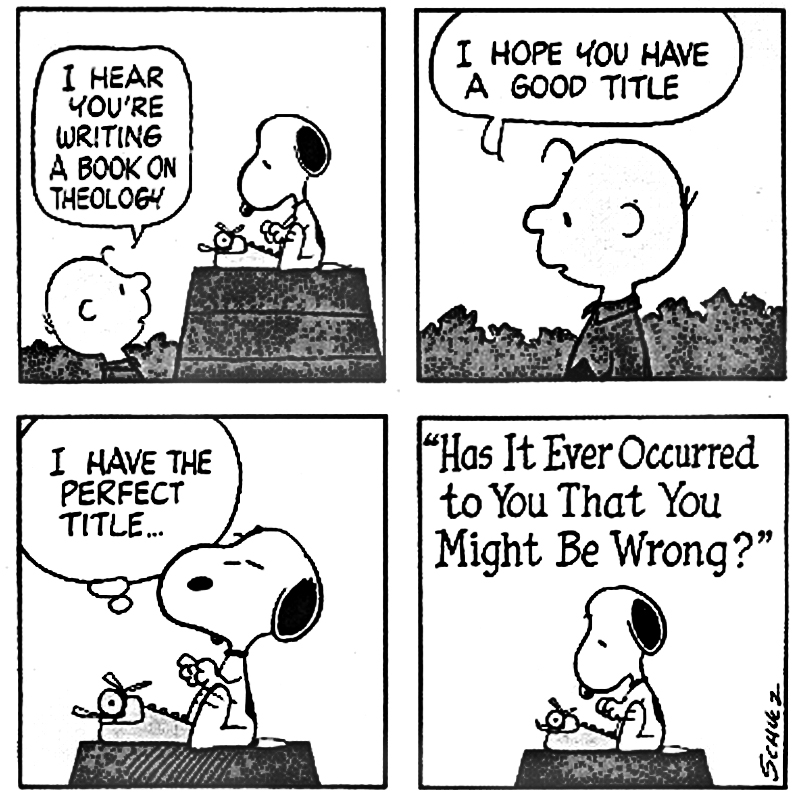
Most of my life, especially my early years, I was deemed a “know-it-all,” which is never a good thing if you want to make friends. I was and am a voracious reader of books, newspapers, magazines, and blogs. NPR is always my preferred audio companion in the car. Knowing things is a key component of my self-perceived identity.
Which is why I was confused when I woke up last Friday morning (after the previous night’s presidential debate) and felt exactly zero need to know what was happening or what would happen. I have written before about how I struggle to not idolize politics. In the past, the upheaval surrounding the debate would have qualified as something a good voter would be very concerned about. I figured I would wake up with dread, concern, and the feared uncertainty. Everything anyone thought they knew about the election had gone up in smoke, and everyone was trying to prepare and predict their way out. So imagine my surprise when I felt nothing but peace, the freedom of coming to the end of our collective knowledge and freefalling into space. Somehow this felt like a most uncertain moment, and the peace I felt was a gift.
Perhaps this is because I have been thinking about uncertainty and the space that it makes — the honesty of admitting our very human limitations with regard to predicting the future. We like to predict and plan because we do not very often like surprises. Sure, maybe the occasional surprise birthday party or gift from a friend, but no one likes the kind of surprises that sneak in like a rogue wave, washing your feet from the shore and tumbling you over and over. I think of friends who have not only suddenly lost a sibling and discovered all sorts of secrets in their wake. I think of friends who have discovered their spouse’s addiction and, in a moment, their lives became unmoored from all that they thought they knew. I consider my own surprise depression or diagnoses that I was not expecting. We crave certainty and knowledge because we expect it to bring us peace. What happened to me on Friday was the exact opposite. I had no idea about what was happening, what would happen, what could happen, or what should happen. It isn’t nearly as life-changing as grief and loss, but this post-debate news cycle was a window into the freedom that comes when we know nothing.
My favorite show, The Bear, returned for its third season last week. After finally opening his dream restaurant, only to get locked in the walk-in freezer on opening night and lose his temper on all of his friends and loved ones, Chef Carmy goes back to basics. He makes a long list of “Non-Negotiables,” the actions and attitudes he knows will win the restaurant the much-coveted Michelin star, things like “Shirts perfectly pressed,” “Constantly evolve through passion and creativity,” and “Perfect means perfect.” He hands this list to his team and it does absolutely nothing to inspire any of them. It sits on the counter with all the weight of the law, and it sucks any creativity and joy from the kitchen, especially for Carmy. His knowledge is extensive, and it is killing him.
It made me think of all the things I would put on my own non-negotiable list. What are the things I know? What are the pieces of information or life lessons I am setting down on paper and holding myself to, that might be killing me. A year ago, and if I’m honest, even many days now, it would be my political opinions. I knew the right way to vote, the right person to elect, and the wrong person to vote for. And my anxiety about what would happen if people did not know these things, the disdain I felt for people who I thought knew less than me, those were sure signs that my non-negotiable, my knowledge, was killing me. I expected myself and others to live up to some sort of “right knowledge” that I could never come close to. And just like in the kitchen, it sucked a lot of joy and freedom from my life. As Paul writes in 1 Corinthians 8, “knowledge puffs up, but love builds up.” All the hot air in the world cannot hold up our hopes, insecurities, and dreams. Only love can do that.
I think what I felt on Friday morning was the security of faith, which is wildly different from knowledge. Faith is a gift, given before we even know it is something to have, and faith is in someone outside ourselves who works everything for good. Knowledge is reliant on our capacity to know. And in this day and age, it is tempting to believe we can find the right answer or gain the right amount of knowledge or be smart enough to predict what is coming. But at some point, when you get the phone call or the MyChart message or read the article, we never know. And that is where faith comes in, securing us in our hope for the whole story arc of God’s story, allowing us to admit that we don’t know as Paul continues in 1 Corinthians 8, “Anyone who claims to know something does not yet have the necessary knowledge,” but he follows that news with the best news: “Anyone who loves God is known by him.” We know nothing, but the God of everything knows us. And that is enough to rely on.








A soothing balm in a sea of constant itches!
Loved it!!
Thank you for this beautiful piece.