




We got record-breaking snow in Charlotte this winter. My two oldest kids didn’t have a full day of school for two weeks. Amid the scramble of juggling full-time work with full-time childcare, an unexpected VIP emerged: I Love Lucy.
When I discovered that my younger brother had quietly reinstated his Paramount+ subscription, the password mercifully unchanged, a new carrot joined our behavioral bribery carousel. The kids had never seen the show and were immediately transfixed. Lucy’s slapstick comedic genius still, well, slaps.
The show triggered questions, though. The older two were baffled by the laugh track. “Who is that laughing?” they asked multiple times. My four-year-old, puzzled by the black-and-white screen, kept wondering, “Mommy, why is it gray?”
But what astonished my husband and I wasn’t the canned laughter or the grayscale palette but the way Fred and Ethel would drop by the Ricardo residence unannounced. These visits were frequent and unplanned, rarely preceded by a phone call, much less formally scheduled.
“Wow, she just busted right in,” said my husband during one episode. “Didn’t even knock!”
We tried to imagine it: a friend strolling through our front door in the middle of breakfast without warning. It felt almost transgressive.
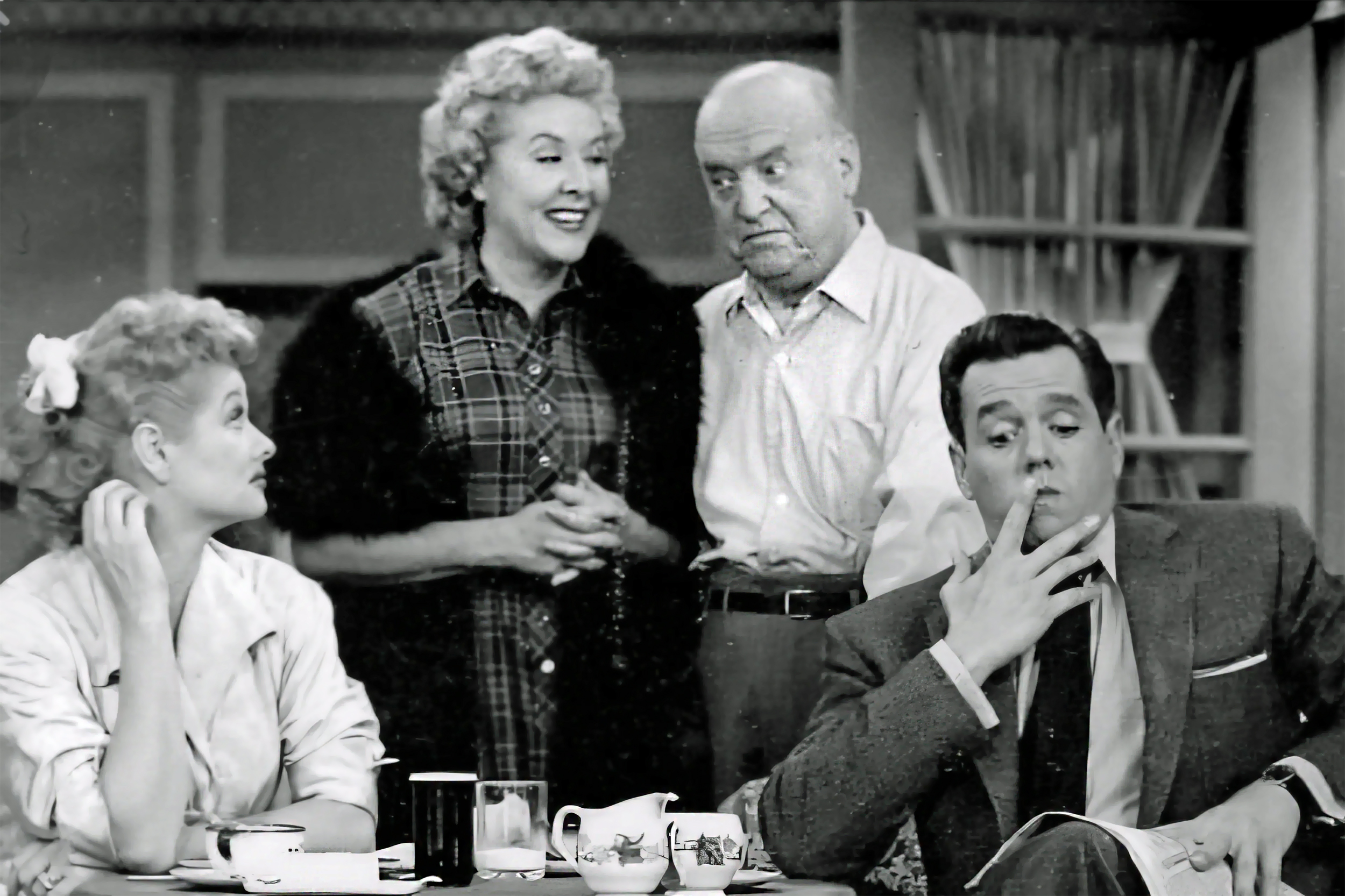
But two nights later, something like that happened. It was 8 p.m. on a Tuesday. School the following day had already been canceled thanks to the snow, and the older two kids were still awake, finishing a movie. Our youngest was asleep in his room.
We heard a thud. A pause. Then again: thud, thud. My husband and I exchanged glances. Had something fallen?
No. Someone was knocking on the front door.
I scrambled for my robe while he paused the movie and went to see who it was, the children wide-eyed with anticipation. Who could it be? At this hour? With no notice?
There in the cold stood our former neighbor and her ten-year-old daughter, clutching a plastic Wal-Mart bag heavy with foil-wrapped tamales.
We had a brief, lovely visit that ended with us tearing into the still-warm contents of that bag. The interruption felt like a gift. I found myself feeling thankful that they hadn’t texted first; the surprise was part of the delight. Had I known they were coming, I would’ve spent the evening frantically tidying, barking at my children to pick up their things, resenting that my husband had yet again left our printer out on the dining room table.
These friends moved out of the city two years ago, and we’ve kept in loose touch. When they lived three doors down, our children moved between our houses with borderless ease. We avoided the exhausting rigamarole of scheduling playdates or coordinating calendars, instead popping in and out as availability allowed, trusting that if someone wasn’t free, they’d simply say so.
There’s a particular intimacy in being surprised by someone who knows you well enough to risk showing up unannounced. An unplanned visit says, I thought of you and wanted to see you, and those are vulnerable assertions.
Yet a quick Google search — how do you feel about unannounced visitors? — turns up a small mountain of outrage: Reddit threads, blog posts, memes dripping with grievance toward the unexpected guest. Google’s own AI summary aptly captures the mood: “Unannounced visitors are generally viewed as disruptive and rude, causing anxiety by violating personal space and routines.”
Somewhere along the way, we seem to have decided that hospitality must be planned, confirmed, calendared, and cleared in advance. Impromptu visits are deemed inconvenient intrusions rather than friendly, neighborly gestures.
One lifestyle blog offers step-by-step instructions for handling an unexpected visitor in a tone reminiscent of a crisis-response manual. “Do not get angry or upset,” the blogger advises, as though the arrival of a friend were akin to an unruly child throwing a tantrum.
She continues: “More than likely, they do not think there is anything wrong with stopping by your home unannounced. They may have grown up in an era where just ‘stopping by’ was acceptable and often encouraged.”
Her phrasing makes impromptu visits sound like a regrettable relic we’ve evolved beyond. But when did dropping by become unacceptable? Why did it stop being encouraged?
Well, one obvious culprit is smartphones. In an age of synced calendars, shared locations, Ring cameras, and read receipts, spontaneity can feel like a violation. Technology makes it easy to screen, delay, ignore. Convenience reigns supreme; control occupies the throne. Surprise threatens both, thus we arrange our lives so we’re rarely caught off guard.
But surprise is not the enemy. It strengthens our flexibility and hones our ability to adapt. When everything is scheduled and confirmed, we leave little room for the unexpected, and with it, fewer opportunities to respond with grace in real time. The true enemy, as Derek Thompson argues in The Atlantic, may be convenience itself. “Convenience can be a curse,” he writes, and our relentless pursuit of it has ushered us into what he calls “the anti-social century.”
So what do we actually gain by abandoning impromptu visits? Not much, I’d argue.
Take, for example, this encounter I had a few months ago. A friend’s son was recovering from an appendectomy, and I had a few things to drop off: a get-well toy, some hand-me-downs, and their cooler, which had been rattling around in my trunk for two and a half months.
I texted to say I was swinging by, but they hadn’t seen my message and were surprised when I arrived. They invited me in, and we ended up talking for a while. I got to hug them after a traumatic week, we caught up, and I even left with an extra loaf of banana bread that they insisted they weren’t going to eat. Oh, and they finally got their cooler back. It was an all-around delightful encounter.
Of course, impromptu visits carry some risk. You might interrupt something. It could feel awkward. On some occasions, the visit may not be received as warmly as you’d hoped. I know because it’s happened to me.
Years ago, my husband was working on a Saturday, and I was home alone with my eighteen-month-old, staring down seven lonely, unstructured hours with a highly energetic, extroverted toddler. So, naturally, we headed to the library. I grabbed two Scooby-Doo books from the book sale for my neighbors’ sons and decided to swing by on the way home.
We exchanged pleasantries, they thanked me for the books, we chatted a bit, and then I left. Later that day, she texted politely phrased words conveying one clear gut-punch message: please don’t ever stop by unannounced again.
I was crushed. Did I totally misread the room? Was I an inconvenience? Annoying? Do I have bad social skills? I called my best friend in tears. She reassured me that it wasn’t about me. “I’d love to live in the same city as you and have you show up at my house with books for my kid,” she said. It helped, but the shame still smoldered.
The next day offered a small redemption. We had a couple over to watch a playoff game, and midway through, there was a knock at the door: another family rolled in unannounced, their kids immediately running wild with mine. It was loud, chaotic, and joyful, and I was forever grateful for what felt like a God wink. Had they not shown up, I might have shut the door on impromptu visits for good.
In our quest for control and convenience, our posture towards surprise has hardened, and with it, our posture towards the virtue of hospitality. Across the Judeo-Christian tradition, hospitality is not merely a polite nicety but a sacred opportunity to encounter the divine. Genesis 18 tells the story of three strangers showing up unexpectedly at Abraham’s tent. He welcomes them in and prepares a lavish meal. The trio, commonly interpreted as two angels and the Lord, leaves him and Sarah with the promise of a long-awaited child. The blessing arrives through interruption — and from strangers, no less.
Scripture returns to this theme again and again. Jesus himself modeled the art of the impromptu visit multiple times over in his ministry (Zacchaeus, anyone?!). Hebrews 13 distills the ethic plainly: “Do not neglect to show hospitality to strangers, for by doing that some have entertained angels without knowing it.” The unplanned knock isn’t a nuisance so much as an opportunity to engage in the holy work of hosting.

But hospitality requires visitors, and if your schedule leaves no margin to either visit or host, that virtue will atrophy. It’s no wonder visits are on the decline. There’s no room. We’re never available. I’m booking weeks ahead just to grab a 45-minute coffee with a close friend. I’m forming calendar polls to gauge playdate availability. We get so mired in text volleys that plans often dissolve before they even begin. Someone double books. Someone’s kid catches a stomach bug. Someone forgets to respond. Why bother initiating at all?
And yet, we must. The unannounced visit won’t cure America’s loneliness epidemic overnight, but as the AI wave crests, embodied friendship will only become more essential. In-person gatherings are crucial for our well-being — and, I’ll say it, our very survival. Socializing is not frivolous; it’s fundamental. Swing by your neighbor’s house lest you end up dating a robot.
Reclaiming the joys of impromptu visits doesn’t have to be complicated, but it does require intentionality and a willingness to trade a spirit of control for a spirit of spontaneity. You can start with something as simple as this: The next time you’re driving by a friend’s house, pull over. Knock. Bring cookies if you have them.
Put more broadly, lean into interdependence. In our quest for a frictionless life, we default to the gig economy for every small need rather than turning to friends and neighbors. The brief yet meaningful in-person touchpoints that once strengthened relationships are becoming increasingly rare. We can’t bother or be bothered. It’s not that we’ve grown more independent; we’ve simply monetized dependence. These days, we’re visited more frequently by paid delivery drivers running errands for major corporations than our actual friends. When everything is outsourced, billionaires profit, and personal relationships suffer.
Consider this your nudge to intentionally resist outsourcing every minor need. This practice rests within what writer Kathryn Jezer-Morton refers to as “friction-maxxing,” or “the process of building up tolerance for ‘inconvenience.’” Embracing friction in daily life often means relying more on other people. Ask a friend for a ride to the airport, or offer one. Need a dress for a wedding? Skip Rent the Runway and raid a friend’s closet instead. If someone mentions a Costco run, see if they can grab a few things for you. Sure, you could use Instacart, but you could also build in a reason to see each other. Bother and be bothered!
“Invite people over to your house without cleaning it all the way up,” Jezer-Morton suggests. If we want more visits, we have to squash the lie that social gatherings must be picture-perfect. Social media has convinced us that hosting requires bespoke tablescapes, signature cocktails, stylish napkins, and the perfect playlist. There’s a place for that. There’s also a place for frozen pizza from Aldi, a bagged Caesar salad, and some apple slices on paper plates out on the back deck. Add a few La Croix, some PBRs, and — if you’re feeling especially fancy — a sleeve of Girl Scout cookies. Congrats! You’ve got yourself a perfectly good dinner party. Don’t overthink it.
I’ve lost much to the merciless pressures of perfection. I’ve gained much more by embracing “good enough,” including an expanded willingness to welcome people into my home. Your house doesn’t need to be flawless to host. Is your dining table buried in UNO cards, school papers, an inhaler, Legos, shin guards, unsent thank-you notes, a hairbrush, and yes, that cursed printer? No worries. Does your living room resemble a laundromat? Same here. Did your four-year-old forget to flush the toilet this morning? It’s fine. Come in anyway.
A friend who takes long walks in her neighborhood told me she occasionally pops in on neighbor friends along her route. Sometimes it’s to refill her water bottle or use the bathroom; sometimes it turns into a glass of wine or folding laundry together while catching up. It’s a come-as-you-are situation.
Of course, that kind of ease doesn’t appear overnight. So how do you get there? Start with a visit.
A few years ago, a newish friend called me at 9 p.m. We were out of town. I picked up, fully expecting it to be a misdial. It wasn’t. “So, this is kind of funny,” she said, slightly breathless. “But we just left a church event, and Evie really needs to poop. She said she might not make it. We’ll be passing your house … Could she use your bathroom?”
I was tickled. I walked her through how to find the hidden key, with one warning: don’t be alarmed if the house looks like it’s been ransacked. When we leave for a trip, our aesthetic lands somewhere between hurried departure and tornado-adjacent chic: piles of clothes, unmade beds, drawers ajar, an unswept kitchen, scattered shoes, coffee mugs in unexpected places, stray Magna-Tiles underfoot. Shambles.
Few things cultivate intimacy faster than peeking into someone’s chaotically messy home in the age of Pinterest and TikTok house tours. In any case, a six-year-old’s poop emergency outranks any embarrassment about the state of my living room. I was delighted to help.
Thank you so much, she texted afterward.
Anytime, I wrote. Which is to say: come in, come in. It’s so good to see you. My house is your house. My toilet is your toilet. Apologies if my four-year-old left a surprise in it.








Love this, SK!
I don’t think this works for everyone. I’m more of a privacy and boundaries type person myself.
Sara! I love this with all of my heart
This was such a fun read and good message. Thank you, Sara Kay.
BTW, I love drop in visits — something that was easy-peasy in college or when I lived in NYC.
But what can we expect when the go-to for most people is to send a text before they dare dial your number for a call? … It’s sad how all this tech (that can easily connect us to people on the other side of the world) has made us so distant from the folks who live down the block.
We are a ‘door is always open’ family. I admit, casual drop ins are strange at first – all that tension came after Covid.
I loved this lovely piece. While I have often been hesitant to just ‘stop by’ others homes— I am not bothered by it happening, in fact, I’m a little flattered. An older version of myself wouldn’t have been so much bothered by it as perhaps embarrassed by the state of my home but I’ve had layers of surrender since those days.
My son has been wanting us to stop by an elderly friend’s home a lot lately and I keep telling him no. I won’t next time.
Love it! Mi casa es su casa!🧡