




Do the angels know the world is disenchanted? Or do we have it all wrong and they are pleased to have aided and abetted that disenchantment?
When reflecting upon the drama of salvation, we tend to focus on two actors: there is God and then there are humans. So in our praise and our evangelism we emphasize our alienation from God and his mission to make right what has gone wrong. But Scripture has more actors than this upon its stage: other non-human beings who, despite our different nature and our frequent waywardness, call us “brethren” (Rev 12:10) and play a part in our rescue and restoration.
The Feast of St. Michael and All Angels is a moment in the liturgical calendar when Christians commemorate Michael’s casting Satan out of heaven. In a secularized age as ours, perhaps it can also remind us all of how myriads of unseen beings populate our universe, carrying out purposes unlike our own, often inscrutable, sometimes nobler, sometimes impossible to describe or comprehend. Perhaps this is a tall order, though; the God and Jesus thing is difficult enough on its own—adding angels to the mix might feel like putting pineapple on pizza. Unnecessary and, frankly, a bit weird.
But we do not need to make the world weird again: it’s always already weird. There is no virtue in denying reality. And the recognition of this fact may chasten our presumptions of preeminence and drive us to praise God and to seek his aid.
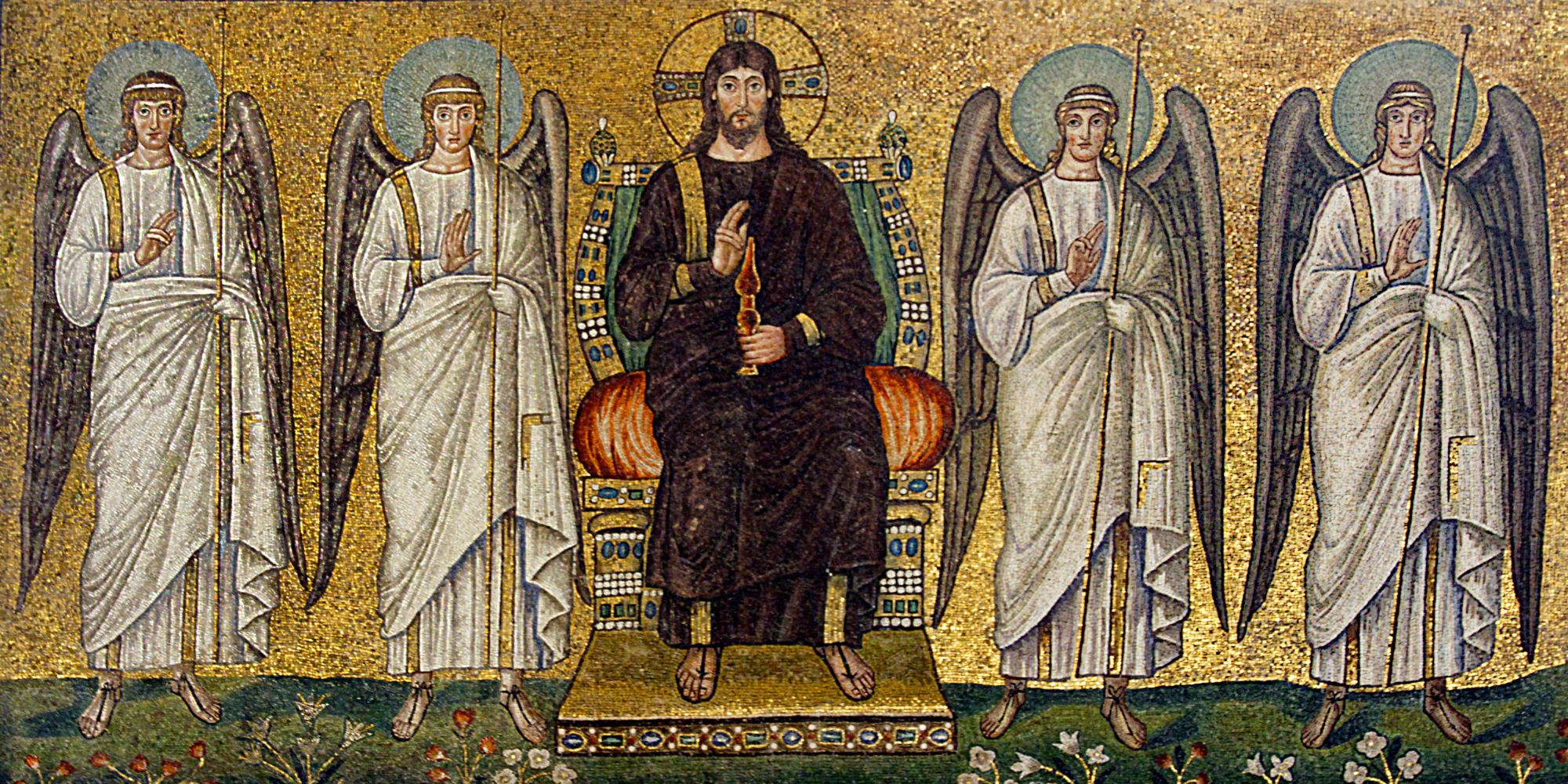
Why does an omnipotent God make use of non-human intermediaries? It’s hard to answer when the same thing could be asked about the spread of the gospel — why make the creatures who need salvation responsible for speaking the word of salvation to other creatures in need? A definitive answer would be speculative, arising out of a knowledge we do not possess, but it seems consonant with the character of a God who affords the gift of agency to others besides himself in giving them to share in his good undertakings.
And so the angels are for us because their Lord is for us. But they do not serve us. They serve God in the entirety of their being, perfectly echoing God’s will in their willing and doing. The angels derive the entirety of their selfhood from their service to God. Their very existence is praise: “Praise him, all his angels; praise him, all his hosts!” the psalmist sings (Ps 148:2). Karl Barth writes that God’s kingdom coming to earth always is accompanied by many strong angels “where the earthly creature seems to be sadly lacking with its praise both in quantity and quality.” [1] As such, the angels ensure there is praise on earth as there is in heaven, as we plead in the Lord’s Prayer.
They herald and effect God’s praise, bringing God’s Word to earthly creatures as heralds of apocalypse: not of an imminent end, but of the unveiling of truest reality, of the being of God before and behind and above the duplicitous “reality” of the world-as-given. The End, that is, that was there before the beginning, shaping the beginning and determining the trajectory from then until the final end. In their role as ambassadors and emissaries the angels regularly bear the revelatory Word to human beings, unfolding the depth dimension of reality and dispelling the enchantment of opposing stories of our world.
In other words, the existence of heavenly, angelic hosts provide a framework for understanding the fortuitous happenstances of life: the sudden dawning of clarity or gratitude out of nowhere or the inexplicable gifts of God that arrive without invitation. A belief in angels imbues life with an expectancy that God is at work in the world, rather than coldly distant.
But their existence indirectly bears witness to the reverse possibility. That this cosmos is populated by other, less than benign beings as well, those that are hostile towards God and therefore towards us. These sleepless agencies of malevolence hinder, degrade, and destroy the human creature, tempt the human towards idolatry, tempt us towards hopelessness and defeat. These forces are too great for us to overcome on our own. The angels strive at all times in their service to God against these beings, and so we acclaim their watchfulness and protection but never offer them the adoration due only to God. In this way also they serve both God and humankind. “You must not do that!” an angel admonishes the apostle in the Apocalypse of John; “I am a fellow servant with you and your brothers the prophets, and with those who keep the words of this book. Worship God” (Rev 22:9).
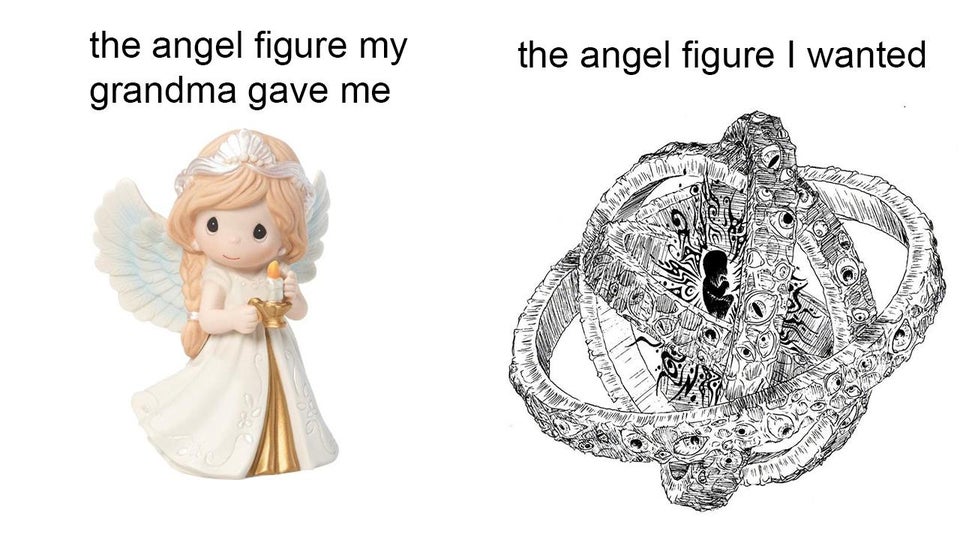
Oddly enough, angels often carry more currency in the non-Christian world than they do amongst contemporary Christians. Particularly for Protestants (it seems) who, tripping over themselves to protect the independent sovereignty of God, have tended to relegate the angels to something referenced in Scripture but of no practical importance. But the angels who do not direct humans’ praise to the God of the gospel are not angels at all: they are other powers who must be spurned, to whom we must not give credence.
But if these kinds of things aren’t widely believed in anymore, isn’t the harm they can do eliminated? Hardly. Barth suggested that,
It would be better for us if we were to learn again with the same fearlessness and freedom to see and to reckon with the fact that even today we still live in a world that … needs a good deal of dedemonizing, because even up to our own time it is largely demon-possessed, possessed, that is, by the existence and lordship of similar or, at times, obviously the same lordless forces which the people of the New Testament knew and which have plainly not been broken or even affected, but in many ways intensified and strengthened, by the fact that our view of the world has since those days become a rational and scientific one. [2]
How have the powers benefited from the fact that our world has become a “rational and scientific one”? By insinuating themselves within the new ideologies which constrain and give shape to that “rational” world. The psychoanalyst Carl Jung similarly observed following the devastation of the Nazi regime:
Just when people were congratulating themselves on having abolished spooks, it turned out that instead of haunting the attic or old ruins the spooks were flitting about in the heads of apparently normal Europeans. Tyrannical, obsessive, intoxicating ideas and delusions were abroad everywhere, and people began to believe the most absurd things, just as the possessed do. [3]
Denying the supernatural powers of this world aided and abetted the powers’ schemes. Evicted from rational discourse they could hide themselves in plain sight. Now they could be indiscernible against the backdrop of this or that totalitarianism, of bigotry, of this complex afflicting the human mind, of the very reductionism which dismisses and subtracts the spiritual from the realm of significance. Non-human powers which are “nowhere” can be anywhere they want to be as we will swiftly explain away the strange when it intrudes.
We thus stand in no less need of apocalyptic intervention than the overtly demon-ruled past of our ancestors in the faith. The warfare in which we engage — the dismantling of strongholds and obstacles raised up against the knowledge of God given in the gospel (2 Cor 10:4-5) — is just as much the duty and task of the angels. And as our history shows, we stand in great need of their dismantling of the narratives which take us captive and tear our allegiance away from the God of the gospel. We are in dire need of rescue from putting our hope in riches and in achievement, from crushing spiritual burdens placed upon us by the competing laws and stories of other lords, and from looking to lawmakers as replacement Christ.
The complexity of a universe filled with powers beyond ourselves opens up the possibility that there is always more than meets the eye. That what appears to us to be perfectly normal could actually be something more sinister, or more beneficent. This multi-storied universe introduces us to second-guessing, shades of gray in a modern world of black-and-white. Far from gullible superstition, it provokes critical examination. More than that, it should provoke prayer.
The fuller this universe is, the less convinced we might be of our self-sufficiency. Surrounded by a multitude of heavenly hosts, we are given to see ourselves as enmeshed within a cosmic struggle, holding fast to the humility of pawns privy to the meddling of others. We need God and his angels in this struggle: to restore the misguided ways of us who wander and strengthen our souls and bodies, to fight back against the nothingness which gnaws at our existence and corrupts our willing and doing. Few may believe in angels nowadays, but that doesn’t mean we don’t need them all the same.








[…] go bump in the night, that threaten our lives and our souls. Far better to spoof the spooky than to pretend such things don’t exist or matter as too many a dour and mAtUrE Christian might assert […]