




What is the most effective metaphor for life? Is it a box of chocolates? A highway? A roller coaster? Each of these images captures what it means to be a person and all the surprises, twists, and turns that come with it. But these words do more than just describe life; they change how we understand it. A person who sees life as a race will live very differently from a person who sees it as a gift.
The metaphor du jour is that life is a journey. The concept of the journey has been one of the most useful allegories in literature across millennia, from Homer’s The Odyssey to The Wizard of Oz. Journeys have the same ingredients as any good narrative: conflict, resolution, feelings of lostness, unexpected surprises and, perhaps most importantly, a destination. But the word has evolved over the past several decades. While it was mostly used to describe a literal voyage, the word “journey” has been quickly reinvented into a metaphor.
In her recent New York Times article, “When Did Everything Become a ‘Journey’?” Lisa Miller discusses this new self-guided phenomenon. Everywhere you look, celebrities and influencers are eager to walk you through their journeys. Whether it’s for sobriety, weight loss, getting divorced, fertility, grief, healing or changing your hair, there is a journey for everyone. Pay a small fee for a course or an eating plan and you can feel like you are accompanying them every step of the way. Today’s branding around the conceptual journey is enough to make a person never want to travel again.
Miller acknowledges the word’s appeal. As humans (and as Americans especially) we are naturally drawn to results and outcomes. According to Elena Semino, a linguist who specializes in metaphor, “Humans learn as babies crawling toward their toys that ‘purpose’ and ‘destination’ coincide.” Each of us is pursuing an end-goal, whether it is a job title, a family or a healthy lifestyle. People who have already achieved the goal thus take on the role of a chaperon or sherpa, guiding us toward our destination. Now that Americans are prioritizing good health, marketers have linked the words “journey” and “health,” implying that a healthy lifestyle is attainable through making the right choices. Hiring a travel guide is simply the first step to ensure a successful journey.
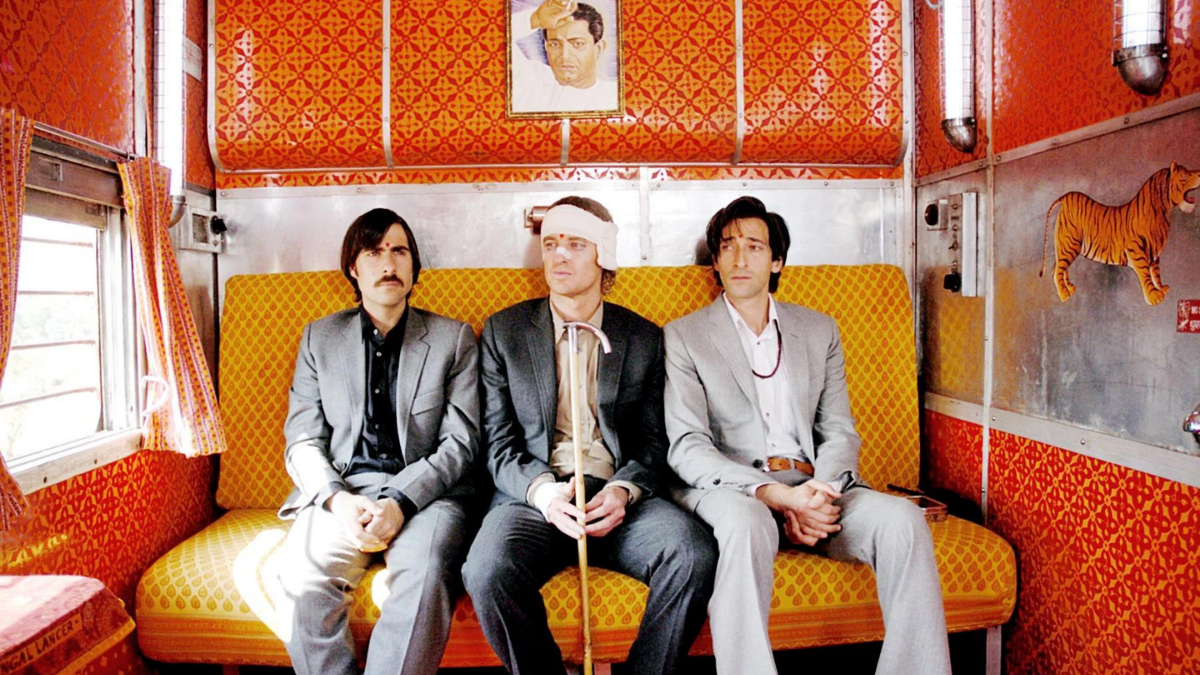
There are plenty of pitfalls of the journey story, however. Miller observes how a journey is vague enough to illustrate almost any experience (she notes that even putting one one’s socks in the morning can be a journey), but far too abstract to connote any real vulnerability. “The word holds an upbeat utility these days,” she writes, “signaling struggle without darkness or detail.” In other words, “journey” has made its way into mainstream American jargon because it allows one’s life to seem meaningful, while trivializing the impact of suffering. Like the word “authentic,” it is a word that sounds real, but, because it is vague and overused, it has lost almost all meaning.
Christianity is full of journey imagery, of course. From the Israelites’ forty-year wandering in the desert to Frodo and Sam’s journey to Mordor. John Bunyan’s Pilgrim’s Progress, the progenitor of the Christian faith narrative, is the story of a man named Christian who makes his way to the Celestial City (by way of other such geographical locations as the Slough of Despond and the Village of Morality) in order to find redemption. His salvation is quite literally a journey, full of trials and choices that he must navigate through wisely in order to make it to heaven. Ever since, the journey metaphor has had an incredibly strong hold on our understanding of what it is to be a Christian.
For instance, many Christians today view their own sanctification as a long process in which, over time, virtues are cultivated through the work of the Spirit. Call it a “journey of justification,” if you will. As you traverse through the perilous Valley of Adolescence and through the wicked city of College, you are expected to come out unscathed or at least find your way back to the trail. Just pray that you don’t get lost in the Desert of Doubt, where many people don’t make it out alive.
Christians, therefore, have fallen prey to the pitfalls of the journey story as much as the rest of the world. If the task, as pilgrims, is to read the road signs and make the right choices, we are no different than the weight loss gurus and influencers offering to guide you through their journey of spa vacations.
It’s worth noting that our modern concept of journeys derives from an essay titled “Self-Reliance” by Ralph Waldo Emerson, who famously wrote “It’s not the destination, it’s the journey.” It’s no coincidence that what first lauds the metaphorical journey is in an essay absorbed in the concept of self. Ever since, we have been preoccupied with understanding our lives in a comprehensive narrative, framing a particular struggle as a journey is a way of casting ourselves as the storyteller of our lives.

One major way that this spiritual journey language breaks down is the role of God. If your life is a journey, who is God? Is he a companion? A guide? The destination? To assign God as any one of these options may be true, but he cannot be contained to a single role. On the road of life, God is the road, the car, the map, the road signs, and the detours. He is the cop who pulled you over for driving 80 in a 55 and the waitress filling your mug at the late-night diner. He is the deer on the side of the road and the unexpected phone call to keep you awake.
As useful as it can be, the journey metaphor ultimately breaks down as a holistic way to understand life. At the end of her article, Lisa Miller explains how most cancer patients prefer to describe their experiences as a journey as opposed to the more militarized language that has been used for the past several decades. Rather than fighting cancer (which implies winners and losers), cancer is something that is simply endured. But then Miller cites a Swedish linguist who studied how advanced cancer patients described their experience. The words “battle” and “journey” were both used frequently, but there was a third metaphor: “They said cancer was like ‘imprisonment,’ a feeling of being stuck — like a ‘free bird in a cage,’ one person wrote. Powerless and going nowhere.” Prison may be the darkest metaphor available, but it’s one that nearly every single one of us can relate to on some level. In the words of Paul Zahl, life is not a journey, but a train wreck. We may buy ourselves a ticket, climb aboard, and imagine the distant places of our dreams, but we are almost always derailed.
And yet, as we wait on the side of the tracks, there remains a hope that we will be rescued. Not by our own strength or sense of direction, but by the one who goes to meet us at the crossroads. He left his luxurious heavenly throne for a one-star stable. He traveled by foot up and down the region of Galilee, traveling all the way into the far country of sin and death. The gospel, after all, is not about our journey to God, but God’s journey to us.








Thanks, Sam. I really enjoyed reading this.
Thanks, Sam. This lands for me. God’s journey to us. Amen!
“Life’s a dance you learn as you go”
That’s a good one.
I think we’ve all been to dances that resembled train wrecks.
Great article- thank you Bird of the Mocking.
Thank you for calling out this journey “madness”. When Alzheimers was called a journey recently, I sensed a need to revolt. The word journey implies to me a pleasant trip that I can prepare for and if I’m prepared, do I need anything else?
I have realized that I want to live as if I had no needs-of other people or God, and really as “good Americans”, don’t we all? He gives grace, I just don’t want to need it.
Grateful for this!
A person who sees life as a race will live very differently from a person who sees it as a gift.
This had value for me. Nice article. Thank you
This is made me laugh: “As you traverse through the perilous Valley of Adolescence and through the wicked city of College, you are expected to come out unscathed or at least find your way back to the trail. Just pray that you don’t get lost in the Desert of Doubt, where many people don’t make it out alive.” Great stuff, Sam!