




A spoiler-free look at the perils of adventure and parenting in Star Wars: Skeleton Crew
I wonder what The Assessment is in your life?
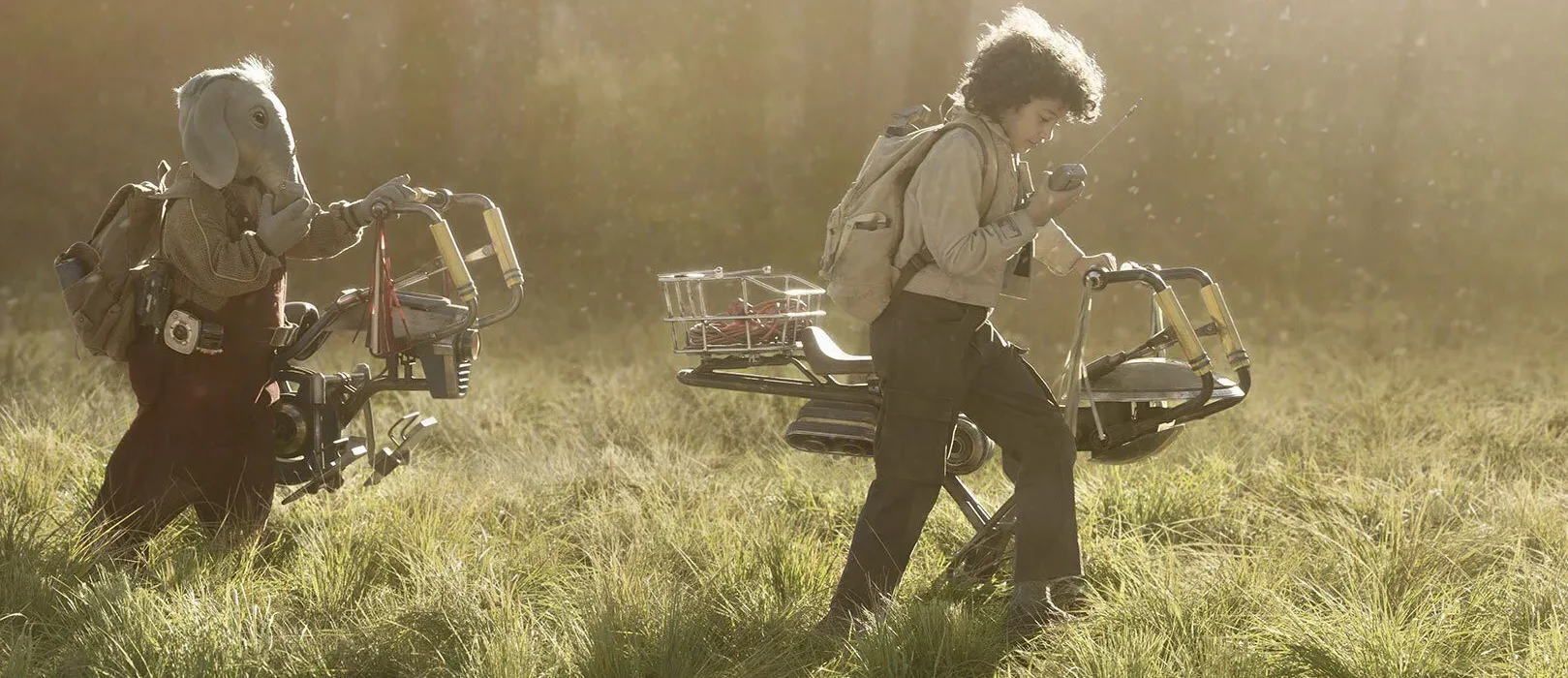
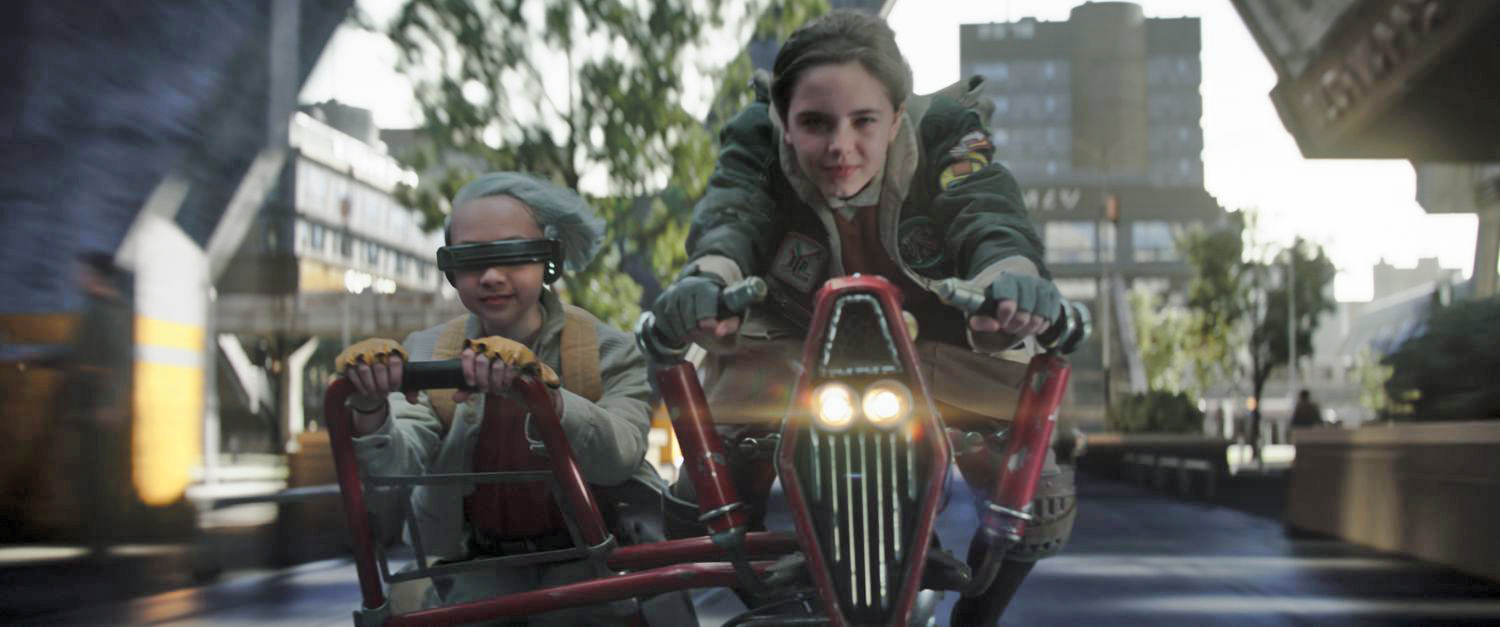
In Star Wars: Skeleton Crew, young Wim seems like he’ll do anything to avoid At Attin’s upcoming series of standardized tests, The Assessment. The young boy, lost in tales of Jedi and space battles and life outside his cheerful futuristic suburban bubble, can’t seem to make studying his top priority, much to his exasperated single father’s dismay. Life is good on At Attin, and Wim should be happy to live in one of the galaxy’s seemingly few peaceful, prosperous, and undisturbed quadrants. If he does well on his test, he could join his father in the middle-class ranks of the planet’s system engineers or process analysts. But when Wim and friends find a spaceship buried in the woods, and when it takes off on autopilot into the wider unknown cosmos, the kids get more adventure than any of them bargain for.
Skeleton Crew is a good show. Think Goonies in space, but done really well. It’s crafted as if the screenwriters got an advance copy of Jonathan Haidt’s popular book The Anxious Generation. That book is devoted, in part, to articulating how helicopter parenting and a lack of free play have contributed to childhood anxiety rates. Kids without freedom, according to Haidt, can’t handle the hardships that life throws at them because they haven’t developed the creative problem-solving skills that free play provides.
The planet At Attin, of course, is the perfect setting to explore these questions. Protected by a massive camouflaging barrier, Wim’s home world is hidden away from the rest of the galaxy. It is, literally, a bubble, lost to time, free from the machinations of the galaxy’s great evils, be they empires, pirates, gangsters, or drug cartels. There are no visitors, or at least, there haven’t been any visitors for a generation, but that’s all part of “the Great Work” that the people of the planet have taken on. Not quite old enough to know why his planet needs protecting, or why his people’s “work” is so “great,” Wim’s life is characterized by structure, assessments, and lots of security droids.
Princess Leia famously told the evil Imperial Grand Moff Tarkin, “The more you tighten your grip, Tarkin, the more star systems will slip through your fingers.” That would be the case for the At Attin security state, and the state of At Attin parenting, as well. Adventure-loving Wim and friends are all primed and ready to take off when adventure finally comes knocking. Anything, as it were, to find a life of fun and fulfillment outside of The Assessment.
That theme of The Assessment is a staple of young-adult media in a world saturated with standardized tests. Even before taking the SAT in high school, I was annually bombarded with the sort of number two-pencil dot matrixes that would “assess my competency” and “track my development.” I can’t remember what I got on my SATs to be honest with you, but it didn’t really matter. The test didn’t hinder, nor did it really advance, the life I wanted for myself, which I am grateful to be currently living.
Still, when we think of Harry Potter’s “sorting hat” and the OWL exam that weighed so heavily on Hogwarts students, or when we consider the various personality factions in the Divergent franchise, or when the hero must increase their rank by passing a test in an anime series, we’re tapping into primal fears and anxieties. For many of us, it wasn’t the SAT, but it was the bar exam, the MCAT, or the Praxis. For others, it was the overbearing parent hoping they’d join the family business, or some version of that well-meaning neighbor from The Graduate pitching “plastics” to a disinterested Dustin Hoffman. All young people bear that pressure to some degree: the pressure to not only grow up, but to grow up to meet others’ expectations, and to grow up without making any mistakes that would derail those expectations.
Thankfully, Wim and his friends are up to the challenge. They are carried across the galaxy, skirting danger and learning important life lessons along the way. They get close-up experiences with the very dangers their parents tried to protect them from, but they make new friends and allies as well. They are pushed to their physical and mental limits. Even poor Wim has his moments of doubt and despair, recognizing that even he wasn’t fully aware of the hardships that adventure can bring. One would hope that these kiddos would have gained these life lessons in safer confines, but given their childhood confines, we wonder if they ever would have learned them if adventure had not come calling.
As the series draws to a close, the barrier, the symbol of At Attin’s security and stability, takes on a new symbolism. It’s no longer keeping away the worst of the galaxy — indeed, the worst of the galaxy has already invaded the barrier. Instead, the barrier is keeping out the best of the galaxy, the very help that will save the planet. Wim and his friends have proven to be up to the challenge of fighting the very ills that At Attin and its barrier wished to keep away. The great salvific question to be resolved is if the parents of those children can let go of the barrier themselves.
From the perspective of a parent, it is a great temptation to think that if my kids jump through the right hoops, impress the right people, pass the right tests, or attend the right schools, they’ll have some measure of success in life. It’s not my assessment that they will have to pass, after all. I love my kids to death, unconditionally, without hesitation or reservation. Instead, my fear is that if they don’t stay within my barrier, they’ll be subject to the hurts and wounds and rejections of the world. What parent doesn’t want to spare their children those scars? Sadly, there is no barrier in the world that can keep those hardships away from my kids. There is no assessment that will guarantee my children access to some higher life free from suffering and hardship.
Trinitarian theology is always a head trip, but there’s something to be said about the fact that the Son left the great barrier of perfection into the world of sinners. Leaving his Father behind, the Son was exposed to the best of the world, but more tellingly, he was exposed to its worst. “Although he was a son,” explains the author of Hebrews, “he learned obedience through what he suffered.” The word “learn” here in the Greek isn’t learning by book study, so to speak, but learning through appraisal and firsthand experience, the same way we might learn that our roof is leaking when we inspect it, or in the way we might learn we have a viral infection when we consult with a doctor. Job was righteous, but he truly learned what it meant to be righteous when his life fell apart. Jesus knew what it meant to be perfect in obedience, but to prove that perfection, he went through the excruciating experience of the cross. It was a necessary precondition of the salvation of the world for a parent to let their child enter into a world of suffering.
As scary as it might be, the very hardships of life that we keep our kids from experiencing are the very experiences they need to learn and prove their own transition into thriving adulthood. Our barriers, then, are probably more about our fears as parents than the wellbeing of our kids. I certainly don’t want my kid to be whisked off in a starship to have perilous adventures fraught with danger and death. But there’s something to be said about being the kind of parent who, instead of sheltering the child from adventure, has them prepped and ready for when adventure calls.
As the action dies down in the finale, and as Wim gleefully watches X-wings fly across the night sky after chasing off the baddies, his friends joke about the damage to their school building. After procrastinating and avoiding and chafing against the strict and overbearing culture of his home planet, his friends joke with Wim: “It looks like you won’t have to take the assessment anymore!” Free from the demands that he be a systems engineer or process analyst, we imagine that Wim might one day fly his own X-wing and fight the ills of the galaxy. We also imagine that his father, unfazed that his son chose a different direction in life than systems analyst, would be quite proud. He’d be anxious too, of course, that his son’s career choice is so fraught with danger, but nonetheless proud. What parent wouldn’t be? The trick, of course, is recognizing that no parent will ever be free from that mix of pride and anxiety, and no barrier or assessment will change that.