




Robert Farrar Capon. A name whispered in hushed tones in the dark corners of theological speakeasies. A rogue priest of Anglican and Episcopal lore, whose name, were it on your lips, could land you in no little bit of trouble, depending upon whom you were talking to, or whom you were ordained with. It seems he has a knack even still — though deceased now thirteen years — for upsetting both sides of the theological aisle and everyone in between. He could cut you down in the death of your sins and trespasses, Johnny Cash style, only to, at the very same moment, give to you the gospel that raises up, Gerhard Forde style (that old Lutheran brother-from-another-mother to Capon if ever there was one). He wielded a wild, full, and freewheeling Christ who comes to the world with a grace too big, it would seem, for our little parochially bound hearts and minds, who breaks out of all our precious doctrinal formulations and church systems, knocking them over with all the glee of a seven-year-old boy toppling elaborately constructed sandcastles on a beach.
To read him is to delight. And I say read, because in full admission here, I’ve never heard him. There are apparently a good number of recordings of his sermons and even a short film of his small group teaching on Genesis. For the time being, at least, I can’t bring myself to listen or watch them. For me, Capon (consensus pronunciation seems to be, Cā-pon “like the bird”) lives on the page, and his voice lives in my head. He was a writer’s writer who painted with brilliant, evocative words and imagery. And he wrote about a good many things, including not just scripture and theology but marriage (in the most honest and refreshing of fashions) as well as cooking — if you don’t fancy yourself a foodie, I dare you to read his The Supper of the Lamb and see if you don’t come out the other side scrolling for the culinary school nearest you! He’s infectious that way. He was born to write. With his words, he wrote into being the world he believed God was speaking into existence by the Good News, a world where wild things run free. And he set me free into it.
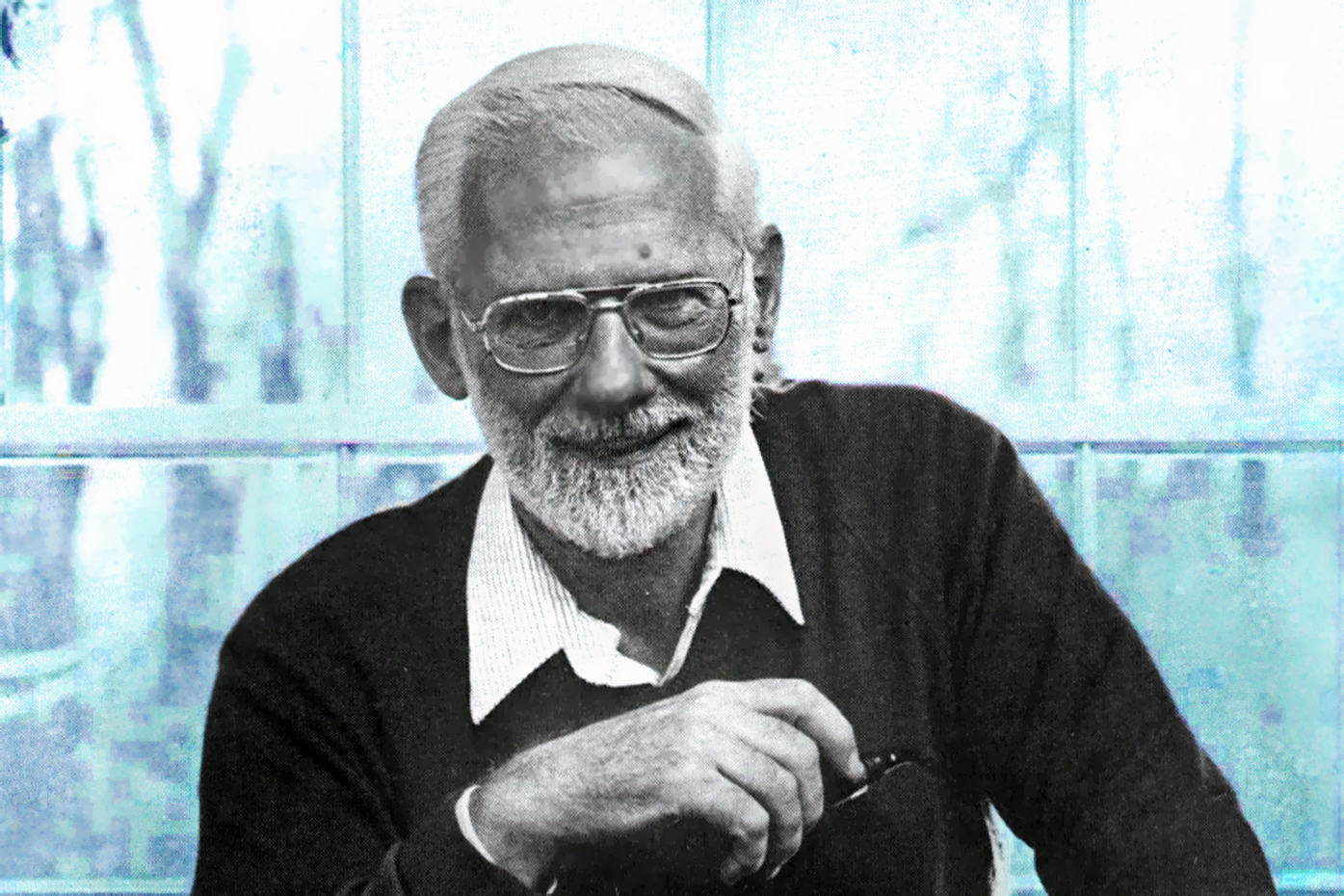
I’m not a Capon expert — I’m not sure there are any out there, frankly. I’m an amateur, in the truest sense of the word, in its original French — a lover, an enjoyer. And it’s my hope that likewise you, through this little endeavor, might become one too. And that perhaps the yeast of that dark little corner of the speakeasy might come, bit by bit, to someday leaven the whole room with light.
So before we end this little intro into what I hope will be a meal that keeps on giving, perhaps we should sample just a little something from the menu. While there are many fine entrées to choose from, for my money you can’t do better than to start with Parables: Kingdom, Grace, Judgment, a three-volume work on the catalogue of Jesus’ parables. It’s the first of his that I read — prompted by 1517 contributor Donavon Riley, who said upon his first reading it, “I thought I knew what the gospel was … until I read Capon.” If you want to hear the voice of Jesus, this is the book. And that is no small feat. The voice of Jesus has been muddled and muzzled by centuries of interpreters, pastors, and theologians, whose efforts to reduce him to one more stooge in the world’s moral, political, and social reform programs have been so effective I dare say the Accuser himself may well have feared for his job security!
Our trouble, says Capon, isn’t so much that we don’t know the things Jesus said, rather:
It’s our familiarity with them … most people assume they know exactly what is meant … and that is the most troublesome obstacle. Jesus spoke in strange, bizarre, disturbing ways. He balked at no comparison, however irreverent or unrefined. Apparently, he found nothing odd about holding up, as a mirror to God’s ways, a mixed bag of questionable characters: an unjust judge, a savage king, a tipsy slave owner, an unfair employer, even a man who gives help to bona-fide pests … what he was proclaiming could not be set forth in any other way than in parables … as a matter of fact, God does so many ungodly things — like not remembering our sins, erasing the quite correct handwriting against us, and becoming sin for us — that the only safe course is to come to Scripture with as few stipulations as possible … and nowhere in the Bible is an un-made-up mind more called for than when reading the parables of Jesus … they are about the mystery of the kingdom … something well hidden, and not at all likely to be grasped by plausibility-loving minds.[1]
And that really is our trouble, from the Garden’s beginning, the original sin of original sinning; a strange and elusive temptation in us to whittle God down to something that fits into our plausible little frameworks. Like King David, we’ve got a floor plan in hand, the real estate contract drawn up — a spacious 4 bed/4 bath, with all the amenities and high-end finishes a god could ever want. But thanks be to God, he refuses the offer to confine himself to our tidy doctrinal houses of manageability, refuses our attempts to pin him down to our photograph albums and our Newtonian cause and effect schemes. An old seminary prof of mine was well known for opening our theology classes by reminding us that “in the beginning God made man in his image … and shortly thereafter, man returned the favor.” Really, we can’t help ourselves.
This being the case, Capon suggests, is why “Jesus said … almost nothing without a parable … in order that ‘seeing they might not see, and hearing they might not understand’” (Mk 4:12). Hmm. That emoji of the little yellow face scratching his chin comes to mind. As a former English ed major, I can’t recall any of my professors instructing us to aim our pedagogy towards blindness and ignorance. What on earth could Jesus mean? Capon’s answer; “The mystery of the kingdom is such a radical mystery … [that it is] intractable to all our attempts to make sense of it.” So, where we would expect — and to tend to think of — Jesus’ parables as clever little stories filled with quaint illustrations for the purpose of yielding straightforward, clear, and applicable life lessons, Capon says Jesus is actually doing quite the opposite; “Jesus’ … device of parabolic utterance is used not to explain things to people’s satisfaction, but to call attention to the unsatisfactoriness of all their previous explanations and understandings,” to “upset his students’ understanding [rather] than to give it a helping hand.”[2]
So come along if you’d like a little upsetting, and let Capon let Jesus un-see and un-understand us, utterly ruin all our previous and paltry satisfactions, and cleanse our palates of the saccharine pseudo-kingdom we’ve been so long fed, that we might savor as for the first time the fine wine and the rich bread that are the kingdom of Christ.
[1] Robert Farrar Capon, Parables: Kingdom, Grace, Judgment, 1, 4
[2] Ibid, 4–5.








As someone who was fortunate enough to know Robert as both a mentor and a friend, I am delighted that Mockingbird is expanding their coverage of his work to include this blog! Keep up the good and challenging work.
Really excited for more of this!
And thank you, Jamie. It is through your work and your ministry that so many of us were introduced to Capon in the first place.
This is so exciting. I’m so grateful to you and Mockingbird for getting this going! Capon is a gift.