




Every corporation wants a logo that sells, which, if my algorithm has anything to say about it, means Peters Design Co. should be doing the designing. Whether it’s Nike’s swoosh or Audi’s rings or Apple’s apple, the intent is the same: Leave an impression that creates equity with your particular brand. One of my favorite shirts, which I think I’ve owned since college, features a Star Wars stormtrooper from the original trilogy rendered in the swirling brushstrokes of Van Gogh’s The Starry Night. It’s not exactly a niche shirt. In fact, it feels a little cliché even as I describe it to you. Still, it strikes just the right balance of irony and kitsch to let the world know I’m in on the joke — that I’m both a nerd and a person with refined tastes. Only one of those things is actually true, which is sort of the point: We prioritize logos to say something about who we are or, at the very least, who we’d like everyone else to think we are. To that end, have you ever thought about how borderline nonsensical it is that Christianity’s trademark is a cross, the very emblem of death, agony, and brutality?
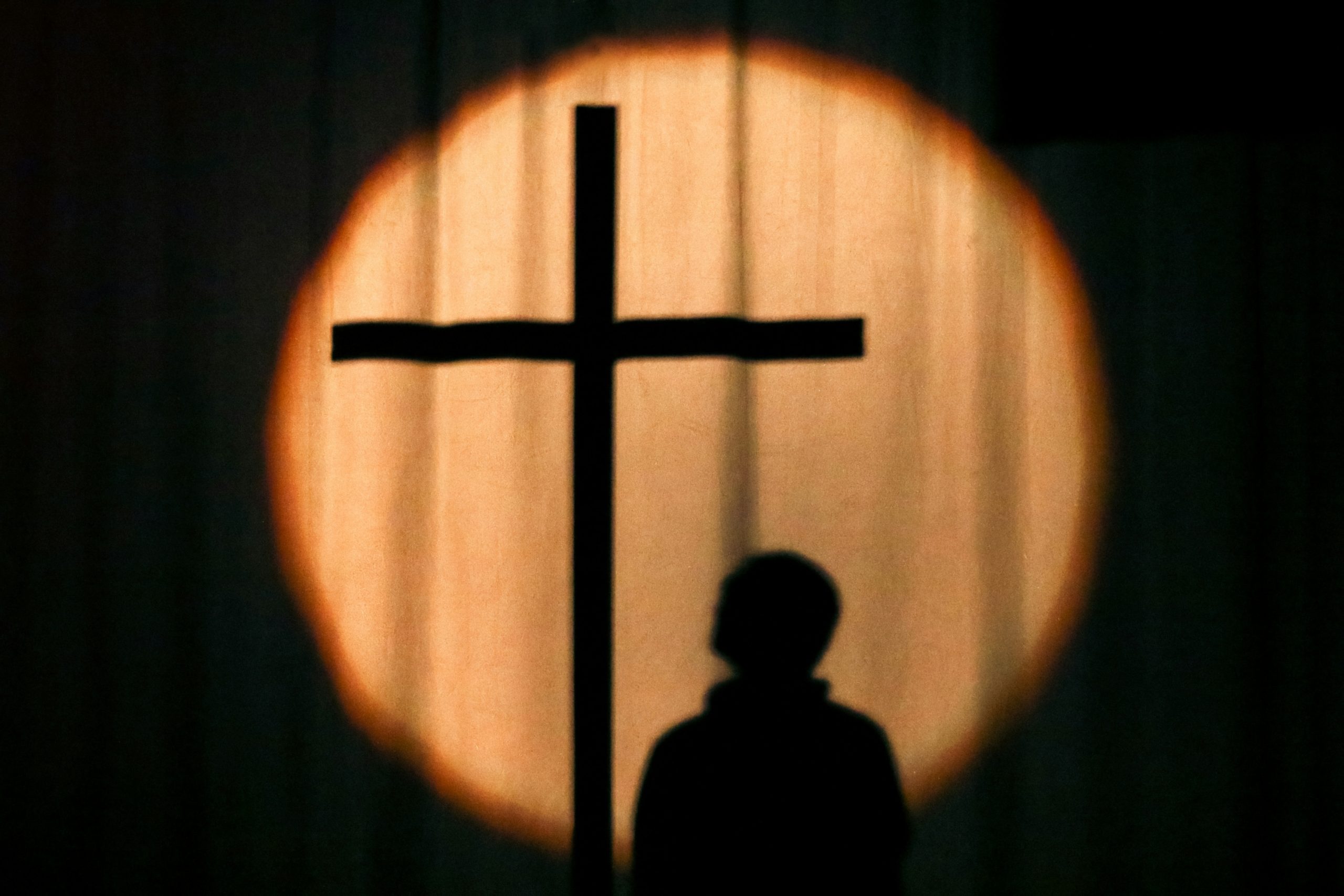
In his concise early 2000s book What Was God Doing on the Cross? theologian Alister E. McGrath wonders the same thing, noting that any organization “which chose as its logo a hangman’s noose, a firing squad, a gas chamber or an electric chair would accordingly seem to have taken leave of its sense” (116). Who’d put any of those horrific instruments on polo shirts and baseball hats or feature them on organizational brandmarks? Surely no one would be that out of touch or that outlandish — not even the folks behind the Cracker Barrel debacle or Gap’s failed rebrand. This “would be an advertising agency’s nightmare,” McGrath rightly notes (116). Any public relations meeting where the topic of conversation was how to spin a torture device as a community-wide insignia of hope wouldn’t just be misguided; it’d be “madness,” as McGrath puts it:
It would be sheer madness to choose an instrument of execution as a symbol of an organization. Its members would instantly be regarded as perverted, sick, having a morbid obsession with death, or having a nauseating interest in human suffering … Only an organization determined to fail as quickly and spectacularly as possible would be mad enough to choose such a symbol.
And yet exactly such a symbol is universally recognized as the logo of Christianity. Christians are baptized with the sign of the cross. Churches and other Christian places of meeting do not merely include a cross; they are often built in the shape of a cross. Many Christians make the sign of the cross in times of danger or anxiety. The graves of Christians are marked with crosses. Careful studies of the origins and development of Christian symbolism have made it clear that the cross was seen as the symbol of the Christian gospel from the earliest of times. (116)
The prevalence of the cross is well attested. It is featured in decor, on steeples, on tombstones, and every other church accoutrement you can think of. But it’s more than a little reductionist to think of the cross merely as a brandmark when it gives us the clearest hint as to what God has been up to the whole time. Far from being merely a treatment of “atonement theories,” though he does cover that (insightfully, I might add), McGrath’s book takes the event of the cross and turns it like a jeweler turns a diamond under a light. The horrors of Golgotha offer the world a multifaceted revelation of just who God is, what he’s like, and the lengths to which he will go to redeem those whom he loves — a revelation, McGrath says early on, that always offers more “than we can imagine. It is inexhaustible” (48). His project isn’t confined to just what the cross accomplished; he’s also interested in what the cross says and reveals about the one who was nailed to it.
In that sense, McGrath’s query is one that cares about what God says and reveals through the cross, not just what’s being done there. To be sure, every sinner saved by grace is eternally indebted to what Christ accomplished on the cross. However, the mere fact that a Roman torture device once held the Messiah, the very Logos of God, should surprise us more than it does. And not just surprise us — it should leave us gobsmacked. We move on far too quickly when singing Isaac Watts’ hymn: “When I survey the wondrous cross / on which the Prince of glory died.” A wretched piece of wood was once stained with the blood of the Word made flesh, the one through whom everything was made and by whom everything consists. Needless to say, despite our best scholarly efforts, I don’t think anyone will ever wring dry all that’s contained in the cross.
Yet, from its very inception, the church’s affinity for the cross was seen as some combination of scandalous and ludicrous. This is why the apostle Paul leans into the “joke” of it all by referring to the word of the cross as “folly” (1 Cor. 1:18, 21, 23). The word is mōria, “foolishness,” which is etymologically related to our word “moron.” If you’re picturing Laurel and Hardy or the Three Stooges, you’re on the right track. It seems and sounds more than a little ridiculous that something like a cross could harbor salvation, let alone hope. Even saying that out loud must’ve seemed so preposterous. And yet, Paul was adamant that the folly of the cross is simultaneously “the power of God” for those “who are being saved” (1 Cor. 1:18; cf. Rom. 1:16–17).
Paul, then, presses the matter further, not only naming but also advocating for that which scandalizes Jews and Gentiles alike: Christ crucified. “For Jews demand signs and Greeks seek wisdom,” he writes, “but we preach Christ crucified, a stumbling block to Jews and folly to Gentiles” (1 Cor. 1:22–23). Whether through tradition or the infatuation with wisdom of the age, the cross prevails as an indicting symbol that humanity’s capacity for glory wasn’t merely stifled; it was suffocated. And that just won’t do, especially not for creatures who presume that they can be like God in and of themselves. Two thousand years later, the cross still isn’t an easy sell. We are still tripping over it, so much so that we’d rather dilute it than grapple with what it means, what it reveals. Our personal PR departments work overtime curating and polishing and spinning our algorithms, let alone our lives, to dull the bite of the cross’s offense. This brings us back to the marketing problem the cross poses, which McGrath rightly anticipates:
Given this widespread hostility in the world towards the cross, why not abandon it? Why not allow public relations and advertising agencies to come up with some new symbol of the gospel, which would be far more attractive to the general public? There has never been a shortage of people urging that this should be done. It would, we are told, be much easier to sell the gospel in the marketplace of life if it was more attractively packaged. Get rid of these unpleasant associations with death, suffering, and execution. These are barbarous ideas, which needlessly offend the sensibilities of intelligent and cultured people. Then the Christian faith could achieve new heights of influence and acceptability.
But the cross has a relevance of its own, which must not be lost. It is a potent symbol of Christian realism. It declares that any outlook on life which cannot cope with the grim realities of suffering and death does not deserve to get a hearing. This symbol of suffering and death affirms that Christianity faces up to the grim, ultimate realities of life. It reminds us of something we must never be allowed to forget. God entered into our suffering and dying world in order to bring it newness of life. (117)
Thank goodness, the church doesn’t appear to be getting a rebrand anytime soon. Every attempt to replace the cross with something more palatable, whether it comes from a PR firm or from our own hearts, is really just a bid for a different God — one who wins by strength instead of weakness and keeps a safe distance from our suffering. But that’s not the God who surrendered himself to die on a tree. The God of the cross doesn’t put a spin on our pain to make it manageable. Instead, he enters it, bears it, and dies under it, precisely for sinners like you and me. The folly Paul refused to stop preaching is still the power of God for salvation. In other words, the cross might still be the worst brandmark ever conceived, but it’s the only one that tells the truth about us and about a God who loves us anyway.