




The following essay appears in Issue 27 of The Mockingbird print magazine.
When I was sixteen, I had a brief dark night of the soul as I lay in bed around 3 a.m. and tried to decide whether I would remain a Christian. (This was back in the days when I adorably thought it was up to me.) My dilemma arose from an exhaustion brought on by years of image maintenance: the effort of pursuing what I thought was the “one right way” to behave as a Christian Good Girl. It was upon this identity that I’d staked my entire existence and derived all my worth, and I had reached the end of my sufficiency.

Beatrice Mady, Still in the Box, 2021. Digital print, 19 × 13 in.
I fell asleep fitfully that night, having resigned myself to a faith that seemed to grip me even when my own grip on it failed. But I would remain shadowed for years to come by this One Right Way — this self-imposed law — that had been influenced by both an etiquette-driven Southern upbringing and a strong dose of church-inspired behavior modification dressed as good news.
Reader, it was not good news. It was not even close to good news.
Good news would only arrive once I’d reached the end not only of my sufficiency, but of my image. After my good girl persona fell apart in my twenties, I headed to New York and found the gospel via grace and the IRS. An error by my accountant plus cross-based preaching taught me that God’s love shows up in myriad ways, even bad news. Not everything was about what I’d done; in fact, so much more was about what he’d done, was doing, and would do, and all of that came back to grace, not to some hall monitor in the sky waiting to pounce on me for doing the wrong thing.
The law, and my own determination to keep it perfectly, would continue to haunt me; but where the law haunts, grace haunts harder. When our older son was diagnosed as autistic at age three, I called upon my experience as a pediatric dentist, and my memories of the autistic patients I’d seen, to determine the diagnosis to be inaccurate. I saw One Right Way to embody this particular diagnosis, and my son didn’t fit that bill. When denial finally gave way to acceptance, I was determined to approach autism in my new One Right Way: by conquering it. We secured a therapist and instituted a rigid schedule for our son that implemented a behavioral approach: train the autism out of him. In other words, change him.
In the midst of this approach, I struggled daily with fears over what my son’s life would look like. When other kids looked warily at him on the playground, when he communicated through actions rather than words, when he sat apart from his class at circle time, I experienced each difference like a knife to the heart. I had always felt different myself, and this echo across time of my own wounds felt personal. It felt targeted. After one of many such days, I lay in bed beside my son, waiting for him to fall asleep and fretting over his future. In that moment, my cumulative, and unacknowledged pain came to a head. The weight of all my fighting — fighting dressed as acceptance but in reality, anything but — finally cracked me, and I cried out inwardly to the One who had caused all this, and could do anything about it.
“How could you be so cruel?” I pray-screamed inside my head as tears silently rolled down my face. “You knew this would break my heart. Why are you so MEAN?”
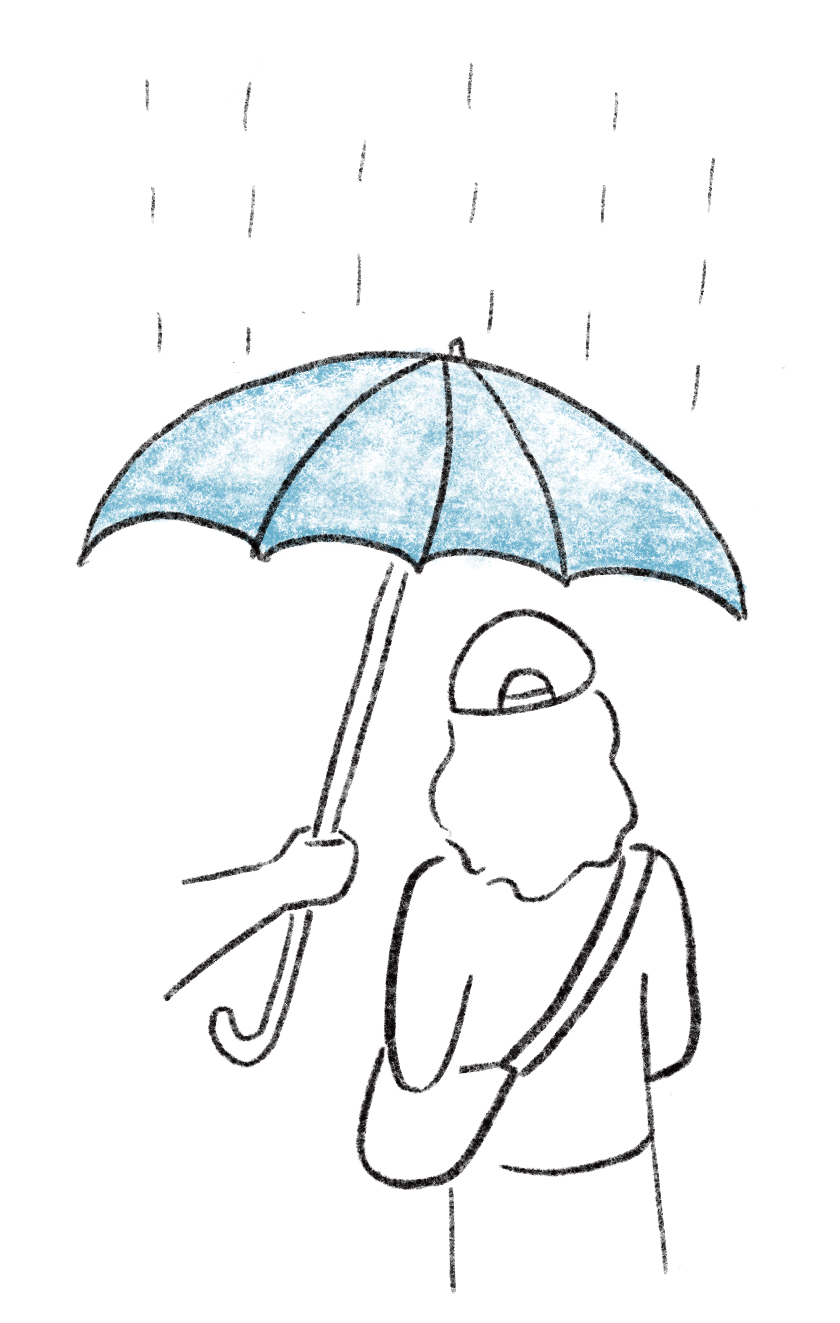
Illustrations by Aubrey Swanson Dockery.
Jesus didn’t show up in the bedroom at that moment and provide me with an answer. And one sure as hell didn’t appear in the trite phrases I’d encountered in online forums: “God gives special kids to special people.” “Is he vaccinated?” “Aren’t we all a little on the spectrum?” But something lifted as soon as I cried out, as soon as I directed my attention and energy away from my own activity and toward him. And while I didn’t leave my son’s room that night with a plan ensuring his future well-being — just like I hadn’t fallen asleep at age sixteen with all the answers I wanted — I did fall asleep knowing that if a savior on a cross was the only answer I got this side of heaven, it would (have to) be enough.
I also knew that God was removing all the walls I’d built — walls that were keeping me from my own pain, and from Jesus, and from my son.
This is the work of grace: targeting not the behavior, but the heart.
It’s so much easier to change behavior: punishment, reward, repetition. Changing the heart, though, requires vulnerability — a word derived from the Latin vulnus, which means wound. Moving toward our wounds is what puts us closer to the grace that changes our hearts — a change often occurring in incremental micro-movements that could be confused with stasis. This kind of movement doesn’t show up in productivity charts or progress reports — which is such bad news for those of us with a weakness for being defined by our measurable achievements.
But it is such freedom for those of us who have reached the end of ourselves and are crying in our beds at night.
After the law broke my mask, grace broke my heart. It was so brittle, there was no other way to bring it to life. As Ezekiel 36:26 says, “I will give you a new heart and put a new spirit in you; I will remove from you your heart of stone and give you a heart of flesh.” Commandments on stone giving way to wounds in flesh. The following verse continues, “And I will put my Spirit in you and move you to follow my decrees and be careful to keep my laws.” This is always the order: grace first changes the heart, then everything else follows. Not so coincidentally, this is what evidence-based parenting advice tells us is the best way to approach our children: first, empathize with what they’re feeling. Be attuned to what’s going on inside, not just the observable outer signs.
I’m reminded of a conversation I had recently with an autistic advocate who is a mentor to my son. When I asked her what was one thing she wished people knew about autism, she said that up until recently, all the focus has been on the behavior of autistic people — and on changing that behavior to make it more “normal” — rather than acknowledging the very real brain processing differences that autistic people experience. The inner sacrificed on the altar of the outer. This is not the way of the gospel. If there’s one thing I’m sure of, it’s that the God I now know cares exponentially more about my heart than my rule-keeping.
 The other day I picked my son up from his speech therapy appointment, and there in the office with his therapist, he said, “I’m scared I’ll never speak perfectly clearly.” My heart tore in two — something I’m used to — and in that tear, grace broke through to speak its words through my mouth: “Maybe not, but you’ll speak like yourself, and the people who matter will never stop trying to understand.” I glanced at the therapist, whose eyes were widened in recognition of the limits of her profession, and she whispered, “That is just the right thing to say.”
These limitations we have to confront — the ends of ourselves, of our professional capacities, of our abilities — they can lead us down one of two paths. The first is a refusal to accept them: a mask-wearing, theology-of-glory-driven form of triumphant living. The second is a much less victorious-looking but so much more Spirit-guided awareness of the fullness of a grace that shows up everywhere, in everything — and being driven deeper into that grace ourselves until it, and not our own achievement, is what begins to define us. Which is anything but limiting. It’s a painful and beautiful expansion in directions we never imagined.
That same boy whose behavior we sought to change is now very much his own person, to the point of deciding recently that he’s an atheist. (His little brother, meanwhile, is the devout rule-keeper, so prayers up for him.) The mom I would’ve been, were it not for my grace-broken heart, would have clutched her pearls and cried in agony at her son’s unbelief. Now I see it as a temporary stop in a story that is being written neither by him nor me but by the God who holds him and his future in his hands, the one who marked him with a baptism we only scheduled but didn’t ordain.
On the way home from that speech session, I told my son about someone else who was always misunderstood, who walked through the world that way so that he could always understand us. When I said I was talking about Jesus, he just whispered, “Oh.” There was so much in that one word. That night he came into our room, sat down beside me, and made a request, and so it was that I found myself once again, a decade later, on a bed beside my son, praying — this time, with him.
To see more of The Mockingbird magazine, subscribe today.








” . . . all the focus has been on the behavior of autistic people — and on changing that behavior to make it more “normal” — rather than acknowledging the very real brain processing differences that autistic people experience.”
Exactly, but try having this approach in US Public Schools and you won’t be employed very long. The IEP assumes progress and progress is measured in absolutes and the verifiable.
Great insight as always, Stephanie.
This is my story too- different timeline- different circumstances-(& country)- but so many similarities- trying so so hard to- then GRACE-& relief-& peace in all the provocation of LIFE. ❤️