




When you send forth your spirit…you renew the face of the ground.
— Psalm 104:30
Every year on Pentecost, the church remembers and celebrates the coming of the Holy Spirit, who is the third person of the Trinity and the active spiritual presence of God in our midst.
The topic brings to mind a little story of something that happened to me in seminary. One day, when I was running late for a lecture, I slipped into the classroom through a side door and took a spot on the other side of the room from where I usually sat. As the professor called my name during roll call, he said, “John Zahl?” and looked up toward the side of the room where I was normally to be found. I answered from my new spot on the other side of the room, “present,” which prompted the teacher to turn his head to see me. He then remarked, “Oh, you’ve changed seats. The Holy Spirit must be at work in your life.”
His point, at least in part, was that people do not typically change seats, and that when they do, something spiritual is the reason for such an unexpected shift. It is an idea that relates directly to Pentecost, I think.
By way of explanation, let’s consider the work of the Holy Spirit within the context of a single verse from the day’s Psalm. The Psalmist writes of God in these words: “When you send forth your spirit…you renew the face of the ground.” He speaks specifically of renewal, which is a word worth pondering. What do you think of when you hear the word “renewal”?
It is a word that means “making something new again.” The image we are given is that of ground being renewed — of spring coming after winter, or of rain coming after drought. It is about dead and unproductive land becoming fertile and lush once again. The metaphor is not subtle, and its range of application is wide: It can relate to any part of our lives or community that feels lifeless, or stuck in a rut. Who doesn’t want their life to be creative and lush with life instead of dry and stuck?
So with that theme in mind, let me ask a question on the front end of this sermon: Do you really believe that the Spirit of God can and will renew the fallow ground in your life — that there really is renewal to be had in the part of your existence that seems hopeless or unfulfilled? Or, almost without realizing it, have you made a quiet little pact with despair? (Let the question sit with you.) Has some part of you accepted that repetitions are the fact of the matter, that they cannot and will not ever change? Have you put a brave face on this conclusion by calling it “realism,” when really what you are is resigned to despair, and lacking in hope?[1]
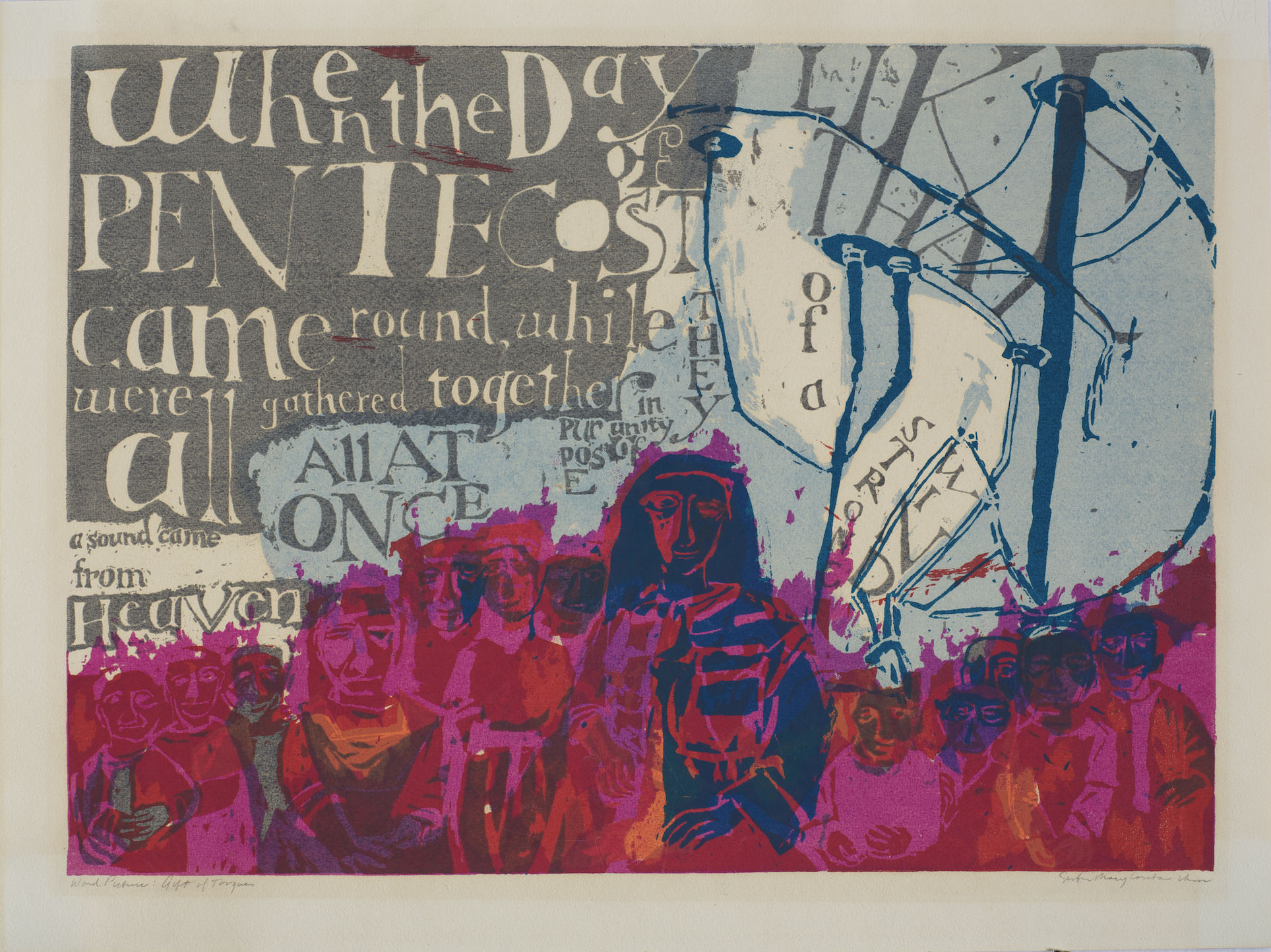
Corita Kent, word picture: gift of tongues, 1955. Serigraph, 18 x 24 in. Courtesy of Corita Art Center.
Consider a few examples of despair. Despair that a child will never find her way in the world. Or despair about the situation with your spouse, that you will never really be happy in your marriage. Or we might be talking about your professional life. As a minister, it hasn’t taken me long to learn that most people are quite unhappy in their work. Or perhaps we’re talking about despair over the state of the Church, over the perception that our culture has lost its appreciation for the value of faith.
In each of these situations, there is the temptation to think of oneself as some kind of a tragic hero, quietly fighting a long defeat in the face of overwhelming odds. Have you become, to your way of thinking, a bit of a martyr in some pronounced area of your day-to-day life? This too is a pact with despair.
In these places, what we need is renewal. And it is important to note that as Christians (especially as we celebrate the day of Pentecost), we believe that renewal is always a possibility, an outcome that is just as viable as any of the current stagnancy that you are facing. We believe that the most impenetrable situation is not necessarily set in stone. Renewal is possible.
But where is it to be found?
Allow me to make two observations. First, when God brings renewal, He does so by engaging with us in our deep desires and feelings. When God’s Spirit creates renewal, it does so through harnessing our real energies, through attraction, and not through force. If you seek lasting renewal, look to your real desires, the durable ones, the places that restore your energy instead of sucking it dry. God’s spirit does not work through heavy-handedness or ideology or force of will; it works through joy and desire and love. In this sense, renewal is usually experienced as a freedom from some kind of bondage.
The second point is the one that I am more hesitant to talk about, but it is unavoidable. It is that the path to renewal usually leads first through suffering and thwartedness and defeat. The shipwreck of our plans and dreams for ourselves is typically the place where new life begins.
This is what the former Archbishop of Canterbury, Rowan Williams, refers to as the “cruciform” shape of the Christian life. The Christian Church was founded on Calvary, at the foot of the Cross, and that is both the once-for-all-time fact and foundation of the religion, and it is also the pattern God’s Spirit continues to employ in its renewing work.
The Spirit of God is not a magic spell, nor is it an escape hatch. It is a deep spiritual reality that engages, often directly, with the places where our ground is most fallow. It brings with it an element of intervention. Renewal comes from the ashes. I have seen this over and over again, in the lives of fellow believers and also in my own life.
The first aspect of the experience of renewal usually has to do with giving voice to frustration. Have you discussed the stagnancy you feel with God and with an outside party, such as a clergy person, or a therapist (and I’m not talking about your spouse)? I encourage you to express your need for renewal, rather than keeping those disappointments quietly at bay in the wings of your consciousness. The Spirit of God draws the darkness into the light.
What I’m really saying is that the key to renewal is often the experience of its opposite. As the Sufi poet Rumi puts it, “the light can only enter into the wound.”
I was struck by these themes during a conversation I once had in New York City with an art historian. I was trying to engage him about his area of expertise, so I asked him who his current favorite artists are. Rather than give me a list of names, he told me that he has a particular area of interest. He looks for artists who have been incredibly successful until, for some reason or another, the market has lost interest in their work — artists who have experienced collapse on the other side of accolade. It is his theory that great artists create their greatest works only after they have experienced some form of a collapse or defeat. Did you know, for example, that Rembrandt suffered terrible personal and financial trouble during the end of his life? His last painting, coincidentally or not, is one of the great works of European art, The Return of the Prodigal Son. I’m sure you’ve seen it. It makes the point perfectly.
Finally, let me leave you with a new question: Is it now the time, at last, to give up on your pact with despair? Is it time to trust again in the reality of the life-giving Spirit of God? Is it time today, once again, to have hope and to believe once more in renewal?
Let us pray:
Come Holy Spirit, and bring new life. Create a way forward where we are blocked. Renew love and passion where they have faded. Harness our desires and make your Kingdom lovely in our sight. Break off the repetitions and lead us down new and unexpected paths. Meet us where we suffer and are unfulfilled. Inspire us as we build and work and create. Give us our food in due season, and renew the face of the ground. Amen.
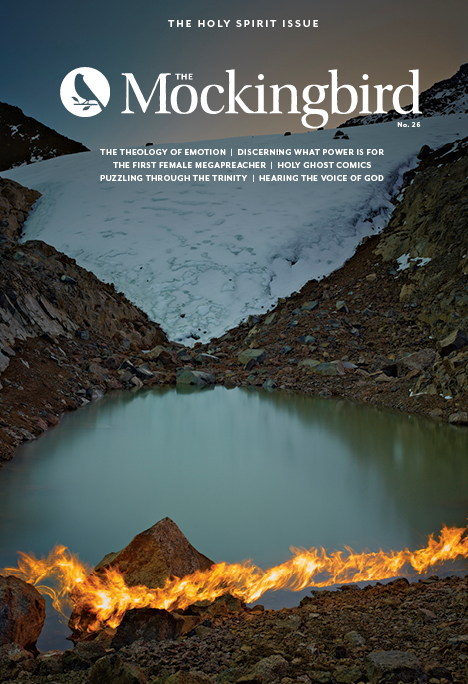
This sermon, from 2013, first appeared in a collection titled Sermons of Grace and then again in Issue 26 of The Mockingbird magazine, available here. The phrase “quiet little pact with despair” is borrowed from Simeon Zahl.








Very well aimed.
[…] can never know what the day will hold. From a faith perspective I was reminded what John Zahl wrote in the recent issue of magazine: “as Christians, we believe that renewal is always a […]
I appreciate you addressing the paradox of a believer
experiencing frustration with their lives without realizing the tendency of believers to view their walk
with Christ as separate from their material lives, or
as many of us have done, to attempt to mingle or spiritual walk with our material world. Though the
Gospels and following Epistles are bulging with both commandments and seem to leave us hopeless as to
finding a means to, “… live in the world but be not of the world.”
This paradox brings leaves many finding solace in
the culture of a church and many adding to their spiritual despair by adding the the burgeoning weight
legalism. Any choice within these values brings despair in realizing that the spiritual reality of God’s Kingdom exists both within the spiritual body of Christ and the material world, with one important exception, that of learning to walk in Christ’s Spirit.
Certainly we can learn that becoming a Christian
doesn’t shield us from the dark side of life in this material world. To learn that God uses these experiences that we can grow in Him.
In fact, in studying the Scriptures many seeming contradictions appear, adding to our frustrations and our despairing as to solving this paradox.
It seems that Christian growth occurs within a steady diet of either the spiritual maturity of the pertinent church leaders who determine, by their own spiritual maturity the Scriptural fodder of their congregation.
I such personal or corporate means lies a great difficulty to learn the key truth about serving, being we cannot do so, on our own, with His help or in any other means that places us as the “point of origin” of the means of serving Him. Our efforts did not bring our salvation nor can they take the place of the Holy Spirit in doing so.
This being true then, what is our role in serving God
and, in doing so finding relief from our despair? As our belief in the reality of Christ’s death, burial and resurrection, Christ alone being the root of our salvation, the same faith can end our efforts to sere Him.
Our process of sanctification after becoming a new creation in Christ is see by our will/faith that He can and will do so.
Thanks so much John