This poetry first appeared in Issue 27 of The Mockingbird magazine.
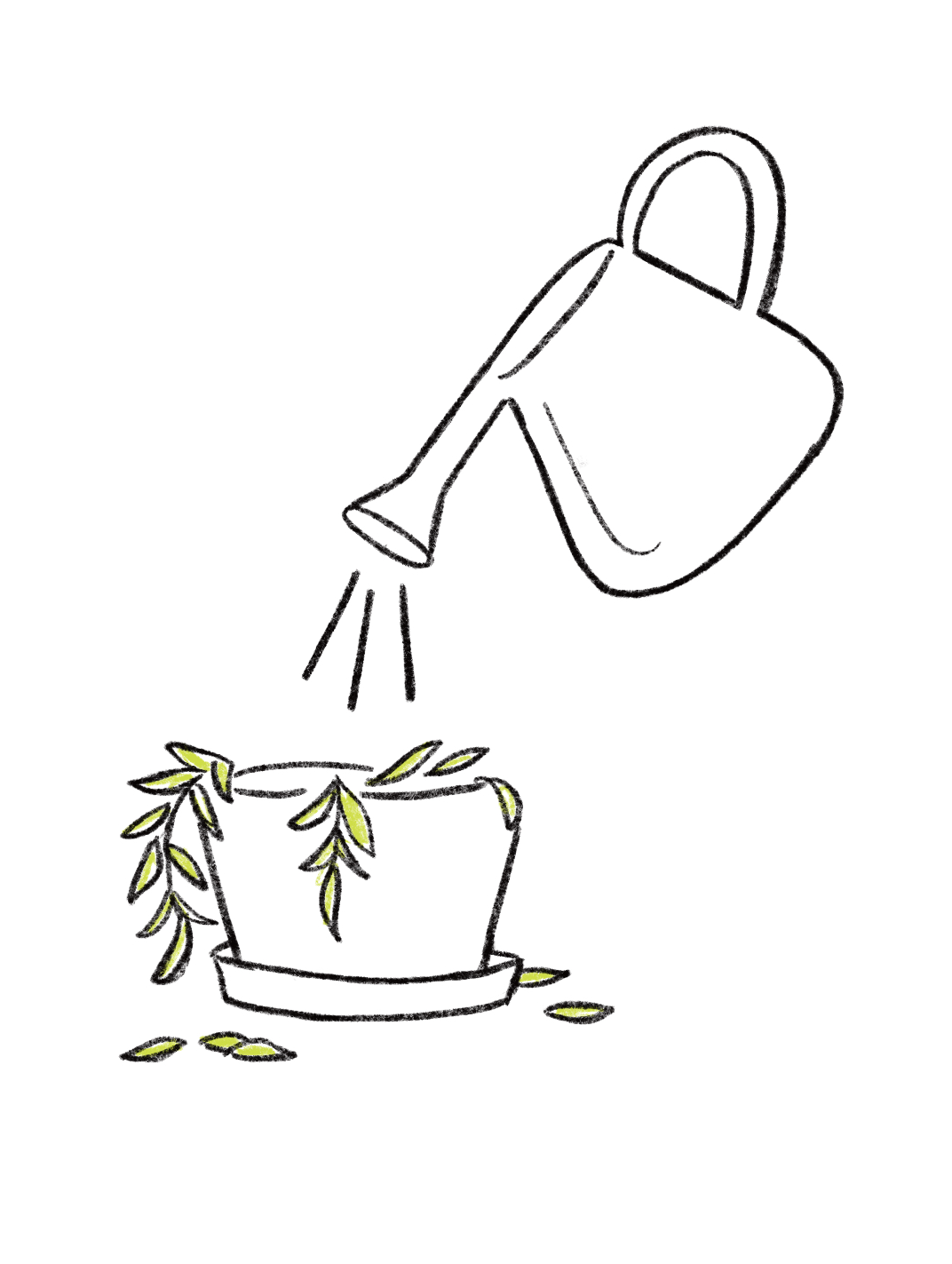
Illustration by Aubrey Swanson Dockery.
With my sons I empty all
the sunflower seed packets
into paper cups of potting soil—
black gloss kernels—
pleading Spirit
speak, become
bestower, thrower, herald, fore-
boder, reporter of stone, hardpan,
bindweed, the deceiving white
butterflies, slugs, earwigs and how
to catch God’s soft hail of here.
All this wind-grist,
wind-smacked grit. Sure it stings,
but mostly, I don’t pray
except: Jesus let me
stay blind for as long as I want. Longer.
You know about the smaller seeds,
the lettuces, carrots, a hundred examples
I’ve planted, the least of all seeds:
mustard’s spindly, needled, worthless,
but when it is grown, it is the greatest
among herbs, and becometh
a tree, so that the birds of the air come
and lodge in the branches thereof.
We’re not looking for nests in any garden I know—
but some sharp pungency, weedy, wily will.
In Sunday School, boys turn eager bandits
wrestling for a place as road-flung kill,
scrunching faces ‘til hauled
upright to wholeness.
Jennifer drew the Priest, the Levite,
the one who showed mercy.
Her scissors shaped the dark
felt roads and hillsides,
stowed each story in cardboard boxes
spray-painted gold.
An enemy has come by night, sown
noxious weeds. From her ovaries
grow tares, pernicious roots,
her whole kingdom—
thorn and thistle-choked.
To eradicate, doctors do not wait
for angels at the end of the age.
Poison and burn. Repeat. Repeat.
Did mustard really even once,
or twice, become a tree?
All day I look for lost things:
keys, a library book, her address.
My father kept a ledger in his shirt pocket.
Scratched in numbers of ewes and births.
Every night, he thumbed the pages,
muttering over columns
of lambs’ weight, sex, whether single, twin, or triplet,
who was their sire. His made-crop, his flock.
He weighed them, bleating
in a bucket hung on the scales’ rough hook—
their legs black stalks, still wet,
sharp hooves tinged with mothers’ blood.
To be lost is to be useless,
the key that cannot turn in its lock.
But what word is given to the lamb’s hoarse wail
ricocheting the pocked hillside?
Or to the coin just under the high dresser’s dark?
Is it only, Soon
the soft sweep of the broom’s straws
will find you?
My mother and hers tended
their measures of flour, pillowing
from the bowl—a world of work
made from yeast—awakened
by not too much warmth
and a little sweetness. Like them,
I press the dough’s soft belly,
stretch and pound it over itself,
hope again a woman can turn
sun, soil and spore to bread.
For orphans, my father mixed
colostrum powder, filled 7-Up bottles
topped with black rubber nipples,
or snaked tubes down the throats of the weakest lambs.
Next Sunday’s golden box, the parable
of the pearl. When the merchant finds
the one, he sells all he has
to afford that great price. I pick up
his felt chair, table, his paper bowl and lamp.
Bed and rug, I fold away,
roll up the four felt beams
of his imagined house,
while Jennifer tends the four-year-olds.
Next week she begins chemo for the third time.
Now between us the gleaming pearl.
Another kind of nest. A seed.
For more, subscribe to The Mockingbird. Illustration by Aubrey Dockery.