




This article is by Andrew Whaley:
It’s March, and where I live in southwestern Virginia Spring is arriving early. Daffodils push through the soil and trees begin to bud. The tulips might even burst before Easter. The birds are singing and the days grow longer. And in our house, it means that we can once again affirm the famous Bill Veeck line, “There are only two seasons, Winter and Baseball.” School teams are playing games, the recreational season begins, and Major League Opening Day is just a week away.
Baseball is my first love in sports, inherited from my grandfather and my father and now passed to my son. My interest has renewed and strengthened as he has become more invested in the sport. Parents will cling to anything to stay connected with their kids.
Recognizing this restored passion, my wife gifted me The Baseball 100 two Christmases ago, which introduced me to sportswriter Joe Posnanski. I devoured the book, essays on the one hundred greatest baseball players of all time. The book, however, was not a statistical analysis of each player or a case for his ranking. Instead, each essay contains stories both of the player on the field and in their lives- stories of fathers and sons, addiction and failure, lasting glory, agonizing defeat. There are moments of levity and poignancy and promise.
I latched onto Posnanski the way you cling to your flashlight on a dark night in the woods because I found that when I read his words I lived with more joy, more hope, more possibility. I quickly read The Soul of Baseball, his stories of Negro Leagues’ legend Buck O’Neil, The Secret of Golf about the friendship of Tom Watson and Jack Nicklaus, and couldn’t wait until my birthday when I finally received his newest book Why We Love Baseball.
Many people who write or speak about sports adopt a confrontational posture akin to the political commentators who dominate cable news. Stephen A. Smith, Shannon Sharpe, Skip Bayless, Colin Cowherd, Jim Rome — they are always quick to criticize, critique, and condemn even if their observations are accurate (and they are frequently enough not!). Posnanski, in contrast, stays outside inflammatory language and speaks to the beauty, humor, and preposterous elements of sport.
In a South Beach Sessions interview with the LeBatard and Friends podcast, Posnanski was asked how he can be a sports columnist who writes with generosity and gentleness even as sports writing and commentary has coarsened over time.
I never wanted to take cheap shots, ever. I felt like if I ever came hard at people, which I did at times, it had double the ‘oomph’ in it because I rarely did it … But I always saw sports as ‘it’s supposed to be fun and it’s supposed to be inspirational and it’s supposed to take us away from all those other things’ … For me it always felt like writing the way that I did and thinking about sports the way that I did really just opened up all sorts of lanes for me, and I still feel that way.
This “coarsening” of sports commentary permeates not only sports but most areas of American life now. We struggle to be hopeful, joyful. Perhaps we even feel guilty if we allow ourselves to delight in our days and our work. I confess, though, that discovering Joe Posnanski has made me want more delight in my life, and so far he continues to provide it.
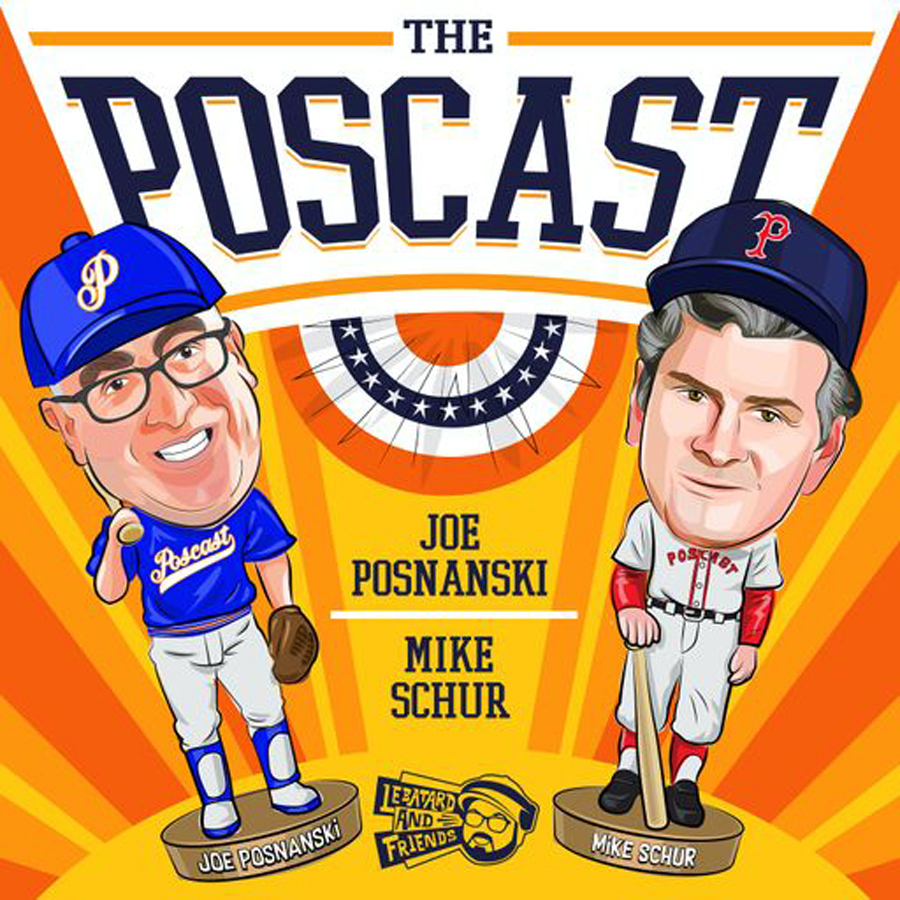
So much has his influence grown over me, that I obsessively refresh my podcast feed in hopes of a new episode of his show, The Poscast that he hosts with Michael Schur (former SNL writer and writer for The Office and creator of Parks and Rec and The Good Place).
In these bleak winter months, longing for joy, I’ve listened to hours of these two men as they open old packs of baseball cards and comment on their findings while soliciting donations to raise money for the ALS charity Project MainStreet, putting together prize packs of baseball cards for those who donate.
In the final episode where they selected the prize pack winners, they circuitously came across the player Mike Sandlock, who played in the major leagues from 1942 to 1953 for the Boston Braves, Brooklyn Dodgers, and Pittsburgh Pirates. His statistics were mediocre. Nothing remarkable.
But then Joe Posnanski notes that in his career Sandlock played with six hall of famers. Notes on Sandlock on the Society for American Baseball Research website indicate that he used to meet sports announcer Red Barber for a beer on his drives home after games.
They discuss how he lived to be one hundred years old and died in the same town where he was born, had six grandchildren and spent his later days watching golf and baseball on television and reading the newspaper outside on beautiful days, leading Michael Schur to declare, “This is my new favorite player of all time!”
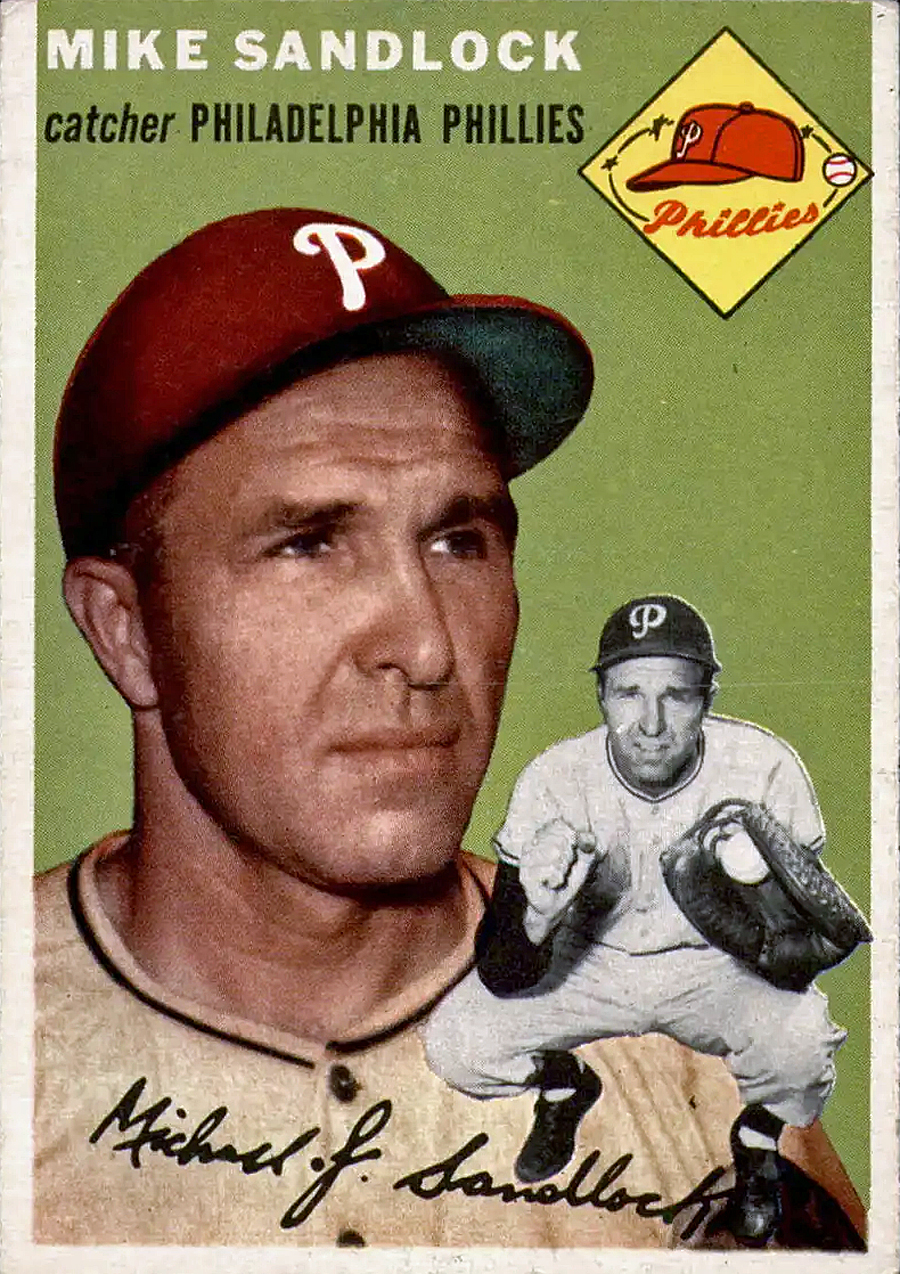 From an athletic perspective, this man is a nobody. He has largely been forgotten in baseball history. No famous home runs, no Hall of Fame plaque, no invites back to throw out the first pitch. Just an average player. But not on this show and not to these two hosts. Instead of focusing on lack, they focus on what he was witness to, what he valued, what made his life rich. And the only word I have to describe a perspective that sees the world that way is grace — to see the value in something where metrics or accolades might suggest otherwise. To define worth in joy and delight.
What I think I’ve found in Joe Posnanski and his ridiculously joyful take on sports is something of how God sees us. In this game of life, though we toil away trying to earn our salvation, to make a name for ourselves, or to find our value in making the “Hall of Fame” in our respective lives, God sees what is delightful, hopeful, and joyful in us. However unimpressive the stats on the back of our baseball card might be, God picks it up and begins to tell a different story. And Jesus shows us that we are freed to see ourselves that same way.
So maybe it isn’t a coincidence that the beginning of baseball season this year aligns with the holiest of weeks in the Christian calendar. Perhaps we might even laugh our way to Easter, proclaiming with delight,
“The Lord is Risen.
He is risen indeed!
Alleluia!
Play Ball!”







Love this, Andrew! I’ve been slowly making my way through “Why We Love Baseball,” and you’ve totally hit the nail on the head as far as the joy Posnanski infuses all of his stories with, it is contagious. I didn’t know about the podcast with Mike Schur. I’ll have to check that out. That Mike Sandlock story alone…
I immediately ordered Posnanski’s new book. I forwarded this to my baseball / grace loving friends and family. Play ball! Go Giants, Tucson High, and Tucson Mountain baseball teams.
PS I can’t believe I forgot to mention our beloved University of Arizona baseball team carrying on the grace imbued coaching tradition of Jerry Kindall and Andy Lopez whom I thank God for every day.