




At one time, I was an otter. That’s what the test told me, at least.
In the last year, however, I stepped into boxes labeled Lion, One, ENFJ, and High D and took up residence somewhere along a thirty-four-personality-trait spectrum. I don’t know exactly where I landed on that last one, because nobody reads the report that accompanies the assessment. We answer the questions, stick the new label in our back pockets, and move on with our day like we just got our letter from Hogwarts and no longer need the sorting ceremony.
Let me define crazy here. At this very moment, as a robin grabs breakfast at my feeder and my husband cooks bacon in the kitchen, an email languishes in my work inbox. It contains yet another link of obligation, yet another invitation to take yet another personality test.
It can sit there until close of business.
Friend, I thought personality testing had its moment, but after a little digging, I confess my error. The projections for the assessment industry exceed $11 billion in 2026. Apparently, we remain deeply interested in our favorite subject: ourselves.
What Do We Do with All This Self-Knowledge?
In the past twelve months, I’ve collected enough personality data to wallpaper a hen house, but little of it qualifies as new information. I’ve known my strengths since tenth grade — and you probably have, too. We can do without a 40-page report to name what the Lord’s been affirming in us all along.
Sure, exploring our strengths matters. We are God’s handiwork after all:
Fearfully and wonderfully made — check.
Intentionally wired with particular gifts, talents, instincts, and burdens — check.
Prepared to walk in good works that God planned long before we showed up in time and space — check.
There is nothing wrong with acknowledging, growing, and stewarding our strengths for the sake of the Kingdom. Of course not. We should offer up our gifts without false humility or apology. But I wonder if the weaker areas of our personality deserve more than a passing glance before we shove them into a junk drawer and walk away.
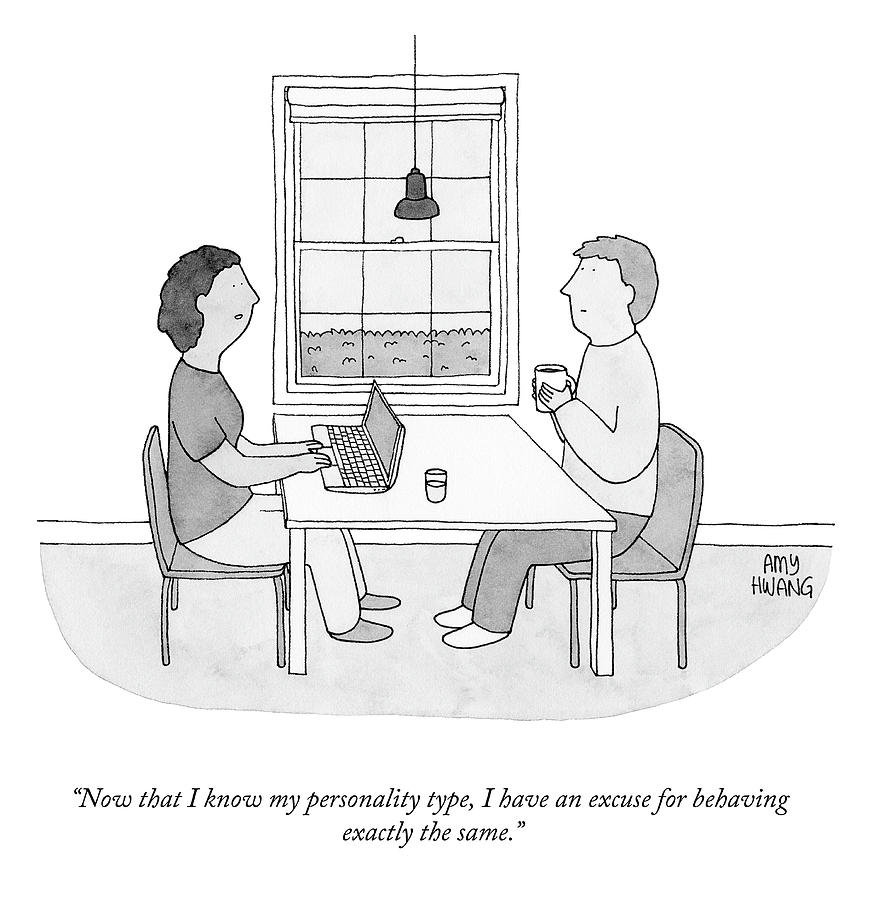 I know. Our weaker areas don’t sparkle. They don’t flatter us. In fact, they kind of kick us in the teeth, don’t they? It can take a minute to see how the same personality tools that highlight our gifts also illuminate the predictable ditches we veer into when we feel tired, threatened, angry, overlooked, or out of control.
But who wants to talk about the places where our hearts bend in on themselves, or where deceitfulness hides in plain sight? It’s much easier to throw up our hands and exclaim, “That’s just how I am,” instead of getting curious and looking closer to see whether those patterns have become a comfortable nest for some besetting sin, a habit of self-protection, a reflex of judgment, a hunger for control, a chronic need to feel needed, or a quieter, more respectable impulse to manage others so we can avoid trusting them.
The coarser parts of our personalities often illuminate truths we’d rather overlook, dismiss, or explain away as cute or quirky. Alas, the people closest to us often experience those traits quite differently than we do. In fact, what feels like personality to us may actually be hurtful to others.
Shall we take a peek then at what’s been hiding in the junk drawer? I’ll go first.
Put Your Type to the Test
Remember when I told you I used to be an otter? I lied. I had otter friends, and their lives looked better to me. They seemed fun and loud and less serious than me, and nobody seemed to expect the otters I knew to do the hard things I struggled to manage. So when our Spiritual Formation class took another assessment, I answered the questions in a way that would sort me into their house.
Which is funny, until it isn’t — because it reveals what personality frameworks can do for us and where they fall short. They hand us language for our instincts, tendencies, patterns, and defaults, but they can’t save us from ourselves. They can’t make us honest or brave. And they most certainly can’t form us into people who love well.
Personality frameworks — Enneagram, MBTI, DISC, StrengthsFinder, you name it — foster growth only when we take them honestly and receive the results humbly. Otherwise, we’ll just keep collecting flattering descriptions of our personalities and use the new language we acquire to justify ourselves.
A few years ago, my school brought in an expert to help interpret our DISC results. He split the roomful of students into outgoing and reserved, then split us again between task- and people-oriented individuals. He pointed to the gap between the four groups, explaining that misunderstandings run both ways inside the chasm: the task-based groups call the people-based lazy and unfocused, while the people-oriented groups consider their task-oriented peers just plain mean.
He looked straight at the high-D corner where I was standing and said something that still echoes in my ears today: “Some people are afraid of you. Not because you’re cruel, but because your intensity is frightening. People wonder what a strong, fast, certain, task-forward person will demand of them.”
When he said people felt scared of me, little me cried. If you’ve ever used excellence as a way to stay safe, then you understand. It looks dramatic on paper, but it lives in my bones. When anything less than excellence disappoints the people you love, intensity starts to feel like a virtue. Like faithfulness. Like leadership. Like an itemized receipt that serves as evidence of great effort.
But sometimes it’s just armor.
At that moment I realized the problem had nothing to do with a lack of self-knowledge. The problem lay in knowing what to do with it. Because insight can explain the chasm, but it cannot build a bridge. Like the Judds said in the ’80s, only love can do that.
The real test, friend, doesn’t concern whether we’re an otter or a lion or an Eight or a High C. The real test is honestly evaluating what comes out of us when we’re pressed, corrected, interrupted, or asked to do something we just don’t want to do.
The real test comes when a blue monster truck tailgates you for fourteen minutes down I-35 and you start singing “This Little Light of Mine” with a hand gesture that does not impress the Holy Spirit. Like at all.
The real test happens when we’re left on read, left out, or left alone to face the reality of how someone else’s sin will impact our lives in a big way.
Let’s make this practical, yes? What do you reach for when you feel unsafe? Control? Approval? Isolation? Perfection? Humor? Competence? Numbing? Managing others?
We can’t practice ourselves out of a pattern we refuse to admit we have. I’m not talking about playing the shame game. I’m talking about allowing a space for grace to land.
The Practices You Avoid Might Be the Point
Most of us avoid spiritual practices for reasons unrelated to theological disagreement. At least I do. We avoid them because of discomfort. For example, if you’re someone who struggles with the myth of perfection, sabbath likely feels like failure. Silence can feel oppressive. Confession can feel dangerous. And yet, it could be that those are precisely the practices that might loosen our grip and retrain our hearts for mercy. If you’re someone who tends to over-help, solitude can feel selfish. Hidden service can feel pointless. Rest can feel like negligence. And yet, those are the practices that tend to cut through the subtle belief that love equals rescuing.
Can you see the quiet irony? The practices that “fit” us best often cater to our comfort. The ones that feel like a bad match are more likely to interrupt our default patterns in constructive ways. And if that sounds like bad news, then perhaps we have confused formation with self-improvement. Because the hope here isn’t a shinier personality. The hope is loving more and more like Jesus.
The process will look different for everyone. In my life, the two spiritual practices that have proved most uncomfortable yet formative have been sabbath and silence.
In the beginning, practicing sabbath and silence felt like poor stewardship of my time, energy, and resources. But they felt this way because my pattern of behavior was all about production and control through effort and excellence — at the root of which sat fear. Letting work sit unfinished so I could get to bed at a reasonable hour felt like failure. Coming to spend time with the Lord with only my Bible felt wrong. Without my highlighters, decorated notebooks, or flair pens, I had no physical evidence of the minutes spent in scripture.
The tension between my desire to show up as my ideal self versus showing up as my real self was more than mentally uncomfortable. I felt itchy. I didn’t want to sit still. I longed to move on and get busy with things that mattered — because my value was tied to what I produced.
One day, Colossians 1:17 moved from my head to my heart. In the stillness, in the silence, I heard one truth on repeat: If he holds all things together, then … that’s. not. my. job.
Not my job. Of course, knowing this and living like it’s true carries its own brand of tension. A father’s prayer became my own: “I believe, help my unbelief.” This sent me on a journey through the story of scripture looking for God’s character, and Job 38–41 became my safe place. I turn to those chapters when I start forgetting who God really is, when I’m not staying in my lane, or when I’m sliding into old patterns that don’t serve me or him very well at all. Just between the two of us, that happens more than I’d like to admit.
Someone once told me that we’re not the producers. We are the worshipers. It’s true and glorious, and I forget it constantly. I have not arrived. My ideal self doesn’t exist. It’s just me — the me who forgets to leave herself any margin and says yes without checking the calendar. The weak, imperfect me who needs his power made perfect in my weakness. The me who’s learning that the weaknesses highlighted by a personality assessment are nothing to fear. Not ultimately.
Maybe that’s why I wanted to be an otter. They weren’t afraid.
But I am not an otter. I am, apparently, a woman with a junk drawer, some armor, and a High Priest who isn’t shocked by either. Friend, even the weaker places are not accidents. We were not carelessly made. We have limits and lanes because we were made for dependence — on God and on one another. What personality assessments reveal about our strengths and weaknesses doesn’t define us. He does.
We don’t have to waste half the data — it is what leads us toward love.








Such great insight! Thank you for being so vulnerable! And I love your writing style!
Heather,
Thank you for sharing your gift and your heart. It is crushing to think as a ‘D’ people are afraid of us. That’s never the intention, but your words remind me that we need each other – the fast one needs the slower one to remember it’s safe to slow down. I wonder if our invisible efforts are more transformative than the ones that can be seen by the world, because the inward hidden ones are only seen by our Savior.
So much truth, vulnerability, wisdom and humility packed in this written message! This causes me to look inward, reflect and grow with a fresh perspective. Heather, thank you writing this and for allowing God to work in and through you. Beautifully written!
I laughed out loud – okay, maybe choked – as I read this as you nailed me spot on: “Remember when I told you I used to be an otter? I lied. I had otter friends, and their lives looked better to me. They seemed fun and loud and less serious than me, and nobody seemed to expect the otters I knew to do the hard things I struggled to manage…. I answered the questions in a way that would sort me into their house.” Oh that I could be be truly and brutally honest with myself and live into the Me God created.
Thank you for this!
Wow. I needed to hear this in more ways than one. This made me sit with the why behind the personality traits I hide behind, and invite the God who holds all things together to hold me, and all my mess, in His capable hands. All of our personality quirks are meant to point us back to Him. Beautiful article.