




The Battle of Kadesh in the thirteenth century BC, between Egypt and the Hittite Empire, was one of the great battles of the ancient world, notable for both sides making heavy use of chariots. Archaeological and textual sources indicate that Kadesh was a bloody, chaotic stalemate that nearly ended in disaster for Pharoah Ramesses II and the Egyptian army.
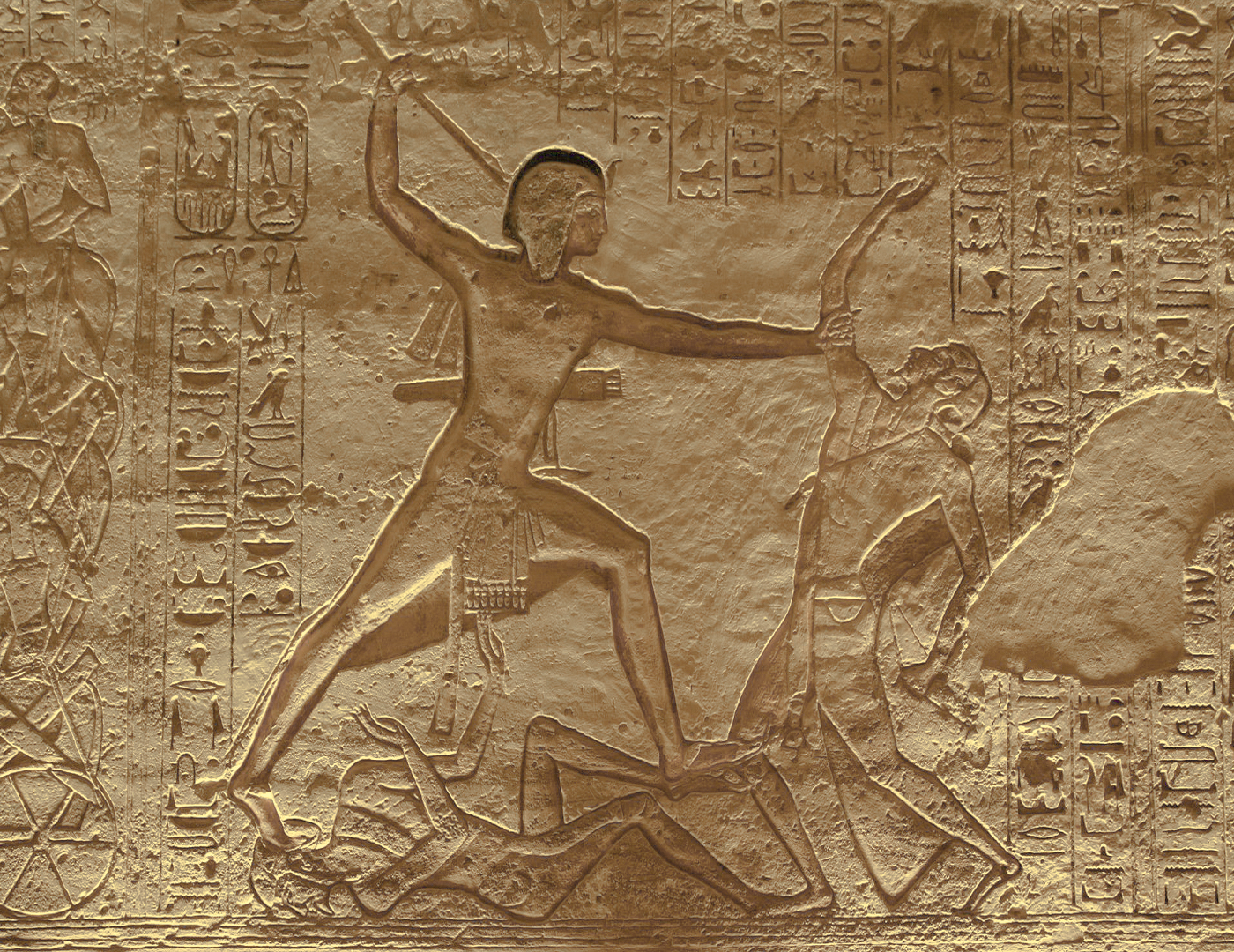
But Ramesses knew as well as any contemporary influencer that, sometimes, you have to dress things up a bit for your followers. Accordingly, he commissioned a set of temple reliefs at various sites in Egypt and Nubia depicting himself as a gargantuan, godlike being smiting the helpless Hittite warriors in a glorious victory for Egypt.
The phenomenon of false or misleading images, it turns out, long predates large language models, Photoshop, or even the camera.
On the other hand, the growing ubiquity of AI-produced content has certainly exacerbated the problem. In a recent article, Tyler Austin Harper — staff writer for the Atlantic and probably my favorite lefty writer — describes his love of “wetsuiting,” that is, wading out at night to remote sandbars or rocks to fish for striped bass. Some in this niche community post pictures of their catches on Instagram. “People who fish are habitual liars,” as Harper notes, fondly, but the increasing prevalence and sophistication of AI platforms now leaves Harper and his friends questioning not only the purported size of the pictured bass but whether it even exists at all.
While photoshopping otherwise genuine images has long been an issue in the angling world, Harper complains that AI’s capability to create images from scratch “automates away the need not only to photograph a fish, but to even catch one in the first place.” Combined with the “documentary impulse” to gain notoriety online for one’s (ostensible) skills, AI tools provide an avenue to impressing others without the hassle of building those skills in the first place.
For Harper, the worst part of it is the reflexive skepticism engendered by the pervasiveness of AI-produced slop. It’s a very human thing to be amazed by displays of skill — but now, if “AI makes it impossible to trust what we see … [then we] have lost the ability to believe in the accomplishments of others.”
To be fair, there is such a thing as “healthy” skepticism. Even without AI, there’s no end to noise, rumor, speculation passed off as fact, and half-truths percolating about the internet and airwaves.
Sometimes the effects are harmless enough. During Russia’s first invasion of Ukraine (c. 2014), I came across an article that Netflix had responded by suspending Vladimir Putin’s personal account. I shared the article completely in earnest, partly because I thought it was funny, partly as an indictment of the West’s weak response to Russian aggression.
I had, in fact, fallen victim to “satire,” which was embarrassing enough, but hardly damaging to myself or anyone else.
Other examples are less benign, like my online ranting against Elon Musk’s perceived Nazi salute — when, as it happened, even the ADL was urging the public to give Musk the benefit of the doubt. It’s probably unlikely, but certainly not impossible, that I tipped somebody somewhere a bit more in the direction of fear and resentment, in service of venting my feelings about my own hasty interpretation of a picture.
***
Again, none of this is new. The world has always contained its share of charlatans, fraudsters, and demagogues making use of fact-free propaganda. Jesus himself encourages suspicion in some situations:
Then if anyone says to you, ‘Look! Here is the Messiah!’ or ‘There he is!’ — do not believe it. For false messiahs and false prophets will appear and produce great signs and wonders, to lead astray, if possible, even the elect. (Mt 24:23–24)
The problem is when skepticism becomes a baseline disposition or attitude. As Harper implies, it’s spiritually toxic to assume that one is being fed lies, that every claim or report (or image) is guilty until proven innocent.
I should know. One of my friends has described me as the “most skeptical person” she has met (although I doubt that). She does have a point: I typically feel that most people are, consciously or not, trying to sell me something. I’m quite familiar with confirmation bias, the “documentary impulse” of which Harper speaks, the well-documented faultiness of human memory, and the machinations of spin doctors from every ideological stripe — and this is my default lens for viewing the world. I have no desire to be taken for any more rides by anyone.
But while being primed for disbelief will often save you from being duped, it will also leave you in a different kind of delusion: that the world is a much colder and narrower place than it really is. To put it in theological terms, the various forms of self-seeking that the world displays will seem far more “realistic” than the love of God.
Much better is Phoebe Bridger’s attitude in her 2020 song “Chinese Satellite,” which will almost certainly top the year-end Spotify roundup as my most-played track this year. In the second stanza, Bridgers recounts observing a friend getting into a screaming match with evangelicals at some protest.
But the next part hits like a freight train:
But you know I’d stand on the corner
Embarrassed with a picket sign
If it meant I could see you
When I die
As in, Bridgers would do the much-maligned work of the culture war if there were a God she could be with at the end of it. She goes on:
Sometimes when I can’t sleep
It’s just a matter of time before
I’m hearing things
Swore I could you feel you through the walls
She has to remind herself that “that’s impossible,” but goes on to admit, “I want to believe.”
Her impulse is to believe, to hope against hope that Narnia is real and this dreary cave isn’t all there is in the world — that there are, in fact, real things to be wondered at.
Such an impulse will, almost certainly, make you look like a fool from time to time. No one considers credulity a virtue. It can even be downright dangerous; discernment of spirits is, after all, listed as a spiritual gift.
And discernment is important. The world is full of lies, shams, and AI slop. It’s also full of remarkable achievement, astonishing acts of love and forgiveness, and all manner of beautiful things — in short, God’s grace, common, special, or anything in between. It seeps through the very walls, if we’re listening for it (and maybe even if we aren’t). It’s worse than useless to guard against lies if, in doing so, we lose our hearts to the “impossible.”




