




The spelling of the word “occasion” gets me every time. No matter how many times I write it, I always want to add an extra “S.” Thankfully, there is zero consequence for my ineptitude due to my ever-trusty companion, autocorrect. My little automated editor doesn’t just highlight my mistake, but corrects it for me, politely leaving a dotted underline to let me know that it made the change. Along with Google and an online thesaurus, autocorrect is my constant coworker. It makes me look smarter than I actually am and asks nothing in return. I often feel like I couldn’t survive without it.
We live in an age where seemingly everything is done for us. We no longer need to edit our own essays, brew our own coffee, or remember to pay our own bills on time. It’s not enough that we have a microwave to pop our popcorn anymore. We now need a button on the microwave whose sole purpose in life is to perfectly pop popcorn. Woe to anyone who tries to heat tortillas with the popcorn button!
Ironically, everything being automated has seemingly led to less autonomy. Because everything is done for us, there is nothing left for us to do. Apparently, Gen Z doesn’t even want to learn how to drive. “I’ll call an Uber or 911,” one young woman told the Washington Post recently (the police, of course, will soon have to modify its motto: “To Protect and to Chauffeur”). Whereas getting one’s license once symbolized freedom and independence, driving is now an inconvenience, especially if texting while driving is illegal. It seems we have become too successful at delegating our power. We have given ourselves over to the things that were meant to serve us in the first place.
Automation has become a cultural virtue in a world where convenience reigns supreme. Why do something yourself when you can pay a little extra for someone else to do it? “Work smarter, not harder,” as the saying goes. On Saturday Night Live, Nate Bargatze recently likened himself to a king when ordering food from DoorDash. “Bring me a Blizzard now!” he orders a delivery guy, a person who he will never see face-to-face. “Lay it quietly on my porch. Don’t let anyone know that I’m doing this. It costs three grand but I’ll pay it.” On the one hand, our culture has reached peak evolution. We can survive comfortably without any exertion or risk to our well-being. At the same time, Bargatze says it best when he admits that DoorDash will probably be the thing that kills him.
I can’t help but wonder if something is lost when we no longer need to learn how to be somewhat self-sufficient. Is it really necessary to know how to parallel park or how to write in cursive in order to be a human being? On their own, neither of those skills seems necessary in 2024, but developing a skill does far more than the task itself. It is often a first lesson in both humility and curiosity. It stretches our limited understanding of our lives. A friend of mine, who just turned sixty years old, recently picked up the violin for the first time since grade school. He would be the first to admit that he sounds terrible, but each time he returns from a practice session, his face conveys the joy of a ten-year-old.
Moreover, automated devices don’t always make our lives easier. Life has never been more convenient, but it’s also never been more complicated. Yes, we have the ability to control a cheeseburger to be dropped on our doorstep in the middle of the night. And praise God for that! But do you even know how many subscription services you have? Or how many wifi enabled devices are currently dragging down your download speed? At the moment, I have 319 different passwords saved on my browser, 42 of which I’m told have been compromised. I have seven different Google calendars, all synced to four devices. And the number of unread messages in my inbox is too embarrassing to type out. Does it sound like I’m in control of my life? Now that automation has put us all on autopilot, who exactly is flying the plane? With anxiety and impulse control disorders being at such high levels, it seems we cannot even control ourselves.
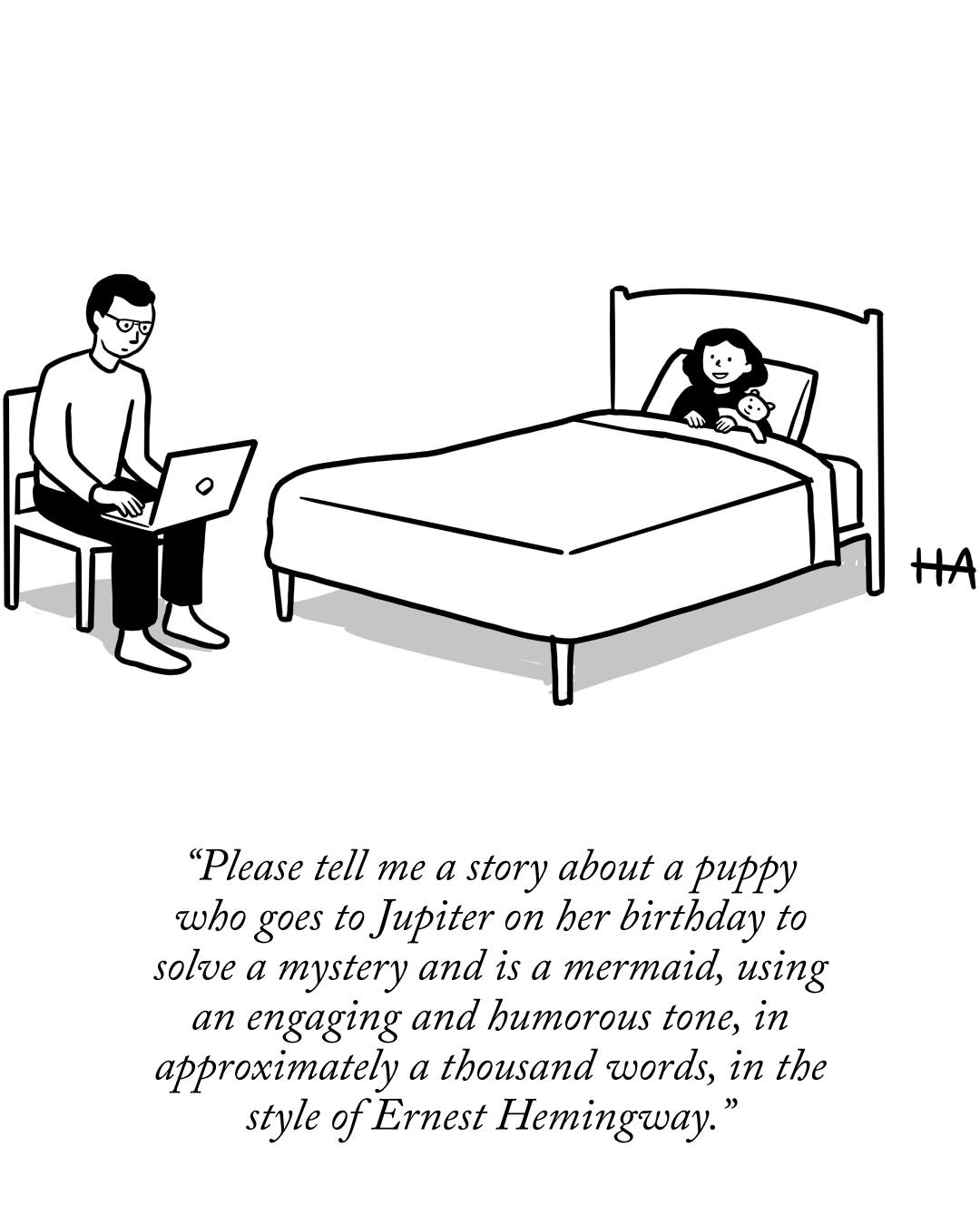 AI has recently brought automation to its natural climax. Automated devices are not only doing things for us, but thinking for us as well. No longer do we merely need to order everything around us, but to control everyone around us. Even the way we relate to one another is being governed by gadgets. The New York Post reported that couples are “using ChatGPT to help win arguments.” One user wrote that, whenever he and his girlfriend have a disagreement, she will leave and then “come back with a well-constructed argument breaking down everything I said or did during our argument.” In response, an online comment recommended discussing the girlfriend’s actions with ChatGPT from his perspective and “It’ll do the same thing to her.” Whenever someone else’s desires differ from our own, it is only natural that we weaponize our devices against each other.
When Jesus says that he came that we might have abundant life, was he really talking about DoorDash? Is a life of convenience and unchecked fulfillment of our desires really the good life he imagined for us? Sure, Jesus would probably marvel at the wonders of a microwave, but I doubt he would call it a miracle. Like Nate Bargatze, it often feels like we are facilitating ourselves to death. Convenience has a way of hollowing us out into a facsimile of real life. Consider it the frozen-pizza version of reality. DiGiorno tastes just fine — and, if you have it often enough, you can convince yourself it’s actually good. But all it takes is one pizza made from scratch by a seventy-year-old, overweight, Italian man for you to realize how pizza was meant to taste. The pleasures of convenience are a cheap and easy substitute for life to the full.
Amid all the conveniences, there is one thing that was done for us that we could never do on our own. While driving cars, editing papers, and cooking pizza may all be a part of the struggle of life, the atonement of sins was done for us by a deus ex machina. He makes me look more righteous than I am and asks nothing in return. I often feel like I couldn’t survive without him.








Love this Sam and I know I could not survive without Him. Going to share with my grandchildren.
warmly,
Betsy