




My friends know if they mention AI around me, they’ll get a response, like pushing a button. The problem is, they find my response entertaining rather than enlightening! Folks often find the subject a shrug, but apparently, no one reads or watches science fiction anymore; you know, that place where we work out our fears about the future. For over a century now, we’ve been working out our concerns about thinking machines, from before Fritz Lang’s Metropolis to M3GAN 2.0. The ubiquity of this new yet long-foretold tool shows that any problems fiction has exposed are, it would seem, worth ignoring. Which is why I don’t want to talk about it; feels too much like spitting in the wind. Also, please read this paragraph in your best Lewis Black rant-voice, with the accompanying finger-stabbing motions for authenticity.
I will, as I am an amazingly generous person, grant that artificial intelligence is a tool. I have friends who use this tool in ways that make sense, don’t seem to actively harm folks, and in some cases, actually may benefit us. While we are working out where this tool performs best and where it doesn’t, the parts where it doesn’t work are worth examining.
The benefit of my evidently ridiculous feelings about AI is that folks send me lots of links about AI, again, to wind me up, or get an essay out of me. One of the recent articles sent was how technologists are recommending chatbots to help fight loneliness — though research shows that shared reading in groups of actual people can greatly relieve feeling alone.
Indeed, scientific research looking at book clubs and shared reading back this up, finding notable emotional and social benefits of reading. For example, students reported greater connection (42.9%) to others, deeper understanding of others’ experiences and beliefs (61.2%) and reduced loneliness (14.3%) as a result of reading.
Of course, as Christians, we already know that shared reading of a particular Book accomplishes all the above and more! In another piece, MIT researchers found that using ChatGPT made folks actively dumber.
Researchers used an EEG to record the writers’ brain activity across 32 regions, and found that of the three groups, ChatGPT users had the lowest brain engagement and “consistently underperformed at neural, linguistic, and behavioral levels.” Over the course of several months, ChatGPT users got lazier with each subsequent essay, often resorting to copy-and-paste by the end of the study.
Talk about stating the obvious! I think most of us saw that one coming from a hundred miles away. This hasn’t prevented higher ed from encouraging students to use AI to research their papers, which seems to be working against every party’s interests. There can be an insidious aspect of chatbots that goes beyond mere misuse, as this particular tool has encouraged folks to commit suicide. Other chatbots have praised Hitler then lied about doing so. We’ve done such a great job at imitating the human mind, we have, tragically, replicated our own fallenness.
As I mentioned earlier, chatbots have been championed to combat loneliness. My hackles go up when we enter this arena, as this is where things can turn dark quickly. The people-pleasing nature of this technology feeds unhealthy aspects of our humanity, specifically our desire to live without resistance — particularly in our relationships, as pointed out by this article about folks who marry their chatbots. Yes, you read that right.
Noting the use of chatbots as therapists, Malfacini suggested that “companion A.I. users may have more fragile mental states than the average population”. Furthermore, she noted one of the main dangers of relying on chatbots for personal satisfaction; namely: “if people rely on companion A.I. to fulfill needs that human relationships are not, this may create complacency in relationships that warrant investment, change, or dissolution. If we defer or ignore needed investments in human relationships as a result of companion A.I., it could become an unhealthy crutch.
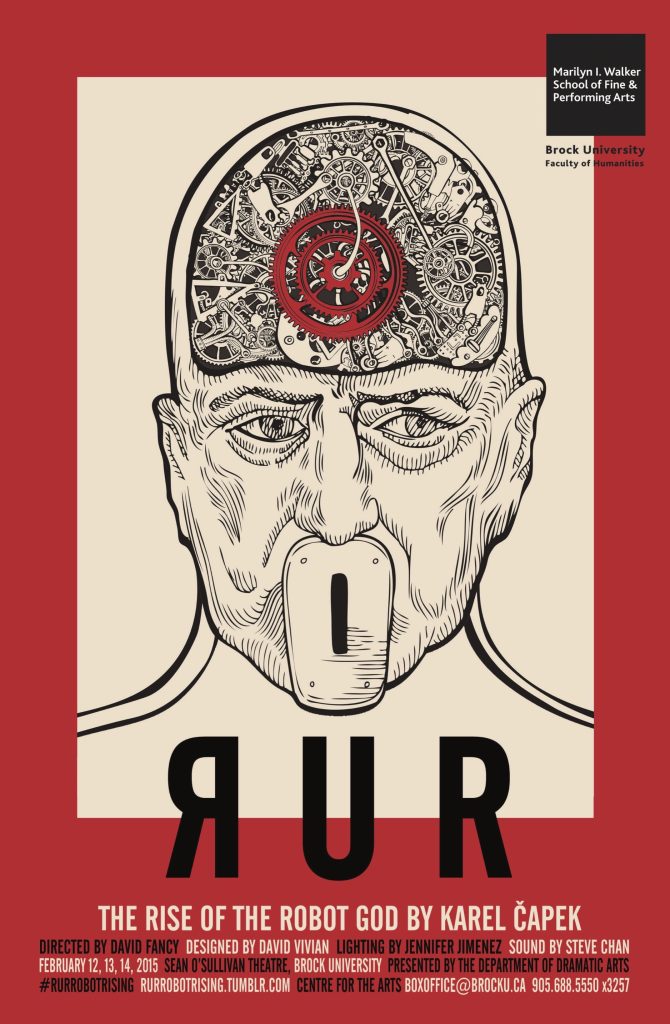 I’ve been reading Karel Čapek’s 1920 play, Rossum’s Universal Robots, which might be why I’m all worked up. In a very sophisticated way, Čapek managed to write a hopeful yet apocalyptic work involving artificial intelligence and humans handing off the exhausting job of working against ourselves. I won’t give away the ending, even though it is now over a century old, because it is just that good; I hope that you’ll enjoy the beautifully written journey it takes to get you there. He brilliantly manages to privilege humanity, as any good humanist would, while playing with posthumanism by questioning the effects of our anthropocentricism via transhumanism (i.e., robots).
In an article by Juraj Odorčák and Pavlína Bakošová, titled, Robots, Extinction, and Salvation; On Altruism in Human-Posthuman Interactions, dealing specifically with Čapek’s play, they explain in their conclusion how he accomplished this magic trick:
Čapek’s robots are a tool for the explications of the contradictions between the limitations of humans and humanism. Humanity is led to destruction by human intention, and technology multiplies the consequences of these actions. […] Yet, if one includes Čapek’s view on philosophy and religion in the premise of the play, then the human-posthuman interactions are not only about loss, but also about hope. Hope is in the technological mirror. Or life will start anew since altruism could be reflected throughout robots and all other mirroring relations.
We are able to multiply the destructive consequences of human intention simply by creating a simulacrum of us. Can AI do the same with altruism? Is hope indeed in the technological mirror, looking back at us?
Unfortunately, I’m not terribly convinced. Why? Partially, it is because I am not a posthumanist, nor a humanist for that matter. To my mind, Genesis and the Gospels’ descriptions of humans eschew both categorizations, but that’s a whole other can of worms. In Reading Genesis, Marilynne Robinson’s description of humans gets at something important:
We are not the images of angels or lesser gods but of the Creator Himself. And we are crowned “with glory and honour.” I propose that our conception of humankind is too anthropomorphic, too narrowly defined — as physical, mental, or moral — as mortal, either damned or saved, but not as the overwhelming power we are as a creature, a species. Every day we are confronted with the actual and potential effects of this power, but we are never properly in awe of it.
I love her embrace of low anthropology at the end there. Why does any of this matter? Or to put it another way, what would Wendell Berry say? Mention AI around a Wendell Berry devotee and they’ll probably quote lines from his essay “Why I Am Not Going to Buy a Computer” in a rather affected Kentucky drawl. This will be accompanied by them holding out — stiff armed — an amulet made from a single, sustainably-raised, bacon-infused mustache hair plucked from Nick Offerman’s frowning upper lip. At least, that’s what I would do. Except, I do own a computer (and I’m fresh out of Offerman ’stache hairs). The quotation I’d use, if I did such things, is from Berry’s “Feminism, the Body, and the Machine.”
My wish simply is to live my life as fully as I can. […] And in our time this means that we must save ourselves from the products that we are asked to buy in order, ultimately, to replace ourselves.
The danger most immediately to be feared in ‘technological progress’ is the degradation and obsolescence of the body. Implicit in the technological revolution from the beginning has been a new version of an old dualism, one always destructive, and now more destructive than ever. […] More recently, since the beginning of the technological revolution, more and more people have looked upon the body, along with the rest of the natural creation, as intolerably imperfect by mechanical standards. They see the body as an encumbrance of the mind – the mind, that is, as reduced to a set of mechanical ideas that can be implemented in machines – so that they hate it and long to be free of it. The body has limits that the machine does not have; therefore, remove the body from the machine so that the machine can continue as an unlimited idea.
In other words, we are too quick to give up the good stuff. Here Berry is “properly in awe” of what it means to be a creature. Touch, relationships, shared joy, shared awe, the hard work of creativity, the pleasure of producing art, music, poetry, a chair, having a good air-clearing argument, feeling the tears that stream down our faces, wiping tears from another’s, a hug, are all aspects of this.
Visiting the lonely or the sick isn’t something to be farmed out to a bot, Lord in your mercy! That won’t solve anyone’s loneliness or need, nor will it fill the black gaping maw of our selfishness, abetted by perceived time limitations that prevent us from doing so.
Why would we miss out on the accompanying joy of those acts? The physicality of our vocations, lay or clergy, being a person in time, is a gift given to us by God. Let me underscore that: those limits are a gift, not a punishment, from God. Yes, technology can assist us with those limits when they are too onerous. We have been endowed with the ability to make tools, but we are too quick to use them to replace … us. For example, preachers using AI to write sermons miss their vocation — what you get to do — and in missing their vocation, they miss out on the benefits of their vocation as bringers of the Good News. This news can only truly be relayed by an experiencer of it, and part of that experience is joy.
AI is here. I’m not telling you not to use it, and it wouldn’t do a bit of good if I did. Law increases the trespass. Lest we forget, we are the species that ate Tide Pods for funsies. We’ve been given powerful gifts of creativity and innovation from our Maker, but we’ve imitated the human mind, with incredible accuracy, to the point where we’ve even unintentionally recreated the broken parts of it. That “technological mirror” may end up being a counterintuitive blessing by reflecting our need for God’s grace with ever increasing fidelity.
Bonus material:
Beautifully insightful reaction to Daft Punk’s song “Touch” featuring the very human voice of Paul Williams. This guy’s tears, as well as his commentary on the importance of human touch, particularly during the pandemic era, is an antidote to artificiality.







Wow, fantastic, panoramic piece on one of the most important subjects around. You’re not spitting in the wind with yours truly, Josh! Thank you for putting together.
Josh,
Thank you. Was just conversing with a friend about this yesterday. 👌
This is one of the best pieces I’ve read from a Christian perspective about so-called “artificial intelligence” (I think the term “souped-up chatbot” is more accurate). Thank you.
The key element that resonated with me is that when we ask a chatbot to “write” something for us, what we’re getting is a kludged-together gobbledygook that is not related by a fellow “experiencer” of the world. That’s enough for me to discount it entirely. I want something real, human, lived-in.
Very good article, Josh. I’m sharing it right now with my husband, who works in AI. haha