




True story. It was some years ago now … I was in the second or third interview with the search committee of a congregation, one to which I was eventually called.
A member of the search committee said, “I have a question … What’s your thing?” He elaborated, “Most ministers have a cause or an issue that is sort of their thing. I don’t think I know yet,” he said, “what that is for you.”
He wasn’t against ministers having a particular cause or issue — a thing — about which they were passionate and which they would urge on the congregation. He, an activist for liberal causes, was for it. He just hadn’t figured out what mine was. Was it racism? Gay/lesbian inclusion? Women’s rights? Immigrant justice? Poverty/economic justice? Health care? Interfaith dialogue?
I thought about it for a moment and then said, “My cause, my thing … is the church. I really believe in the church and think it matters, that it’s important.”
The man who asked the question looked a bit perplexed; disappointed really. His expression, maybe it was the eye roll, said, “The church, really?”
Still, I was kind of proud of my answer, if for no other reason than it was the truth. Also I had resisted the temptation to tell him what he wanted to hear. I could’ve trotted out some cause or issue. I was interested in and had some level of concern and involvement in most of those listed above. All are important. But they weren’t my “thing.” My cause was the church, the church and gospel.
To my mind, it is a problem when clergy or laity see the church as primarily instrumental, as their platform for another “more important” or “relevant” cause or agenda.
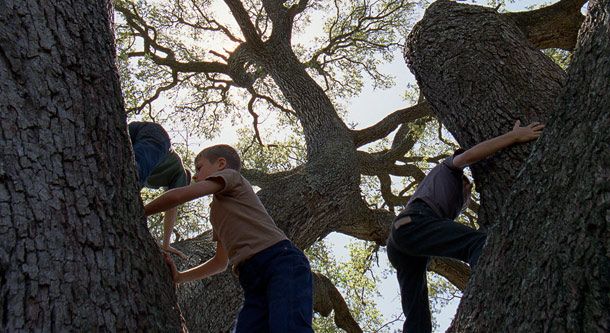
A Church Is Like a Tree
Dennis Sanders recently did an interview at his Church and Main podcast with Trygve Johnson. Johnson is a man after my own heart. In a difficult time for the church and for our culture, he spoke forthrightly, enthusiastically, of his love for the church. If you listen to the podcast — hope you do — I especially recommend minutes 14–20.
With Psalm 1 in mind (“They are like trees planted by streams of water, which yield their fruit in its season, and their leaves do not wither, in all that they do, they prosper”), Johnson compared a healthy church to a healthy tree.
“A tree provides stability, even as it changes with the seasons. It is a stabilizer to the soil. It offers a canopy of shade to those in need of respite. Its branches provide a place for children to climb and play. It acts as a filter to take in the poisonous gases and recycle them as fresh air. A tree roots a community. If you want to destroy a geography, get rid of the trees.”
What a great analogy or image. “When a church is healthy,” concludes Trygve, “it brings up the water table for everyone in the community.” But like trees, we have tended to assume a church will always be there. Like trees, we see them, but we don’t see them. We take them for granted, only to wake up one day and discover they are gone. We say, “Something is missing, something’s off here, what happened?”
I know, I know, many people would disagree with Johnson’s positive portrayal of the church, some virulently. Legions point to the church’s failures. Writing in public spaces, I hear plenty about this. Yep, we’ve failed so many times in so many ways. Believe me, I am well acquainted with the failures and foibles of the church.
And yet … I love the church. I have seen, experienced, and felt the church Johnson describes — the church that is a tree planted by streams of water, a tree that stabilizes the soil, that roots a community, that absorbs the poisonous gases of our culture recycling them as forgiveness and hope, that raises the water table for everyone in the community, whether they are part of that or any church.
Johnson’s non-hedged, full-throated — but also not naive or triumphalist — profession of love for the church is a rare word these days. It is also bold and powerful and needed.
We need the church to be — not triumphalist, not self-aggrandizing, but also not apologetic. We need the church and churches, and those who lead them, to be confident.
Not Only Church
But it’s not only the church in which we have lost confidence. The 2023 Wall Street Journal/ NORC poll explored American’s confidence and engagement in five key sectors and values, as well as how levels of confidence in each have changed in the last twenty years.
Those five were patriotism, religion, having children, community involvement, and money/ personal financial well-being. Participants were asked, “How important is each one in your life?” Confidence and engagement had declined precipitously in all but one. The sole sector in which American’s trust had grown? Money. I could get moralistic about trusting in money and wealth, but I won’t. I get it. It’s understandable. But also kind of sad. That’s all you got?
It is almost a cliché to say that we are living in a time when trust has everywhere eroded. David Brooks recently cited a study where people were asked, “Do you believe most people are selfish and out to get you?” 72% of millennials and Gen Z answered “Yes.” That too is sad.
In such a world, you don’t often hear people making bold affirmations like those Trygve Johnson offered. Irony is our go-to. When we say “I believe” we’re not saying, “Here I stand, I can do no other.” We’re saying, “I don’t know, maybe, it’s possible.” We play it safe. We hedge our bets. We draw back from engagement and commitment.
But I wonder — could this be a vicious cycle, one that feeds on itself, deepening distrust, cynicism and isolation? How odd, how refreshing it is to hear someone go all in. “I love the church.” “I love this school.” “I love this place, this community.” Such a love is not blind to foibles and failings. It sees them, but sees more.
I Believe in Believing
I remember a student in a confirmation class some years ago. He had been quiet for most of our sessions. I didn’t have a good read on what he might be thinking or if he was thinking anything other than “When will this be over?” Still, he showed up every week. At the conclusion, I asked them all to write their own Statement of Faith. I was moved — “shocked” might not be too strong a word — by his very first line. He wrote, “I believe in believing.”
Think about that. “I believe in believing.”
Being critical, looking for the flaws, saying what’s wrong. There’s a place for that. I do plenty of it. Too much. But at some point, what matters is what you affirm, what you stand up for, what you believe in, and what you love. “There is,” wrote Montesquieu, “a power in the universe forever on the side of those brave enough to trust it.”
“What’s your thing, your cause?” asked Bob. “My cause is the church; I believe in the church. I believe it matters.”
To all of you who are doing the hard, heroic work of keeping the tree of a particular church strong and healthy — to the faithful laity, to the church staff, to the clergy, the pastoral leaders — thank you. You are helping to stabilize the soil in an unstable time, to clean the cultural air of poisons, to raise the water table for everyone. What you do matters. It matters enormously. Thank you, bless you.








This is excellent. I could not agree more! I am a parachurch youth-worker and the animosity and bitterness toward the church is astounding. This refreshed my soul!
“I believe in believing.” I will be carrying that with me all week..
I love this so much ! Yes! I love the church. Of course , the church is imperfect . Of course we all are. But still the church, like its members, is lovable. This article expressed feelings that I’ve been struggling to put into words. Thank you.
After 2000 years, the church is still here and making a difference in the lives of individuals and the world, despite its scandals and scoundrels. I too believe in the church.
Hi Tony, thank you for writing this. I always look forward to seeing your pieces on Mockingbird. This one brought up a lot for me, so I thought I would play devil’s advocate for a bit — a little sympathy for the devil, if you will.
One of my concerns is that the loss of confidence in the church is treated as a cultural problem rather than first receiving it as an indictment of the church, or at least as a symptom of the church’s own pathology. Repeated testimony does not become less morally urgent because it is repeated. In my view, loss of confidence in the church may not be evidence of cultural cynicism. It may be evidence of institutional harm, a witness to suffering that has not been adequately acknowledged.
Personally, I have been part of churches for 40+ years, and I have experienced nearly every form of harm and abuse at the hands of churches and preachers. Those churches and preachers did not lack confidence. They told me they loved me, that I could trust them implicitly, that they had my best interest in mind, and that their voice in the pulpit was equivalent to God’s word. I was told, “You have to keep hearing it.” So I kept coming back (until I didn’t), because within that framework and system, leaving meant depriving myself of hearing God’s word.
Given both my own experience and the 2,000-year history of the church, caution toward the church seems like a sane and wise response. Because of its history, the church should be in the position of building trust, not expecting it.
Distrust, caution, and discernment may be very good signs of faith and maturity. It may mean someone has grown up, seen through the facade, and stopped mistaking institutional confidence for true spirituality. If someone is cautious about going back into an abusive relationship, we would call that wisdom, not cynicism.
Also, Psalm 1 is not talking about the church as an institution. It is talking about a person. To transfer that image onto the church gives the institution the beauty of the righteous person in the psalm.
A church with this much history should not be surprised by suspicion. It should expect it, earn its way past that suspicion slowly, and seek to understand why people do not have confidence in it.
Thanks to all who have responded. Melvin, I don’t disagree with you at all, and I do concur with your words, “In my view, loss of confidence in the church may not be evidence of cultural cynicism. It may be evidence of institutional harm, a witness to suffering that has not been adequately acknowledged.” I’ll be doing part 2 of a lecture series on “Church and State at the 250th” next week. (See my Substack for video of Part 1 last week). In Part 11 I will lean on J. Rauch’s “Crossed Purposes” and his argument that the church has a lot to answer for regarding the mess we are in. I do love the church but also agree with Rauch and much that you say. As the NT puts it, “Repentance begins with the house and people of God.”
Someone said recently to me (in a similar vein on Christianity) that “truth is truth.” I was quite bothered by the statement. I didn’t bother nitpicking them because they’re a newer Christian, but to have such confidence is in proximity to arrogance and to have no doubt is quite questionable… at least in my estimation. I’m open to being wrong. I too, believe in the church… but to believe in belief is doubling down and really doesn’t hold up to much scrutiny.