




This past May, the Detroit Free Press printed an obituary which shocked not only Detroit but the entire rap community. In it, the deceased is described as “a rogue splinter in the flourishing underground rap scene of the mid to late 1990’s.” His songs have inspired the masses and his pen is the culprit behind the wittiest of lines. When asked about the loss, fellow rapper 50 Cent had this to say: “He’s not a friend. He’s a psychopath.” Even still, the piece makes it clear, Slim Shady, the legend, will not be forgotten.
Okay, so it may have been a marketing campaign for Eminem’s new album and not a true announcement of someone’s untimely passing. The Death of Slim Shady (Coup De Grâce) is the rapper’s twelfth studio album, which happens to be his eleventh album to rise to the top of the Billboard charts — dethroning Queen Swift of her twelve week domination. Even with its charting success, it wouldn’t be an Eminem album without the flood of critique from fans, critics, and the rap community overall. With the controversial, and outright offensive, Slim Shady making a reappearance this should be no surprise.
If you don’t know, Slim Shady is a character part of the unholy trinity that is Marshall Mathers, Eminem, and Slim Shady. While Marshall Mathers is the man, with Eminem as the performer, the Slim Shady persona is known for being aggressively offensive while utilizing absolutely absurd yet skillfully creative words. He is the untamed and on-the-loose version of Marshall. The creation of Slim Shady occurred after the lackluster release of Eminem’s 1996 debut album, Infinite. While there was hints of who Eminem would become, this album was a milder and seemingly less vulgar attempt at the art — still ambitiously lyrical. The album’s lack of success obviously left the artist unsatisfied: “After that record, every rhyme I wrote got angrier and angrier.” Then one day, while reportedly on the toilet, Slim Shady was created.
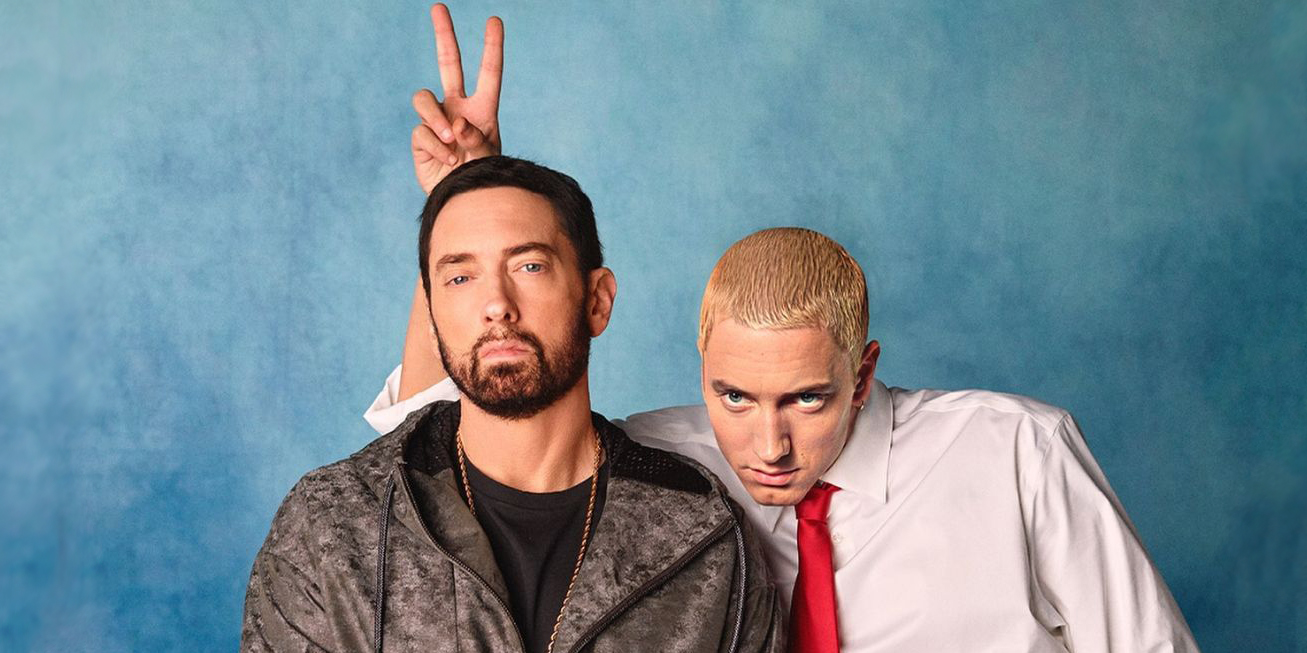
This led to the infamous bleached hair, Dr Dre’s classic production, The Slim Shady LP and the opened floodgates of outcry and lawsuits. The new album launched Eminem into fame and stardom with his well known hit “My Name Is” and the shocking track “Guilty Conscience,” where he goes head-to-head with Dre like an angel and demon on different people’s shoulders. But there were controversial lyrics and songs which troubled people. Like “’97 Bonnie and Clyde” where he fictitiously goes with his young daughter to bury his wife (whom he’d just murdered). He also discussed his mother’s drug issues and an old school bully, which resulted in lawsuits. But this did not stop Eminem, who continued to make contentious music that was often honest, but depravingly so.
After hitting major success, Eminem’s marriage eventually crumbled and his best friend passed away leading Marshall into a spiral of drug addiction and a four year silence. During this time he got sober and created a dividing line in his catalog where people continually debate he was never the same again — some say for the better, others for the worse. But Shady didn’t go away. Shady evolved into the voice calling him back into using, back into clawing his way to fame. The Shady persona certainly brought Eminem to fame but in Marshall’s mind, it also caused his demise. Numerous songs, like “When I’m Gone,” traced how the fame that Shady achieved for Marshall was what also ruined his family life and his relationship with drugs. That’s why he’s had multiple allusions and sometimes plain outright skits in his albums where he attempts to kill Shady. Nevertheless, the Shady persona seems to return.
There is a specific instance on Relapse — an album which Eminem states he was learning to rap again after rehab while simultaneously battling the temptation to relapse — where it’s explicitly spelled out for us. On a song called “My Darling” Eminem is tempted and Shady is summoned.
“Shady, I know you’re in there somewhere, come here!
Talk to me, sit! Here, pull up a chair!
Why don’t you cut your hair?
Ha-ha-ha-ha-ha-ha! Dye it back, come on, try it! […]Shady, listen! You hear that?
They’re screaming for you, I can bring
your career back! […]This is what you wanted your whole life, Marshall, right?
Look at this house, look at these cars:
they’re so nice, woo!
Oh, but you didn’t know fame has a price too?
That you just now seeing the downside to
Lose your best friend from high
school, your wife too..
become a valium addict, start a rehab cycle
But together we can break the cyle Marshall…”
On this track, Marshall even tries to kill Shady again and yet he doesn’t die. However, this battle between Shady and Eminem seems to fade into the background as a somewhat — emphasis on the somewhat — more mature Eminem takes over the career from that point on. This of course, brings criticisms from fans who channel the temptation in their calls for the old Eminem to come back, or for Shady to take the forefront again, at least in his old fashion.
Eminem begins making songs like “Headlights” in which he apologizes to his mother who he’s had infamously degrading public words for. He talks honestly about his addiction, why he was the way he was and how grateful he is to be sober now — he even begins making more marketable music with pop artists. Of course, the lyrical exhibition is still taking place and he has his fun with jabbing people but it is clear even in the tone and cadence he uses that Eminem has changed.
That long road leads up to today and The Death of Slim Shady (Coup De Grâce). Throughout his career Marshall has killed Slim Shady multiple times and he seemingly never dies. This depraved, tempting and destructive side of himself is ever-present a force to be reckoned with. And reckon with it he does.
The new concept album imagines Slim Shady reemerging and taking over Marshall’s life once again. He forces him to relapse and brings out the old vulgarity and offensiveness of Slim — even using some sort of voice modifier to sound like his old 90’s self. In a brilliant move, Eminem gives the fans what they’ve demanded and simultaneously shows why Slim has been left in the past.
On “Guilty Conscience 2” the album comes to a climax as Slim and Eminem have a back and forth in the style of the original song with Dr. Dre. It’s a deconstruction of himself as he breaks Shady down to reveal his immature, hurt, and bullied inner child. He shows that Eminem utilized this character to rise to fame while also deflecting the criticism of how his words affected people. The tracks ends with a fight between the two with Eminem ultimately getting the upper hand and committing the coup de grâce by shooting Slim. And yet, a skit after the song reveals the entire concept of the album was a dream, perhaps a nightmare, of Eminem’s which could arguably leave the door open for Slim’s return once again.
While all this might seem overly complicated or maybe even over dramatic — or even a great way to continue making money while rehashing similar concepts, fair enough — the idea of a dichotomy within ourselves is not a foreign concept to humanity. We often try to get rid of parts of ourselves only to find them resurfacing again quite quickly. You promise to rid yourself of the easily angered person residing in you and to be more gentle with your children, only for a Magna-Tile to be thrown at your face the next morning. You swear the version of you who dresses in a robe and carries gavel in hand will not arrive at the workplace tomorrow, but then your coworker tells you they love watching The Bachelor and suddenly you are declaring a verdict over a menial difference in entertainment taste. You tell yourself there won’t be a resentful person living inside you, that you will be a forgive-and-forgeter — then your mother says those words again. Other times, it’s something quite more serious like an addiction. Or a personal trait which follows us our whole life and we aren’t even aware of how to properly put it to rest.
I can’t tell you the amount of times I’ve packed the dirt over my tone’s grave only for it to get me in trouble all over again.
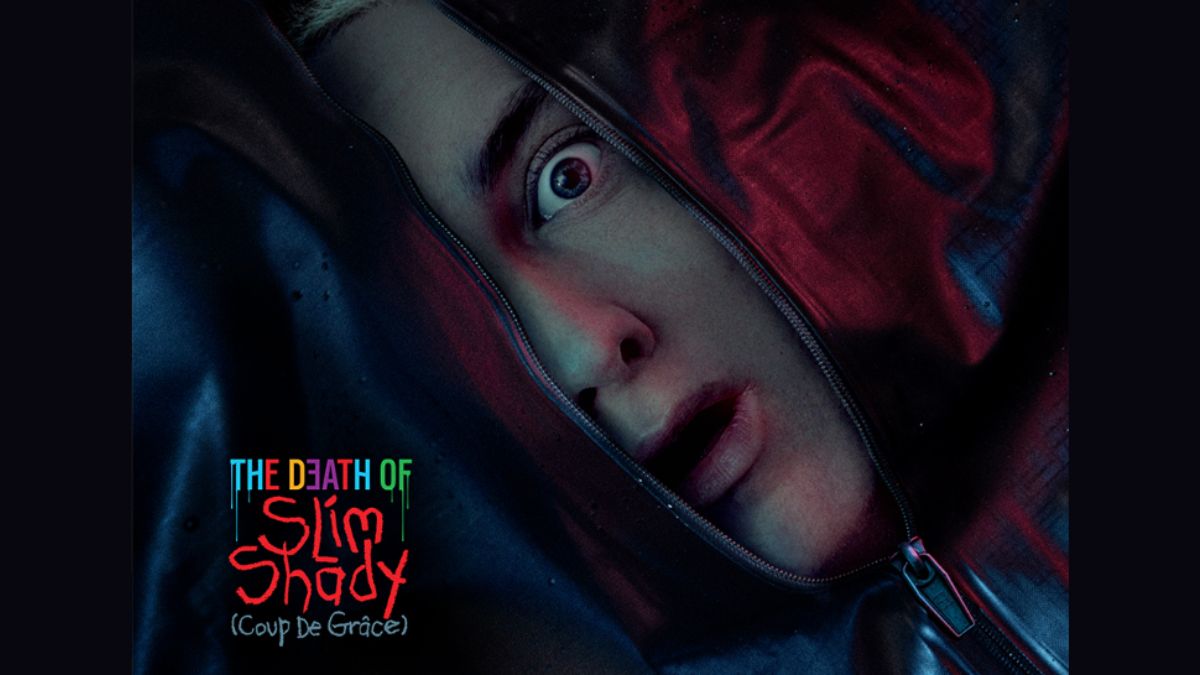
The cover art to The Death of Slim Shady is painfully accurate. Slim Shady is peering out of the open zipper of a body bag. It’s an accurate depiction of life, and even of the Christian faith. It’s the inward battle of law and gospel, flesh and spirit. It’s not too different than Marshall Mather’s battle against himself as he’s matured and grown out of his Slim Shady ways, but always deals with the tempting call to turn back to his old self.
Hence the subtitle of Eminem’s new album, Coup de Grâce. In the style of Hitchcock, there’s an introduction to a song that defines the term:
“The coup de grâce is the final shot
Right between the eyes
Also known as the kill shot
something to stop the pain”
Coup de grâce can be translated as “stroke of grace” or “blow of mercy”. It’s typically used in reference to putting someone, animal or person, out of their misery. Webster’s says it’s used toward someone who is “unlikely to recover” and that the act is a “definite end to something.” It is unclear if Eminem is playing off this in an ironic sense, considering it seems he can’t ever perform the final blow to Shady. Any average day in a human’s shoes proves the coup de grâce is a difficult task for us to enact on ourselves. We make noble attempts, but even if we succeed the body bag’s zipper seems to unzip from the inside.
Thankfully, the coup de grâce we need is not the work we do. We certainly pursue the daily deaths of self, our law breaching and law boasting ways, while continually pursuing righteousness but our true hope is found in the Death — the coup de grâce from above. And what a stroke of grace it is, what a blow of mercy we cling to. The one that zips up the body bag and brings out something new.





Wow! This was the essay I didn’t know I needed! Great piece Blake!
Good shit brotha! I love it!
Terrific work Blake. The video for “When I’m Gone” is quintessential AA which is quintessential Christianity.
Listening to Death—Coupe de Grace as I write this .