Why Am I Like This?, by Kobe Campbell
Those familiar with her social media presence will not be surprised to discover that Campbell has brought the same empathy, wisdom, and flair to her first book. If this is your first exposure, get ready for a deft and highly pastoral guide to the intersection of therapy and theology — the kind that doesn’t devalue either discipline. Bringing to bear a wealth of scripture, clinical experience, and personal testimony, Campbell sensitively dispels destructive misunderstandings of mental health, while illuminating the many paths God takes us on toward healing. We are so excited that she has agreed to join us at our 2024 NYC Conference.
Seventy Times Seven, by Alex Mar
Alex Mar’s research into the brutal death of Ruth Pelke at the hands of teenager Paula Cooper uncovers a story of one man’s miraculous change of heart, which becomes a catalyst for change in hearts and minds across the world. Seventy Times Seven recalls more than a vision of divine mercy — it also explores how moral injunctions to forgive can be flippant in the face of the world’s overwhelming tragedies, and the kind of low anthropology required to advocate for the worst among us. A secular argument that grace is, ultimately, worth the cost.
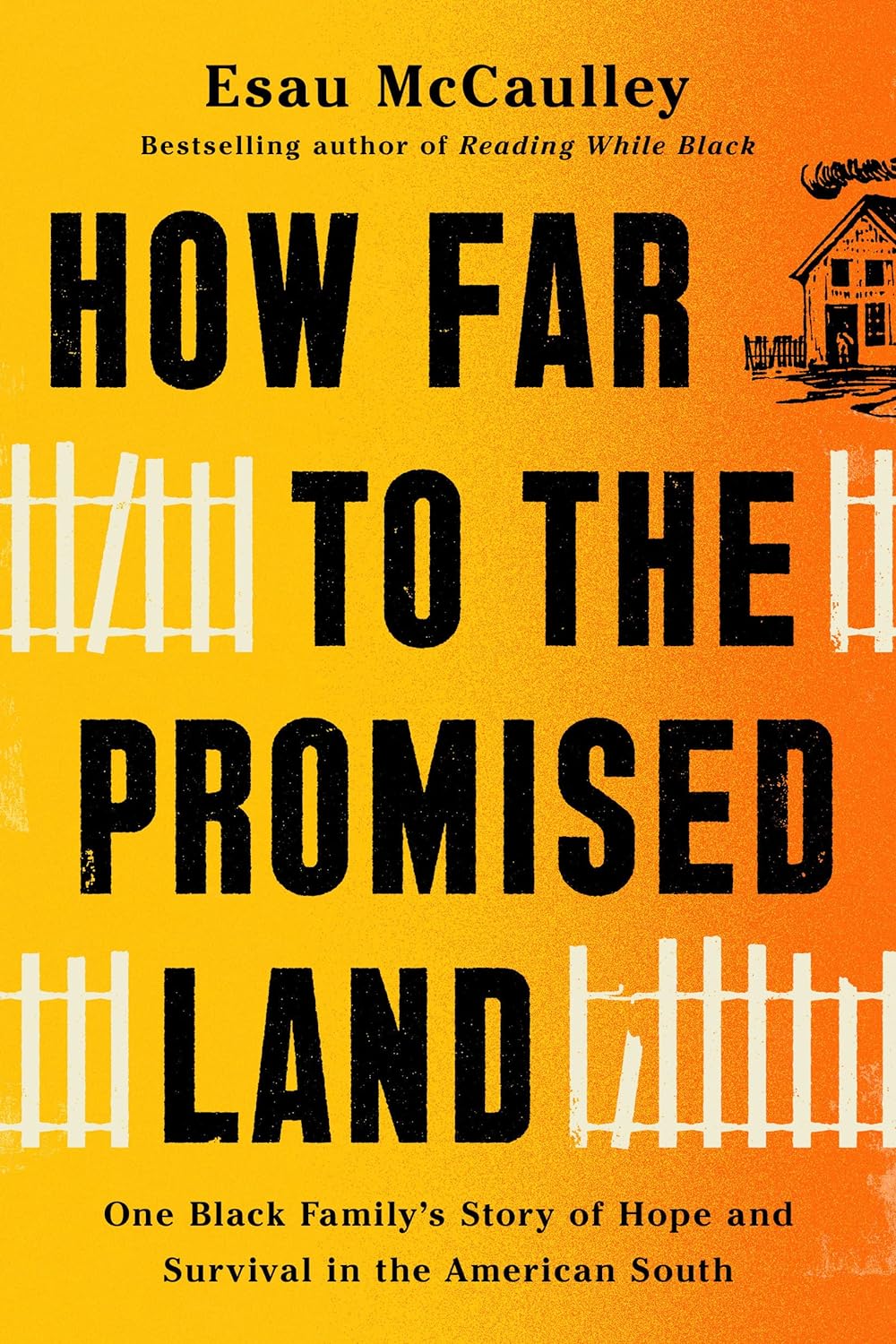 How Far to the Promised Land, by Esau McCaulley
In this insightful and moving memoir, McCaulley reflects on his and his family’s struggle with poverty and racism in the American South. Far more than a rags-to-riches tale or a story of personal conquest through grit and determination, How Far to the Promised Land vividly illustrates the injustices and hardships of racism and the merciful providence of God through it all.
Birnam Wood, by Eleanor Catton
In Catton’s new literary thriller, there is none righteous, no, not one. The story of a guerilla gardening group that gets entangled with a billionaire, this novel’s every character seeks right action and rationalizes their increasingly bad decisions until eventually they become uniquely tyrannical, a Macbeth to someone else’s Duncan. Francis Spufford noted that “If George Eliot had written a thriller, it might have been a bit like this.”
The Anxiety Opportunity, by Curtis Chang
In which the co-host of the popular Good Faith podcast delves into a subject close to his own worried heart and comes up with more than a few life-lines for the anxious among us (translation: everyone). While Chang refuses to over-spiritualize his subject, he thankfully doesn’t under-spiritualize it either, drawing assuredly on both Scripture and pastoral experience without ignoring the science. This short book won’t ‘fix’ anyone’s anxiety, nor does it claim to, but it will go a long way toward helpfully reframing it. The second half — from the introduction of the Anxiety Formula onward — boasts freshness, with the emphasis on eternity being a surprisingly welcome turn.
The Brothers Karamazov by Fyodor Dostoevsky: A New Translation, by Michael Katz
Not that this reviewer is any expert in Russian, but many are praising this new translation for its chaotic, “cacophonous” spirit, which they say was all part of Dostoevsky’s design. The translator himself, Katz, resolves to “render the rhetorical eloquence of the most poignant and significant passages, those in which Dostoevsky’s characters express their deepest religious convictions.” Can confirm: the most-cited passages, and the whole, are eloquent and spirited. A fun version.
The Half Known Life: In Search of Paradise, by Pico Iyer
Pico Iyer may be a travel writer by trade, but he’s clearly interested in more than providing tips for your next vacation. In this latest book, he scours the globe to learn more about humankind’s troubled quests for an earthly paradise. He offers dizzyingly poetic and philosophically rich descriptions of places like Iran, Western Australia, Kashmir, Northern Ireland, Jerusalem, Sri Lanka, rural Japan, North Korea, and Varanasi — places that, as he explains, have often “been too seductive for [their] own good.” Although not a Christian, he also writes deeply about matters of faith, regularly referencing the likes of Thomas Merton, Emily Dickinson, T. S. Eliot, Van Morrison, and the author of The Cloud of Unknowing. It’s a beautiful book that will stay with you for a long time.
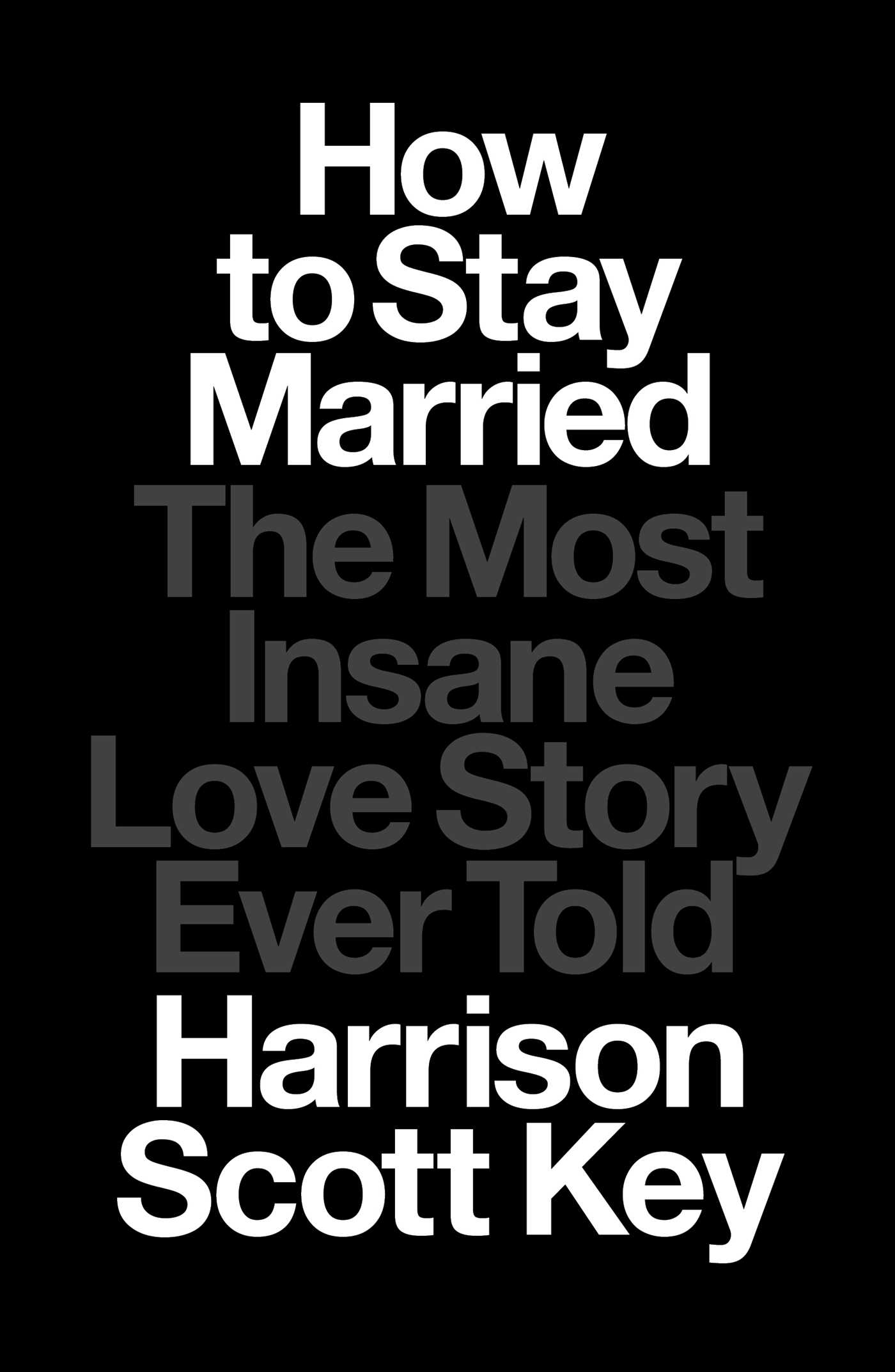 How to Stay Married, by Harrison Scott Key
How should a professional humorist handle the revelation of his wife’s infidelity? Tell some jokes, embark on a spiritual quest — all the usual. Hilarious, down-to-earth, and most of all moving, How to Stay Married is a must read for pretty much anybody. Come for the humor, but stay for the profound reflections on sin, mercy, and modern marriage.
The Living Color of Luke’s Gospel, by Larry Parsley
In his first devotional, An Easy Stroll Through a Short Gospel: Meditations on Mark, Dr. Parsley proved himself to be an incisive and elegant writer but also, more than anything, a friend. Now, in his follow-up devotional, Parsley illuminates the brilliant subtleties of Luke’s gospel — the careful wordplay, the beautiful imagery — which, all together, paint the story of Christ in living color. Go verse-by-verse, and see this old story with fresh eyes.
It Was an Ugly Couch Anyway, by Elizabeth Passarella
In her second book of personal essays, Passarella again puts a lie to the notion that writing about the Christian life can’t be hilarious (or honest!). Middle age, career, kids, marriage, health, real estate — it’s all here, presented with a journalist’s eye for detail, a humorist’s ear for punchlines, and a believer’s heart for grace. Come for the wry observations about the struggle to get by as a family in the big city; stay for the hard-won wisdom about the nature of help and hope.
When Church Stops Working, by Andrew Root and Blair D. Bertrand
If you only have time for one book about church decline, this is the one. A user-friendly distillation of Root’s Ministry in a Secular Age series, this short volume manages to avoid both the sky-is-falling and the head-in-the-sand rhetoric that mars so much writing on this topic. Root and Bertrand synthesize the insights of Charles Taylor and Hartmut Rosa in ways that are imminently readable and refreshingly vertical. Those looking to go deeper should check out Root’s The Congregation in a Secular Age. Incisive stuff.
Cahokia Jazz, by Francis Spufford
Cakokia Jazz begins with an intriguing premise: what if Native Americans hadn’t died from the epidemic of smallpox that swept through the continent upon the arrival of European settlers? From this starting point, Spufford spins a murder mystery tale set in prohibition era 1920s Cahokia, a fictional city north of St. Louis comprised of Native American, white, and black residents. The ambitious scale of Spufford’s world-building is enough of a draw, but doing so in service of a fascinating plot and apt cultural commentary makes Cahokia Jazz sing.
 Never Enough: When Achievement Culture Becomes Toxic — and What To Do About It, by Jennifer Breheny Wallace
Written in response to reports that upper middle-class children who attend “high-achieving schools” are now considered an official “at risk group” — suffering from two-to-three times the national average rates of depression, anxiety, substance abuse and suicide — Wallace set out to uncover what is creating so much unpeace. Her findings may not surprise those familiar with the toxicity of performancism, but the language of “mattering” she introduces represents a fresh resource for anyone interested in addressing our spiritual landscape.
The Mysteries, by Bill Watterson and John Kascht
Almost thirty years after calling it a day with Calvin and Hobbes, the legendary cartoonist returns with a black-and-white fable about the perils of disenchantment. Beautifully illustrated, with not a wasted word, Watterson’s brief tale invites myriad interpretations, including theological ones. Is it better to fear God than to forget him? Is the most dangerous misunderstanding the assumption of full understanding? Are the most enduring realities those that lie beyond our control? Like all of Watterson’s work, The Mysteries rewards return readings.
Lessons and Carols, by John West
Lessons and Carols is a genre-bending memoir that examines the aftershocks of alcoholism and mental illness through the lenses of poetry, ritual, and community. Echoing the form of a traditional Anglican Christmas service of stories and songs, John West’s lyrical prose invites readers to participate in the recital of an unorthodox rendition of the liturgy called Lessons and Carols. Each December, a faithful circle of irreligious friends assembles to eat and sing and reimagine an old story about love made flesh. In that gathering’s glow, resentments turn to quiet wonder at the ways a better world can appear.
Zero at the Bone: Fifty Entries Against Despair, by Christian Wiman
In prose and poetry both, Christian Wiman examines the allure, the pitfalls, and the graced necessity of despair. Wiman is conversant with despair and testifies to how it is both less sexy than many of us are tempted to believe and more useful than we often dare to entertain. Christianity, he insists, feeds both wells, as despair is not ultimate, but has the potential to dislodge bogus ultimates we tend to worship. Wiman commends faith in Christ not simply for consolation, but for provocation towards a life we can never quite live or become worthy of, one in which we find ourselves again and again as ones being called into life. Look for our interview with Wiman in The Spring/Summer edition of The Mockingbird magazine.