




Every night, my oldest child falls asleep next to Lionel, an oversized stuffed lion with the word “COURAGE” emblazoned across its chest. In the room next door, my seven-year-old snuggles up with Anna, a bright pink llama roughly the size of a medium dog.
These enormous stuffies easily retail for $30–40 apiece, and honestly? I never would’ve bought them. They’re garish, impractical, and far too big for their small beds (and our small house). But they’ve become beloved bedtime companions, and because my children adore them, I suppose I do too, tacky though they may be.
As stuffed animal origin stories go, Lionel and Anna’s are one of the more interesting ones. They came to our household by way of a Halloween party hosted by the free after-school program at our church. The program director had sourced them from our neighborhood “Gifting with Integrity” Facebook group — a hyperlocal space where neighbors give, receive, share, and lend freely.
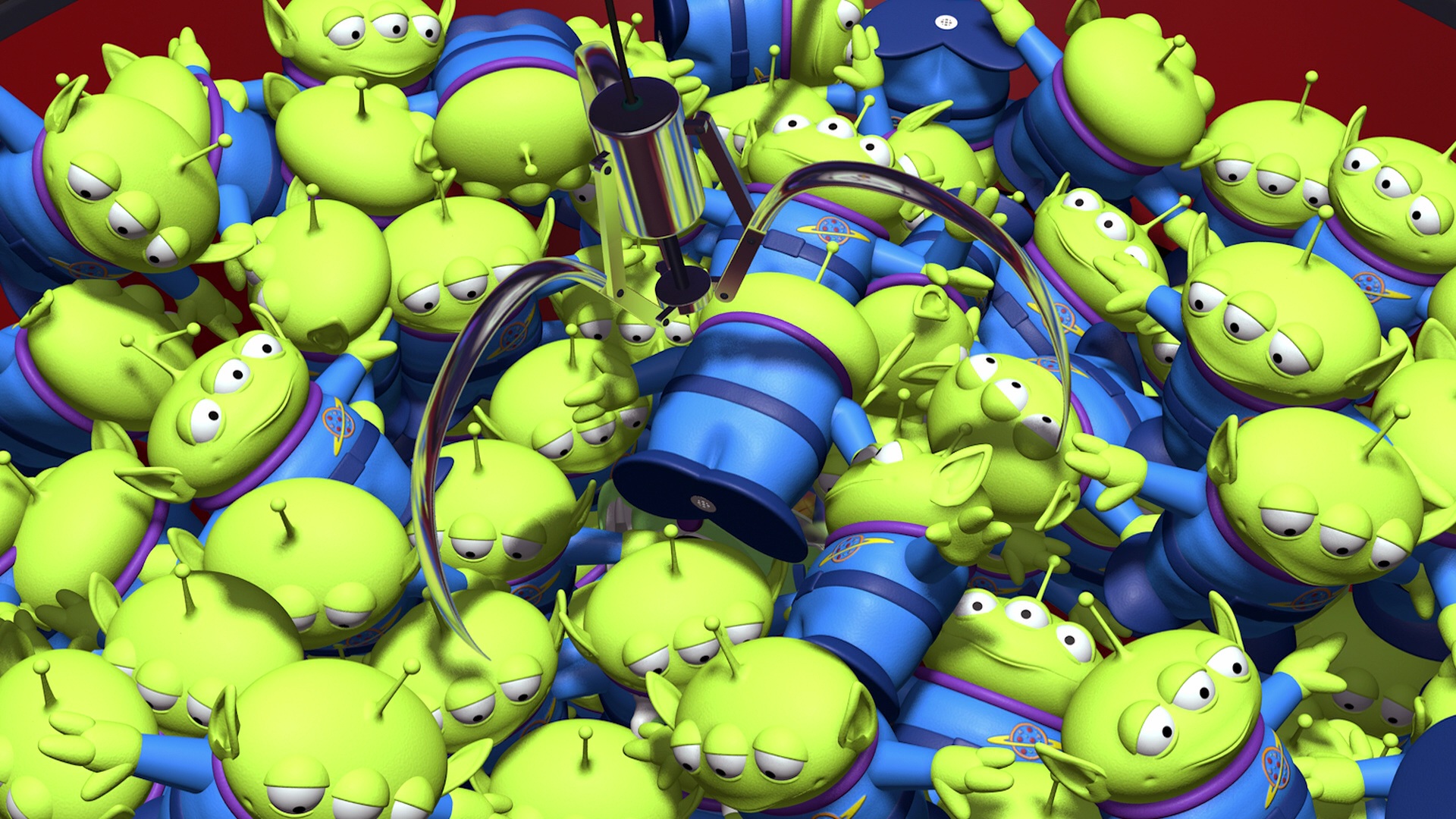
I know this because I’m in the group and saw the original post. “I’m a claw machine champion,” a neighbor wrote. “I have 8+ bags of stuffed animal prizes. New, straight out of the claw machine.”
Later, the director posted photos from the party: delighted kids fiercely hugging their massive new treasures.
“This group has got to be one of the most wholesome corners on the internet,” someone commented.
She wasn’t wrong.
A few summers ago, I came down with a bad case of COVID. I recovered, but my milk supply didn’t. Suddenly, I was fumbling through the unfamiliar territory of supplementing with formula for my voracious seven-month-old. I didn’t own a bottle warmer, so I posted a quick ask in the group during our drive to church one Sunday.
By the time our pastor gave the benediction, someone had responded: “I have one! Just DM’d you our address. It’s in the mailbox. Hope it helps!”
I swung by their house on the way home. No negotiations, no Venmo, no explanations. Just a real need answered in real time by a generous neighbor I’d never met.
In a digital landscape dominated by outrage-fueled hot takes and monetized interactions, gifting groups are a rare and refreshing pocket of internet grace.
These communities — “Buy Nothing,” its offshoot “Gifting with Integrity,” and its edgier cousin, “Take My Shit” — began surfacing over a decade ago. Membership surged during the pandemic, when people were starved for connection and porch pick-ups felt safer than stores.
The premise is simple: post what you’d like to give away, lend, or share. Ask for what you need. No buying, selling, trading, or bartering.
Membership is tied to where you live. In these “hyper-local gift economies,” money is off limits and the focus is — as my group’s guidelines say — on “the true wealth” of connection.
The guidelines read like excerpts from a Walter Brueggemann sermon:
We come from a place of abundance, not scarcity … We measure wealth by the personal connections made and trust between people … We believe every community has the same wealth of generosity.
It all glimmers with prophetic imagination — a quiet, countercultural resistance to the pull of algorithm and mammon. Here, trust trumps transaction. Interdependence outranks self-sufficiency. These subversive little economies insist that abundance is real, our needs are worth naming, and everyone has something to give, no matter how small.
Jesus commanded us to love our neighbors. But many of us don’t know them. My gifting group has changed that, one bread pan, one basil plant, one pair of outgrown toddler shoes at a time. I’ve made friends, set up playdates, met parents of my kids’ classmates, and learned the back roads of neighborhoods I’d never visited. I’ve received things I didn’t know I needed (hello, air fryer) and given things I thought I’d never part with (my daughter’s hair bows — sigh).
Sometimes, loving your neighbor looks like letting go of the rain barrel that’s been sitting in your shed for half a decade. Ariana, who lives five minutes up the road, was thrilled to take it. She mailed a handwritten thank-you note the next day.
I live in an economically diverse area, and our group’s “gives” and “asks” reflect that diversity. Some neighbors offer brand-new Instant Pots or Kate Spade lamps; others request diapers to carry them to their next paycheck. I’ve seen people share about everything from miscarriages and job loss to early sobriety (“Please take my wine! I need it gone ASAP!!”). And again and again, people show up, meeting needs with creativity, generosity, and imagination.
Take Lynn, a retiree who’s offered to clean homes for people recovering from childbirth, illness, or disability. Or David, an IT wizard who has repaired and gifted dozens of computers, monitors, and tablets. Kingdom love in the shape of a freshly scrubbed toilet. Or a refurbished Dell.
Of course, things get messy. People forget the rules. Pick-ups get delayed. Exchanges can be awkward. I’ve knocked on the wrong door, interrupted family dinners, and been ghosted more times than I can count.
Once, a neighbor came to pick up a LEGO set just as I was hollering at my kids to get in the car. We were running late, as usual.
“Hi! I’m here for the LEGO set,” she said warmly, unfazed. “You seem busy, so I’ll just grab it real quick!”
I apologized, flustered.
“Oh, don’t worry,” she smiled. “I have two little ones. I get it.”
My husband once asked if I thought people ever take advantage of the group. But that’s the wrong question.
Yes, there are moderators and boundaries to keep things mission-aligned. But the heart of these communities isn’t control. It’s trust. It’s an economy of grace, grounded in mutual care and abundance — not merit or scarcity.
When someone asks for a single onion, a dresser, a portable oxygen concentrator — or, say, a bottle warmer early on a Sunday — the question isn’t “Do they deserve it?” it’s “Can I help meet their need?”
And when you play by those rules, no one loses. Everyone is fed, giver and receiver alike. Sometimes with literal bread makers, honey from backyard hives, or extra bananas (“Instacart sent 10 pounds instead of 10 bananas — help!”).
And sometimes with bright pink, claw-machine llamas.








Sara-Kay, I love this article and community you describe so much! Thank you for sharing this beautiful story.
Love this so much.
Love this, Sara-Kay! I’ve been going through my things over the past couple of weeks and considering what to do with the items I no longer need…seems like I may have found my answer!
I think what you’ve written here is incredibly timely and important. A balm to what our culture has become and an invitation to a more life-giving way.
Thorough enjoyed reading your article. What a wonderful and caring neighborhood! It’s made me want to go the the attic and start giving it all away. Thank you! God bless!🧡