




In contrast to revenge, which is the natural, automatic reaction to transgression and which, because of the irreversibility of the action process, can be expected and even calculated, the act of forgiving can never be predicted; it is the only reaction that acts in an unexpected way and thus retains, though being a reaction, something of the original character of action. -Hannah Arendt
It was an act of ultimate betrayal. It happened at Colston Hall, in Bristol, England, 1966. Bob Dylan played the first half of his set with predictable hits (“Mr. Tambourine Man,” “Just Like a Woman”) and the crowd cherished every song. But for the second set, he ditched his acoustic for a Fender Stratocaster and brought out a band and a pair of enormous speakers that proceeded to literally blow the audience away. The crowd was attacked by a wall of sound. Just before the final song, an audience member shouted one word — “Judas!” — which was followed by jeering and applause, proving that the charge against him was justified. The people had spoken. Dylan had gone from hero to villain in a span of three-and-a-half minutes. He was condemned with one word.
There is hardly a more reviled name in history than Judas Iscariot. What makes him far more treacherous than Benedict Arnold is how personal his betrayal was. Jesus was not a political rival but a trusted friend. Unlike Marcus Brutus, Judas had nothing to gain from Jesus’ downfall. So why did he do it? After thousands of years of speculating on Judas’ motives, John’s Gospel still provides the most reliable theory: the devil had put it into his heart to betray him. Our modern minds might accuse John of over-spiritualizing the matter, but contemporary science is helping prove his case. Judas was likely not in his right mind. What’s likelier still is that he was hell-bent on revenge.
Psychiatry researcher James Kimmel (and 2026 Mockingbird Conference keynote speaker!) gathered a group of almost thirty neuroscientists and research psychologists around the world to study the human mind when triggered by revenge. The study shows that while only one out of five people act on their desire, almost one hundred percent of people who feel wronged instinctively want revenge, as if human beings are biologically hardwired for it. Kimmel compares revenge taking hold of the brain to an addiction or a disease. A CT scan of a brain triggered by revenge actually looks almost exactly like a brain on drugs. In order to cover over the pain of being wronged, revenge provides a dose of dopamine that is essentially irresistible.
Maybe you’ve been betrayed by a parent, a sibling, a coworker, a spouse, a friend, or a minister. Money embezzled, your name slandered, some kind of infidelity, neglect. Nothing hits a nerve like being wronged. Kate Braestrup, a chaplain to the game warden in Maine for fifteen years, was the person called in for pastoral care during the aftermath of violent crimes in rural areas. “The most common real-life motivation for violence, whether it’s a barroom brawl or genocide,” she says, “is moral indignation. Like, ‘Their ancestors killed our ancestors’ or ‘He disrespected me’ or ‘She abandoned me. What else could I do?’” According to James Kimmel, in the heat of the moment, there is very little that can be done.
There is reason to believe that Judas felt betrayed. The night he handed Jesus over, all the disciples gathered to celebrate the Passover Supper, remembering God’s mighty rescue of the Jews from the powerful clutch of Egypt. Everyone was looking to Jesus to topple Rome in the same way. Days before, Jesus had entered Jerusalem with throngs of people cheering his name. He could lead a massive revolt that very night! He should be armed for battle like his ancestor King David! But what is he doing instead? Wrapping a towel around himself and acting like a little servant boy.
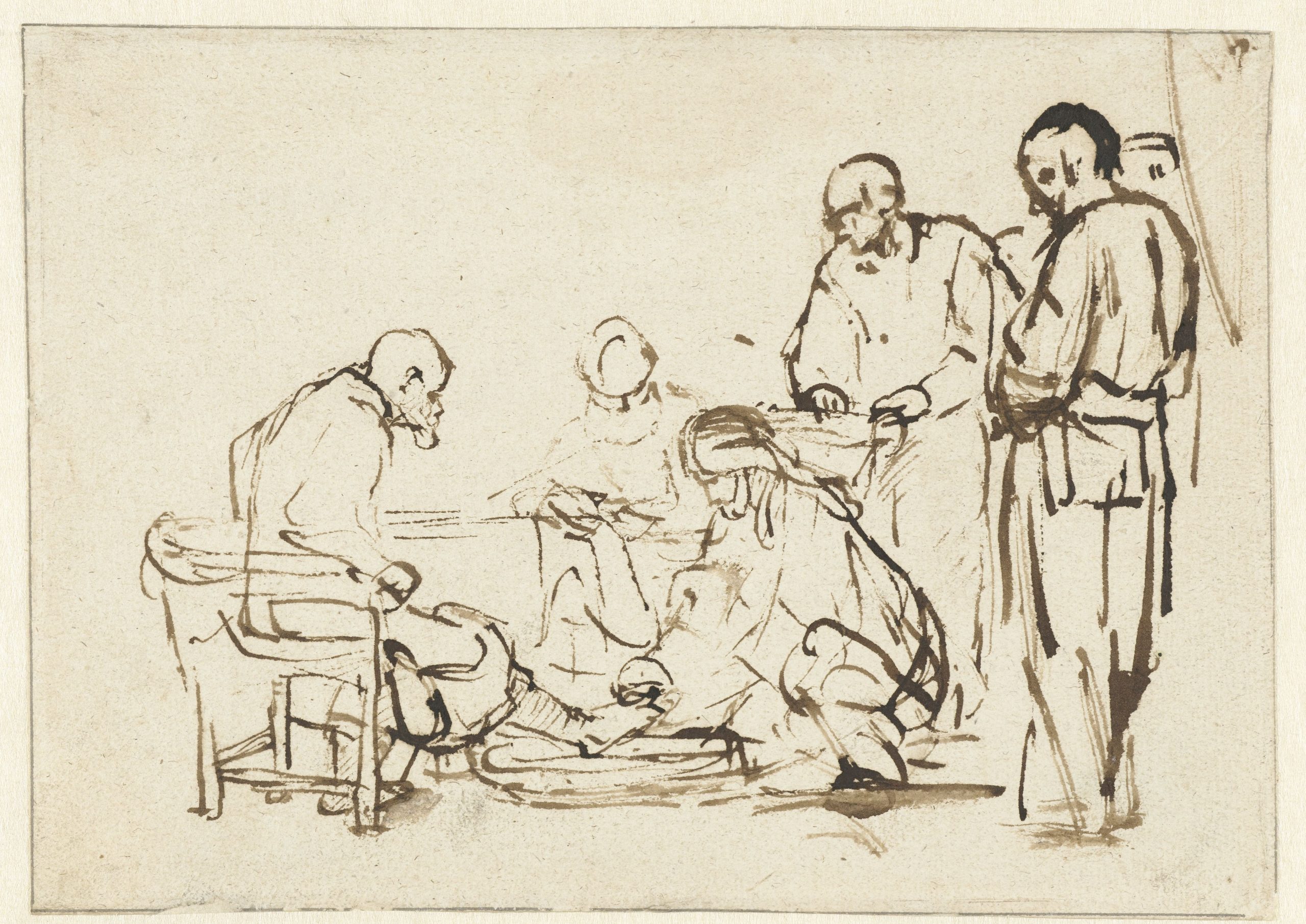
This foot washing was no publicity stunt. The level of intimacy with which Jesus interacted with each disciple proved to be too much to bear. Even Peter wanted to save him from such indecency, saying, “Lord, you will never wash my feet.” Jesus replies, “Letting me wash you is a prerequisite for being in my company.” To which Judas says, “Well, then count me out.” As John’s Gospel puts it so plainly, “Judas went out and it was night.” Call it whatever you like — revenge, disgust, contempt — it had already set in and was coursing through Judas’ veins. Even Jesus realized it was too late to go back.
Have you ever betrayed your better judgment in a way that spooked you? Have you surprised yourself as to what you are actually capable of doing? Whether it was losing your temper or having an affair or turning a blind eye to some kind of injustice, you likely sacrificed a lot for very little reward. Like Dostoevsky says in Crime and Punishment, “Your worst sin is that you have destroyed and betrayed yourself for nothing.” The thing you wanted — control, power, pleasure, revenge — was an illusion. Unfortunately, by the time we come to our senses, it is far too late. The act has been committed and has the potential to mark the rest of our lives. Just ask Judas.
Left to our own biology, we don’t have a prayer. As James Kimmel puts it, “The iron grip of revenge is so strong, in fact, that forgiveness sometimes seems almost miraculous when we see it.” If revenge is the disease, forgiveness is the antidote. In the case of Maundy Thursday, the antidote can be directly applied to one’s feet.
Forgiveness is the antidote that has saved the world from killing itself. The famous Confucius proverb — before you embark on a journey of revenge, dig two graves — precisely sums up Judas’ experience. He turns Jesus in and both of them die. And yet, the antidote of forgiveness insists on life. It refuses to dig two graves. “One grave will do,” Jesus says. “Let it be mine.”
There was one song missing from the setlist that fateful night at Colston Hall in 1966; one of Dylan’s early ballads called “With God on Our Side” in which he sings, “Through many dark hour I been thinkin’ about this / that Jesus Christ was betrayed by a kiss / but I can’t think for you, you’ll have to decide / whether Judas Iscariot had God on his side.” If Maundy Thursday tells us anything, it’s not that Jesus was on Judas’ side. He was at his feet.







