




There’s a scene in Ingmar Bergman’s 1957 arthouse classic, Wild Strawberries, in which the septuagenarian protagonist, Professor Isak Borg, has a dream that he is back on the student side of the classroom experience. The examiner in the dream asks him to read some quasi-Scandinavian-looking gibberish on the blackboard. Isak phonetically sounds it out but says he can’t understand it. The examiner says, “What you see on the blackboard is a doctor’s first duty. Don’t you know what that is?” Isak admits he’s forgotten. The examiner responds with an insightful one-liner: “A doctor’s first duty is to ask for forgiveness.”
Bergman combines surrealism with a classic “didn’t study for the test” anxiety dream with a deeper insight that maybe hadn’t quite broken through to his conscious mind. The dream scenes throughout are some of the best ever put to celluloid. In fact, most of the movie unfolds on a car journey from Stockholm to Lund, during which dreams, memories, and chance encounters force Isak to reckon with his past joys and regrets.
Describing asking for forgiveness as “a doctor’s first duty” is a way in. The reminder doesn’t actually have anything to do with Isak being a doctor. But we frequently have to come to larger truths elliptically. The judgment is softened when something is described as a duty of our profession rather than a personal failing. We’re able to see that it is something we should do, without first becoming defensive or despairing to the point of inaction.
Much of the conversation around forgiveness today (when it gets talked about at all) centers on forgiving those who’ve hurt us. Which is important. It’s hard to live when you’re boiling in a stew of resentment. But I think the other side of the coin that Bergman underscores is at least equally important, and frequently more difficult.
When we ask others to forgive us for our transgressions, it’s a far more vulnerable spot. There’s no guarantee that our plea will be met with mercy. Mercy is far from a given in this world, which is why it always feels so miraculous when we are on its receiving end. It also necessitates us admitting we were wrong.
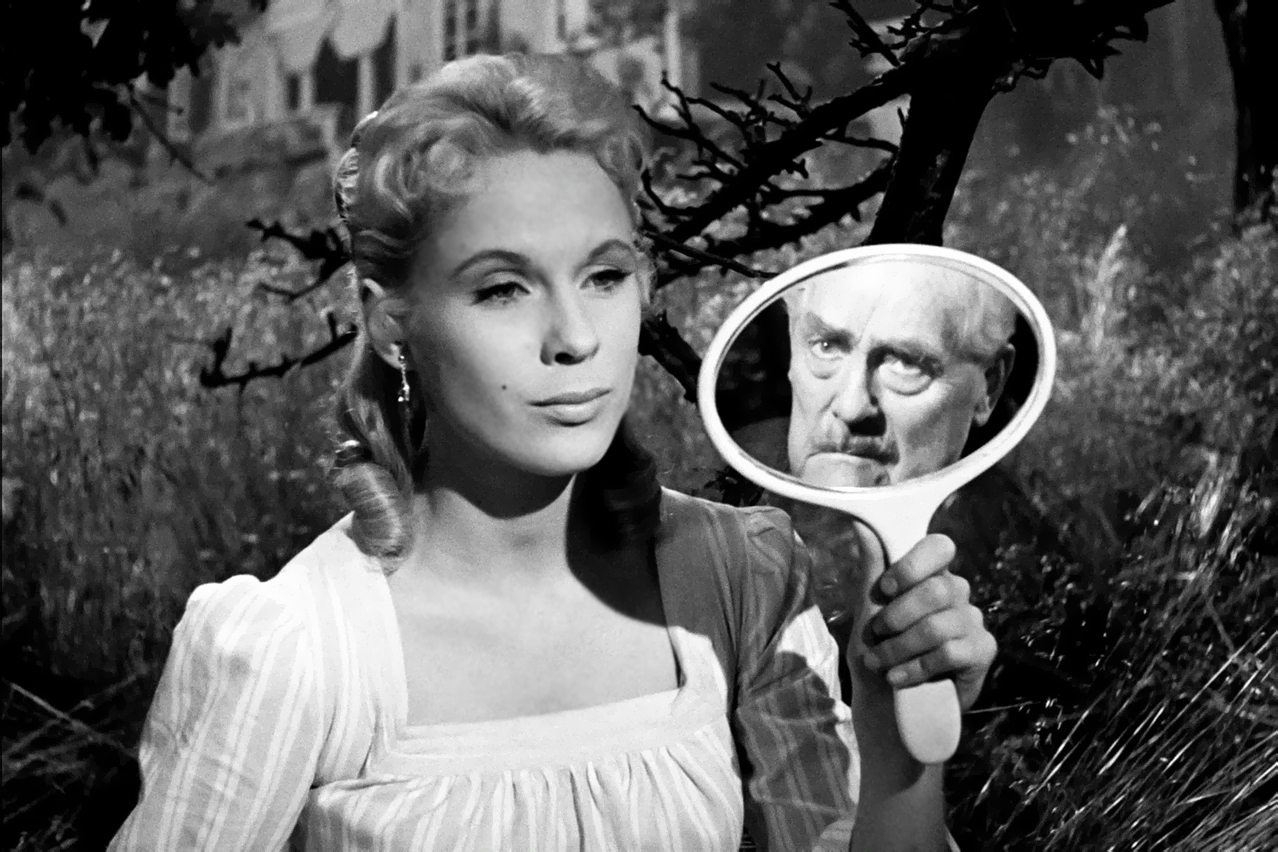
Most of us can pretty easily call to mind instances when we’ve been wronged. The sting of betrayal or harm leaves a mark that’s difficult to forget. But when we are forced to look at the places where we’ve been complicit in hurting someone else, the endeavor careens into chaos. We resist it as much as we can, and when we finally make an attempt, we aren’t especially reliable narrators. We keep taking the wheel, steering around the harm we’ve done, convincing ourselves there wasn’t any wrong to begin with, hurtling into guilt out of proportion to the offense, or trying to outrun it with good works. Asking for forgiveness is the exit ramp from this endless loop, because it admits that the verdict isn’t ours to render.
One of Jesus’ parables that gets at some of this is that of the Pharisee and the tax collector (Lk 18:9–14). The Pharisee of the story is who we are when we attempt to make ourselves the judge of our own actions: “I fast twice a week,” “I give a tenth of my income.” In his self-righteous prayer, he thanks God he isn’t like other people. But when we stop editing the story in our favor, we begin to resemble the humble tax collector: “God, be merciful to me, a sinner!” This acknowledgment of our failings helps us see the truth the Pharisee refuses to see: that we are just like other people. Just as frail and guilty and in need of forgiveness.
This doesn’t mean all the ways we fail are good. They’re not. But if we know we are bound to fail, that failure isn’t ultimate and is, in fact, one of the only ways we really learn anything, we are made free to try. Fear doesn’t have to be the primary unspoken factor in all of our interactions. When we know we can ask for forgiveness, we become less defensive; the mere possibility of forgiveness changes our posture. Asking for forgiveness makes us vulnerable, but not ultimately so. The people we’ve hurt may not forgive us, they may lash out at us for having the gall to even ask, but because we know God’s mercy through the life, death, and resurrection of Christ, we can take that too, without giving in to our self-justifying and reactive impulses.
Maybe that’s why asking for forgiveness is our “first duty.” Whether we’re seventy-eight or seventeen, our accomplishments matter less than whether we’ve learned to stop needlessly defending ourselves. Isak’s dream examination is the examination waiting for us all. The question isn’t whether we’ve lived perfect lives but whether we’ve learned to ask, “Will you forgive me?”








Beautiful, powerful piece, Joey. Thanks so much.