Welcome back, fiends, to Mockingbird’s Spooky Summer! Our third entry in the series is a collective pick, a flyover of the No Man’s Land that Blaine and Blake call home. Emma Tammi’s 2018 film, The Wind, distills a sample of the Great Plains’ dread as it showcases another side of pioneer living that cinema often leaves in the background. So pull on up, we have a seat saved for you. Just don’t mind the wind picking up, or that silhouette in the back of the gathering. It’s … probably nothing.
Ian: Well, Blake said this one would trigger him and Blaine, but we picked it anyway. So what did y’all think?
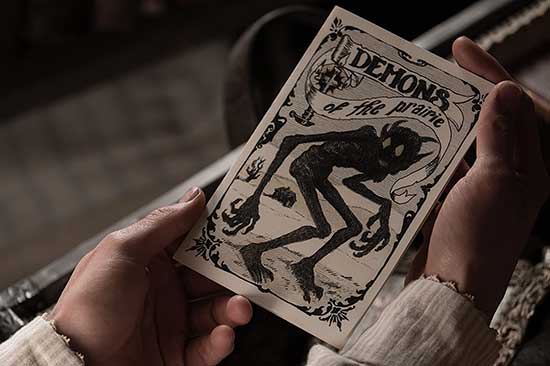
Caleb: I liked this! It made me curious about how much of it had some kind of historical precedent. It’s dealing with the real phenomenon of “prairie madness” where settlers would become depressed or agitated by the sparseness of the Midwest. And we’re privy to Elizabeth’s experience with it. But part of her burgeoning paranoia — if it really was that — is fueled by this pamphlet called Demons of the Prairie. Do y’all know if this was a real piece of literature?
Ian: Not from what I can find. Many of the beings named in the pamphlet check out, and there may well have been pamphlets like it, but I haven’t been able to track down testimony or a preserved copy of this one.
Blake: Looked like a cool zine though.
Ian: Totally, dude, it looks like a local metal crew’s zine that’s been Xeroxed a hundred times.
Blake: I haven’t looked in a DSM lately, so I don’t know if there is a precedent for such a madness, but I would presume it does have some historical basis.
The book on which this movie is loosely based takes place in the Abilene, Texas, area during the settlement phase of development. That area is just southeast of where I grew up and retains much of the same harsh landscapes that the Texas Panhandle does, especially in the early days without modern comforts to mitigate its harshness.
We are talking about the southern reaches of the Great Plains, and it’s notorious for being a hard place to live, unforgiving in ways that much of the rest of this region doesn’t have to deal with. Little water, hard caliche ground, and the wind is constant. We battle the Great Lakes region for windiest parts of the country. Between the difficult land and the constant wind carrying over the flat terrain, it makes for a perfect circumstance for madness.
Ian: Yeah, Laura Ingalls touches on prairie madness in one of her books. These Happy Golden Years, I think?
Blaine: Willa Cather is where it’s at, my dudes.
Blake: I have a couple of her books but haven’t read them yet. Does she deal specifically with prairie madness?
Blaine: Cather has her triumphalist tendencies, but her work is a far less romanticized take on westward expansion than Laura Ingalls Wilder.
Ian: KEEP LAURA INGALLS WILDER’S NAME OUT YA FLIPPIN’ MOUTH!
Blaine: Oh, I mean, I grew up with the Little House books and have a real fondness for them. It’s just that Wilder isn’t who I’m going to for prairie madness fiction.
Ian: *Ahem* Forgive me. If there’s a point at which I can work in a Will Smith dunk, I’m going to do it.
Blaine: This is the way.
Ian: So The Wind is more Cather than Wilder? Is it demon pamphlet gone Wilder? Willa man help me out?
Blake: Dorothy Scarborough, who wrote the original book in 1925, was an alumnus of Baylor and taught at Columbia. One of her subjects was ghost stories. She has a book where she collects the best of the best. The Wind utilizes the gothic romantic style but transposes it to the Plains/prairie. It’s quite effective and groundbreaking in its own way.
Blaine: I like how the movie situates itself in domestic life on the plains. It seems like a lot of movies trading in similar territory focus on how difficult was to do traditionally masculine work — tilling the earth, building the homestead, etc. — and we see a lot fewer domestic narratives in film form.
Ian: I haven’t read the novel or seen the 1928 film, so I wonder how much the film’s horror feel is original to it or how much it is present in its source.
Blake: The movie trades more heavily on the horror visuals whereas the book — I haven’t seen the 1928 film either! — is much more coy with its supernatural elements, allowing the tension to ratchet in the reader’s mind with suggestion only. It mostly focuses on how constant the wind is and how it makes everything that much harder.
The protagonist is an outsider from the East Coast who is shipped out to Texas when her family falls into ruin. Whereas in the movie, we get the sense that our protagonist has become pretty accustomed to the difficulties already. The one link is exactly what Blaine said about centering the story on domestic work. The men are largely side characters here: Scarborough is more interested in feminine interiority.
Ian: Well, I appreciated how the focus on the female characters absolutely allowed for them to be as broken and unreliable as the male characters.
Blaine: The 1928 film is great — Sjöström was a real one — and seems like it cleaves closer to the plot of the book. It’s not supernatural. This is entirely a personal preference, but of late I am less enamored of narratives that do the whole, “Is it madness (grief, etc.) or is it supernatural?” thing. Blake talked about this brilliantly in his A24 piece.
Blake: Yeah it’s not a gimmick I’m a fan of — never have been. It’s too convenient and very in line with materialist, DSM-style diagnosis.
Ian: No, my dude, that’s all of us here. I hope and pray that that catches up culturally and soon.
Caleb: Jake Raabe says the funniest thing about Gen Z is that they are making a billion-dollar entertainment industry out of how scared they are of empty rooms and VHS tapes.
Blake: True. And I’m here for architectural horror like Night House or The Backrooms.
Caleb: It also has sort of a Garden of Eden vibe to me. Here is a couple alone in “Paradise,” and the world is nothing but potential to them. The only other presence for a while is “the Wind,” which is spoken of antagonistically, contra the biblical account of the Spirit coming in friendship at the cool of the day.
It’s also kind of a Cain and Abel story of jealousy: their new neighbors become not siblings to them but competitors, even going so far as to have Isaac set his adulterous sights on Emma, the forbidden fruit.
Ian: 100%, yes! The promise, or potential, of Eden is spoiled here just as it was for our first parents. I very much like how this place of promise felt like a truly alien, monstrous wasteland, suggesting we do not belong here. So it’s almost like trying to retake an artificial Eden, and it of course fails.
Blake: If it wasn’t the demons messing with Elizabeth’s mind …
Ian: It’s a vein The VVitch doesn’t explicitly touch, but I do think implicitly: this might be a new world for all of you, but the Devil colonized here a LONG time ago.
Caleb: As one Letterboxd reviewer so eloquently put it: this is just The VVitch with the fan turned on.
Ian: My question for y’all is: did you find the fractured chronological presentation helpful in balancing mundane causes and paranormal ones? Or did it feel like unnecessary fiddling? The way that Zack Snyder, when he learns of a technique or a cool historical event, immediately works it into whatever he’s doing, regardless of whether or not it fits, makes sense, etc.
I think it could have been executed better technically, but I receive the time-split narrative as suggesting we do not have to pick one or the other: demons messing with her mind; hardship, toil, loss, inhuman landscape, the entire knotted complex.
Caleb: I’m usually not a fan of this kind of time-split narratives (Christopher Nolan’s Memento being a notable example) because they rarely serve the story. I can see how you could argue that it ratchets up the paranoia and disorientation, but it largely felt unnecessary to me. I’m also not sure what to make of the preacher.
Blake: I took him as a wolf in sheep’s clothing. Demons know the scriptures better even than us sometimes, so it makes sense they would deceive us in the trappings of a shepherd.
Ian: In the moment I felt frustrated that I couldn’t decipher if he was a genuine itinerant preacher mimicked by the plains entity — The Wind! — or was only ever a face of the demonic howling waste.
Caleb: Yeah, I’m still not sure if I know!
Ian: I can live with the ambiguity if the film’s form is supposed to engender prairie madness in us as we watch and not Snyder-esque pretension.
Blake: I think it’s notable that the director went on to do both of the Five Nights at Freddy’s films —
Caleb: — which, if I’m honest, makes me respect her artistry less. Haha.
Ian: Guys, what were we thinking? Why did we not keep our fingers on the pulse of the youth and pick FNAF??
Blake: It’s just the Marvel effect except with horror IPs: grab up the indie directors for the tentpoles. She did something right, though, because it was a high grosser.
Ian: You heard it here, folks, this just in: Blake Collier says money determines a thing’s rightness!
Blaine: I agree with your point about the technique if it matches a real intention. Though I guess I don’t think the film leaves much room for ambiguity in the end (certainly not in any interesting sense).
Ian: Expand on that. (Listen. I was tired. I’m sorry!)
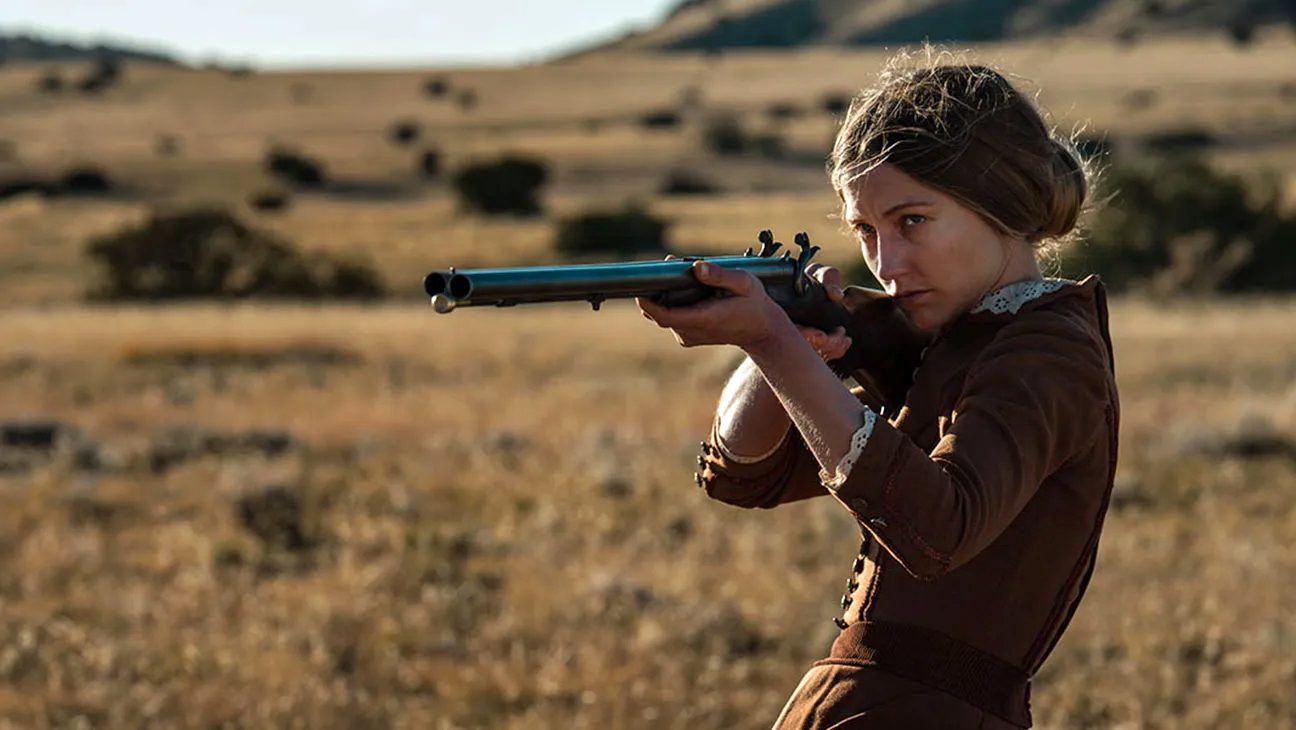
Blaine: So, I think the film leans heavily toward a rationalist explanation of the events. In the final sequence, past and present collide, and what it reveals is that the idea of demons was planted in her mind upon arrival in the area. In the end, she’s left alone in a barren landscape reflecting on the words of her husband saying, “It’s just you and me.” And the visual language — her sitting alone in the bed she has made — says, “It’s just you.”
It doesn’t have to be read that way, but even if you leave a supernatural reading open … so what? The film doesn’t seem particularly interested in exploring these things — how the spiritual and material are intertwined, the land moved by immaterial forces, etc.
This sounds like I’m being hard on the movie or that I didn’t “like” it, but that’s not my intention. I just don’t think the time jumping structure worked in its favor. It felt like more of a gimmick to me in how it played out. Like we’re supposed to be shocked at having the rug pulled out from under us at the end, when it’s all telegraphed from a mile away. I think the film is much stronger when it leans into the mood and tone of these individual moments instead of trying to manufacture tension through juxtaposition. But let me add that the shadow-play stuff worked really well! I like the Murnau hand claw bit a lot.
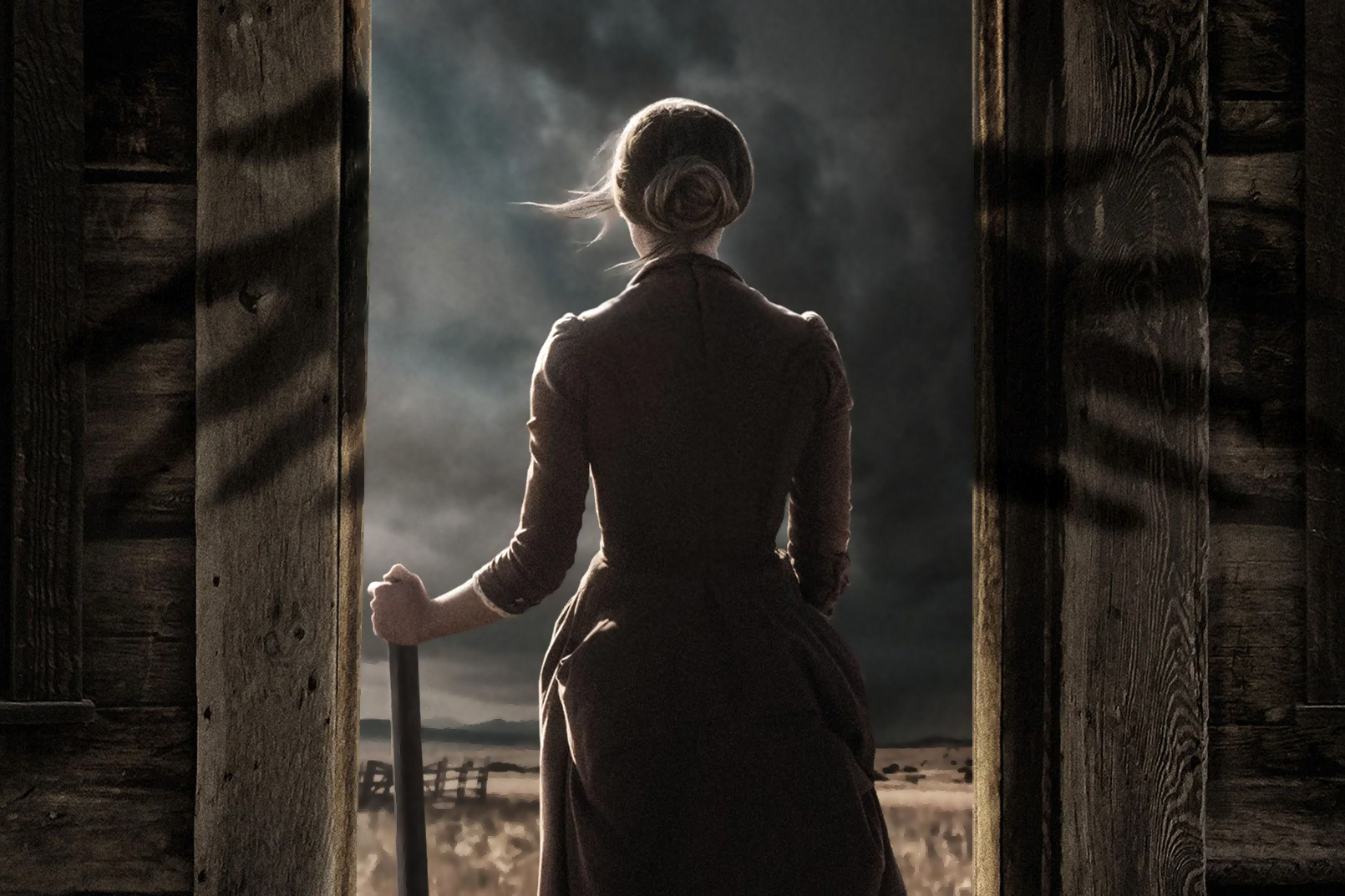
Ian: This doesn’t have to be a programmatic point, but isn’t it so often the case that bringing your spook or monster or under the full lighting apparatus to give the audience the entire thing undermines its frightening quality? When we see Emma’s specter in the doorway it genuinely rattled me, but the more she came into the light the less fearful she became. The analogy writes itself, there’s no getting around it, but I think that’s what this film should have stuck to.
Caleb: Tommy Lee Jones’ The Homesman (2014) I think does a better job of depicting the severity and injustice of what nineteenth-century women lived through on the plains.
Blaine: I feel that The Missing is underrated in that regard as well.
Ian: And in terms of the craft of filmmaking, if the goal is to engender prairie madness of a sort in the viewer and make you ask yourself, “Was that real? Is this dreadful thing outside of me or inside of me?” (and the answer’s always, “Yes”), then not only is it tremendously more frightening but it plays to the point of the sought-after ambiguity. “Did I really see Emma? Or am I projecting onto the darkness?” Woof, that can be handled poorly in a therapy-fetishizing, A24 way, but it can be contemplated skillfully in the right hands.
Caleb: Regardless of whether this is an interior or exterior threat, what’s so scary about it to me is just how alone she is. There’s a barrenness to her land and her family that is just not good! One of the most primal fears you can experience is utter forsakenness; to be truly alone. So in that way, I think the movie captures the feeling well.
Blake: This is ultimately where I stand as well, even though I think the criticisms that have been spoken here are largely accurate.
Ian: How will The Wind enhance our readers’ summers, boys?
Blake: I think the film would still register as a solid watch for most people specifically for the setting, the vibes, and some pretty solid terror. We’re getting record breaking heat down here in the Southeast, which is driving many of us insane.
Ian: You don’t have a monopoly on that heat, pilgrim!
Caleb: This makes me look forward to a slowly encroaching winter, which, like Elizabeth, is my preferred season to go insane.
There you have it, folks! Thank you for joining us in weathering The Wind. We hope the prairie madness didn’t set in too much for you, but we also urge you to bolt your door when you get home tonight. Be sure to check out Blaine’s pick, Ishirō Honda’s overlooked Matango (1963), otherwise known as Attack of the Mushroom People. Holy moly — I just said that. Buckle up and we’ll see you next week for more spooky summer fun!