




I spent some time recently with two older (even older than me) guys from church. Some might say they were odd, but I found them delightful. They jointly own a beat-up, but serviceable, flat-bed trailer that they use for all sorts of things, frequently helping people from the church and the community with various projects. They were helping me move a large-ish tree. Along the way, we stopped to load some lumber for a project they were working on at the nearby Methodist Camp.
Throughout our time together, the two were engaged in constant banter, back and forth kidding and teasing directed at one another — and occasionally in my direction. Their banter provided a lightness and levity to our prosaic tasks on a warm day. It turned our chores into fun.
It was like being with a couple of kids. That feeling that was heightened when, while they were paying up in the lumberyard, I crossed the street to buy the three of us outrageously large ice cream cones. There we were, three old guys licking away at our ice-cream, trying to stay ahead of their melting.
Their repartee got me thinking about banter, which the dictionary defines as, “the playful and friendly exchange of teasing remarks.”

Pondering such, I realized that out here in rural northeastern Oregon banter is often the lingua franca. When I go into the hardware store, which I do often, there is always bantering to be heard and participated in, sometimes with acquaintances and sometimes with strangers. The several employees banter back and forth amiably among themselves. At “The Rusty Spur” tavern, across the street, it is the same.
There’s a certain art to it, as in improv theater. You are playing off whatever another person gives you to work with. You point out hilariously habitual flaws or mistakes, crack jokes at the ridiculous, or comment on just how dang hot it is that you’ve already sweat through your good shirt. Like a game of verbal tennis, banter works best when played with another to send a volley back your way. Banter says, “Don’t take yourself too seriously.” And, “whatever the work may be, we can have some fun while we’re at it.”
What functions does such banter serve? A friendship of banter is held together by the mutual camaraderie that sees each other’s foibles within the compassionate gaze of grace. In the case of my two octogenarian friends, it was clearly an expression of affection, one that was elemental to their long friendship and many shared endeavors. Banter also seems to be a way of making life, sometimes in the midst of literal and figurative heavy lifting, light-hearted. Not to put too fine a point on it, banter reminds us that life itself is a comedy. That everything can be the opportunity for a good joke or friendly jibe.
My curiosity led me to enter “Articles about Banter” for an internet search. I wasn’t really surprised by what popped up, but it was revealing. Article after article linked banter to bullying, workplace or sexual harassment, and “micro-aggression.” I couldn’t find any that had something good to say about banter. Instead, articles warned of banter’s dangers, excesses, innuendos and general inappropriateness. Beware banter!
I get it. Bullying is awful and, especially among children, cruel. Harassment is real and the line between banter and belittlement is opaque. Jerks pretend something is humorous that isn’t. What seems fun to someone may be hurtful to another.
And yet, given my recent experience with my two pals, all these warnings and the various alarms they sounded made me a little sad. There is a comic element to life. True and good comedy reminds us that life, despite our foibles and misfortunes, often turns out in unexpected good fortune and joy.
The many dire warnings about banter strike me as a sign of a culture that’s lost something important, a certain lightness, a comic element. A culture where we’ve learned to be fearfully on-guard and ready to take offense. A culture which catastrophizes early and often and has little room for forgiveness.
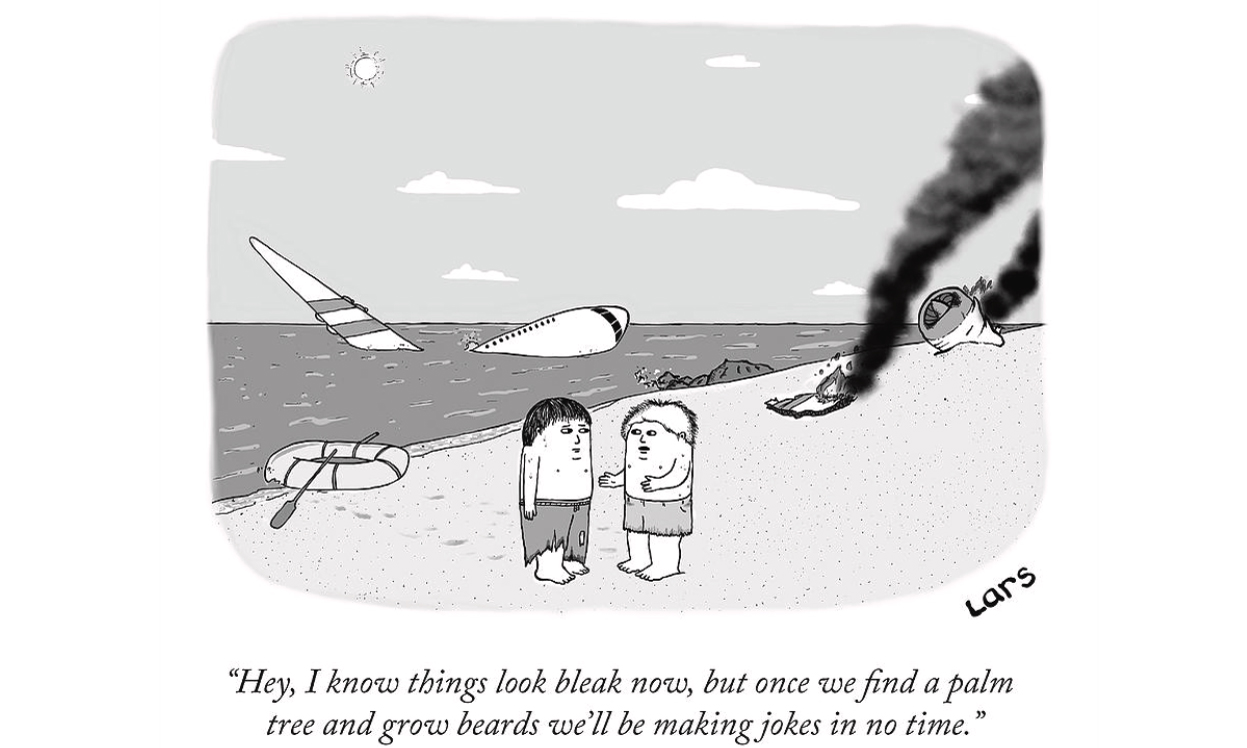
When I think about it, I realize I don’t hear much banter in a place like Seattle, where I live the balance of the year. Oh, some in the company of good friends. But seldom in casual interactions in stores or among strangers encountered on the street.
Generally, people in Seattle don’t interact with people they meet on the street or in a store at all. Walking on by with eyes down and ears plugged with a device is more often the norm. But when you step outside the city bubble, these devices of loneliness are less common. People greet or acknowledge one another on the street, and it’s a general practice to wave when you pass someone on the road in your car or truck. Perhaps the distance and anonymity are just inevitable in an urban setting and center?
Suffice it to say that the banter of my two friends left me both smiling and entertained, and feeling that life — despite ample evidence to the contrary — is good.
There is a sense, certainly, in which the Gospel itself is comedy. It is too good to be true. To this grand comedy, cheerful banter may point. I’m reminded of the self-serious character “Dogberry” in Shakespeare’s comedy, “Much Ado About Nothing.” A strict man of the law, Dogberry was not one to banter. With the two “malefactors” on trial, the sheriff mistakenly exclaims, “Thou are condemned to everlasting redemption.” He meant to say the opposite, “everlasting condemnation,” but the humor of Dogberry’s error exemplifies the ridiculousness of the gospel. In a world of guilty malefactors, God declares “There is no, therefore, no condemnation for whoever is in Christ.” (Rom 8:1).
Possibly, we’re overdue for some banter, light-heartedness, and the comedy of the gospel. For all the seriousness of the world, the gospel is the one place where our mistakes are transformed into slapstick, where our habitual flaws are not judged, but laughed at with understanding and grace.








I love bantering with my friends. It’s how I know I’ve achieved (and desire) closeness with a particular person. Notably, I think a good banterer is one who has learned to listen well, which is a great skill for anyone, anywhere.
[…] treasure in a hobbit hole unexpected, delightful, and share-worthy. From birthdays to captions and friendly banter, these puns bring a sprinkle of Middle-earth magic wherever they […]