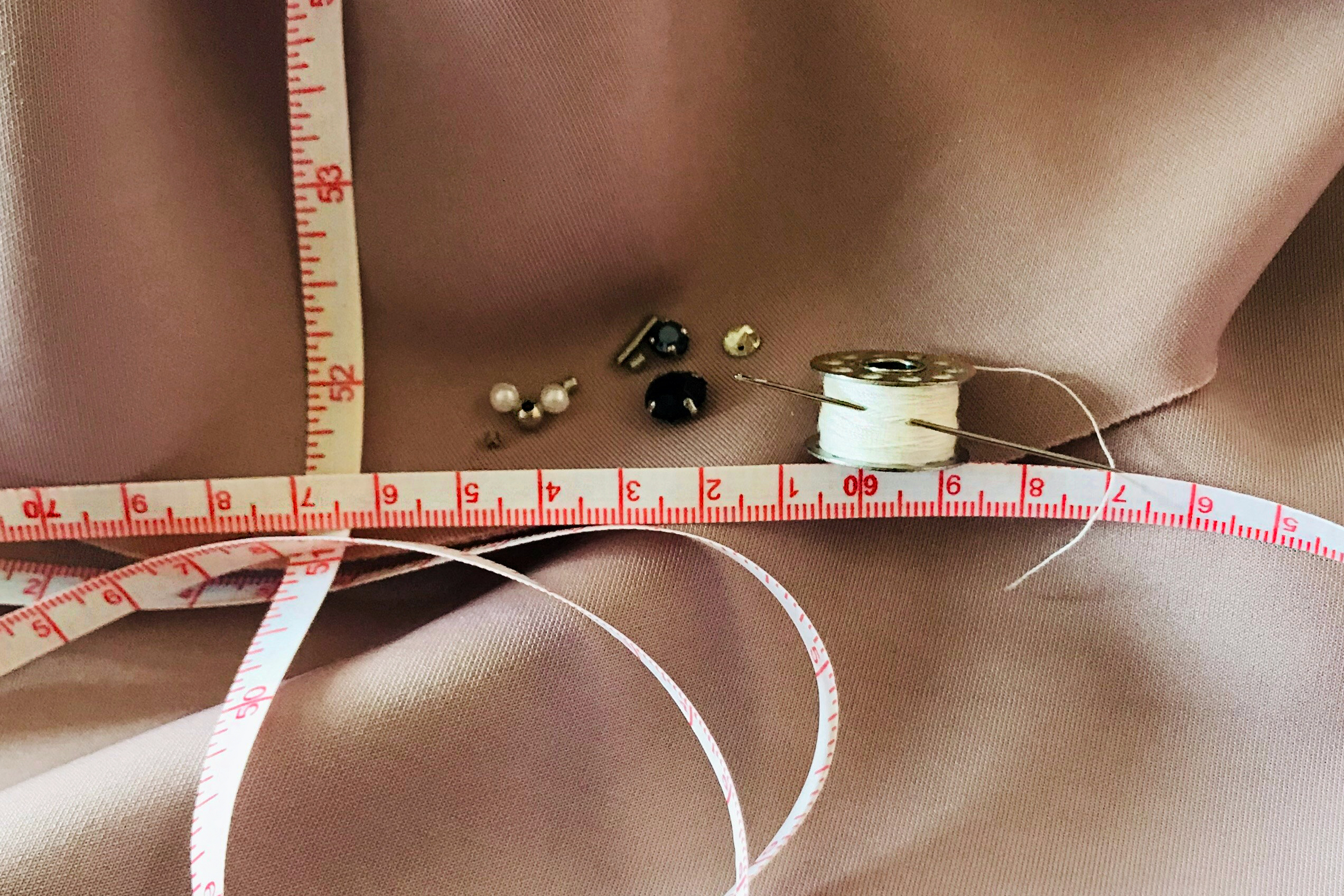
My mother is a gifted seamstress. Just a bit ago, I tucked my youngest child into bed, gently draping his little legs with a quilt she sewed for him. I wish I could say I inherited this same talent. I did not. And so I often appeal to her for help in this arena. Most visits to my parents’ house include me bringing a small heap of clothes that need mending. My mom gets right to work, reattaching buttons, patching tears, repairing hems, adjusting waistlines, tailoring sleeves to fit just right. It is such a gift.
Unquestionably, her most impressive sewing feat was making my wedding dress by hand. I wasn’t finding any styles that I liked and, mostly for fun, tried on a designer gown at an upscale boutique. I loved it. That is, until I saw the price tag. It cost roughly the same amount we had budgeted for the entire reception.
Standing there in front of the mirror, a swell of disappointment rising and tears close at hand, my mom began to circle me slowly, silently studying the seams, inspecting the fabric.
“I bet I could make this,” she finally said.
She took action right away, gathering supplies, taking measurements, searching for the perfect fabrics. In total, the materials cost less than two hundred dollars. The dress itself, though, was priceless. Not because it was perfect but because it was lovingly crafted and freely given.
***
In Genesis 1, we are given a rapid-fire introduction to the many roles of God. God is a creator, organizer, decorator, feeder, teacher, gardener, cosmos builder. And just a few verses later, we learn that God is also a seamstress.
God takes on this role right after everything goes wrong. When Adam and Eve eat the fruit from the Tree of Knowledge of Good and Evil, guilt rushes in alongside a jarring awareness of their nakedness. Their response is to hide from God.
God responds by picking up a needle and thread.
Genesis 3:21 tells us, “The LORD God made garments … and clothed them.” This is grace in action. The passage dismantles the common image of God as a disappointed judge. Here, God is not a grumpy disciplinarian so much as a loving seamstress, gingerly mending shame with each tender, careful stitch.
Later, Paul picks up this same thread in his letter to the Colossians when he urges God’s beloved to “clothe yourselves with hearts of compassion, kindness, humility, gentleness, and patience … Even more than all this, clothe yourself in love.” The metaphor is timeless, universally relatable. We all wear clothes. They protect us and signal belonging while allowing us to express our personalities and identities in creative ways. Clothing shapes how we move in the world, and the virtues Paul names do the same. They are garments we are called to wear every day, steadily forming how we live and how the world sees us.
Immediately following the story of Paul’s conversion in Acts 9, we meet a woman named Tabitha, a skilled seamstress known for serving neighbors in need. When she falls ill and dies, scripture tells us that the widows in the community gather at her home to grieve. Weeping, they show up holding the clothes she had made for them.
Someone sends for Peter. When he arrives, he sends everybody outside, kneels in prayer, and then tells Tabitha to get up. She does. It is the first resurrection in the New Testament outside of Jesus’ own ministry. I like to imagine, with no small measure of joy, how many more widows were clothed by Tabitha in the years that followed.
All these years later, I keep thinking about my mom in that fitting room, offering to make my dress without being asked. She saw an opportunity to participate in a momentous milestone in my life and jumped on it. It was not an obligation but a joyful, generous offering, rooted in love.
The dress was exquisite. An ivory silk bodice and underskirt anchored delicate layers of a pleated, tucked chiffon, flowing out beneath a banded empire waist adorned with nearly a thousand hand-knotted satin fabric pearls. It was exactly what I wanted: elegant, understated, one of a kind. I only wore it for a few hours, but the care it carried was immeasurable.
Making the dress was an exercise of living out the very virtues that Paul says we should put on in Colossians. The process was not quite, well, seamless. My mom had to drive across state lines with her sewing machine in the backseat to develop the pattern. She scoured the Southeast in search of a supplier willing to special order the fabrics. When her best friend traveled to New York, my mom sent her on a wild goose chase through Manhattan’s garment district, searching for pre-made fabric pearls. They did not exist.
So my mom learned how to knot them by hand. This was before how-to videos and online tutorials, so inspiration came from an ancient Chinese knotting technique a friend showed her. That season, she was never not knotting — during nightly episodes of Jeopardy, at the doctor’s office, in the passenger seat of the car on drives to visit my grandma. An act of devotion expressed through patience and persistence.
***
Most of us won’t make wedding dresses or raise the dead. But we’ve all been clothed more than we realize. And sometimes, when we resist the urge to overthink or hold back, we pass that covering along. We cloak hurting friends in prayer. We show up with dinner in the wake of sickness. We drive across town in rush hour traffic to offer hugs and Kleenex in hospital waiting rooms. We drop off hand-me-downs for a neighbor. We help cover an unexpected car repair. We give the gift of a steady, unhurried, non-anxious presence.
Listed out like this, these examples might seem quaint or wholesome. Even a little cutesy. But lived in real time alongside the demands of everyday life, they carry weight. Time is short. Stakes are high. Tensions flare. Trade-offs abound.
Not to mention, things rarely go as planned.
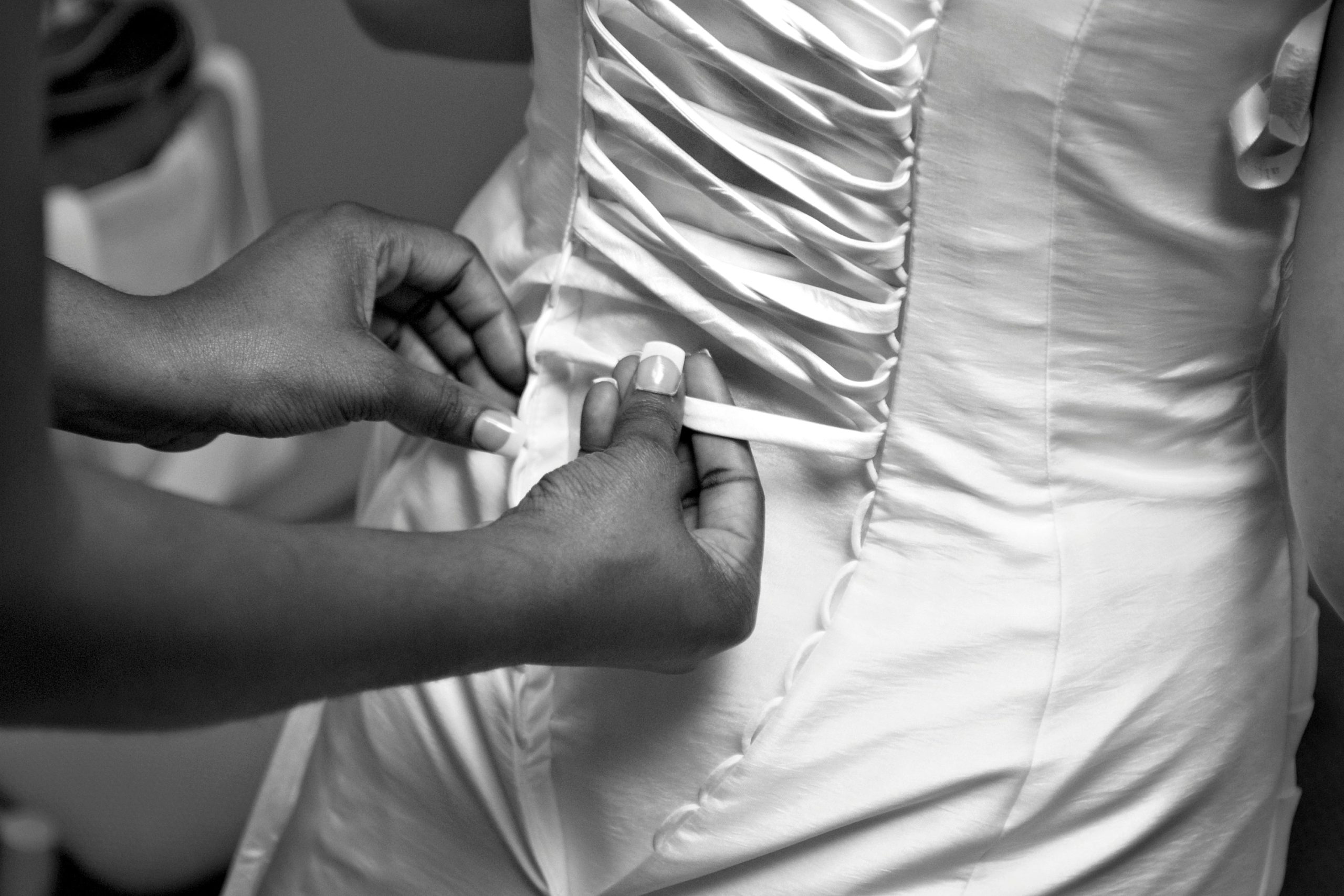
On my wedding day, the dress did not fit. The strapless gown my mother had carefully designed and crafted for me — the dress made for my body alone, the one that had fit like a dream just weeks earlier during final alterations — was suddenly too big. When my sisters helped zip me up moments before I was to walk down the aisle, we realized we had a problem. It gaped. It sagged. I panicked.
Through gritted teeth and hushed voices, my sisters sprang into action. Someone find mom. Send James to CVS for safety pins. Do they sell sewing kits? Sara Kay, what happens if you squeeze both arms tightly against your sides? How hard can you clamp your armpits?
I must have blacked out because I don’t remember exactly how it all unfolded. But my mom later described standing with me in the church balcony stairwell — me in my underwear, guests trickling in, prelude music playing — while she cinched and tugged and worked some safety-pin magic to ensure my processional didn’t accidentally veer into “wardrobe malfunction” territory.
Here’s what I remember with stunning clarity: walking down the aisle minutes later, both my parents at my side, my forever love waiting for me at the altar. Everything — the dress drama, the nerves — melted away into a simple, astonishing wave of love. I was surrounded by it, hemmed in before and behind. Literally clothed in it.
***
When Paul lists the virtues we are to wear, he also instructs readers to “bear with one another.” The original Greek can also mean suffer or endure. And indeed, we do. We endure irritations, tragedies, inconveniences, traumas, and disasters that threaten to unravel us. We suffer injustices, humiliations, misunderstandings, and pains that fray our edges. But God, in steadfast lovingkindness, sends menders to bear with us in sorrow and joy, to stitch our wounds in difficult seasons and clothe us in garments of praise in the good ones.
God for Adam and Eve. Tabitha for the widows. My mother for me. These faithful seamstresses, steadfast and creative, teach us that care is not always loud or dramatic. The work is laborious and often invisible, yet the clothing they create holds profound power — the power to cover shame, protect, meet needs, elevate the most momentous occasions. Threaded with love, they aren’t weaving mere clothes so much as fashioning garments of grace that endure. Garments that never wear out, never fade, never go out of style. And they always fit just right.