




Sitting in the service I was bundled back up. I was wearing a turtleneck and had pulled out my winter coat again. All March the weather had been shifting between the soft warmth of a lamb and the fierce windy roar of a lion. It appeared March was going out like a lion, the cherry blossoms had frozen and wilted. We were all confused, wrapped in our coats, as to where our spring had gone, and why winter was extending her stay.
One of my friends and I consistently refer to spring as “violent”, the weather, the emotions, everything about it seems violent, the constant shifting between sunshine, pouring rain, and freezing winds. My own mood can likewise be foul and chaotic. As the blossoms spring to life and are merry and excited, sometimes I’m simply not in the mood for the chirpy happiness. When I’m looking for warmth and comfort in a sunshiny mood, I’m then affronted by a freak snowstorm freezing the daffodils that had presumed it was safe to come out. Yes, it’s a violent season.
I occasionally lean so hard into tulips and the egg casserole and the pastel colors and victorious cheers that the often cold weather of Easter morning is insulting to me. But the cold spurts this spring haven’t insulted me. This Lent more than others I’ve pondered about the fragility of life. The way we never saw the magnolias this year because they froze in our random March snow storm. Perhaps it’s the great tragedy of the news cycle for the past weeks, looking at Ukraine and gasping that this world is not what it ought to be. And yet this is reality; the pain and suffering we see is real and is happening.
There are some weird contrasts in this season, and it’s hard to wrap my mind around.
But the whole story of Easter is such a paradox as spring. A savior that dies, death is defeated by death, evil must appear to be victorious before the turning of the tide. Unexpected, bitter winds will blow before we truly receive the warmth of spring. My church’s theme for Lent has been “death and the eternal weight of glory” and we’ve spent a lot of time in the book Job — the story of a man who had everything, lost it all in an instant, and then spends what seems like an eternity complaining. Talk about a book of death and things being “not what they ought to be.” It’s hard to reconcile ourselves to the injustice of Job’s story.
But it was sitting in the evening service on the wintery March Sunday hearing the words, “We are afflicted in every way, but not crushed; perplexed, but not driven to despair; persecuted, but not forsaken; struck down, but not destroyed;” that a dazzling moment occurred.
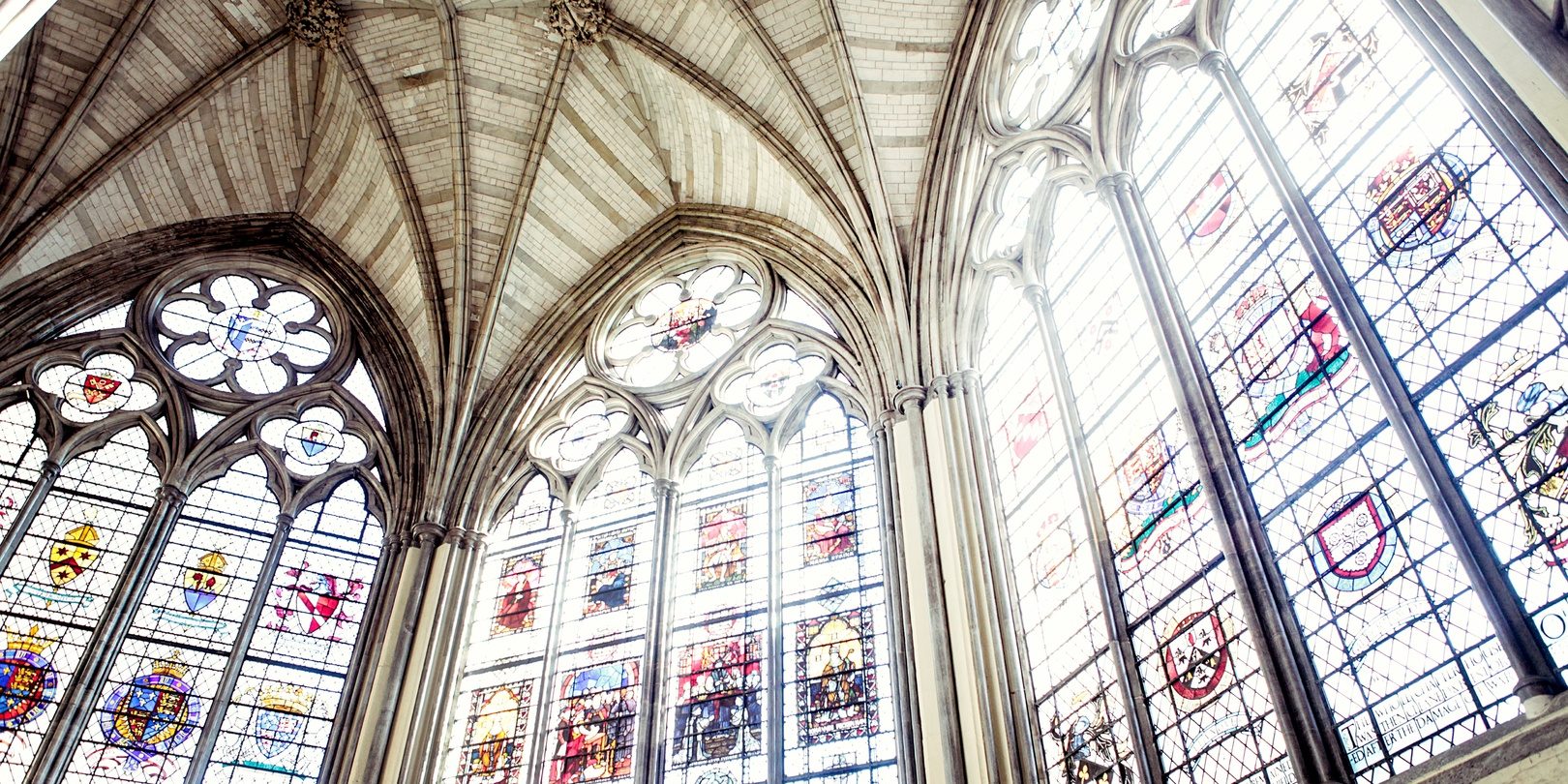
In the middle of the sermon, after spending most of the service listening to the wind bellowing against the church, a ray of sunlight burst through a stained glass window. You know that feeling of sitting by a window when the sunlight pours through and you are warmed? That happened. Suddenly there were golden yellow and ruby red shadows cast on the floor. The rays of light shining through suddenly and unexpectedly. I no longer needed my winter coat, bathed in this ray of warmth and light. My friend and I after the service had both caught the moment of sudden light and color pouring into the little humble church. If only for a moment, if felt like a relief.
I’ve been reading through Ezekiel during Lent (a weirder book than Job). If I had my druthers I’d start over and go with a Gospel, or something else New Testament, or literally anything besides this one. Amid its strange and dark prophecies, there is a sunlit stained glass moment.
It’s a seemingly very strange passage when Ezekiel is told to tell the bones to live again, to tell the four winds to breathe into the bones. And he does.
This is what the Sovereign Lord says: Come, breath, from the four winds and breathe into these slain, that they may live.’” So I prophesied as he commanded me, and breath entered them; they came to life and stood up on their feet — a vast army.
It’s the same imagery of Adam being formed of dust and being breathed to life, of Aslan wandering through the witch’s palace breathing new life into his creation. It’s the image of a weary Christian in a wintry world having the Holy Spirit fan a flame of hope.
Ezekiel has the violence of spring I often feel. The land will be turned into a desolate waste and people will be wiped out, but in the midst of it all there are warm promises. A God who promises to be the shepherd his people need, and a reminder of his glory — that in a valley of bones he can bid them to rise to new life. The passage is a stained glass moment of glory amidst a dark and dreary book.
Amidst our cold wintry springs we can only bear a moment of illumination, a light that glistens in our eyes to give us but a taste of glory. But one day, we will not be shrouded in winter coats, in our fragile human bodies, huddled together. The violent spring will be of a different sort. A roar of a just lion perfectly combined with the sacrifice of a lamb, it will not be just a ray of colorful light breaking through but will envelop us entirely.
But until then what do we do? We stay on the lookout for the glimpses of glory. In the words of Emily Dickinson; “we noticed smallest things, things overlooked before, by this great light upon our minds, italicized as’t were.” Lent is not a season of self-imposed dreariness, but a lesson for living in a turbulent world. Staring at the dark for this time trains our eyes to see where the shadows shift and rays of light burst through the gaps. To appreciate the mere existence of flowers amid the cold. Because when the world is not what it should be, the moments of glory are revealed through sunlit stained glass.








Love it! Yes, Ezekiel is a bit weird and complex, but compelling and wonderful like a performance artist speaking the prophecies given to him. Thanks for this reminder.