




“Clothes make the man. Naked people have little or no influence on society.” – Mark Twain
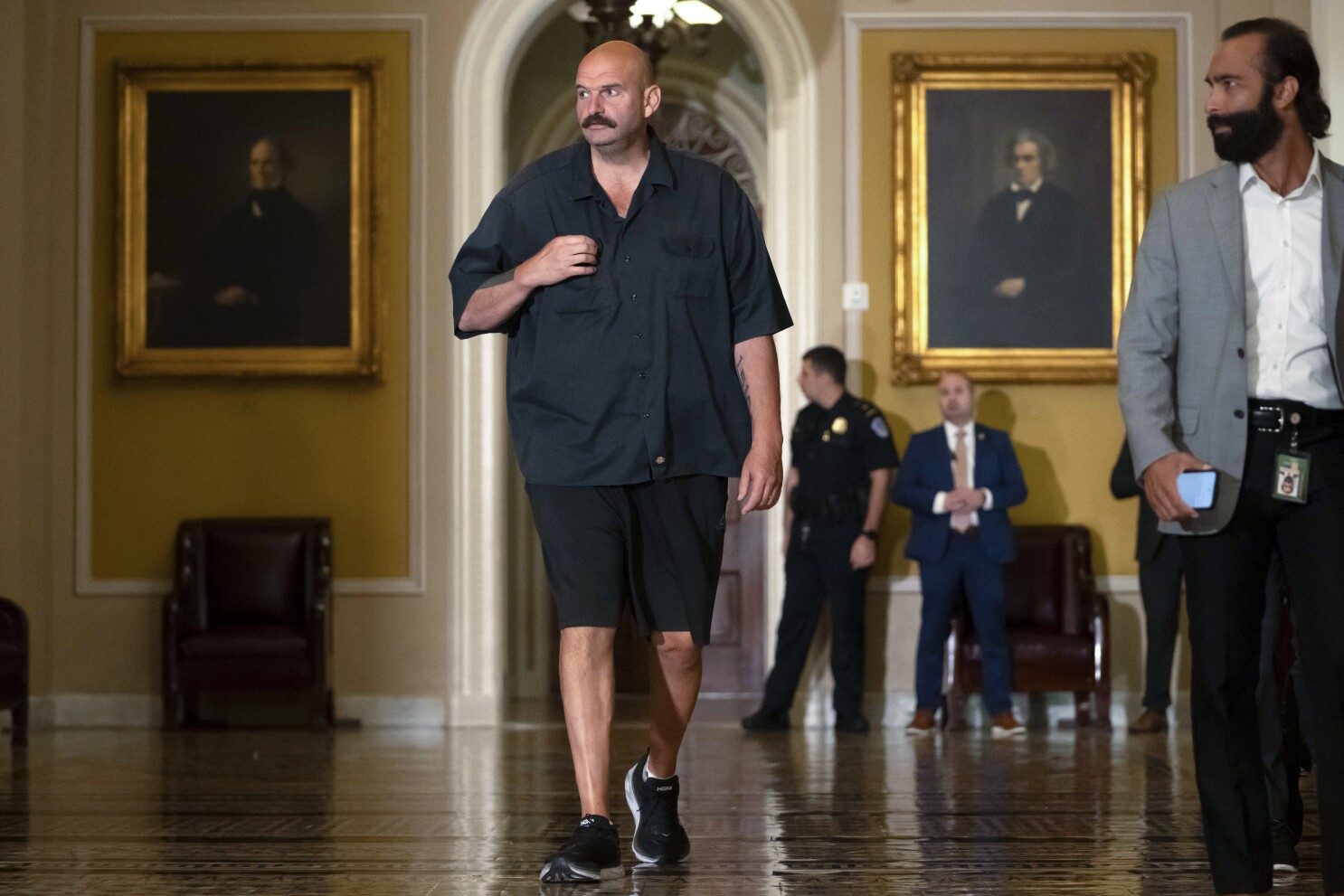
Two weeks ago, the Senate moved to bring an end to its longstanding unofficial dress code. After centuries of business attire being the unspoken rule, the floodgates of fashion were opened. The next day, John Fetterman made headlines for wearing a hoodie and gym shorts on the Senate floor. The new rule caused such an uproar that, just days later, senators unanimously voted to reinstate an official dress code. The Senate’s about-face on fashion was arguably the most bipartisan act done in years.
What is to be gained and lost with a necktie? More than we’d like to think, apparently. Studies show that students who wear uniforms to school listen significantly better, that there are lower noise levels and that more classes start on time. Uniforms are no longer exclusively for elite prep schools, either. Nearly 20% of all public schools now require a uniform. Conforming to a set dress code helps develop a certain habitus that helps reset a child’s expectations for their education.
Likewise, when you abide by a dress code, you become a part of something greater than yourself. Whereas conformity is often seen as the end of one’s personal identity, it tends to be an effective way to bring us all together. In the aftermath of removing a dress code from the Senate floor, the author Max Anderson bemoaned how we’ve prioritized individual self-expression over maintaining respect for the institutions of our past. “No single move like this matters all that much,” he wrote, “but cumulatively, I can’t help but believe they lead to a more selfish society, where individuals are less likely to subsume their own desires and ambitions for the good of the whole.” It’s a valid argument. Now that we are each holding ourselves to a unique set of standards, it is getting difficult to agree on the things that are most important in life.
As much as we’d like to dismiss clothing as a surface-level matter, what we wear tends to represent our values. The Senate’s reversal was not done in order to make a positive impression on the world or to be more professional, but to “protect the sanctity of that place at all costs.” As soon as religious language comes into play, we’re clearly not talking about slacks and button-downs anymore. “Dress code” translates to “moral code.”
In case this seems like too much of a political issue, the way we dress applies just as well to church. Whether it’s intentional or not, people seem to wear their theology on their sleeves. A clergyperson wearing vestments and a preacher in a muscle shirt say very different things as to what worship is all about. The same goes for attending church in a suit and tie, a tea-length dress, or designer ripped-jeans and a graphic tee. Some dress up to make church feel holy and set apart from the rest of a weekend spent in athleisure. Some use nebulous dress codes to police and shame the faithful (particularly when it comes to how women dress). Still others want to emphasize that God accepts as we are and is not charmed by fancy clothes.
Some people may dress to impress as a means of self-righteousness. They not only wear a jacket to church, but cufflinks. In that case, whatever social expectations are in place should be made with those in mind of those who can’t meet the law. Exercising one’s freedom looks like service and mercy. Still, others may err in the opposite direction and purposely dress down in order to make a point. But a barefoot bohemian who judges the well-dressed dandy is no better in the eyes of God. While people on either side may look at the outward appearance, the Lord looks elsewhere.
A friend of mine who used to work at Gucci provides an interesting perspective on the religiosity of fashion. Over time, he noticed that people who walked into a Gucci store already wearing expensive clothes would saunter through the aisles with the greatest of ease, but rarely would they buy anything. Most people, he said, would enter with fear and trembling as if it were holy ground. Heads bent low, speaking only in whispers, they would touch the scarves and handbags as if they were touching Jesus’ cloak expecting to be healed. It was the people who felt least deserving to be there — the ones in Walmart athleisure — who would spend a fortune. As if the belt of truth and the handbag of faith could be bought for a price.

Despite what you might have heard from your parents growing up, the church does not need to instill a dress code policy. In the early church of Rome, when some people believed that the Sabbath day was more important than the rest of the week while others thought that every day is the same, Paul announced that both views were permissible. “Each one should be fully convinced in his own mind,” Paul says, an indifference that must have left the church dissatisfied. Elsewhere, when addressing the issue of whether Christians could frequent the local butcher shop, Paul gives a similar non-answer. As clear and passionate as Paul can be on some issues, for others he is content to leave the issue unresolved. Eat what you want. Practice the sabbath, or not. It’s not too difficult to infer what he’d say about Sunday morning fashion: “whether suits or vests or jeans — the body of Christ can wear whatever it pleases.”
Better yet, Christians are already wearing the same thing. Not the clothes that we walked in wearing, but the ones that God has given us himself. The banquet feast is prepared and we’re all dressed to the nines. As Paul says in Galatians, “As many of you as were baptized into Christ have clothed yourselves with Christ.” Whether we are dressed in Gucci or Goodwill, we no longer need to express ourselves, but Christ crucified. While we first covered our nakedness in fig leaves, the Lord, as Isaiah says, “has covered me with the robe of righteousness as a bridegroom decks himself with ornaments and as a bride adorns herself with her jewels.” Dress codes may come and go, but surely this heavenly outfit is something that will never go out of style.




