




In the D.C. area, it is not uncommon to be asked upon meeting someone for the first time “What do you do for work?” While it may be natural to ask someone how they spend half of their waking hours, it also reveals something about how we perceive identity. Who we are consists in what we do to make money. I’ve always known this but have recently felt it more acutely.
In early January, I listened to the hosts of the podcast Pantsuit Politics interview Senator Cory Booker. Washing dishes in my grandmother’s kitchen in Baton Rouge, I felt encouraged and uplifted by his words. I can’t tell you precisely what they were, but I remember feeling encouraged that the senator seemed to both have values and be driven by those values. Then, as I moved to check something on the oven, I heard him use the phrase “hardworking American families,” in the context of discussing social safety nets. I felt ashamed.
Prior to this year, I was first unemployed in 2022. At that time, my chronic illness had overtaken my body and brain, and I struggled to simply get through any day. I remember my self-talk: “Your job is to get through the day. That’s all you have to do. This is your one job.” Then, when my long-term disability appeal through my employer was denied, human resources informed me that I had to separate from the company. I clung to the possibility of retaining the job, the “actual” job that paid, despite my physical state, but my efforts were fruitless.
That year, my partner also left. Part of me wants to use the more objective wording: that we separated. But this is not an accurate representation of what happened. He left, and I clung onto the relationship for far too long. Having no job and now no housing, I had to move in with extremely generous friends, away from most of my belongings.
That summer, I stayed with my friends and their parents at the parents’ cabin for a weekend. Saturday morning, we all went into town to shop. Sitting outside on the main shopping avenue, my friend’s dad observed a couple. The woman was obviously pregnant and carrying a heavy bag, and my friend’s dad chastised her partner (not to him, but to us) for not carrying the bag for her. Watching the seemingly happy couple walk away, I recognized that I did not have a partner to not carry a bag for me. I felt as though I would sink into the pavement.
In February of this year, I was laid off again. My company implemented USAID contracts. Since the majority of our revenue came from the U.S. government, we could not weather the foreign aid freeze for long at all. I am unemployed and unpartnered again. I am a non-working American, who cannot tell you what I do for a living (“it’s complicated”). I feel ashamed.
I also feel scared. I feel scared almost anytime I am not looking for a job — kind of like that feeling you might get when you’re in school that any time you’re not studying is not well spent. I feel scared because I know that I live in a society that only values members who appreciably contribute. Unemployment is not enough to live off, and SNAP only covers groceries (and eating at some restaurants for disabled people). If I work any part-time jobs to supplement my unemployment insurance, that money will simply be deducted from my unemployment income for the week. Thus, working part-time is disincentivized because it takes away from a full-time job search with no gain.
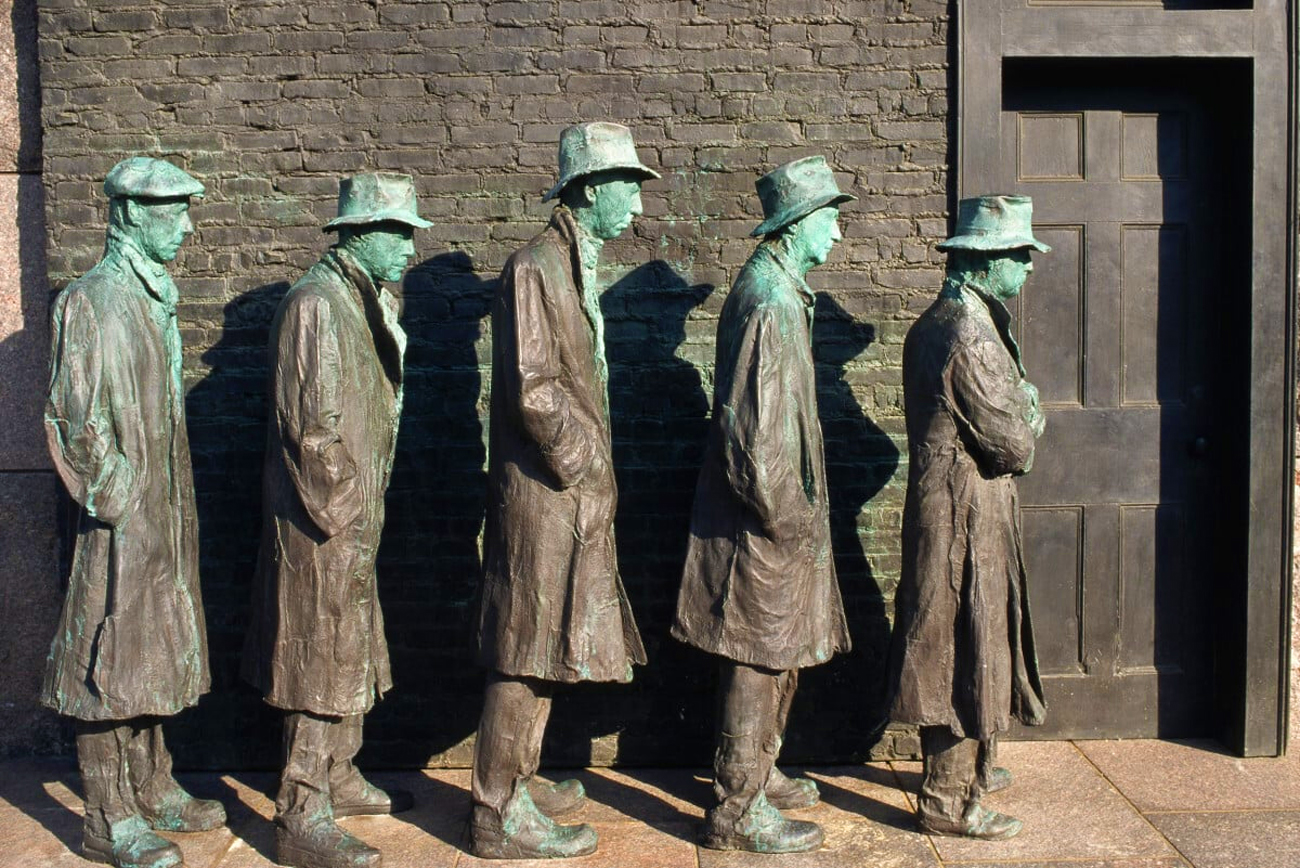
The flip side of a society that values work is the stigmatization of those who aren’t the right kind of person. If you have a disability, you may find obtaining long-term disability to be a hard-won or fruitless battle; you may be anxious about requesting accommodations from your employer. If you need to work from home, your loyalty and work ethic may be questioned. Those who are unemployed find themselves monitored and constrained by a bureaucratic system that functions as if you are lazy.
Thus, I feel ashamed. I feel ashamed that I am single, that I am not working, and that there are days when I feel so panicked that I can barely move. Ashamed that I have no paycheck coming in, that I am aging, and that I do not have children. It can be very hard to fight this shame while being embedded in a system that values what I am not. Such mental choreography is easier said than done, and it has a way of compounding the shame by blaming people for what they otherwise cannot control.
Is God ashamed? God may be heartbroken that I lost a job I loved, that I lost a love, that my soul crumbled into rocks and ash. But my God is not ashamed. What does my God, the God of Jew and Greek, slave and free, male and female, have to say about all of this? He stirs my brain to recall these words, heard just last night:
I lift up my eyes to the hills — from where will my help come? My help comes from the Lord, who made heaven and earth. He will not let your foot be moved; he who keeps you will not slumber. He who keeps Israel will neither slumber nor sleep. The Lord is your keeper; the Lord is your shade at your right hand. The sun shall not strike you by day nor the moon by night. The Lord will keep you from all evil; he will keep your life. The Lord will keep your going out and your coming in from this time on and forevermore. (Ps 121)
Howard Thurman, armed with the understanding imparted by his grandmother that the Creator of existence also created him, explained that he could “absorb all the violences of life.” Jesus Christ does not see me as an unemployed, unpartnered, childless, aging woman. He sees a child of God. If I am lowly and shameful to the world, that is of no account to him. I know no greater freedom.








This is a raw and real writing, deeply human. Your reflections on identity, shame and dignity in the face of loss and your “budding” transformation brought on by faith are powerful! Thank you for sharing!