




Here’s the next installment of our Hopelessly Devoted series, which highlights a recent entry in our 365-day devotional, Daily Grace — now available in a smaller (4″ x 6″) travel edition! Grab it in our store or on Amazon.
Oh, and it’s ALSO available on our fancy new MBird phone app (iOS and Android).
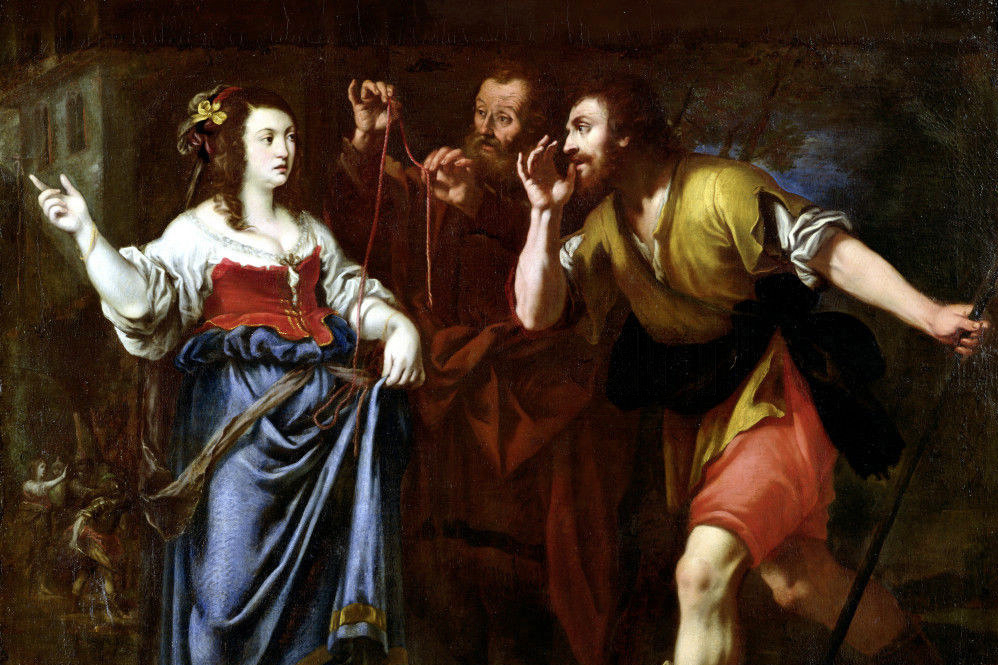
But [Rahab] took the two men and hid them. Then she said, “True, the men came to me, but I did not know where they came from. And when it was time to close the gate at dark, the men went out. Where the men went I do not know. Pursue them quickly, for you can overtake them.” (Josh 2:4–5)
This story reads like a scene from a Cold War–era action movie. Joshua, leader of the Israelites, sends his spies to scope out the city of Jericho. They take refuge with Rahab, a prostitute, who saves their lives by hiding them on her roof, lying to the authorities, and sneaking them out of the city. In exchange, the spies agree to spare Rahab and those of her house when the Israelites invade.
For ancient literature, it’s pretty thrilling stuff, and yet as a child I remember being appalled by the story. I mean, she lied, right? Is the Bible saying that’s okay??? It’s funny how rigid the young mind can be about rules. Not to mention the old mind. It’s also strange that I didn’t suffer the same agony over the fact that — in Joshua 6 — the Israelites murder almost the entire city. Still, Rahab’s story begs the question: Is lying always wrong? A Christianity Today article summarized the issue: “The Bible condemns deception … Even so, when Rahab’s story is told … the Bible — while not justifying her lie — does not condemn it. The same is true of the midwives’ lie (Ex 1:15–21) and Elisha’s lie (2 Kgs 6:19).” Beyond scripture, I think we can all envision scenarios both routine and extreme in which lying might be commendable, and yet none of this lessens the general importance of telling the truth; it only suggests that the ethical water is a tad murky.
Is lying always wrong? Who cares? Ethical purity was never the point. We don’t worship the law, nor are we saved by it. The Bible contains much ethical teaching but is not an instruction manual. It is rather — as Rabbi Abraham Joshua Heschel put it — the story of “God’s search for man.” Twice in 1 Corinthians, that great expert in the law, St. Paul, writes that “‘All things are lawful,’ but not all things are beneficial.” Such a notion doesn’t lessen the importance of the law but emphasizes the strange freedom that comes from trusting in a loving power greater than ourselves.







