




For the earliest Christians, the most important theological question they faced — the turning point of the burgeoning Jewish sect — was how Christians should relate to the Law of Moses. Other matters were addressed, whether it’s the church in Corinth going off the rails or encouragement to a church in persecution, and those things are incredibly important. Still, the vast majority of the ink spilled in the Epistles section of the New Testament focused on the ways Jesus fulfilled, and therefore changed the Christian’s relationship with, the Law of Moses. Arguments about circumcision and Jewish feast days and eating meat sacrificed to pagan Gods are all tangible, everyday examples of just how confusing and challenging the matter can be.
Sadly, some two thousand years later, the church and the world remain confused about this issue. Individually, this sometimes manifests in more legalistic practices around the Sabbath or overbearing parents a little too obsessed with whether their children honor them. Corporately, this manifests in Christian movements that seek to apply the Law of Moses to modern political matters. In the U.S., on the political right, the Law of Moses is often cited to justify everything from private property to traditional marriage legislation. On the left, the Law of Moses is often cited to justify debt relief or immigration policies. There is also a school of thought called Theonomy, which argues that the Law of Moses is God’s perfect vision for earthly government (and that Christians should vote accordingly). While this movement peaked in the 1970’s and 80’s, a resurgence of this thought is being promulgated in some circles under the banner of “Christian Nationalism.”
To understand how the Christian reads, marks, learns, and inwardly digests this extensive section of the Old Testament, this is the first of four a four part series that takes a deep dive into this most crucial of questions.
- Part 1 – How Paul Defines the Word Law
- Part 2 – The New Testament’s Commentary on the Law of Moses
- Part 3 – Attempts at Integration – How Best to Apply the Law of Moses
- Part 4 – The Law and the Spirit
How Paul Defines the Word Law
If you’ve been around the church for any length of time, you’ve heard the word “law” used as shorthand for a number of different things. In Judaism, the first five books of the Bible are often looped together and called the capital “L” “Law” or the familiar Hebrew word “Torah.” But also, theologians have often talked about “the law” as God’s moral will, the standard of holiness expected of Christians. Sometimes they’ll divide out two or three uses of this law to help Christians integrate the paradox of God’s righteousness and forgiveness. “Law” is also a word wrapped up in our civil obligations, invoking imagery of congress or police officers. Here at Mockingbird, we use the word “law” in the law/gospel distinction to describe any word of condemnation or judgment.
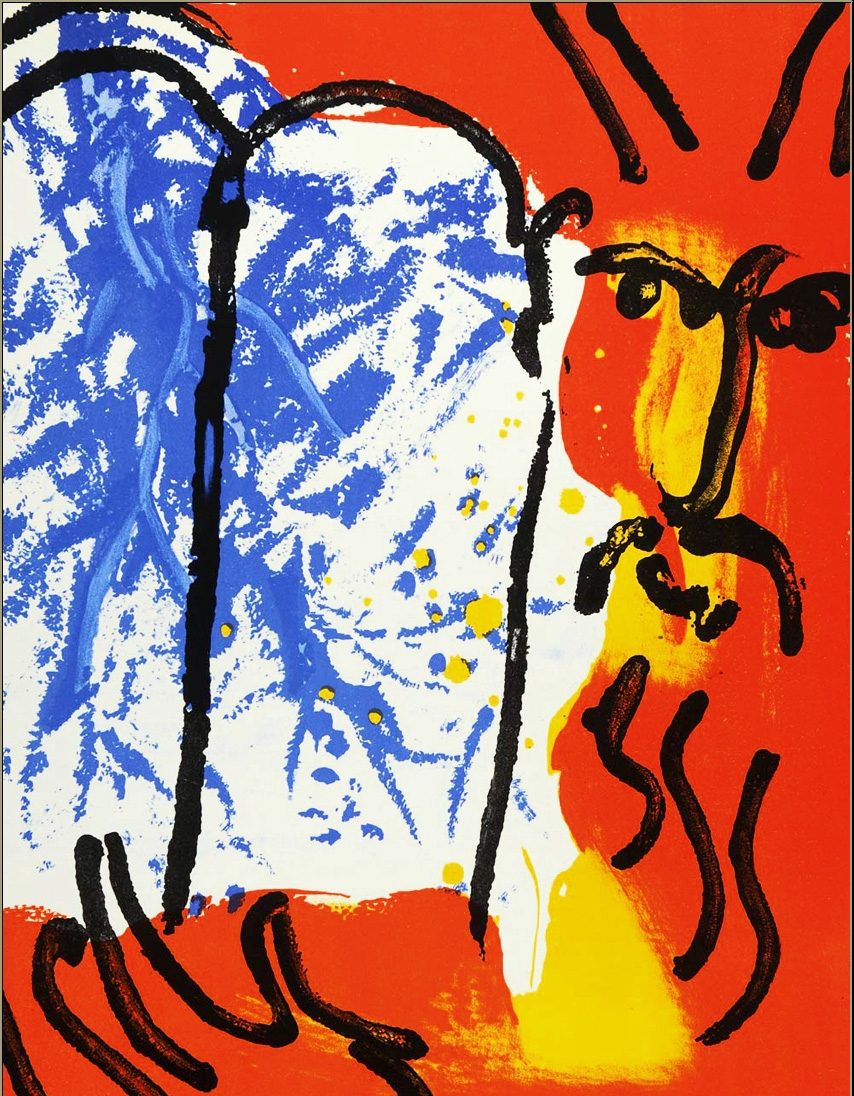 In the New Testament, the Greek word used for “the law” is the word nomos and its derivatives. The word is commonly spoken and discussed by the main players in Matthew, Mark, Luke, and the book of Acts. In these instances, the word “law” is largely a plot point, a part of the narrative that leads to Jesus’s death and resurrection and the establishment of the church. Jesus may asked about specific laws and he provides illuminating answers, but broader theological reflections on the matter are initially taken up by Paul, whose letter contain arguments alongside anger and explanations alongside exhortations. In his epistles, we get the clearest “why” and “how” for the transition of God’s people from incomplete obedience to the Law of Moses to faith in Jesus’s death and resurrection that brings about life. His arguments are occasioned by understandable circumstances — should Gentile converts be circumcised, for example — but his argumentation always exceeds a simple yes or no answer.
Martin Luther, when reading Paul’s letters, suggested that when Paul used language like “law,” he meant the total moral will of God. When Paul writes in Galatians 3 that “All who rely on works of the law are under a curse,” Luther would have thought about those who relied on their good works, whether circumcision in Paul’s day or the purchasing of indulgences in his own time, are under a curse. Their works are not good enough, and the fact that they think those works are good enough shows how far from God they truly are. Faith, then, for Luther, is the complete trust in God’s promises made through Jesus’s death and resurrection: forgiven sins, the resurrection of the body, life everlasting, etc.
Things have changed a lot since Martin Luther’s initial reading of Paul’s letters, especially our understanding of first century Palestinian Judaism. The holocaust, the discovery of the Dead Sea scrolls, and a host of archaeological insights have placed Paul’s Jewishness at the center of recent scholarship. Often called the New Perspective on Paul, this school of thought dismisses Luther’s mildly anachronistic imposition of medieval controversies upon the first century apostle. The great problem of that time and age, they argue, was the integration of Gentiles into the people of God, a title formerly reserved by the Jews. Works of the Law, they argue, are the series of festivals, rituals, and behaviors that made Jewish culture distinct. In this reading, “All who rely on works of the law are under a curse” is Paul’s warning against those who think the people of God are defined by things like circumcision and diet. The people of God are composed of anyone with faith, and using kosher diets, ritualistic circumcision, or new moon festivals to exclude or reject those with faith draws down God’s curse.
And yet neither Luther or the New Perspective capture the fullness and scandal of what Paul means in his comments on the law. One verse in particular becomes the key that unlocks not only Paul’s definition of “the law,” but also, it unlocks Paul’s greater understanding of what it looks like to be in relationship with God. The verse is an offhand comment in Galatians 3:17, which reads:
This is what I mean: the law, which came 430 years afterward, does not annul a covenant previously ratified by God, so as to make the promise void.
In this context, Paul is comparing two different covenants, both of which come from God, but are separated by 430 years. It’s easy to see that he’s referring to a covenant God made with Abraham in Genesis 15, a covenant promising him a land, a people, and a son through whom he would have unnumbered descendants. Keen Bible readers will remember that, to ratify the covenant, God had Abraham slaughter a number of animals so that their blood ran into a trench. Then God appeared as smoke and fire and walked through the bloody trench. The imagery was: if this promise is not kept, may the covenant maker (in this case, God!) be rent asunder and bled out as these animals.
The second covenant, 430 years later, refers to the covenant God makes with Israel on Mt. Sinai after the Exodus in Exodus 19 and following. God makes Israel an offer: he will give them a series of commands to follow regarding how to behave, how to structure a just society, and how to worship. If Israel agrees to keep those commands, God promises to bless Israel beyond anything the world has ever seen. If Israel agrees to keep the commands, but doesn’t keep them, God promises to curse Israel beyond anything the world has ever seen. With Moses acting as a middleman, the offer is presented to Israel’s leadership. The stipulations are passed along for everyone to review. Tribal leaders gather, the matter is approved, and Israel agrees to the terms of the covenant. Animals are again slaughtered — “may it be unto me as these animals if I don’t keep my end of the bargain” — and the covenant is formally agreed to. The tribal leaders of Israel go up Mt. Sinai with Moses to meet God, seal the deal, and throw a celebratory feast. (They even get to catch a glimpse of God and his jewel inlaid throne room!).
Let us assume, for the sake of argument, that Paul is a consistent writer. When he uses words and phrases repeatedly in an argument, or throughout the corpus of his letters, let us extend to him the courtesy of clarity. When Paul speaks about the law, he is speaking specifically about the Sinai Covenant, the latter of these two formal contractual agreements that God has made in the past. The literary word for this is synecdoche: a part of an idea that stands in for the whole of the idea. In the same way that the massive apparatus of the U.S. government system is often referred to by its capital, Washington, or in the same way that the Pittsburgh Steelers are often referred to as simply “Pittsburgh” by the pundits on TV, Pau’s use of “the law” encapsulates the set of laws given at Mt. Sinai (and the following addendum laws given in Leviticus, Numbers, and Deuteronomy) that structure the rules for Israel’s moral, civic, and spiritual life.
Read in this light, the New Perspective has a good point: recovering the Jewishness of Paul helps us see that his thought process is rooted in his past as a Pharisee and the challenges of the church. Luther may have overplayed his hand by extending the idea to include God’s moral will. The New Perspective, however, misses the greater point: it is not just the cultural distinctives of first century Jewish Christians that come under fire: it’s the Law of Moses in its entirety. The sacrificial system, the dietary laws, the strict measurements for the tabernacle, to follow these things is to be under a curse, but also, the various moral principles of the covenant are causes for curse as well! “All who rely on works of the law are under a curse” also applies to principles about hospitality to immigrants, the sanctity of sex and marriage, and even the Ten Commandments. Though Luther may have overplayed his definition of the law, his conclusion, that even our good moral habits and attitudes cannot save us, rings truer than his critics to Paul’s original teaching.
What might it look like to follow Paul’s lead and read the whole of the New Testament with this filter? If we extend this reading out into the rest of Paul’s readings, and consider that other New Testament authors had the same inclinations as their peer, the answer for how Christians relate to the Law of Moses becomes clear, and the Gospel will lose much of its fuzziness and come into focus.





great breakdown, I’m excited to read the rest of the series!
Just awesome! God bless you.