




Jesus was pretty feisty. Sure, he sat with the crowds and multiplied the loaves and fishes. He calmed the storm while the disciples cowered in fear, cured the sick, elevated the marginalized, and sought out the last, least, lost, little, and dead. But that doesn’t negate how contentious he was.
The Gospels paint a picture of the Messiah such that we can see how he was eventually done in by the hostility that surrounded him. I’m sure he heard the murmurs of his disciples and the crowds: “It’s all good and well that you fed thousands, Jesus, but why didn’t you rain down manna from heaven for the rest of us? Thanks for calming the storm out on the sea Jesus, but what about all the other hurricanes and typhoons? I’m all for making the last first Jesus, but if I’m in a position of power right now you’re not going to take it away from me, are you?”
It’s amazing to take a step back from the strange new world of the Bible every once in a while to think about how enthusiastic the crowds were for Jesus (free meals not withstanding).
And yet, the parables are downright confounding, they’re anything but clear, and they don’t paint the prettiest picture of the Kingdom. This apparently wasn’t anything new, at least according to the Lord. Like Mark and Luke, Matthew records that Jesus spoke in parables, and without a parable he told them nothing. Parables to fulfill what had been spoken through the prophet: “I will open my mouth to speak in parables and I will proclaim what has been hidden from the foundation of the world.”
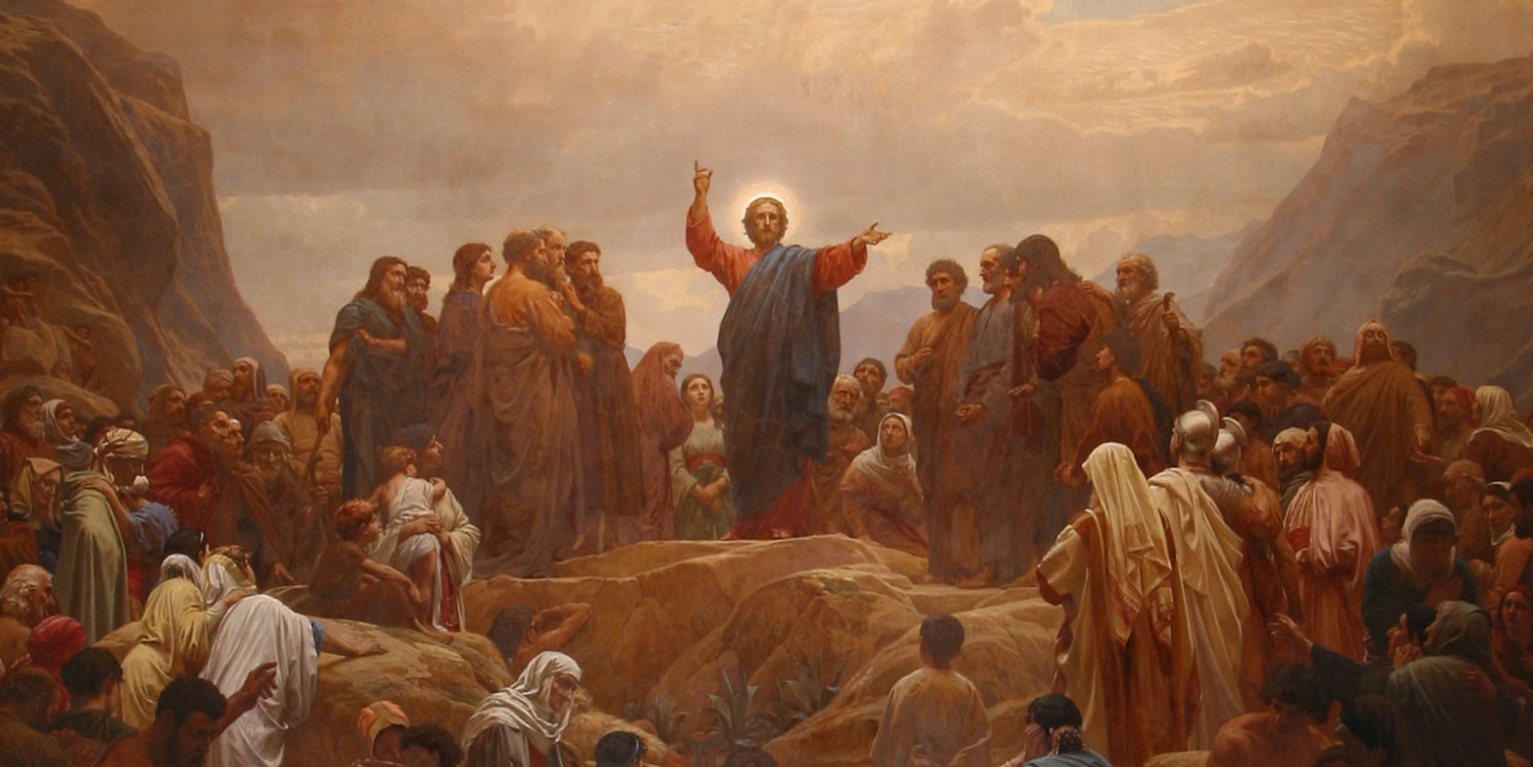
This is how the Lord works: in mysterious, confusing, and scratch-your-head kind of ways. With stories about a sower scattering seeds, a father who throws a party for his wayward son, and a field with weeds and wheat.
All of the parables, whether they’re parables of grace or judgment, point to Jesus’ strange proclamation that the kingdom is already here, existing under the banners of judgement and grace. It’s not something off in the distant future that we have to wait for or work for. Rather, it’s among us in this present moment, and has been with us, mysteriously, since the foundation of the world.
Of course, the mystery of the kingdom throughout history is the whole point. For, since those days back in the Garden with Adam and Eve, the kingdom has been hidden and only signs of it have broken through (the people Israel, Jesus, the Church, etc.). But it has only been hidden, not absent. It is not, “yet to come.” It is already here in strange and mysterious ways.
This dynamic of bewildering hiddenness, presence and absence, is found through Jesus’ parable of the Weeds and the Wheat. A man plants good seeds in his field. But one night, while everyone’s dreaming of sugarplums, an enemy comes and plants weeds among the wheat. When the plants start to grow the servants of the man notice the weeds and ask if they should remove them. But the man says, “Nope, if you take out the weeds you’ll only ruin the wheat. Just wait for the harvest and we’ll get it all sorted out.”
That didn’t sit well enough with the disciples, and perhaps even with many today, so only after leaving the crowds and retiring to the house do the disciples pick up the previous, and unending, line of inquiry. “Lord,” they say, “You’ve got some explaining to do. Tell us what the parable of the Weeds really means…”
“Fine,” Jesus seems to say. “The story I told wasn’t good enough for you eh? Well how about I explain every little part so it loses its excitement and you all can rest easy. But I should warn you, the more you know, the more you know. And you might not like what you come to know.”
“Okay,” Jesus begins, “Check this out: I’m the guy sowing all the good seeds. The field is the whole cosmos, and the good seeds are the people of the kingdom. But the weeds, they are from the evil one, and the evil one is, well, evil. The harvest is the end of the age, and the harvesters are angels. I will send out the angels, and they will collect out of the kingdom all the stumbling blocks and all the indwellers with sin, and they will throw them into the furnace of fire! Then the righteous will shine like the sun in the kingdom. Did you get all of that? Are you happy with the explanation O disciples of mine?”
Are we happy with it? Maybe we are. We’re pretty decent people after all. Heck, we’re reading a theological reflection online! We’re not terribly worried about being considered among the weeds. And, frankly, we know some other disreputable types who might deserve the furnace.

Or maybe, this doesn’t sit too well with us, knowing, in our heart of hearts, that we’re not as good as other people think we are. Knowing that, if we were to identify ourselves in the parable, we have more in common with the weeds than the wheat. Does that mean Jesus is going to send the angels to toss us into the fiery abyss?
It’s notable that, having listened to the Lord wax lyrical for an afternoon about sowers, wheat fields, mustard seeds, and yeast, the disciples gather in the house with Jesus and they demand to have the “parable of the weeds” explained to them. Of all they heard, that’s the one teaching they wanted explained. And even the way they frame the inquiry, they have managed to turn the parable into something else. No mention of the divine farmer who delights in letting things grow together, no questions about where the farmer sows the wheat, they don’t even ask about the servants and their response to the growing field.
All the disciples heard was a story about weeds. Jesus delighted in giving those disciples a tale about the confounding relationship between good and evil from the vantage point of the Lord, but all they received was a pigeon-holed story about evil, and only evil.
Perhaps the disciples should be given some credit. Rather than slinking down in their seats pretending to know exactly what was going on, they had the gall to raise their hands with an, “Excuse me Jesus, I don’t get it.”
I like to imagine that when questioned about his parabolic utterances, Jesus responded first to the disciples by throwing out his hands saying, “Yep, you really don’t get it.” But that’s not in scripture. What is in scripture, on the other hand, is Jesus’ apparent willingness to unpack all that he had laid before them, one detail after another.
Even today, we struggle like those disciples. We don’t understand the church’s relationship to the world, we don’t understand the complex dance between good and evil, we don’t understand what it means to be the wheat anymore than what it means to be the weeds. And if (and that’s a big if) we ever do start to see behind the curtain, if things begin to fall into place, it’s more of a journey toward understanding, rather than an end in itself.
But it is a tremendous gift to be part of that journey! For, the parables of the kingdom make it rather clear that heaven is not distantly “up there somewhere.” Instead, the kingdom creates time and takes up space here and now. Jesus speaks through these strange and wild and wonderful stories so that we, those who receive them, might be for the world the reality of the kingdom. Sometimes we forget that in Jesus we get to see and hear what countless people had longed to see and hear.
The Lord made flesh, dwelling among us, telling stories about what reality really looks like.
And yet, the reality of Jesus’ explanation still hangs before us, a dreaded fiery catastrophe for those whom the harvesters gather together: “Just as the weeds are gathered and burned with fire,” Jesus says, “so will it be at the end of the age. The Son of Man will send his angels, and they will gather out of his kingdom all stumbling blocks and doers of iniquity.”
And that is what God will do. The New Jerusalem, the Supper of the Lamb, would be pretty weak if the Lord allowed such stumbling blocks to remain. Evil will be dealt with. It will be vanquished forever and ever.
The disciples, like many people, can’t help but assume that’s their job right here and right now. “Forget letting the angels divide up the weeds in the wheat Jesus! We can start right now! Give us a list of all the unforgivable sins and we’ll sort everyone out for you!” That kind of work since has been going on since the beginning of time right up to today. We are quick to find a sin, whatever sin we want, and hold it over one another as the sign of someone’s outside-ness to our inside-ness, whether it be hanging Commandments in court houses, locking people up for every crime under the sun, or putting people on death row. But when are we finally going to make the world a better place?
Jesus says, in his explanation of the parable, this work doesn’t belong to us. It’s up to him. And for that we should be remarkably thankful. Because no one would cut it as a wheat in the kingdom of heaven. “No one is righteous, no not one,” to steal an expression of Paul’s. There is only one person who has lived a life without sin, and he became sin in order that we might be freed from it. He went ahead and nailed every last one of our sins to the cross, past, present, and future. He forgave us from the cross for the worst sin of them all, for trying to kill God.
We, whether we like to admit it or not, are in the weeds — we deserve the furnace.
But what happens in the furnace? Eternal torment? “And the angels will throw them into the furnace of fire. Then the righteous will shine like the sun in the kingdom of their Father.” A furnace of fire. That’s quite an image that Jesus chose. Interestingly, furnace is not a word that occurs in scripture all that much. In fact, it’s rather rare. Jesus uses it here and again seven verses from now. It also shows up, unsurprisingly, in the Book of Revelation.
But there’s one other, very notable, use of the word furnace in the Bible. It happens in Daniel chapter 3. In Daniel, the people Israel are living in exile in Babylon, having been taken from the Promised Land. King Nebuchadnezzar of the Babylonians catches word that three men (Shadrach, Meshach, and Abednego) are refusing to worship the gods of Babylon and the king orders them to be thrown into the furnace of fire. Where, miracles of miracles, nothing happens to them.
Moreover, when this king looks inside, he see another mysterious figure with the three men. The King orders them to be removed from the fiery furnace and he blesses the God of the men he had previously condemned to death. They are delivered from the fiery furnace and they stand as the righteous in a land of iniquity. It doesn’t take a lot of imagination to picture them glowing from their fiery ordeal and standing as a testament to the power of the Lord for salvation.
Jesus says that the weeds will be tossed into the furnace of fire and then the righteous will shine like the sun in the Kingdom of the Lord. As the wonderful Robert Farrar Capon notes, the Kingdom of heaven will be populated entirely and only by forgiven sinners. That is, all of us. Hell, whatever it may be, exists only as a courtesy for those who don’t want any part of forgiveness.
The fire of refining that comes at the end of the age will burn away all the stumbling blocks to the kingdom, it will burn away all iniquity, and the only thing left will be forgiven sinners. Nothing more, less, or else.








Maybe God is so patient to let the field alone because He is not willing that any should perish. He is able to turn a weed into a wheat. Isn’t that where we all started?