




It was October of my junior year of college, and leaves were not the only thing falling. All my friends were falling in love, or at least, so they told me as we sat at lunch in our college cafeteria eating grilled cheese sandwiches with a dessert bowl of Lucky Charms before our 1 PM Southern Literature class. Several of them had just gotten engaged weeks before, and a few more seemed headed in that direction soon, according to their recent Pinterest activity on boards titled “To Have and to Hold” or more discreetly, “Dreams.”
I rolled my eyes at their Pinterest boards, but in private, I hid a copy of Tim Keller’s The Meaning of Marriage: Facing the Complexities of Commitment with the Wisdom of God in the drawer of my dorm room desk. I purchased Keller’s book because I hoped that perhaps Keller could provide enough Wisdom of God as my friends (and maybe me) Faced the Complexities of Commitment.
Nine years have passed since then. In those nine years, I’ve answered many post-proposal FaceTime calls, attended over a dozen weddings, and replied to group texts about first, second, and third babies. Nine years later, I am still not married. And so nine years later, as my friends’ lives still feel so different from mine, I was interested to add another book to my complexities of commitment collection, which is now stored on a bookshelf and not my desk drawer. This time, the book was titled “How to Stay Married: The Most Insane Love Story Ever Told,” by Harrison Scott Key.
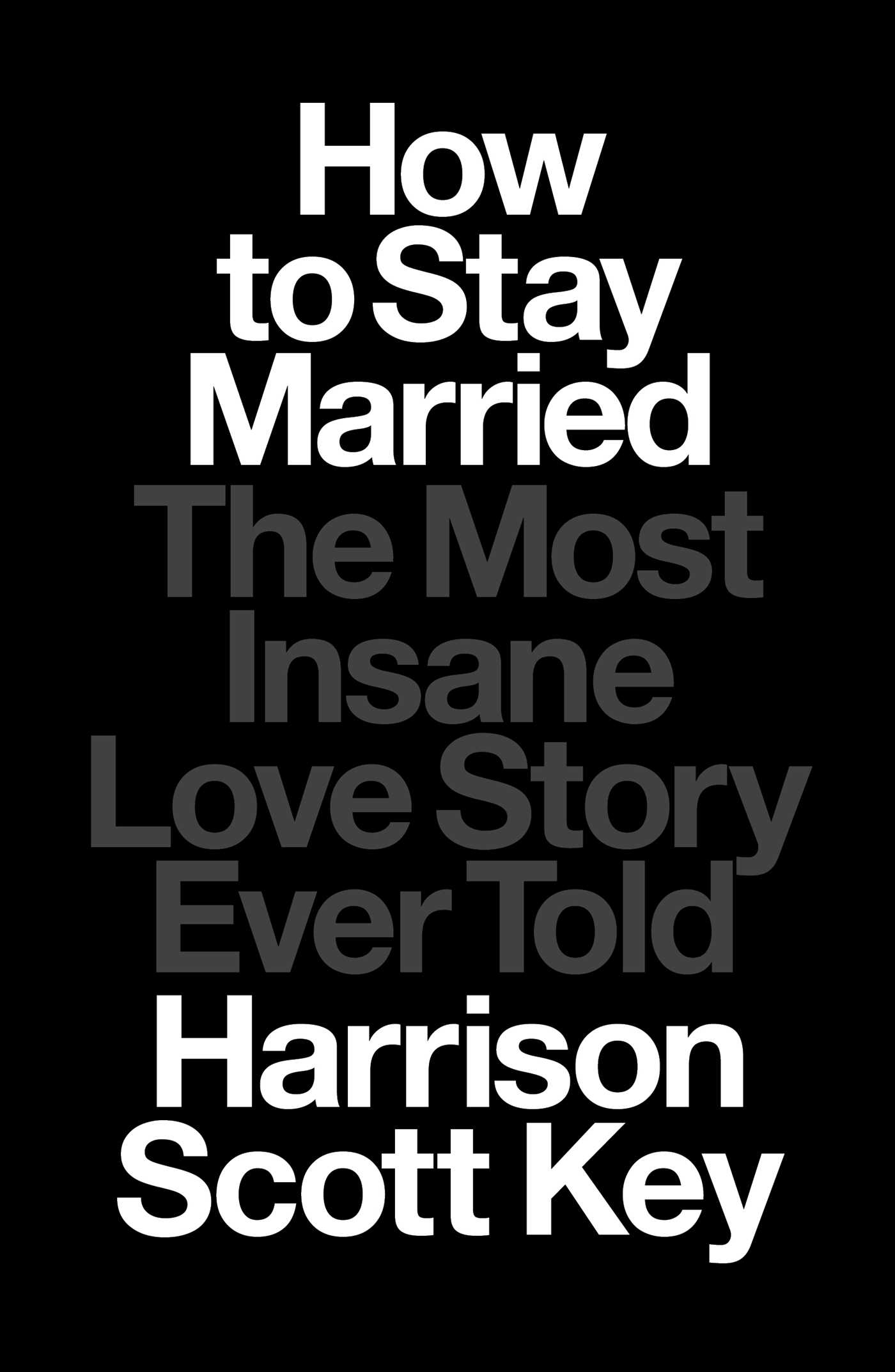 How to Stay Married tells a hilarious, shocking, and spiritually profound story, but it does more than that. Upon receiving my copy, the book did something truly shocking: it grew hands and held up a mirror! What I saw in the mirror’s reflection was both hilarious and profound: the reflection showed an assface, specifically, my assface. Excuse my vulgarity, for I am only quoting the author here.
In chapter 15 of How to Stay Married, Key goes through each letter of the alphabet, naming and claiming 26 of his flaws that could’ve led to the demise of his marriage — “A: I am an ASSFACE” to Z, “I am handy with ZINGER if I need to hurt someone and want to avoid breaking any laws.” This clever, hilarious, and alarmingly-relatable chapter ends with Key recounting a confessional text he sent his wife and the moment that followed:
‘I don’t know much. But I know this: I’m an assface.’
And the wildest thing happened. She said, ‘I am, too.’
Nobody told me fighting for my marriage would be less of a fight than kneeling in humiliation at the feet of my enemy. In those delicate days in the autumn of 2017, our marriage motionless in the critical care unit of the burn center, this admission of such an obvious truth, that we were both deeply flawed assfaces, was the first thing we’d agreed on in a long, long time. (p. 133)
I tore through the book in three days, staying up well past my bedtime to read it, though 1) I don’t actually have to have a bedtime, given that I’m a grown woman and 2) I’m not trying to stay married, nor have I ever been married.
How to Stay Married is aptly subtitled: it is a pretty insane love story. It’s a book that’ll make you say “Yikes!” about both Key and his wife and the mess that can be love and sex and mortgages and marriage and church and community. But as many times as Key’s story made me exclaim “Yikes!”, I saw so much of myself reflected back the personalities, public personas, and private prayers of both Key and his wife, Lauren. To my surprise, I found myself asking this question: Mirror, Mirror on the Shelf, Is This Book About Myself?
Yikes, indeed.
Some reviews of How to Stay Married contain language of trepidation, describing it as “raw,” “brutally honest,” and “shockingly revealing.” But if my 1 PM Southern Literature class taught me anything, it is that the texts that unsettle us the most are usually: 1) the truest, and 2) the ones we need to read the most. As Flannery O’Connor, the master Southern storyteller on the sinful nature of man, wrote, “The truth does not change according to our ability to stomach it.”
Key’s How to Stay Married is informed by the same Southern sensibilities that O’Connor possessed, switching between the genres of horror and humor, all occurring in the most dramatic setting of all: the family home. “I use the grotesque the way I do because people are deaf and dumb and need help to see and hear,” wrote Flannery O’Connor. Key uses the grotesque story of his marriage to help the deaf hear, the dumb speak, and the blind see. “See what?” you might ask. Well, first, to see that your face resembles an ass, but ultimately, that beyond the humor and horror of each of our stories exists something else: hope.

As insane as the love story is, the miraculous spoiler of the book is that Key and his wife actually stayed married. The book is more about death than it is about divorce: death of expectations, public image, youthful optimism, the American dream, the whole entire self.
Whatever your feelings about Christ being the bridegroom and the church being the bride, here’s what I’ve come to see: Rome slaughtered Jesus, and that’s what marriage will do. It will slay you, crucify and burn and behead you and everything you thought you knew about yourself. And the thing that’s left, after all is burned and plucked away, that is the real you …What if marriage, at its very best, exists to remake us into beautiful new creatures we scarcely recognize? What if, in a cosmically weird way, escaping a hard marriage is not how you change? What if staying married is? (p. 295)
I might not be married, but I can relate to Key’s testimony of the painful process of being remade in Christ. In every instance of hardship in my life, my impulse is to seek an escape. Find an out. Move towns. Quit jobs. Cut ties. A few months ago after a particularly challenging experience occurred within my community, my first reaction was to think up places I could move away to. After five years of building relationships in my church and my town, I found myself feeling like an angry dragon, ready to take flight, breathe fire, and burn it all to the ground:
Something had ruptured, come unmoored deep inside of me, the demon of pride let loose and made visible … It would take me years to understand this, but the understanding began in that church hallway, that a good person is a temporary and imaginary creature, as make-believe as unicorns and fire-breathing cows, because the best of us are often the worst, full of proud and viperous snakes, believing ourselves gods. The dragons did not just live in history and myth. They lived inside me. (p. 29)
Relating to a book that confirms that you, too, are an assface, a flight risk, a proud and viperous snake, and a fire-breathing dragon, could be kind of a hard message to stomach. And yet, Key’s harrowing, hilarious, and honest book did what so many Christian books struggle to do: it actually made me hopeful. This book will make you laugh and it will make you cry tears of hope.
In the last chapter of the book, Key writes, “Stone hearts cannot laugh. Only soft ones, loose and alive, do that.” Once again, Flannery O’Connor’s Southern sensibilities live on through Key. In Mystery and Manners, O’Connor shares this thought: “Only if we are secure in our beliefs can we see the comical side of the universe.” It is unsettling to read a story about a man who gets burned alive, to laugh and wince and cry as he tells his tale. But by the end of the book, you might just find yourself feeling more secure in the belief that grace is a gift given generously, that Jesus wasn’t a make-believe myth, and that hope is worth holding on to. Reading this book might just make a stone heart get a bit little softer.
How to Stay Married is a book for married people, single people, college students with wedding Pinterest boards, and feminists who hide books they bought about marriage in their desk drawer. But a warning to any prospective readers: this isn’t a self-help manual or a 7-Step Guide to Winning Back Your Wife. It does not answer the question “How Do I Stay Married?” but instead retells The Most Insane Love Story Ever Told. You can also find this story in a longer book where dead bones dance and donkeys talk; the author of that book is quite funny, too.
What happens to the world, to people, to marriages between assfaces, when a cosmic weirdo from Nazareth intervenes in the drama that is your life? At times, this Savior’s truths can be hard to stomach, and yeah, he has been known to call people a “brood of vipers.” But ultimately, he is a Savior who came to redeem each of our stories, to slay our dragons, to defeat death, and finally join us in a good laugh.








Love your writing, Grace! This was excellent
Just now reading this review, after hearing Key at the spring 2025 NYC conference, and reading How to Stay Married. (I’m half through.) “Yikes!” is right. Some parts are indeed painful to read. But utterly amazing writing, too, and some hard truths are shared with unfolding humility. Great review article!