




Here’s an underrated piece of pop culture news worth your consideration. In mid-July of 2020, an anime kid’s show that premiered in 2005 beat the Netflix drama Ozark for the longest tenure on the streaming provider’s Top 10 list. By that same metric, this anime show on Netflix is more popular than the meme-worthy Tiger King and the reality dystopia Love is Blind. This ratings quirk is worth, perhaps, a bit of exploration. Are legions of nerds trolling the algorithms, messing up the Netflix numbers and obscuring the quality of shows that are available on the platform? Are the Millennials giving in to nostalgia during the pandemic and enjoying a blast from their past? Could a kid’s anime show really be so good that viewers are giving it The Office treatment long after the series ended?
If you’re a fan of Japanese animation, you’ve likely discovered that anime programs or manga collections don’t hit the “thoughtful Christian cultural commentary” circuits very often. Anime is certainly my guilty pleasure, the low-investment TV genre that powers down my brain in the evenings. I imagine your home renovation show or your NCIS reruns function in the same manner. When we talk about anime, we’re talking about the unique Japanese style of animation that gave the world Pokémon, Hello Kitty, and Sailor Moon. Beyond the universally popular childhood franchises, there’s an extensive anime library available for any age range and maturity level. But after working through dozens and dozens of anime franchises, I’m struck by how the genre as a whole has proven to be, er, Mockingbird resistant.*
Here’s what I mean: I just can’t find many of the themes that we here at Mockingbird enjoy in the anime genre. If you want a medieval fantasy dystopia that serves as an allegory about class warfare, there’s an anime for that. If you’re into giant fighting robots and also deep philosophical conversations about just war theory, we can do that, too. Coming of age stories where a young ninja or pokémon trainer takes the hero’s journey to become the best in the world? The anime world is your oyster. I can even get you anime where the villains are the seven deadly sins, or the protagonists are Catholic priests who traverse the world fighting demons. But if you’re looking for well composed themes of powerful weakness, redemptive suffering, guilt and grace, law and gospel, or death and resurrection, I’m mostly at a loss. These themes don’t mix well with the anime genre.
Some of this, I think, has to do with the target audience. Anime is mostly made for nerds, adolescent boys, and gamer types. That’s even the case in Japan, where the world otaku has become a semi-pejorative catch-all word for the subculture. I think the East/West divide is another reason for the lack of cruciform thought in the genre. As comfortably “Western” as Japan has become in the last century, it would be wrong to expect Christian themes in their cultural artifacts. The history simply isn’t there. If Tom Holland is right in his book Dominion, the reason we can riff on Christian themes in American culture, high and low, is because of a history of Christian thought and practice that lingers in the cultural air. Famed Catholic Japanese author Shusaku Endo once said that the Christian faith would find no quarter in Japan. In his novel Silence, both protagonist and antagonist call the island nation a spiritual “swamp,” where the roots of Christianity would not be able to grow.
So, if you want a solid sci-fi, fantasy, or action TV show with some philosophical depth, and you don’t mind dubbed voices and j-rock soundtracks, anime gets the job done. Just recognize that you’re probably not going to find good sermon illustrations for your nerdy youth groups.
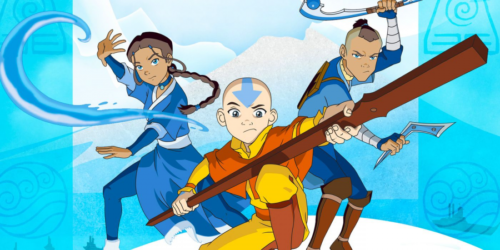
But let me tell you about a diamond in the rough, a gospel-saturated anime that deals with the themes we at Mockingbird love and appreciate. It’s the same show that took Netflix by storm. In 2005, the kid’s network Nickelodeon premiered an anime series that was directed by an American team of writers in partnership with consultants versed in Asian history and culture. The show, Avatar: The Last Airbender, kept the animation style and cultural context of most anime, but the show’s Western writers gave the show’s plot and dialogue the extra care and attention most anime lacks. The result was a critically acclaimed kid’s show that expanded beyond the anime subculture into the greater pop consciousness. It introduced children to mature concepts like forgiveness, determinism, consent, genocide, fascism, and redemption. It was quietly progressive in the sense that it featured strong female characters and characters with disabilities. The show kept everything about the anime style but ditched the genre’s fascination with pulp violence and low-brow sexuality. It was such a cultural achievement that it won a Peabody Award in 2008 alongside fellow winners Breaking Bad and the HBO John Adams documentary.
In this new Mbird series, I want to make the case that Avatar, the Last Airbender is, uniquely, an anime show for Mockingbirds — for Christians and really anyone with a beating heart. It’s going to be a multi-part serial on the site for the weeks to come, with essays highlighting the TV show’s remarkable character development and storytelling. Even if you’re not an anime fan, I hope you’ll take a chance on this fantasy world of moral conflict, courage, mercy, and forgiveness in line with Tolkien’s The Lord of the Rings and Lewis’s Narnia.
You read that right. An anime show on the same tier as Breaking Bad, being compared to The Lord of the Rings and The Chronicles of Narnia. Does this otaku have your attention now?
Here’s an introduction to the semi-feudal fantasy world of Avatar. In the show, a number of humans are gifted with the ability to “bend” one of the world’s four elements: earth, water, fire, and air. It’s a telekinetic martial art of sorts, where earthbenders can cleave and manipulate large boulders with their minds and firebenders can shoot flames from their hands. Whole societies are built around these miraculous bending gifts. Waterbenders build massive cities out of ice and airbenders can fly using gliders. Each element has its own geography and nation — the Earth Kingdom, the Water Tribes, the Air Nomads, and the Fire Nation, and each nation was meant to live in harmony with the others.
In this fantasy world, a supreme peacekeeper would be born and reincarnated every generation, one person who could bend all four of the elements. This “Avatar” would be an all-powerful arbiter of the world’s problems, an extra-political figure whose power was meant to keep the nations of the world at balance. With the Avatar serving as a judge and check, the world had existed in relative harmony for a millennia.
But when the show begins, we find that the Avatar has gone missing. The Fire Nation has taken advantage of the Avatar’s absence to march against the three remaining nations, and a century-long war breaks out across the world, claiming countless lives. One of the world’s four great peoples, the airbenders, have been massacred in the conflict and are thought to be extinct. With the Avatar missing, who will stop the Fire Nation and restore balance to the world?
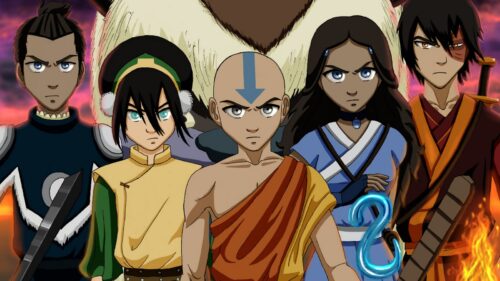
In the shadow of this great geopolitical nightmare, two young water tribe teens, Sokka and Katara, are out fishing by the South Pole. They discover a young boy trapped in an iceberg, and when they free him, they notice he bears the unique tattoos of the extinct airbender nation. This young airbender named Aang is the last airbender, and providentially, he is the lost Avatar, trapped in the ice for a century while the war around him has waged on. Now, the trio must travel the world so the young Aang can learn to bend all four elements and stop the Fire Nation from world domination, a challenge made harder as they are pursued by the Fire Nation’s disgraced Prince Zuko.
If you embrace the Eastern fantasy elements of this fictional world, you’ll find across the show’s three seasons tales of law, forgiveness, love, friendship, mercy, and grace. Next week, we’ll dive into our first character study and see how the power of a mother’s love can truly transform a world at war.
* I might be slightly exaggerating here. Occasionally, I’ve watched an anime show and thought it featured remarkable storytelling worth featuring on the site. If someone was inclined to write a series of posts on the anime show Trigun, I think that would work. Yasuhiro Nightow, the creator of that series, is rumored to be a practicing Catholic, and the whole series is infused with themes of grace, non-violence, and unconditional love. I think another post on the role of mental illness and performance anxiety in Neo Genesis Evangelion could fly on the site, too. Do you have any recommendations for anime that Mbird readers would enjoy? I would love to hear about them in the comments below.







I’ve been told numerous times to step into the anime world, specifically Avatar. Those same people also told me watching the M. Night Shyamalan adaptation doesn’t count. They said it rather aggressively so I take it the movie doesn’t do the show any justice. It will be added to the list and I look forward to your series on it! Thanks!
Hi Blake! I don’t know that I’d recommend the *entire* anime world, but there’s some fun stuff there to explore. And I will be addressing the Shyamalan adaptation of The Last Airbender in Part 6 of the series. Ha!
I’m glad you’re tackling this series. I’ve considered tackling it but I came to the series as late as 2012 and had other things going on.
I wouldn’t say The Last Airbender is anime so much as American animation that successfully assimilated the influence of anime in terms of world-building. A lot of its themes, though anchored in honor-shame cultural contexts within its narrative, map pretty readily on to themes of family legacies of sin and even just-war theory. Using the four elements of earth, air, water and fire was a useful bridge between hemispheres since Heraclitus, for instance, proposed that fire was the governing element in the four-elements debates as to which of the four best explained the cosmos in Greek philosophical discussions. Not that Iroh is really a Heraclitus type, obviously. 🙂
I was thinking of writing about Ghost in the Shell US vs Ghost in the Shell Oshii a few years back because there ARE ways Christians can write about US failures to adapt anime but those failures involve a lot of work. I was thinking of using Emil Brunner’s Man in Revolt and The Mediator as a gateway into getting at the reasons why the US Ghost failed and the Oshii film has become a cult classic but time and energy and IRL stuff got the better of me. Some of the landmark anime have explicitly ANTI-Christian themes that nevertheless make subversive use of biblical texts and themes and Oshii is particularly prominent there, with his subversive use of 1 Corinthians in Ghost in the Shell or the use of the Babel narrative as a backdrop for his criticism of technocratic real estate ventures in Japan in the 1980s.
The Last Airbender series is something I was hoping Mbird could get to so I’m looking forward to this series. I would mention that ATLA isn’t the only 2000s era American cartoon to successfully bridge the US and Asia, Tartakovsky’s Samurai Jack managed to do that and the last season was fantastic.
The Shyamalan adaptation definitely doesn’t count but, neither, I’m afraid do the post-series comics or even Legend of Korra (Korra drops the emotional development that ATLA had in favor of a heroine who keeps questing for more power as an end unto itself in ways that reminded me more of … okay, I’m trying not to spoil anything for people who haven’t seen ATLA)
Jeremiah! I am still in awe of the Batman series you did back in 2012, and it was part of the inspiration for this series (which won’t be nearly as long). Part 1 drops Monday. I’m not wed to the idea that ATLA is an anime per say – it is something unique (like Samurai Jack which I also really enjoyed!), an east/west merger that’s more than the sum of its parts. I’ll touch on Korra stuff in part 6 too. Hope you enjoy the posts to come!
The passion in this post is infectious. I’ve only occasionally watched Avatar, but more than ever I want to now.
As an aside, I always thought the Pikachu/Ash dynamic was intensely Christian. They are an electric mouse + newbie child-trainer, in a world of powerful beasts and adult-trainers, but their shared weakness is the basis of a love that empowers them to conquer gym after gym. And leads ultimately to a literal resurrection, in Pokemon: The First Movie (1998/99). Aside from that, I’m none too familiar with anime, so I trust your point that such themes may be rare
Also: the decision not to “evolve” Pikachu into a stronger and more powerful monster but double down on power in love and weakness is more meaningful than the marketing money suggests. It always made me happy that that first Pokemon movie made it into the Mockingbird At The Movies collection we put out!
The Space Battleship Yamato 2199 series re-imagining of Star Blazers is actually very good. The 2202 sequel series is … not quite as compelling but it’s still worth watching.
I know it’s a somewhat contrarian position but I think Evangelion is a little over-hyped, that it, along with Ghost in the Shell, resonated with American viewers because of how they could read Western ideas on to the shows, a la Ghost in the Shell appealed to fans of cyberpunk who would then not pay much attention to how Oshii’s films made deliberate, subversive use of biblical texts (or not always subversive, a la his Tower of Babel through-line in the Patlabor: The Movie). Actually … I don’t know if I’ve got the energy or inspiration for it but a mini-series just on Mamoru Oshii’s use of biblical texts in his films would be worth a series–he was right to point out that adapting Patlabor 1 would have made more sense for a Western audience in terms of themes and cultural references.
For anime series, I’d say Cowboy Bebop and Samurai Champloo are both pretty good entries. I’ve been dreading the inevitable American remake of Your Name because the anime itself is gorgeous and well worth watching. The English dub is pretty good even if I can’t shake thinking of how the male character constantly sounds like Dean Venture for a reason. 😉
There series isn’t as well known compared to other mecha/adventure anime but I really loved Eureka Seven.
[…] exploration of Avatar: The Last Airbender continues. Check out the introduction to the series here. Spoilers […]
[…] To start at the beginning of our exploration of gracious themes in Avatar: The Last Airbender, go here. […]
[…] Our exploration of gracious themes in Avatar: The Last Airbender continues on with its fourth installment. To start at the beginning of our series, go here. […]
[…] Our exploration of the gracious themes in Avatar: The Last Airbender continues. To start at the beginning, go here. […]
[…] was already addressed in news item number three, you’ll forgive me for plugging the seven-part deep dive into the original show I put together back in 2020. If this adaptation is half as good as the […]