If you are ever looking to have yourself a crisis of faith, I’d direct you to a cursory glance over church history. Critics of Christianity need look no further. There they will find plenty of ammunition (thankfully, our hope is not in church history and the perpetrators of evil therewithin). Wherever you land after journeying through the bloody pages of the past, it is clear that unchecked power in the hands of anyone, religious or not, is asking for trouble.
Without a doubt all of history could be described as a struggle for power, and God’s people have been in the mix, righteously and unrighteously, from the beginning — in some senses, it is almost unavoidable. This year FX gave us a stunning and thought-provoking visual depiction of one of these moments in history with the series Shōgun (which just broke a record by winning 18 Emmys this year). The show is based on James Clavell’s novel, Shōgun, a historical fiction and adaptation of Giles Milton’s Samurai William: The Englishman Who Opened Japan. The show is a cinematically beautiful and stunning piece of entertainment that depicts the brutal collision of religions, cultures, and authorities.
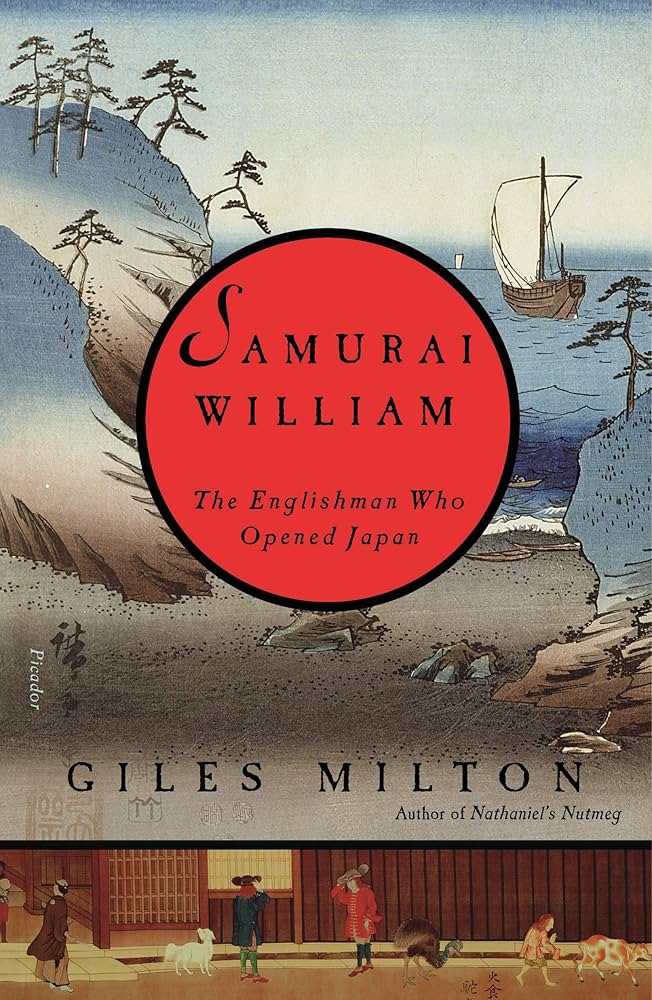
When an English Protestant washes up on Japanese shores in 1600, he awakes in a new world. In a time where little to nothing was known of Japan and maps of the far East “saw only squiggles, dots, and grotesque sea monsters,” brave venturers and eager tradesmen set sail into the unknown. But William Adams, the Protestant, quickly finds out he is not the first to stumble upon Japan — Portuguese Catholics already planted a flag and set up shop.
While Milton’s work is more thorough, the show provides a condensed, albeit highly entertaining, version of the historical events. But what ends up being at the core of the cultural and religious collision is the quest for power, as usual. The Japanese were surprised to find out there was a split within Catholicism and even more surprised that someone else, the Portuguese, saw Japan as belonging to them. Adams, in opposition to the Portuguese, worked for the East India Company and began establishing trade, although this became a rather difficult task. Eventually, he navigated his way up the political ladder and developed a beneficial relationship with the shōgun, the military leader and unofficial ruler of Japan, which infuriated the Catholics.
Power. So cliché, right? Yet it’s truly at the core of all the great shows (e.g., Breaking Bad, Game of Thrones, Ozark). Furthermore, a wide swath of church history could be associated with the desire for power and money. After witnessing the Pope-ordained Spanish conquest of his land, a native Latin American chief summed it up bluntly:
“They have a god they greatly worship … You see their god here” … he had a basket full of gold and jewels and said, “You see their god here, the god of the Christians.”
This is certainly a sentiment still felt today — sometimes, rightly so. And of course, the religious seeking power, influence, and capital are not just reserved for the history books.
In today’s world, Jesus and Christianity are often co-opted by both political sides. This is not news to anyone. There’s this idea that we can use Christianity to force people, whether by law or guilt, to act how we’d like them. Or even more than that, force them to see us as virtuous because of our beliefs. History tells us this is not news either. It also informs us it isn’t effective, even if the work is virtuous.
Giles Milton didn’t just write about the tradesman William Adams, he also wrote of those who arrived before him, like Francis Xavier, a Jesuit priest who came to Japan with the excitement of proselytizing a new people. On a journey to the inland, he voluntarily traveled without a pack animal and tore up his clothes and feet often, seeing his journey as a humble and lowly one. He eventually realized these signals to his voluntary poverty did nothing for the Japanese culture and instead dressed himself in silks and offered presents to a local lord. This, along with his knowledge of astronomy, led to 500 conversions. Xavier learned to adapt and meet the people where they were instead of scoffing at their blindness to his piety.
Another group of Jesuits wrestled with the same issues in Japan when they were looked down upon because they took care of the poor and sick — the lowest rung of Japanese society. Charity apparently was not a strong virtue, and the Japanese elite were largely alienated by the monks’ actions. Alessandro Valignano, a Jesuit who arrived in 1579 and oversaw the mission, initially viewed the Japanese as barely human and “very stupid”. He quickly learned how incorrect he was and eventually wrote, “We who come from Europe find ourselves as veritable children,” and “the fact that there are contradictions and differences between Japanese and European customs does not mean … that they are in any sense barbarians, for barbarians — truly — they are not.” He modified the Jesuit’s strategy and wrote Advertimentos, Sumario and Historia del Proncipio which taught and instructed the monks on how to operate well within Japanese society — perhaps too well. Having a seat at the table of power can change you in the process. Those new hospitals quickly pivoted to serve the upper class instead of the poor. They may have converted tens of thousands, but their new influence was as costly as it was precarious.
For Adams, maintaining his influence with the shōgun eventually became a struggle. The TV series shows how the differences between the Catholics and the Protestants continually frustrated the Japanese authorities. After multiple incidents, Shōgun Tokugawa Ieyasu declared an edict that told Catholic Christians they had to leave or they would suffer extreme punishment. The Japanese converts were to revert to Buddhism. Protestants were somewhat safe from this edict, thanks to Adams’ relationship with Ieyasu. But when Ieyasu passed away, the succeeding authority did not honor the relationship and persecuted all Christians severely for years. If you gain the ear of the shōgun, you also fall victim to his whims.
While seeking a hearing in the halls of power is not inherently wrong — Paul surely made a practice of it — this aim can devolve quickly into a quest for power itself. As the election season gets more intense, I’m reminded that we are not called to seek power for power’s sake. We are not called to enforce our ways on others for sheer control over them. And we are not to put looking virtuous over actually assessing the culture and meeting it where it is. This never goes well. I’m also reminded of how Paul sought the ear of the courts not for the sake of gaining their ear alone, but rather because of the ear he’d already gained in Christ. It was because of the power he already had in the gospel, not because of the power he longed for. Jesus did not cultivate power but rather displayed it in who he was. He did not seek the ears of councils, kings, and authorities, but spoke of the ear he already had access to. His beliefs weren’t tools for co-opting political movements and cultural waves, but they guided how he operated within them.
In this season of yard-sign righteousness and explosive topics, I’m reminded that our hope isn’t in how much power we can gain through legislation or a candidate. It isn’t in party slogans or rally chants, nor is it in ballot boxes and “I Voted” stickers. Our attempts to look pious or our desire for a certain worldview represented won’t provide hope. We certainly don’t hope in winning a debate at a dinner table or a Facebook comment thread (there’s never a winner there, only losers). There will be plenty of actors attempting to gain our ears this election season with the promise that you have gained theirs. In the midst of this flood of voices, I’m reminded of the ear we’ve already gained access to, through no wheeling and dealing of our own but rather through the one who laid his rightful power down for our sake. The annals of history testify that it is in him, this crucified and risen one, in whom our hope and true power resides.