




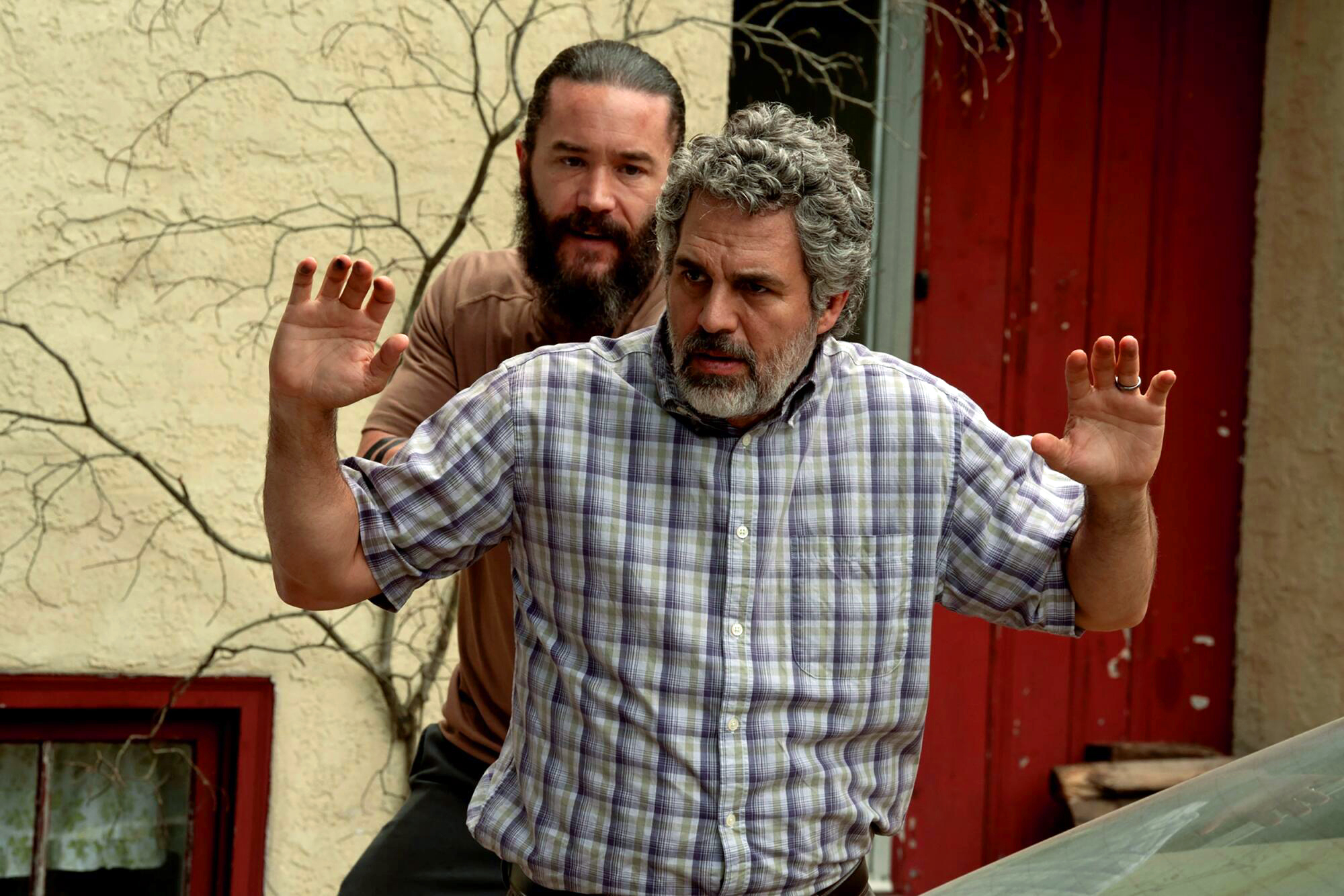
Brad Ingelsby, visionary director behind Mare of Easttown, has spun up another eastern Pennsylvania crime drama in the HBO miniseries Task. When I recommend Task to friends, I often fumble with the main points of why it moved me. Do I mention Ingelsby’s religious curiosities and exploration of doubt and faith, forgiveness and mercy? Is it the depth of the story and character development? Is it because it’s the last thing since The Fault in Our Stars to make me ugly cry? Yes. And no. Task watches like a parable. And it sits with you like one too. For that reason, you kind of just have to experience it. It’s been weeks since we watched it, and a day rarely goes by when it doesn’t come to mind. Especially Tom and Robbie’s story.
When special agent Tom Brandis (played by Mark Ruffalo) returns from work, he fills a plastic Philadelphia Phillies cup with ice and vodka. He believes that if the poison medication is hidden in a plastic cup, his youngest daughter Emily won’t notice. And if he’s lucky, as the night rolls on, he won’t notice the knocking guilt and anger at his wife’s death, his son’s incarceration, and the shattered life that lays on his kitchen floor. Tom is also a lapsed priest; the problem of pain forced him to hang up his robes. Still, the ghost of the priestly identity follows him everywhere he goes. One morning, Tom tends to his garden in the summer sun. Sunscreened and hungover, he fumbles through a conversation with Emily. The garden and conversation a desire to tend to something but not knowing how.
As Tom drinks himself to sleep, Robbie Prendergrast (played by Tom Pelphrey) is about to break in and rob yet another home that’s been funneling drugs for the biker gang The Dark Hearts. Having lost his brother Billy to the gang, Robbie is on a revenge path. But with each house he hits, he’s further exposed and risks the safety of his children and his fatherless niece, Maeve. Robbie is a far cry from a man of the cloth. And yet there is a rhythm and faith to Robbie’s life that stands in stark contrast to Tom’s. One of the most touching practices Robbie does is a rendition of the sign of the cross. When they were kids, Robbie’s brother Billy taught him that if you splash cold water across your shoulders before jumping in, your heart won’t explode. Before each burglary, Robbie mimics the ritual; the sign an unprayed prayer that his broken heart won’t explode.
Most of the drama plays out in the natural world of eastern PA. Tom has his garden, Robbie lives in a cabin in the woods. Tom’s task-force headquarters are tucked away in the wilderness. Water is a metaphor just out of reach for my understanding. The watering hole that was Robbie and Billy’s playground is a sacred space. Tom dunks his head in ice water to knock the hangovers. Robbie signs the cross. The Dark Hearts, too, creep further into creation as the violence intensifies. They also bathe in the river and pollute the sacred spaces with blood. The show feels alive, like each life explored in the show forms a collective heartbeat. Even the river seems to celebrate and cry with the wounded characters of Task. Creation is at their mercy and yet provides a deeper mercy still.
Other crime dramas may feel like a battlefield. But there are just too many wounded bodies in Task for it to feel that way. As Eliot says in “East Coker” (that Simeon Zahl expounds upon here), “The whole earth is our hospital.” There are gurneys to tend to. And the children in Task often function as the medics. Every time they’re on screen, I feel like I might need to cross myself or my heart will explode. Tom’s daughter Emily is a quiet presence in her absent father’s life. Maeve Prendergrast, Billy’s daughter, cares for Robbie’s children and keeps their home. Sam, a young boy who has been inadvertently kidnapped by Robbie during a raid, is constantly a source of grace. He carries a sadness and yet imputes a tenderness to all who care for him. Sam is an animal lover; Maeve teaches him how to float in the river. He is observant to the birds above and the lilies below and brings peace to his caretakers.

If I’m honest, I have a knee-jerk desire to diagnose Ingelsby’s exploration of faith and its validity. With a show as religiously curious as Task, I want to know what he’s trying to do with his art. If you dig, you can find some semblance of what he’s trying to do. But I also think of the Pharisees and the mental gymnastics they performed to make sense of Jesus’ parables. Like them, I often ask the wrong questions and try to make sense of something instead of reflecting on its sacredness. As Robert Capon says:
The parables are true only because they are like what God is like, not because they are models for us to copy. It is simply a fact that the one thing we dare not under any circumstances imitate is the only thing that can save us. The parables are, one and all, about the foolishness by which Grace raises the dead. They apply to no sensible process at all — only to the divine insanity that brings everything out of nothing.
Robbie and Tom don’t meet until episode five (of eight) when a rendezvous between Robbie and Dark Hearts member Jayson is further complicated when Tom shows up. Robbie takes Tom hostage and forces him to drive them to Jayson. The two connect as Robbie rides behind Tom, their inflection and eye contact hinting at motive, pain, and loss. The faith-filled criminal and the faith-less priest traveling in what’s reminiscent of a confession booth.
Robbie releases Tom before arriving at his fateful encounter with Jayson. And as the Dark Hearts have done all season, they take lives. Robbie’s plan is seemingly squashed as Jayson plunges his blade into Robbie’s side. As the violence scatters, Tom finds Robbie and they jump into a squad car. Unlike before, Tom climbs in the back with Robbie. He applies pressure to the wound; Tom’s fingers feel the side that’s been pierced. Robbie dies in the back of a car, no divide between him and the priest that holds him. It’s hard to say for sure, but as the camera pans out from the car, Tom appears to be mumbling something. I can’t help but think Tom is administering Last Rites:
May Christ Jesus, who was crucified for thee, deliver thee from torments; may He deliver thee from eternal death, Who for thy sake vouchsafed to die. May Christ Jesus, Son of the Living God, place thee in the ever-blooming garden of His Paradise, and may He, the true Shepherd, own thee for one of His flock …
Like the water metaphor, what’s shared between the two during their time is a mystery. What I do feel though is that Robbie has imparted something that feels like faith to Tom; that the widowed field agent has something in his pocket after the exchange. It confirms in me that for faith to emerge, death is necessary. The doubt of Thomas was buried when he plunged his hand into Jesus’ side. The grudge or ill will harbored toward another breaks down under the weight of tenderness. Jesus often calls us to observe his creation as a medicine for our anxious thoughts. I can’t say exactly what happened in that car leading up to Robbie’s death, but for the remainder of the show, Tom is a man alive, the transference of faith sustaining Tom to do the unthinkable in the season finale. It would be too much to get into the last episode. Suffice it to say that there is a courtroom, and a father and a son, and a “foolishness by which grace raises the dead.”
After the dust settles, minutes before the closing credits roll, Tom is seen, once again, in his garden. Hanging in a corner of his plot is the plastic Phillies cup that held Tom’s poison at the beginning. Bottom removed and hollowed out, it has been turned into a bird feeder. Every drop has been drained dry.







