




Though Maria Dahvana Headley’s 2020 translation of Beowulf isn’t known for its fidelity to the Old English text, it does capture some of the poem’s texture. If nothing else, her rendering provides the world with an unforgettable opening line: “Bro! Tell me we still know how to speak of kings!”
Some of my friends and I have latched onto this phrase, first, because the modern anachronism of Old English is genuinely funny; but second, because of an earnest drive in all of us that seeks language to articulate a deep yearning. We use both it and a shorter phrase — “Some kings”— when we hear of a commendable deed carried out so as to testify that though good men may be rare, they have not altogether vanished from the earth.
Americans tend to have a knee-jerk revulsion at anything that feels like monarchy. There is an almost smug superiority we feel toward those unenlightened few who believe in or still have kings. But our own history is far less enlightened than we care to admit.
It’s worth remembering that one of the motivations animating the American Revolution was precisely the limit set upon colonial expansion and hostile action against the indigenous tribes beyond the Appalachians. Grievance 27 of the Declaration of Independence accuses the British king of inciting “domestic insurrections” and endeavoring “to bring on the inhabitants of our frontiers, the merciless Indian savages.”
This is a matter of record: Resentment over peoples and lands the colonists were not permitted to despoil provided the justification the Second Continental Congress believed it needed to reject the king. Certainly, there were other and far better grievances, but this one shows how misguided some of our anti-monarchy zeal really is.
Truth be told, many of the colonial grievances were with policies enacted by the House of Commons — democratically enacted policies, let the reader understand. The point here is that not all opposition to kings is good or holy or even rooted in reality.
Tell me, do we still know how to speak of kings?
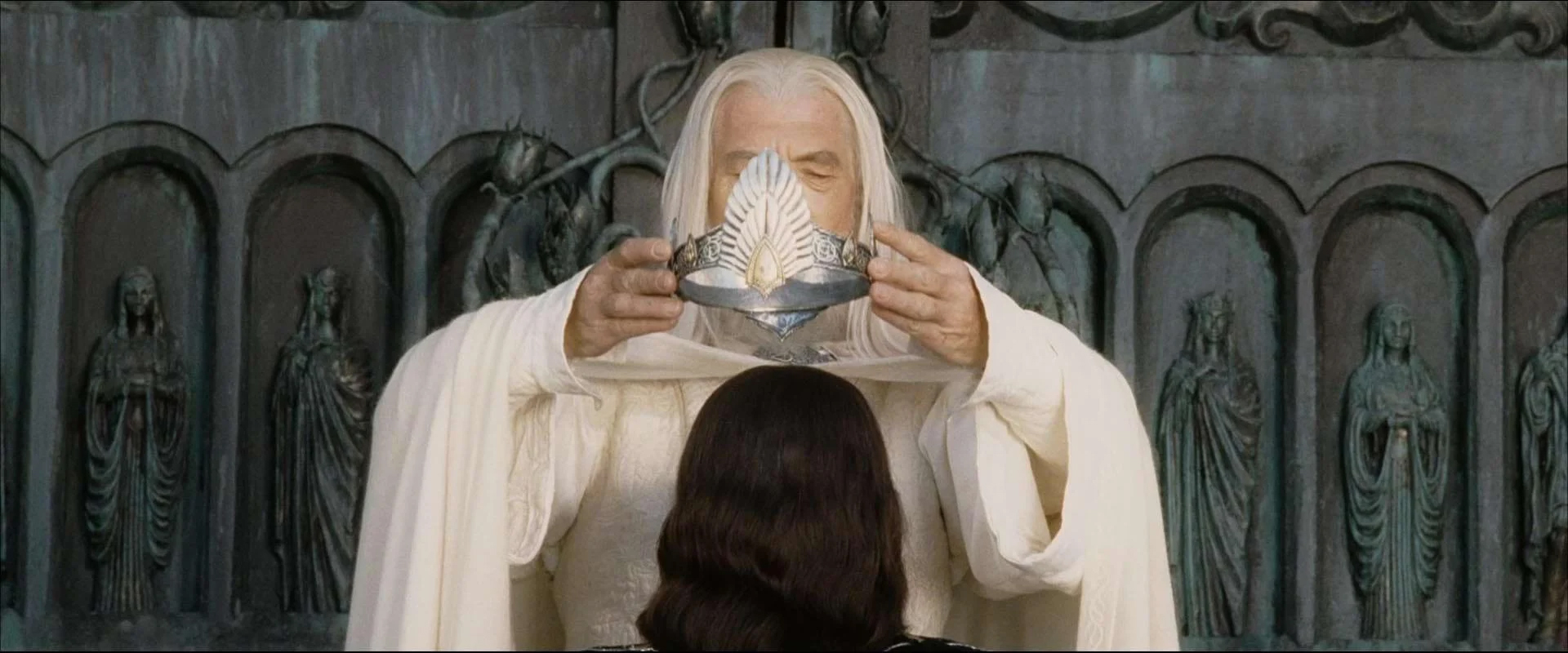
Kingship is inscribed within the universe. There is One who made and who upholds all things, who superintends and governs them. All authority in our world is an imprint of his kingship upon the fabric of the cosmos. There is something weighty in this symbol that conveys the goodness and wisdom of God.
Which is not to say that all authority and rule is good or just. Obviously not. There are better and worse rulers, and most of us can probably recollect more of the worse ones than we can the better. We have been burned by bad authority figures who cared more for the prestige and the trappings of their roles than for the substance of those roles.
Nor is it to say kingship carries divine sanction. It is to affirm with Karl Barth that analogy is real, and so all fatherhood is predicated upon the fatherhood of God. In the same way, there can only be kings because God is king over all. There is no divine right of kings, but there are some kings in whom the beauty of God’s kingship effervesces.
And this is why good and noble authorities capture our imaginations so. We see Aragorn in action and see him pursue wisdom and serve others, and we love him for it. We long for him to come to Minas Tirith and be crowned. Our souls burn when we see Jon Snow being proclaimed King in the North. We want Arthur to pull the sword from the stone and heal the realm.
And when things go wrong in the stories we love, we burn with eagerness for usurpers to be defeated and the rightful king to be enthroned once more. You know in the matter of your being, better than you do in your intellect, how right and good it is for the true king to be restored. It sets our hearts thumping like sneakers in the dryer when we witness a true king exercising his authority properly for the flourishing of his people.
A good king is a living connection to a people’s past. He is a living symbol of that people’s story and wisdom and potentially a check upon their worst inclinations. He is a tangible testimony that what is good and best about the past is not wholly past, is not dead and buried, but is present to shape the present.
Bro! Tell me we still know how to speak of kings!
There was a remarkable — and I would say unintentionally revelatory — convergence of No Kings rallies with Palm Sunday. What is revelatory is the fact that this day commemorates Jesus’ triumphal entry into Jerusalem. He is welcomed as a king on that day and called upon to rescue his people: “Hosanna to the Son of David!”
The Palm Sunday procession with palms (and maybe even a donkey if you’re lucky) is no puppet theater. It is an acclamation of the King of Kings, a yearning that there is one person in the universe who might come to save us; the acclamation of a king on his throne whose rule is just and merciful and worthy of praise. He is not just a deliverer but a royal one.
My friends and I began saying “Some kings” after the initial wave of No Kings rallies because we took issue with the titular claim. No kings? None whatsoever? You mean to tell me you would never pledge yourself to one, no matter how noble and just and staunchly loyal to what is good and best he may be?
I can’t endorse such a slogan, but for reasons that far exceed the current political movement. I am making a political point but not a partisan one. It is inescapably political because to belong to the Lord is to belong a lord. Vows we take, we take before this lord. Hymns we sing, we sing to this lord. The sacraments that nourish us are also pledges of fealty to a lord. A good lord.
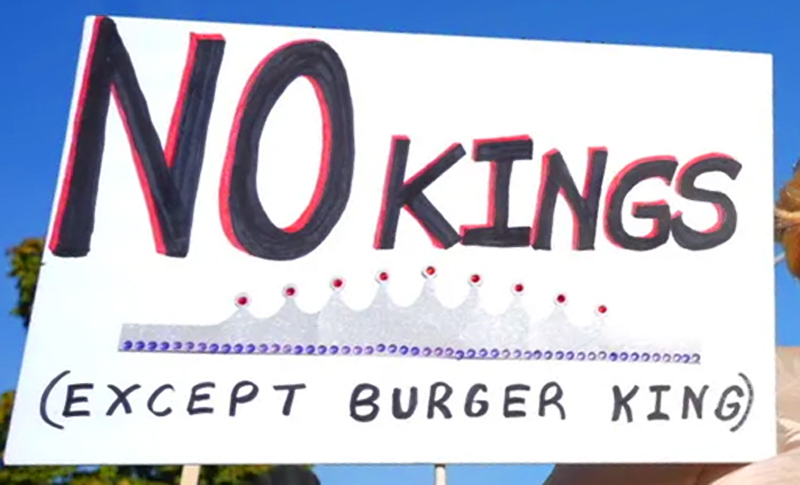
The problem is that we are so hell-bent on autonomy, we would opt for the chaos of the Book of Judges — where everyone does what is right in their own eyes — than yield ourselves to the One who rides into Jerusalem on a donkey, whose burden is light (Mt 11:30), and whose kingdom is righteousness, peace, and joy in the Holy Spirit (Rom 14:17). We are so full of hell that in a matter of days, we who got caught up in the throng at his entry will howl for him to be crucified.
I say “Some kings” to witness to goodness in a deranged and suicidal world. To say, “Here is one who is worthy of acclamation.” In a world full of rotten kings, some kings prove the good of their station.
There are few things easier than using indignation at a bad ruler as justification for self-rule in all of its inevitable disorder and self-deceit. Anger is a gratifying emotion; all the more so when the anger is well placed. But what, typically, is its end? Consider the bad example of the Continental Congress, and then look at our own lives and the mess we have made of them. You can and probably should be angry at several officials now and across your lifetime. But within your own fiefdom, it is your best thinking that got you here, where you are, snatching pods from the swine.
Isaiah’s final Servant Song (52:13–53:12) is one of the texts assigned for Palm Sunday. This passage is paired with this event because it helps us to see what sort of a king is entering Jerusalem. He is a servant of the true God, the one who enters into covenant with sinners to give them new life. He conducts himself with the wisdom of God. He is one before whom other kings will shut their mouths, in astonishment, in shame, and in the awareness that suddenly springs up when you recognize how horribly you have messed up and been found out.
He is one who does not fall in line with what we think we want or need. He knows us and our best thinking and loves us anyway. His program and his form are not appealing to us, and he is hated for being holy and yielded to God. Nevertheless, he takes on all that is ugly and horrendous within us. But even that sacrificial act we mistake for his being rejected by God.
A true king sums up his people; a good king turns his people back from the bad courses they would otherwise elect to take. So here: “All we like sheep have gone astray,” following the impulse of the death drive in the myriad ways we pretend are normal and good. But he, too, is a lamb, but he does not protest as he goes to his death, a substitute in our places. A true king takes the course we all stubbornly refuse. Our wickedness brings about his death and completes his identification with us.
But the offering he makes of himself redeems his people. He takes the harder road that none wish to take, and his anguish secures life and peace for his people. And like a good king, he then divides the spoil with them. All of this comes from God and from the king he appoints to deliver us poor, dumb, bleating sheep.
Most kings fall pitifully short of this. But some kings approach it. And one king sets the glorious standard.
Is the fall of monarchies to blame for expressive individualism? That might be a small stretch but not an unreasonable one. If you think you need no king, then you probably esteem yourself and your abilities far too highly. I ask: Are you acquainted with yourself like this king is acquainted with grief (Isaiah 53:3)? Can you really esteem yourself a capable captain of your soul?
Further, do you think the faction you belong to right now is sure to secure ultimate, lasting victory over the world’s darkness? Do you think they will have your back when you violate their ridiculous shibboleths and run afoul of their imagined purity? No. And you know this. I am only asking you to admit it. Do not harden your hearts against kingship itself. Await the King of Kings and applaud some kings who beautify this vale of tears in the meantime.








What a beautiful article and a reminder to keep our eyes on the one true King. Love your enemies, do good to those who hurt you.
Steve