




One: Kinds of Diversity
There are three kinds of theological diversity:
- That which results from finitude
- That which results from fallenness
- That which results from ignorance
1. Because we are finite creatures (even were we unfallen we would all still be finite) we cannot comprehend an infinite God. All of us will be — by temperament, ability, inclination, and formation — more capable of perceiving some aspects of God’s Being and God’s Creation and less capable of perceiving others. Some will immediately see the Righteousness of God; others, God’s Mercy; still others, His Creativity (as “maker of heaven and earth, and of all things, visible and invisible”). Probably we do not deny the aspects of Divine Truth that we are not quick to notice, but our minds won’t go in those alternate directions of their own accord. For this reason we Christians all need one another to make our understanding and appreciation of God more complete. (It will never and can never be fully complete.)
W.H. Auden’s way of putting this point is to say that theology, like the music of Bach, is polyphonic. Most of us will hear clearly one of the themes that God propounds; others we will hear less clearly or not at all. You, my sister or brother in Christ, will be my instructor in those musical themes of God’s Being and of salvation history that I am deaf to. And this is one of the chief reasons why the many members of the one body must value one another.
2. But in addition to those aspects of God’s character and purposes and commandments and acts that I am, because of my finitude, unlikely to perceive as fully as I ought, there are those that I prefer not to see, because of my sinfulness. And the same is true of you, my sister or brother in Christ. It’s easy of course to accept that in some broad general sense I am a sinner, but when I get down to the brass tacks of particular sins … well, I will find a way not to ask hard questions of myself.
But I will find it quite easy to ask hard questions of my neighbors! It is very likely that when I hear the Parable of the Good Samaritan I will identify myself with the Samaritan and identify my neighbors with those who, seeing the wounded man, “pass by on the other side.” (“I thank you, Lord, that I am not like that Levite …”)
Unfortunately, pastors and theologians too often aid and abet this self-excusing and other-accusing element of my character. Indeed, Kierkegaard, in his Journals, argued that providing us a get-out-of-jail-free card is what professional theology (“Christian scholarship”) is often all about:
The matter is quite simple. The Bible is very easy to understand. But we Christians are a bunch of scheming swindlers. We pretend to be unable to understand it because we know very well that the minute we understand we are obliged to act accordingly. Take any words in the New Testament and forget everything except pledging yourself to act accordingly. My God, you will say, if I do that my whole life will be ruined. How would I ever get on in this world? Herein lies the real place of Christian scholarship. Christian scholarship is the Church’s prodigious invention to defend itself against the Bible, to ensure that we can continue to be good Christians without the Bible coming too close. Oh, priceless scholarship, what would we do without you? Dreadful it is to fall into the hands of the living God. Yes, it is even dreadful to be alone with the New Testament.
I open the New Testament and read: “If you want to be perfect, then sell all your goods and give to the poor and come follow me.” Good God, if we were to actually do this, all the capitalists, the officeholders, and the entrepreneurs, the whole society in fact, would be almost beggars! We would be sunk if it were not for Christian scholarship! Praise be to everyone who works to consolidate the reputation of Christian scholarship, which helps to restrain the New Testament, this confounded book which would one, two, three, run us all down if it got loose (that is, if Christian scholarship did not restrain it).
Because I want to “restrain the New Testament” when I fear judgment, but unleash it on those of my neighbors I dislike — and because others are in this respect like me — we get this second kind of theological diversity.
And theological diversity that results from sin is not to be welcomed and embraced, but to be lamented. We should pray and seek to overcome it. Indeed, we should not think of any of this as theological diversity but rather theological inconsistency, or contradiction, or even chaos. When diversity arises from sin, it divides us from one another and prevents us from experiencing the fullness of our proper unity in Christ.
When we find ourselves disagreeing, nothing is more important than learning to recognize this lamentable form of diversity. I suggest that each of us ask this question: When I very strongly take one side in a matter of contention, does the view I hold make life harder for my neighbor than for me? If so, I should immediately get on my knees. I am not necessarily wrong in such a case, but the likelihood of my being wrong is greater if the weight of a particular view falls more heavily on my neighbor than it falls on me. Woe be unto me if I imitate the Pharisees: “They tie up heavy burdens, hard to bear, and lay them on the shoulders of others; but they themselves are unwilling to lift a finger to move them” (Mt 23:4).
3. Often, though, we get theological diversity because some among us have not been well-instructed. One example will stand for many: There has been a strong tendency throughout the history of Christianity to understand the biblical word “flesh” (σάρξ, sarx) to mean the human body. This leads to the error of thinking that by abusing one’s body one can “mortify the flesh”; people subject to this error end up injuring their bodies as enemies rather than caring for them as gifts, and they do so while disregarding the corruption of the will, the disorder of love, that sarx is really meant to indicate. (As C. S. Lewis has noted, “If the imagination were obedient, the appetites would give us very little trouble.”)
Moreover, this leads to a neglect, perhaps complete ignorance, of the essential doctrine of the resurrection of the body. If fail to grasp that in the New Creation our bodies will not be left behind but rather will be glorified (1 Cor 15:43), we miss something essential about God’s purposes for Creation.
I use this example because it shows how errors build on one another. Pastors and theologians and teachers have a great responsibility to be sure, or as sure as they can be, that theological disagreements do not arise from ignorance. It is very difficult to disagree with people without coming into personal conflict with them and, then, failing in charity. And if good teaching can prevent unnecessary conflicts, then we should make sure to teach well.
Two: Unity and Diversity
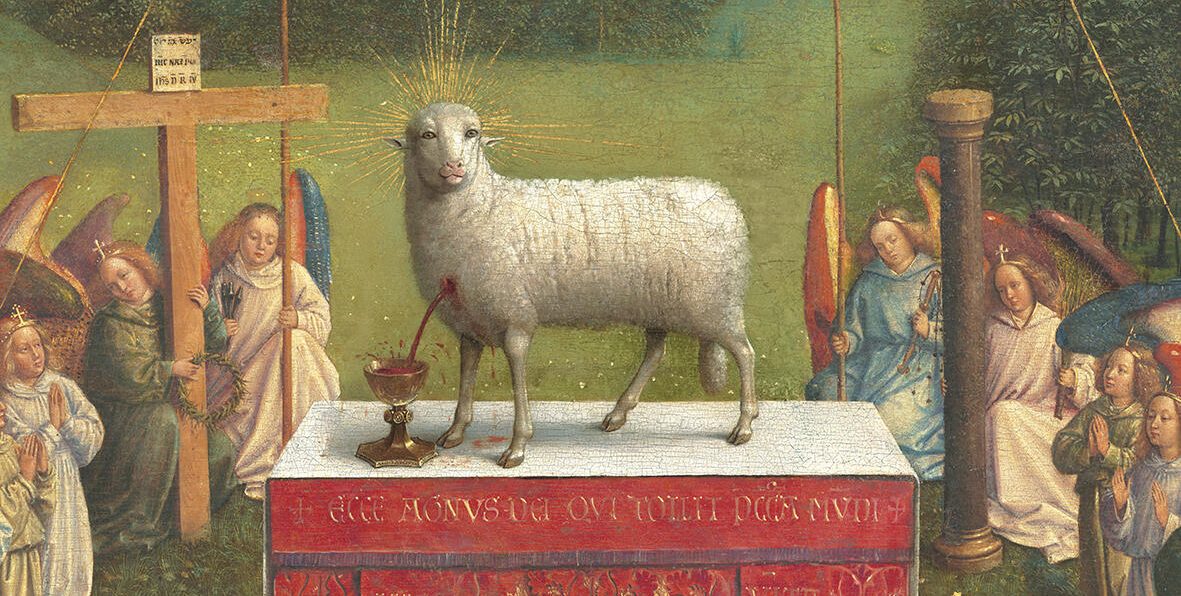
After this I looked, and there was a great multitude that no one could count, from every nation, from all tribes and peoples and languages, standing before the throne and before the Lamb, robed in white, with palm branches in their hands. They cried out in a loud voice, saying, “Salvation belongs to our God who is seated on the throne and to the Lamb!” (Rev 7:9)
In my considered opinion, every discussion of diversity in the church should begin with prayerful reflection on this passage. Diversity here is only meaningful because every member of this crowd is united in baptism (the robe), in God’s reconciling peace (the palm branches), and in the Song of Salvation.
We all know the old saw: “In essentials, unity; in non-essentials, liberty; in all things, charity.” Not a bad rule, as rules go, but it’s imperfect. The first problem here is the binary distinction between “essentials” and “non-essentials.” To understand our disagreements, we need at least three categories: things essential to our proper unity in Christ; things not essential to that unity but nevertheless important; and adiaphora, by which I mean points on which people might have strong views, and strong personal preferences, but which cannot and should not be legislated for others.
With regard to the third category, I think especially of musical preferences. With regard to the first category, I think of the Creeds and the other documents of the great Ecumenical Councils.
When I point out to people that some of the issues that most divide us today are not mentioned in the Creeds, I often get the reply that the bishops who formulated the Creeds did not know that these issues would ever become controversial. This is true; but God knew. And that, I believe, is the key point. It is a matter of ecclesiology and pneumatology: If you believe that the Holy Spirit is with the people of God when their episcopal representatives meet together for the express purpose of clarifying essential teaching, then you will not think that the content of the Creeds is a historical accident.
Since the Second Council of Nicaea in 787, the whole Church has not met to clarify doctrine. Therefore those seven early Councils have a unique place as the only fully authoritative guides to what is essential for Christians to believe. (Their authority is, of course, grounded in scripture, for it is scripture that they set out to interpret.)
Some people resist the confining of essential teaching to the work of the Councils — but often, I think, that is because they think that the only two categories we have are (1) essential dogma and (2) adiaphora. And this is precisely why I say that we need that third category: the not essential but nevertheless important. Whether the threefold order of ministry in the new testament is the permanent God-ordained pattern for the ordering of churches; whether Christians are allowed to lend money at interest; whether all of us, and not just the “rich young ruler,” are commanded to sell all we have and give the proceeds to the poor; or any number of issues that have divided churches these last few decades — these are all questions that are not settled by the work of the Councils and are therefore not essential, but it would be exceptionally foolish to dismiss them as matters indifferent. It would also be irresponsible and uncharitable: for if my brother or sister in Christ cares deeply about a given issue, am I demonstrating love to that person when I say, “Oh, that doesn’t matter at all”?
We should, therefore, see disagreement on such not-essential but also not-indifferent points as a highly significant problem to be addressed. And that takes us back to the first section of this paper.
But before I explain that, let me say this, something I learned from my friend the Rev. Jessica Martin, a priest in the Church of England. The place where we begin to address disagreement among Christians is in the service of holy communion. Many people make the grievous mistake of thinking that they need to sort out all their disagreements before worshipping together. This is to get things just backwards. It is only when we sit together to hear the Scriptures read — and collectively to affirm them as “The Word of the Lord”; when we affirm together our faith in the words of the Creed; when we get on our knees and together confess our sins; when we exchange with one another the peace of the Lord; when we come to the Lord’s Table to receive the “spiritual food and drink” offered only there; when together we are sent out into the world in peace to love and serve the Lord — it is only when we have done all that together that we are rightly prepared to confront our disagreements. As those who have heard one Word, made one proclamation of faith, made one confession of sin, eaten the one Bread of Life and drunk from the one cup, we are not enemies! No matter how often and how strongly we disagree, we are in Christ reconciled to one another!
The next step is for us, guided by our pastors, to discern whether any of our disagreements are the result of ignorance, of simply not knowing what the Christian Faith teaches. Any ignorance thus discerned and acknowledged should immediately (or as soon as possible) be remedied.
That done, we are ready for the harder task of discovering whether any of our views are the result of our fallen nature, of sin still reigning in us despite the saving gifts of God. Here the whole emphasis, for each of us committed to this process, must be on our own shortcomings. Woe be unto me if I point to the speck in my brother’s or sister’s eye while remaining unaware of the log that is in my own. Self-examination is my primary task, and not far behind it is my obligation to intercede for my fellow children of God, so that they too may find the guidance they seek.
The goal here is to gradually draw closer together in belief, but also, and even more essentially, in love. Our hope is to come to agreement whenever our disagreements result from our sins. And if we persist in that hope, live out that hope, then people will look at us and say “See how they love one another.”
And when our disagreements result from our finitude? Why, then, we should rejoice in them, for if you clearly see something of God’s Truth that I cannot see as well, or at all, then you may become my teacher and guide, as well as my fellow pilgrim. And then, as the poet Scott Cairns has said, “We’ll go the rest of the way together.”








This is a banger. God bless.
A helpful counsel of humility in approaching theological disagreement — thanks. I am a little confused by the title, though, which seems to cut against the theme of humility that the essay is teaching?
+Mark, I believe brother Alan was engaging in a bit of playful irony with his title. Or, I may be wrong. I am not always correct.
I guess I am among those who feel we’ve wrung the irony trope well past dry…!
[…] My Correct Views on Theological Diversity by Alan Jacobs. No matter how strong we might disagree, the unity of the church is established by our common dependence upon God. […]