




This essay first appeared in Issue 27 of The Mockingbird magazine.
The theological question that I get asked the most is how civil law and Christianity relate. My simple and usual answer is: they’re opposites that are sometimes complementary.
The longer answer starts with the proposition that the law is generally about restraining things deemed bad for society and fixing social wrongs. It’s an effective tool to restrain evil: imprisoning a drug-dealer who cuts his product with fentanyl is a win (criminal law), and it’s a win to make a big tobacco company that misrepresented research on the safety of cigarettes compensate people who relied on those misrepresentations (civil law). Both outcomes probably make the world a better place.
The area of law where I’m personally experienced — civil litigation — is a powerful instrument for justice.1 Any person, no matter their connections or credentials, can, if they feel they’ve been wronged by another, summon any other person to court and force judicial resolution of the issue.2 I could sue a Fortune 500 CEO, my local senator, a Supreme Court Justice, or Taylor Swift if they rear-ended me, slandered me in the newspaper, or withheld my share of profit in a joint business — or for anything else I can think of.
Litigation is also a mirror for human instinct. In your everyday life, you could always address anyone who’s wronged you, accuse them, and push for judgment. You could knock on your neighbor’s door to accost them about their night-barking beagle, stroll into your supervisor’s office to tell them the coffee tastes rancid, remind your employee that humming while she works is intolerable in a modern office setting, or tell your son you don’t approve of his girlfriend.

Wayne White, Jerry Lee, Jimmy Lee, 2024. Oil on canvas, 30 × 40 in.
Two of my favorite TV shows — Seinfeld and Curb Your Enthusiasm — answer the question: what if you took all these little annoyances with other people that percolate below the surface and addressed them? Watching Larry David actually tell Mocha Joe that his coffeeshop tables are too wobbly provides a measure of vicarious justice: he’s the voice of all of us victims of wobbly tables. At the same time, it’s a reductio ad absurdum: life simply wouldn’t be tolerable if everybody voiced every petty grievance all the time. Moreover, accusation never leads its recipient to repentance. Instead of acknowledging the just observation that coffee shops shouldn’t have wobbly tables, Mocha Joe loses it on Larry and bans him from coming back. Larry, in response, leases the adjacent storefront to open “Latte Larry’s,” a “spite store”: a competing enterprise with the sole purpose of spiting Mocha Joe, who is now Larry’s enemy.
Crucially, Larry brings up the wobbly tables with the best of intentions. He admires and respects Mocha Joe and wants to help him succeed. Mocha Joe needs to know the tables are wobbly so he can fix them — so his coffee shop can become the best possible version of itself. The problem is that Mocha Joe gets a bit defensive, then Larry presses a little more, then Mocha Joe turns critical toward Larry, then Larry gets defensive; each succeeding comment is said at a slightly higher volume and with slightly more emotion than the previous one; each succeeding comment is more personal. Before long, the two are enemies. Larry never intended the spite store, but that’s where he ends up.
If that description doesn’t strike a chord with you, then you’re probably a better husband than I am. If it’s impossible to get even a cup of coffee without developing tiny grievances, then how much more so when you live with someone. Socks on the floor, dishes in the sink, lights not turned off before leaving home — humans living in close proximity experience myriad minor imperfections — and occasionally more major offenses — all the time. Same with parents and children and bosses and subordinates. As a practical matter, the only feasible way to live in any kind of relationship with people is to let most of those things “slide.” When we can’t, we become alienated: there’s a reason Larry’s character is constantly clashing with almost everyone he’s close with.3
In Curb, there is one character conspicuously absent from almost every episode: a judge. Larry constantly seeks to justify his position by appealing to those around him. Even more than that, though, he’s looking for someone who takes the offense as seriously as he does. Instead, he tends to hear something like, “Sure, wobbly tables are annoying, but just put a napkin under them.” That no one cares quite as much as Larry does about the (real) problems he encounters leaves him feeling isolated, in a world that feels like its morals have come unstitched.
Curb’s trivial nature means that we can watch this unstitching in a way that is nonthreatening and even entertaining, but at the same time connects with the parts of us that feel alienated when our moral intuitions are not adequately affirmed by the society and/or world around us. He becomes a sort of lonely crusader, a knight in service of everyday moral causes, and we cheer him on while marveling at how much time and energy he wastes, how many relationships he strains or burns, in service of his mostly petty but good ideals.4 We sympathize with his isolation — when my friends think I’m overreacting at a restaurant that serves strawberry shortcake without strawberries, or my wife gets visibly fatigued by my rant about a Christmas tree farm where you cut down your own tree but the price is more than when they cut it down for you, or any one of a thousand petty everyday injustices we suffer in a given year — I know that Larry would sympathize. He would sympathize not just with my frustration at the problem but even more with my frustration at the astonishing indifference of the healthy, normal people around me. His alienation is mine.
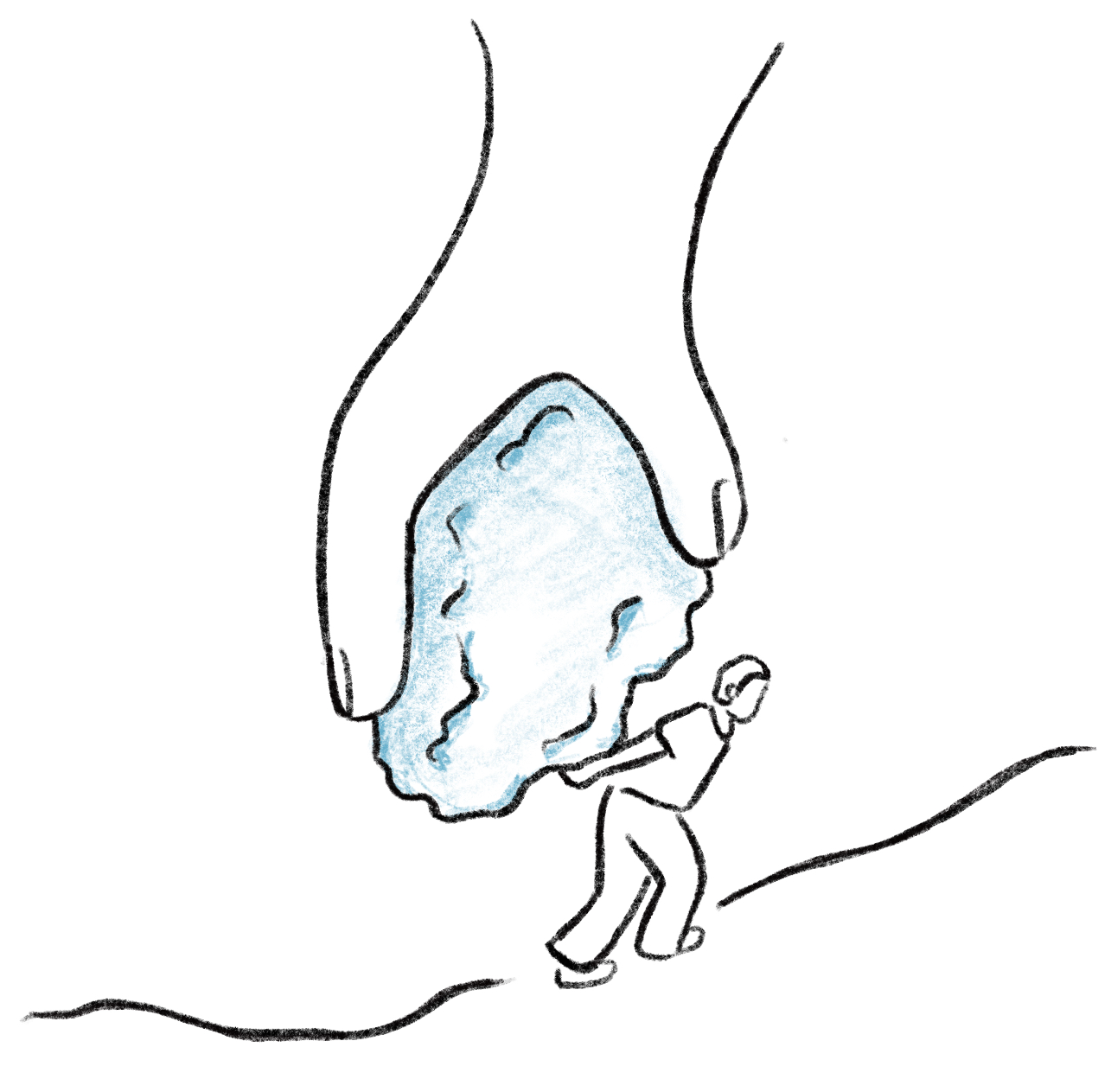
But what if society weren’t indifferent? What if the government provided, free of charge, a forum to hash out every dispute to the bitter end — and even a judge to render judgment? That is the promise of a civil litigation system. It appeals to powerful instincts. First, our moral intuitions: the judge will have to agree with me, to see my point — any impartial person would! Second, the instinct for argument: if I make my points in exactly the right way, the other person must agree with me. Third, the instinct for accountability: the person who has wronged me should be made to answer. Have you ever felt that if someone refuses to answer one of your arguments, you should win by default? Well, guess what: if you file a complaint against someone in most civil courts and they don’t answer, you win! Same if you file a motion and they don’t respond to it.
Our desire for justice in a given dispute reflects both an instinct to vindicate oneself — perhaps at the expense of the one who wronged us — and our desire to see the world healed of injustice. The thirst for justice is in some ways primal, in other ways sublime. Litigation gives full play to our passions for argument and vindication, gives us an arena where we can put Right (as we see it!) against Wrong and struggle to prevail. But there are limits to what can be accomplished in that arena, and litigation can often sabotage the goals it tries to achieve. After working in this field for approximately a decade, I’ve learned a few lessons about the passion for justice, argument as the means of pursuing that passion, and what it takes for disputes — within and outside the courtroom — to ultimately resolve.
Litigation’s Limits
First, our passions for redress and vindication are, in fact, passions. As humans, we are emotional creatures: what the heart desires, the will chooses, and the mind justifies, as the old adage goes. Everything we do ultimately comes from desire.5 That means the justice process is fraught with emotion: a litigant (meaning a plaintiff or defendant) may refuse to participate in a lawsuit because they simply can’t face the situation at all. In divorce cases, each party’s idea of what would be a just outcome is so far from the other’s that they may well spend $300,000 on lawyer fees fighting over $100,000 in assets.
Even the lawyers are subject to passions. When we’re trying to settle a case, we tend to be very polite to the other lawyer. Whether the other lawyer likes us or not should have absolutely no effect on his ability to settle the case, but of course it does. For the same reason, we tend to be very polite to regulators, and even the meanest lawyer treats the judge with the utmost respect. Of course, I’m an impartial lawyer in every situation — but no one who does this professionally ever imagines for a second that the other guy is. The process is as impartial, impersonal, and unemotional as we could possibly make it, and yet emotional and personal factors suffuse every single stage of the process.
Second, the law is more about procedure than substance. This was the single hardest thing for me to learn in law school. Procedures serve a purpose: the orderly administration of justice. For example, if an employee whom you terminated eleven years ago sued you for alleged employment discrimination, there would be all sorts of problems: witnesses’ memories might be foggy, crucial evidence may have been lost. For those reasons and more, the law generally requires that an employee who desires to sue for discrimination must file a complaint (“Charge”) with a federal agency (the EEOC) within 180 days.
Broadly speaking, the substance of an argument cannot be fairly resolved unless there are some rules to govern the dispute. But procedure often swallows substance: if someone sends a Charge to a random email address they think is an EEOC employee on day 179, does that count? What if they realize their mistake and send it to the right address on day 181? If they fail to exhaust but Defendant fails to raise that defense, has Defendant waived it? Does the employee’s failure to comply with the exhaustion requirement deprive the Court of jurisdiction?6
Even in a system designed over centuries by generations of our country’s brightest lawyers to efficiently resolve disputes, funded to the tune of 60 billion dollars a year, a litigant still spends more time fighting over the rules of the game than the game itself.
Does that sound familiar? Arguments about the rules attend any game from Capture the Flag to pool. In a modern NFL game, how much time is spent on challenges and reviews, on endlessly watching replays to judge whether the receiver’s foot was in-bounds or not, whether the runner was down by contact, whether the hit should have been flagged for targeting. Fights between siblings, spouses, and parents and children often turn into the same thing. We can talk about my working and not spending enough time with the kids… if only you could stop exaggerating how often I’m away. I’ll listen to your arguments about why we need to cut back on spending, but first you need to acknowledge my feelings about this issue. I can’t believe you don’t remember making that promise — how can we even have this conversation if you won’t recognize you’ve broken it?
Each of these expresses a norm for how to argue: don’t exaggerate, pay attention to the other’s feelings, be honest about the past. For many of us, getting the how of argument right — arguing well — offers a tantalizing promise: just nail it down, establish the rules … then everything can proceed fairly. But of course different people have sharply divergent procedural values. Speaking bluntly and clearly for one person serves the important values of truth and clear communication; for the other, speaking delicately preserves the critical foundation of love and mutual consideration.7 Perhaps importantly, the ideal of a perfect argument is completely unobtainable. There will always be ‘procedural’ breaches that you can fasten onto in the other person’s presentation, and that they can fasten onto in your presentation.
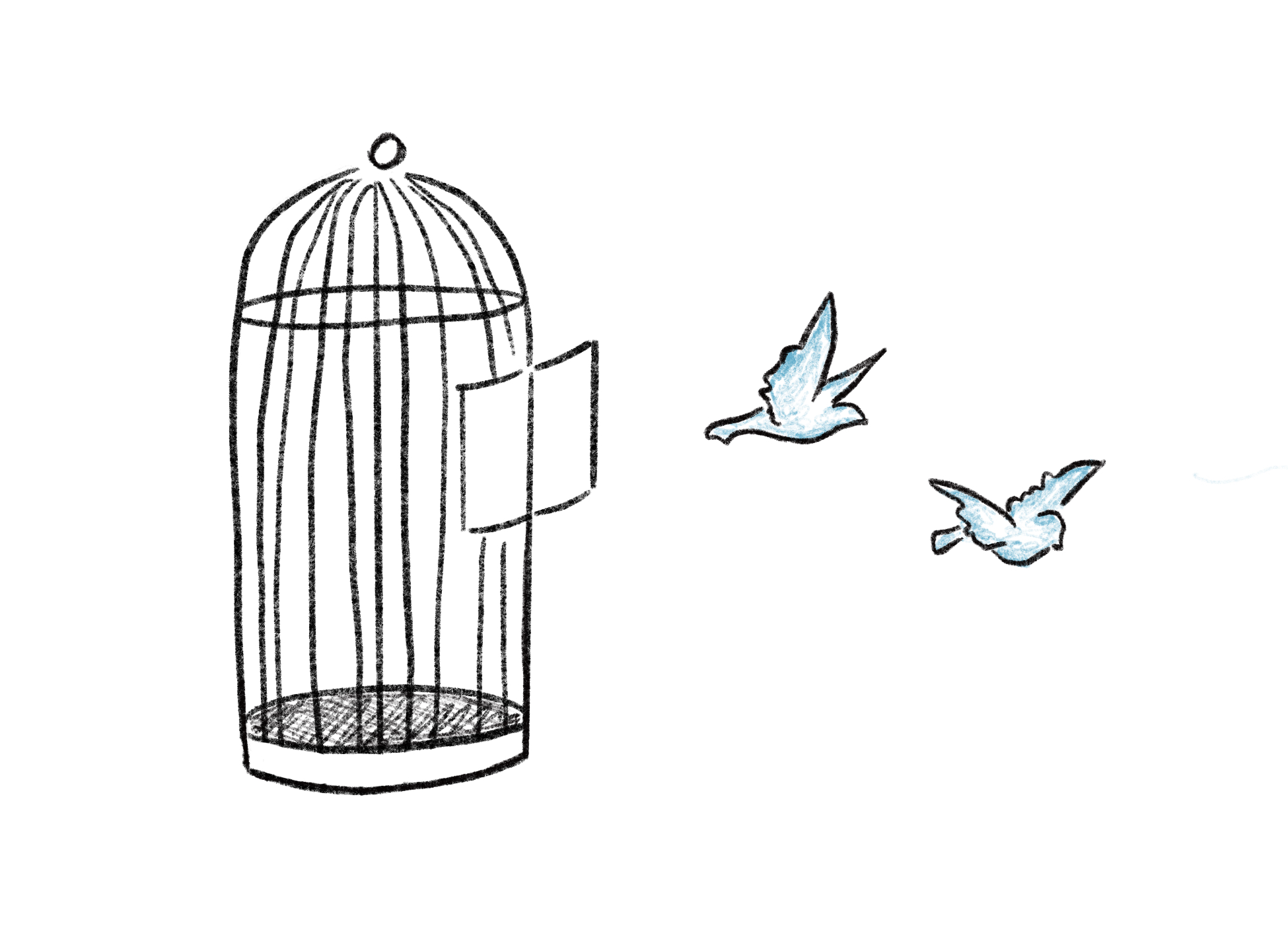 A lesson from litigation is that arguing about the rules of the game, and whether they were followed, is often a false trail. The judge almost never cares as much as you do that the other lawyer failed to produce documents. Instead of punishing them, the judge will just make sure the documents are produced. In a contentious case, the parties can spend hundreds of hours litigating procedure. A typical result of such efforts is that you present your excruciatingly researched argument about the eight deficiencies in the other lawyer’s document production; he presents his excruciatingly researched argument about the thirteen deficiencies in your document production, and the judge gets onto both of you and gives you deadlines for producing the documents. In other words, fighting about procedure is often a zero-sum game.
That points to a third lesson: the judge almost never fully agrees with you. On procedure, a neutral judge will usually make less of the other person’s failures than you expect him to and will make more of your failures than you expect him to. The same is true of substantive arguments: we see the side that’s important to us; the other person sees the side that’s important to them, and the judge (or jury), more often than not, sees a little bit of both.
Based on that, if you were able to summon a neutral judge to preside in an argument between you and your brother over, say, cleaning out your parents’ storage room, you would find that your own failures were greater than you believed and your brother’s were less. This is almost universally true for lawyers, who are only moderately emotionally invested in the court hearing and are professionally trained to evaluate legal issues impartially; it is much more true for an argument where you are very emotionally invested. A part of us wishes for a judge to litigate our grievances to their full conclusion, but almost none of us would like the end result.
Fourth, arguing tends to radicalize people, to make them more entrenched in their positions. Litigation is maximalist: you bring the biggest guns, the most arguments, that you can. If a business is in a dispute with a printer supplier that delivered a shipment of substandard toner, it might start as a relatively simple matter. But once a lawsuit is filed, both sides often start escalating: the buyer alleges not just for breach of warranty, but also fraud — they knew the toner was bad. One side alleges bad-faith litigation: the only purpose of this is intentional abuse of the judicial system for harassment. You try to catch the other side in a lie at their deposition, and now they’re potentially on the hook for lying under oath. The other side asks you to search ten years of emails for the word “toner,” and you have to pay thousands in legal fees to comply with their absurd request. Both sides apply maximum pressure, and soon what was a low-stakes case about toner has become a dug-in, hotly contested affair where the two sides are miles apart and settlement is almost impossible.
“Once we get into argument mode,” a married woman once said, “I don’t want to concede anything to my husband, because I don’t want him to win.” When you deploy power to try to resolve a dispute — including attempts to use logic to force someone into a certain position — then the other person resists and, moreover, responds with counter-acting power. That is why lawsuits ultimately can advance the truth, but not reconciliation.
Civil law, then, serves the interests of justice, truth, and accountability. But its operation is mired in messy human feelings and desires that muddle its effect in any number of ways. Moreover, once you get the verdict you longed for, you are usually disappointed — both sides are disappointed.
Latte Larry’s — the spite store in Curb — is a fitting metaphor for where many civil disputes end up.8 They become all about inflicting pressure on the other, not being the first to blink, winning. A final lesson from Mocha Joe: at the end of the episode, Larry hears loud music at night, and walks over to the adjoining house, and tells them to keep it down. He sees his new neighbor, Mocha Joe, standing on the balcony, telling him they’re having a party, and next week they’re having a Luau. “Do you know why?” Mocha Joe asks, looking relaxed in a summer blazer and blue Aviators, a smile on his face. “Because that’s what spite houses are for!” That points to one more aspect of litigation: when it turns into a fight, the other side is usually willing to be more unreasonable than you expect. And the emotional effect of the dispute often winds up being surprisingly close to home.9
Despite these problems, cases still resolve. Eventually, there are no remedies left to pursue, no legal courses of action left — THE END. And the ability of the American litigation system (and other civil justice systems) to put disputes to bed is remarkable. Cases can drag on and on, but the hang-up on that one bad deal or problem employee won’t last forever — time flows on. In itself, that is promising.
Almost all cases end in either settlement or judgment. Both reveal something about how to solve grievances in other areas of life. In a settlement, people might not walk away friends — they usually don’t — but at least they can agree on a resolution (usually a fixed amount of money) to resolve the case. There are two primary mechanics I’ve observed in settlement: (i) pain (or exhaustion) and (ii) mediation.
Settlements: Wearing Down Your Inner Lawyer
Litigation is exhausting. It demands immense amounts of time to jump through the hoops, answer the opposing party’s contentions, argue every little procedural issue into the ground, make every citation perfect, and so on. Most clients hire lawyers, converting most of the time drain to a money drain. Eventually, people simply tire of it. No matter how passionate Larry David is about wobbly tables and the various injustices committed against him by Mocha Joe, eventually he will give up the spite store. At a certain point, it’s just not worth it.
Part of the pain is that people realize firsthand all the emotional costs of litigation discussed above. Although the parties’ disagreement seemed minor, years of argument have widened, rather than narrowed, those differences. They also realize that attorneys’ fees — which typically represent the combined costs of meeting procedural requirements (and holding the other side to meeting its requirements) and developing substantive arguments (and rebutting the other side’s) — may be higher than they’d thought. The dispute has taken on a life of its own.
And it will continue to do so. There are future costs, including potentially trial. Justice — the jury’s verdict — is much closer at hand when a case settles two years in than it was when it commenced. But vindication no longer seems quite as desirable (nor as certain) as it did when the case was first filed. The vast majority (over 90%) of civil cases settle before trial.
So too in everyday disputes, exhaustion ends many arguments. This may seem defeatist, but it is merely descriptive: it doesn’t matter whether our weakness (tiredness, aversion to confrontation, etc.) should overcome our sense of justice; it often does.
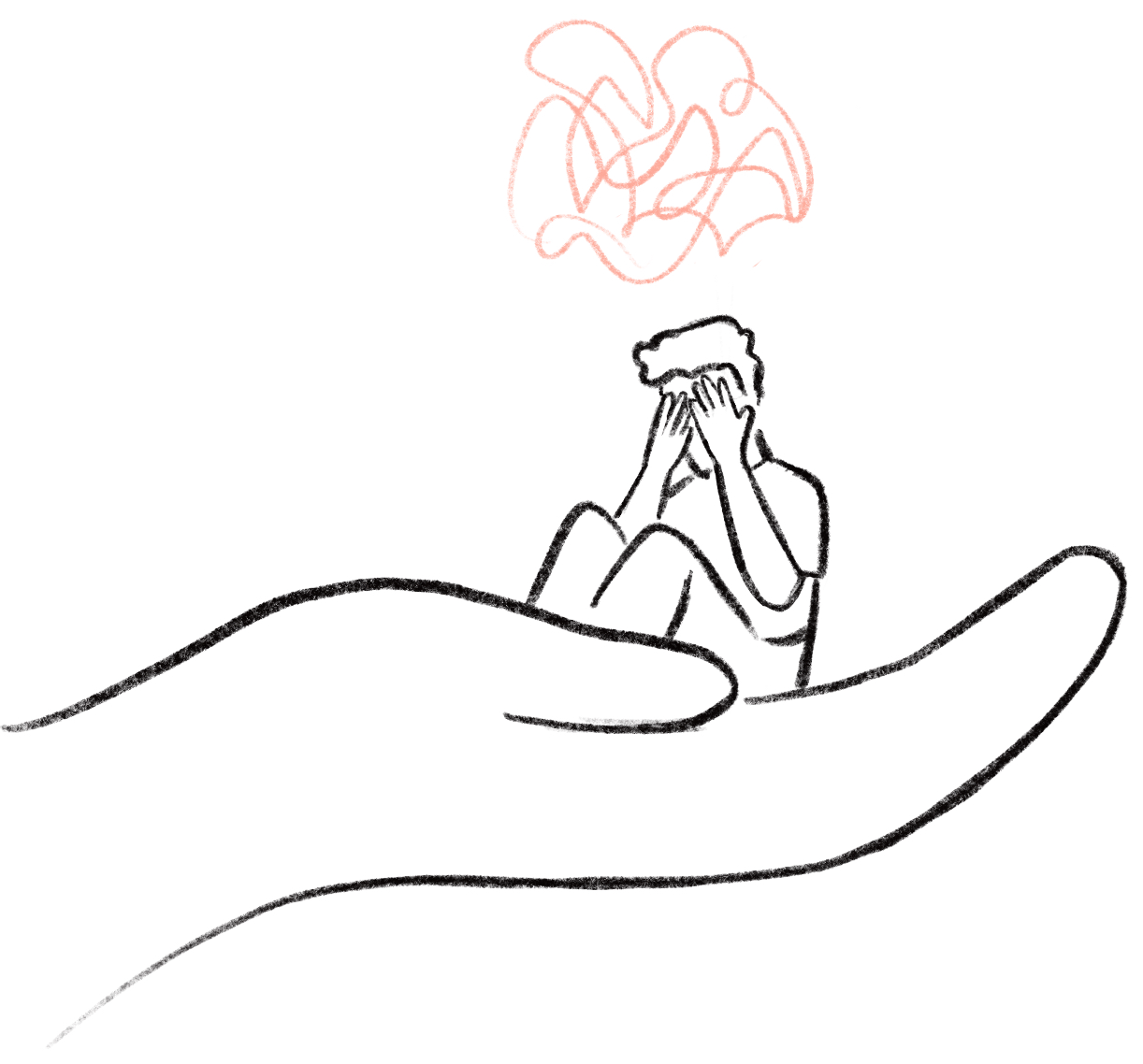 Certainly there are some noble quests for justice that are undaunted by human weakness — think, for instance, of Atticus Finch’s defense of Tom Robinson. But in everyday life, the vast majority of arguments are not worth litigating to their conclusions. It doesn’t matter that much who emptied the dishwasher. Even more important arguments, like about what age to get your kid a smartphone — an argument with real potential mental-health consequences — at some point become not worth fighting to the bitter end. In drawn-out fights, fatigue serves us well; the only way they end is if someone lays down their arms. Speaking personally, I never lay down my arms purely due to humility or admitting the other person’s right or magnanimously letting them win. Those sentiments may play a role, but so does fatigue.
That our limits — time, emotional energy, tolerance for confrontation, need to keep the peace — can help end an entrenched argument is a powerful example of how all things work together for good. It also exemplifies how God’s power is often made perfect not in our strength — our logic, zeal for truth, ability to find the right persuasive words — but instead in our weakness.
Settlements: The Role of Mediation
The second major mechanism of settlements is mediation. This usually happens towards the end of a lawsuit, once both sides, even if they’ve been entrenched and radicalized in their beliefs, have also been softened by the costs of pursuing the dispute. Pain and mediation work together.
As a young lawyer, I couldn’t wait for my first mediation. It was a dispute where the documents, although voluminous and complex, clearly showed our side was right. All we needed was a mediator to master the details of the evidence the way I had and explain to the other side all the fatal weaknesses in their claims. Once they realized that summary judgment (i.e., pretrial judgment) in our favor was almost a certainty, they’d settle for pennies on the dollar, or close to it.
The mediator came in, spent five or ten minutes discussing housekeeping matters, then went to talk with the plaintiff in a separate room. Fifteen minutes passed. Then thirty. Then an hour. Finally he came back to our room. The plaintiff, he explained, had spent an hour venting to him. He hadn’t gotten anything in the way of legal argument. I laid out our defenses and pointed him to some of the key documents. He went back to the plaintiff’s room, while I readied my stack of papers, replete with color-coded sticky notes to pull out what was needed to rebut whichever of the plaintiff’s arguments he made to the mediator next. Another fifteen minutes passed. Thirty, an hour. An hour and a half. At this point, I was getting annoyed. What were they doing? The mediator returned with answers to none of my arguments. He explained that the plaintiff (not her lawyer, but the client) had talked for the whole time but hadn’t said anything relevant to our legal arguments. At this point, I was incensed my client was having to waste money on this. By the end of the day, though, the case had settled.
What I have since learned about mediation is that the impartial mediator must at all costs preserve the plaintiff’s trust in the mediator’s impartiality. This often means not pointing out flaws in the plaintiff’s case, at least not while the plaintiff himself is in the room. The plaintiff, who filed suit because he believed he suffered a legal wrong, wants above all for someone impartial to hear how he’s been aggrieved. The plaintiff will often go on and on about personal grievances related to the lawsuit that are completely irrelevant to the legal analysis of how much he could recover on his claims. The plaintiff may talk about injuries suffered years ago, about troubles with his kids or the doctors not understanding what’s really wrong with him or the difficulties of grocery shopping. The mediator sits and listens, never criticizes. At last the plaintiff has found someone who hears him.
I’ve come to learn that the primary value of mediation often lies in a listening ear. When the aggrieved party — the plaintiff always, and sometimes the defendant — airs grievances to the other party, that produces anger, defensiveness, and counter-recriminations. But when the aggrieved party airs grievances to a mediator who receives the full weight of the grievances and does not react, but sympathizes — then the aggrieved party comes into a place where she can detach from the grievance, step back from the fight, and maybe — maybe — become willing to resolve it. I don’t mean to overstate the power of listening (the plaintiff typically receives a check, too), but non-reactive listening is often the final and decisive piece of the puzzle.
One more note on mediation: the grievance-airing plaintiff probably believes the mediator will take back all of her concerns to the defendant and the defendant’s lawyers. The mediator rarely does; if he did, defendant would become defensive, and it would be the same cycle. But if the plaintiff knew the mediator was working merely as a paid listener and her concerns were not going beyond the room, the listening wouldn’t have the same power. For a dispute to settle, the plaintiff must prosecute her case — both her grievances that are legally relevant and those that aren’t — to its conclusion against the defendant. If the defendant has counterclaims, then he must prosecute his case to its conclusion against the plaintiff. But neither party is capable of standing in and being prosecuted. The mediator, therefore, becomes a stand-in defendant to the plaintiff, who can heap the full weight of the defendant’s sins, vicariously, upon the mediator. The mediator likewise becomes a stand-in for the plaintiff to the defendant, and the defendant heaps all of the plaintiff’s sins upon the mediator. This is the way the vast majority of civil cases end.
Judgment: End of the Line
The other way a civil case can end is judgment: a judgment that the defendant is not liable or that the defendant is liable and must provide certain remedies (usually a monetary payment) for the harm the plaintiff suffered.
 Judgment is, I believe, the most important of resolutions to civil cases. The coming judgment hangs over the entirety of the litigation, and the hope for a good judgment and fear of an adverse judgment are the primary forces that motivate parties during a lawsuit. Without the possibility of judgment, there would be no moral universe within which the wrongs addressed by civil litigation are recognized and resolved.
By the time judgment comes, the parties have exhausted other options. The defendant believed the plaintiff’s case was very weak, and plaintiff believed her case was very strong; one or both of them were wrong but were unable to realize it or, if their lawyer explained it to them, were unable to accept it. Even the massive costs of trial and the listening ear of mediation did not, together, resolve it. In such situations, the dispute could go on forever.
The best illustration of this that I am aware of comes in Aeschylus’s trilogy, the Oresteia. It opens with the play Agamemnon [Trojan War spoilers follow], whose titular character sacrificed his daughter, Iphigenia, for a wind that would bear the Greek fleet to Troy. Now he is returning home in triumph after taking the city. Upon return, he is given a god’s welcome by his wife, Clytemnestra, who then kills him to avenge their daughter. Her accomplice is a man whose father was wronged by Agamemnon’s father. In the second play of the trilogy, The Libation Bearers, Agamemnon’s son, Orestes, avenges him by killing Clytemnestra and her accomplice. The family remains trapped in a cycle of violent justice that knows no limit. Orestes’s crime of matricide is so horrendous that the Furies, demonic personifications of avenging justice, pursue him. The third play opens with him fleeing them, as the cycle of violence goes on and on.
Often in a real-life dispute, neither side is capable of being reasonable or of compromise, and the cycle of retrenchment and recrimination spins out of control — it overwhelms the human capacity to seek common ground, spinning beyond the abilities of the best lawyers or mediators to resolve. The Furies reign supreme.
In Agamemnon, Orestes takes refuge in Athens, on the Areopagus — a rocky hill across from the Acropolis. Athena, the goddess of wisdom and justice, brings the Furies to heel, but lets them bring their charge. Accused of matricide, a crime which is an outrage to society, Orestes takes up position on the “Stone of Outrage, ”while the Furies take up position on the “Stone of Un-mercifulness.”10 Standing between the two stones, Athena convenes a judicial tribunal. When the jury ends up tied — human justice cannot resolve so difficult a question — Athena breaks the tie, voting for Orestes. The Furies howl and seethe, but they can do no more harm to Orestes, bound as they are to obey Athena.
The cycle of violence has ended, and the Furies end up domesticated, serving in Athens as lesser gods, their power acknowledged, but circumscribed.
Judgment is where the cycles of violence and recrimination find their end. Judgment domesticates, checks, and limits Fury. So, too, in everyday life. Almost every dispute, if it does not end through fatigue or a third party’s listening intervention, will end in judgment. This may be the judgment of a court, or the judgment of the children, or the judgment of the community. Human judgment, though, is fallible and hard to accept. Maybe the community judged you for its own silly reasons — they don’t know the full story. Such judgment has little ability to stop the cycles of recrimination and anger, little power to check the Furies.
We must, then, look for perfect and final judgment elsewhere. A final, divine judgment — as Aeschylus recognized 2,500 years ago — is the only way anger and recrimination can die. In this regard, a Last Judgment is absolutely necessary before any sort of paradise can come to human life.
Five centuries after Aeschylus, the Apostle Paul told the Athenians to repent because God “has fixed a day on which he will have the world judged in righteousness by a man whom he has appointed, and of this he has given assurance to all by raising him from the dead” (Acts 17:31). This is hopeful for those of us who’ve been wronged: every single wrong done unto us will be exposed, held accountable, and judged. As a result, we can know that God has recognized our pain. That is immensely promising and even liberating, and for those who’ve suffered great injustice, paradise may be unthinkable without it. But it is also terrifying: as civil litigation teaches, the verdict will usually be a bit less in your favor than you think. And all the things we’ve done, revisited on us, may merit a terrible punishment.
Paul exhorts the Athenians to repent. The Greek word Paul uses, metanoiein (μετανοεῖν), means to “have a serious change of mind and heart about a previous point of view or course of behavior, esp. in the face of extraordinary developments.”11 To repent is to accept the force of God’s judgment on your sin, to lay down your shield rather than fighting to justify yourself, which “is already a defeat for you” (1 Cor 6:7).
The place Paul proclaimed the coming judgment of Jesus was the same Areopagus (in English, Mars Hill) where Orestes was judged. At the site where the ancient god hovered between the Stone of Outrage and the Stone of Unmercifulness and pronounced Orestes innocent, Paul announced that all judgment will be given to Jesus, who bore the un-mercifulness of furious justice to give us the outrage of mercy.
Just as the Greek system of justice was founded on the Areopagus, where Athena bound the Furies to Justice, so Paul in the same place proclaimed the ultimate end of justice, because on a hill outside Jerusalem, Christ had bound Justice to Mercy. As a result, we who have done wrong can know in advance that the sentence for our sins — a terrible sentence, death (Rom 6:23) — has been fully executed and served by the Judge himself. Christ has slaked the Furies’ wrath, has fulfilled every demand of Justice, and has taken all possible recrimination for every human wrong upon himself — for our sake.
The dispute has been resolved: “It is finished” (Jn 19:30).
For more, subscribe to The Mockingbird. Illustrations by Aubrey Dockery.








Dear Mockingbird and Dear Will McDavid,
I just happened across your wonderful site today while searching for information on Walker Percy’s influence on David Foster Wallace. Somehow that brought me here. Like Mr. McDavid’s interrogators, I too am intrigued by the relationship between Western law and Christianity, so was thrilled to see his excellent and highly informed article. I recently read the late Harold Berman’s two-volume study on the Western legal system, “Law & Revolution” (I and II), which I cannot recommend highly enough. Berman argues that the 10th-11th century canon law did indeed have a definitive impact on the Western legal system, albeit from which the latter has slowly but inexorably drifted ever since. In a related thesis, Notre Dame professor Brad Gregory agues in “The Unintended Reformation” that the West’s legal drift from moral truth took a major turn during the Reformation, committing the West to secular positive law justified only by the long and strong arm of the state. In short, the West has been in a controlled crash for 500 years (or 508 if we’re counting). The reason I am sharing this is simply because no one else I know finds this history interesting let alone pivotal to life. Thanks again – keep up the good work!
As a former litigator, Arbitrator, law professor, and theologian who writes about the theology of law, let me say: remarkable! I’m going to share this piece with my students.
And OMG I just saw your footnotes . . . Footnote 9 . . . been there!!