




This article is by Lara Musser Gritter:
About 6 months ago, I was lying in bed, unable to sleep, unable to turn my brain off from an ominous feeling of dread. Normally I’m an asleep-when-my-head-hits-the-pillow kind of person so my husband Josh asked me what was going on. I said, “Oh, it’s just an existential dread night.”
“A what?” he asked.
“Existential dread. You know just the occasional night when I wonder to myself, what if it’s all not true. What if Jesus was just a nice guy but God does not exist? What if the universe is a cold ever-expanding vastness and I’m just a blip of energy and carbon in the utterly uncaring cosmos? What if after death is just inky blackness and oblivion? The book of my foolish life slammed shut with utter finality and futility? You know?” Sensing Josh’s thoughts I said, “Wait, do you not have existential dread?”
“No. I literally never think about any of that.”
It’s great when you can be reminded that people are mysteries and certainly not all like you. Not everyone has existential dread. Huh. I’d never thought of that.
Because ever since adolescence I have occasionally laid awake at night with darkness and gloom sitting in the corner silently watching me. I called it existential dread before I ever spoke it aloud to anyone. The prophet Joel is instructed by God to bring this dread upon the Israelites saying “Blow the trumpet and sound the alarm, let all the inhabitants of the land tremble. For the day of the Lord is coming!” I think much of this trembling stems from a basic fear of death.
This hit home shortly after that when Josh introduced me to an app called “WeCroak.” Incredibly simple, the app sends 5 push notifications a day saying, “Don’t forget you’re going to die.” If you click it, it will show you a quote about death. That’s it!

As a pastor who regularly grazes the veil between life and death while I journey with others passing through its threads, I figured I ought to get into this morbid app.
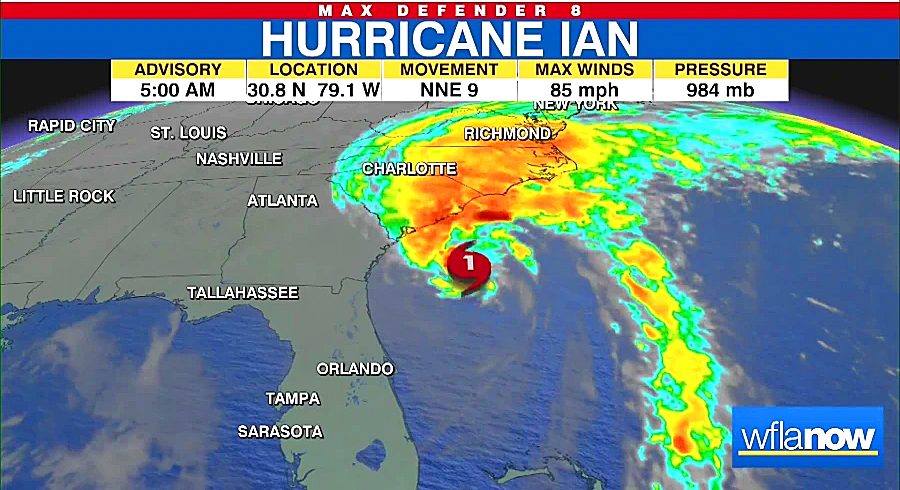
Now, this was the day before hurricane Ian, then a tropical storm swept through the Carolinas.
That day, a beloved member in our church had been moved to hospice in Winston. So when I got the text that she was now on hospice, I changed into my pastor clothes and got in the car despite the storm starting.
My visit was sweet, as so many hospice visits are. She was unresponsive but they say hearing is the last sense to go so we talked, read Scripture, prayed, and even sang, badly, her favorite hymns. A mentor of mine once told me that the dying process is sacred and holy. As I walked out of the hospice house, I thought how true that is — to be present with someone as they draw near to their earthly end. I thanked God for the 90+ years God gave this woman and the way all those years make it easier to accept that this was her time.
As I drove home, Ian was actually now over North Carolina. The wind and the rain were really kicking up — as was my anxiety about driving in it. That old existential dread was sitting in my backseat watching me, unblinking. I shook it off and thought to myself, “I don’t like this situation but I’m fine. I’m going to drive safe and I’ll be home in no time.”
As soon as I had the thought, I saw in my rearview mirror a red blur coming upon me wayyy too quickly. Before I knew it, I felt it hit my rear corner, causing my car to fishtail. As I regained control, I saw the red car zoom ahead of me. I pulled off to the shoulder and shortly after the red car did too. Neither of our cars were drivable. With multiple other accidents that night we were stranded for the next two hours while we waited for highway patrol.
First, I launched into crisis response mode, calling Josh, the police, a tow, insurance, and a friend to come pick me up. But eventually my phone was on low battery and there was nothing left to do but put it away and wait in the inky darkness of this storm while my car rocked back and forth in the wind.
Not long after, I got a push-notification on my phone,
“Don’t forget you’re going to die!”
I couldn’t help but laugh. Yup. If a hospice visit followed by car accident in a hurricane hadn’t reminded me, I most certainly am going to die.
So with nothing else to do, I sat there for a while in the dark trying to wrap my arms around this death thing. In many ways it’s natural and beautiful and in so many other ways it’s perverse and terrible. I fear it, because I do not know it. I fear it because I cannot control it.
But we do not grow brave in the face of fearful things if we avoid them. And we do not gain peace when seeking control over the uncontrollable. It is by coming close to death that we begin to befriend it and it is by surrendering to the uncontrollable that we finally discover peace.
So I decided to invite that existential dread into the front seat of my car and sat with it for a while. I contemplated the end of everything I love. I contemplated death and life and my own inability to save myself until the lights of highway patrol illuminated my rearview mirror with the hope of deliverance and salvation.
This is Lent in a nutshell. A season where our wonderful ancient church tradition interrupts our lives with a push-notification saying, “Don’t forget, you’re going to die.” It’s a brief six-week period to invite our existential dread into the front seat of our lives and to sit with it, try to wrap our arms around it, and maybe with enough time befriend it.
We don’t befriend our haunting dread simply because it’s a wise practice or because it will make our lives better, we befriend this dread because Jesus did. From the illuminated mountaintop of transfiguration, Jesus chose to walk down into the valley of the shadow of death. On his last night, he cried tears of blood begging God not to take him beyond the veil of death and yet he submitted even to death on a cross.
In Lent, we walk with Jesus, facing our death along with his, brushing up against the veil of death so that we might be healed by his death — remembering that we are dust and to dust we shall return.
After all, we do not walk through Lent in order to accept a futile death. We walk through Lent because God is sprinting toward us with a promise that the light of Christ shines in the darkness and the darkness cannot overcome it. God conquers death with deliverance and salvation.
In the days following the accident, I found myself pausing on my way to my rental car to breathe deeply fresh air and noticing the lively birdsong. I found myself studying my daughter’s hair and rejoicing at the levity and glory of her tiny ringlets and singing my favorite Taizé song to her, “In the Lord I’ll be ever thankful, in the Lord I will rejoice, look to God do not be afraid …”
God brings life out of death.
I still occasionally have my existential dread nights, but the mindfulness of my death helps me be the kind of fool who dives deeply into the inky abyss of unknowing — only to find God’s unseen grace holding my hand.








This is beautiful, Laura. Thanks for writing it.
Thank you for letting me know I’m not the only one. One Sunday, when shaking hands with the pastor after church, he asked me how I was, and I decided to be honest for once, so I said, “I’m experiencing existential terror.” He replied, “Would you like us to sit with you?” which seemed to me the best thing that could be done for me. The following Sunday, all he said to me was “Don’t be afraid.” Just what I needed.
Thanks Lara. So real. We all likely have these same “crazy” thoughts.
I did miss that breakfast, so I’m so grateful to read this here. Thank you, Lara.