We celebrated our 54th wedding anniversary the other day. As celebrations go, it was a quiet one. Finding a favorite Seattle restaurant was all booked up, we went for a picnic. We walked to a spot where we looked out on the sun setting over the Puget Sound and Olympic Mountains and laid out a table of various delectables. During the courting phase of our relationship and the early years of our marriage, picnics were our go-to. So a picnic was more than a picnic. It was all those other picnics, and hopefully, a few more to come.
54 isn’t one of those numbers with a zero at the end that seems to call for a big event, party or some kind of a “do.” But it is significant in its way. I liked how Linda responded to the messages of congratulation on the family text thread. “Fifty-four years. Kind of crazy. Kind of wonderful.” Indeed.
No one asked us what were the keys to wedded bliss or a happy marriage, which was fine. Attempts to sum up such things, to distill the secret, are usually a let-down, if not BS. Besides, our marriage has had its share of un-bliss and not-happy, as I suspect is true of most marriages. Still, we’ve stuck with it, and stuck with one another. And we’re grateful for having done so.
Pastors who have had a long pastorate in the same congregation, 25 or 30 years, will say that while they have served the same congregation all that time, in another way it hasn’t been one congregation but several. That is to say, that while they have been there in the one church and place, the congregation has changed and the world has, too. So they have served several congregations without making a move.
A long marriage is like that. There are different chapters, even different marriages, within the one. You change as individuals. You change as a couple. Your family changes. You have kids (or not). They grow up. Your own parents get older, and then are gone. If you’re lucky, grandchildren arrive. You put your all into your work. And then you don’t. The world changes in ways you never imagined it would. In a long marriage, like a long pastorate, it’s not the same thing year in, year out. Which is good. Still, part of the value of a long marriage is the continuity through the changes.
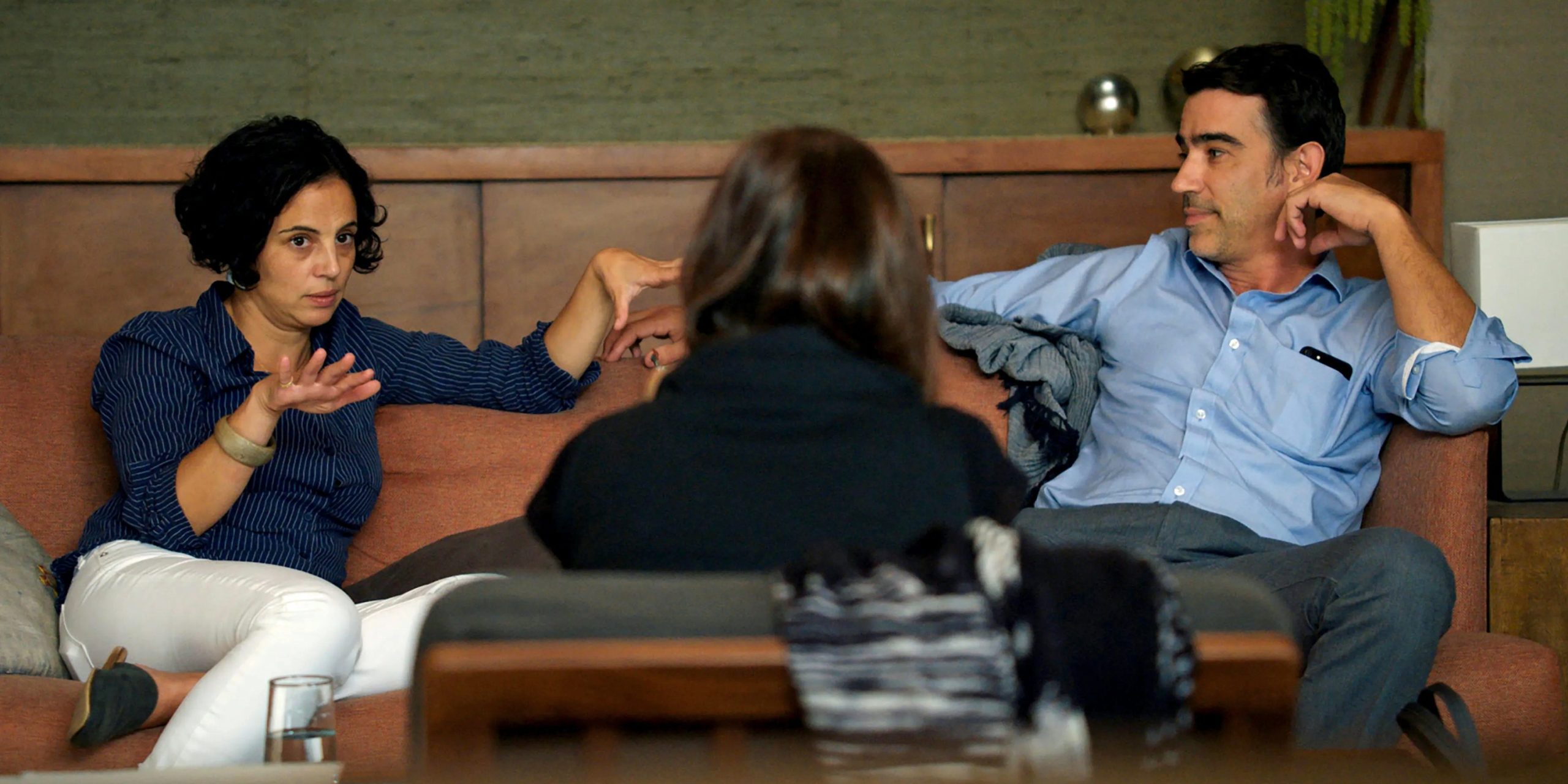
On our anniversary, I happened to read an article on “couples therapy.” We’ve done some of that. It’s been helpful. The author, Orna Guralnik, believes that something new is happening in couples therapy. She focused on how recent social movements, like Black Lives Matter and #MeToo, have had positive impacts on couples and led to break-throughs at home. Partners in couples, said Guralnik, are more aware of the influence of factors like race, gender, and class in how they see the world and relate to one another.
But alongside this more macro analysis, Guralnik contends that the biggest challenge in relationships is for people to see their partner as an other person. She writes:
One of the most difficult challenges for couples is getting them to see beyond their own entrenched perspectives, to acknowledge a partner’s radical otherness and appreciate difference and sovereignty. People talk a good game about their efforts, but it’s quite a difficult psychological task. To be truly open to your partner’s experience, you must relinquish your conviction in the righteousness of your own position; this requires humility and the courage to tolerate uncertainty.
I think she’s right about that. Letting your partner be other, not requiring they be the same as you, is a significant challenge in a marriage. After 54 years, we may be getting the hang of it … at least a little. Being curious about, sometimes amazed by, the otherness of one’s partner is a strange, necessary blessing.
At the same time, it was also kind of striking to read this, about the “radical otherness” of your partner because of late, “otherness” shows up mostly as a negative term and concept. “Othering” someone means seeing another person as someone who is alien to you or your group. The dictionary defines it as, “The act of treating someone as though they are not part of a group and are different in some way.” “Othering” is seeing someone else as less than you or your group. They aren’t part of “us,” they are a “them.”
So, as we like to say today, “it’s complicated.” Othering: bad. Seeing your intimate partner as radically other, and different than you: good. Both can be true. Both I would say are true.
The challenges of acknowledging otherness show up in the life of faith and church as well. We sometimes too readily equate a radically other God, “whose thoughts” said the prophet Isaiah said “are not our thoughts,” with our own values or enthusiasms.
I recall the story of an old priest who, on visiting a former church, came upon a large banner in the church’s empty social hall. It said, “God Is Other People.” The priest found a marker and entered a large comma after “Other.” Now the banner read, “God Is Other, People.”